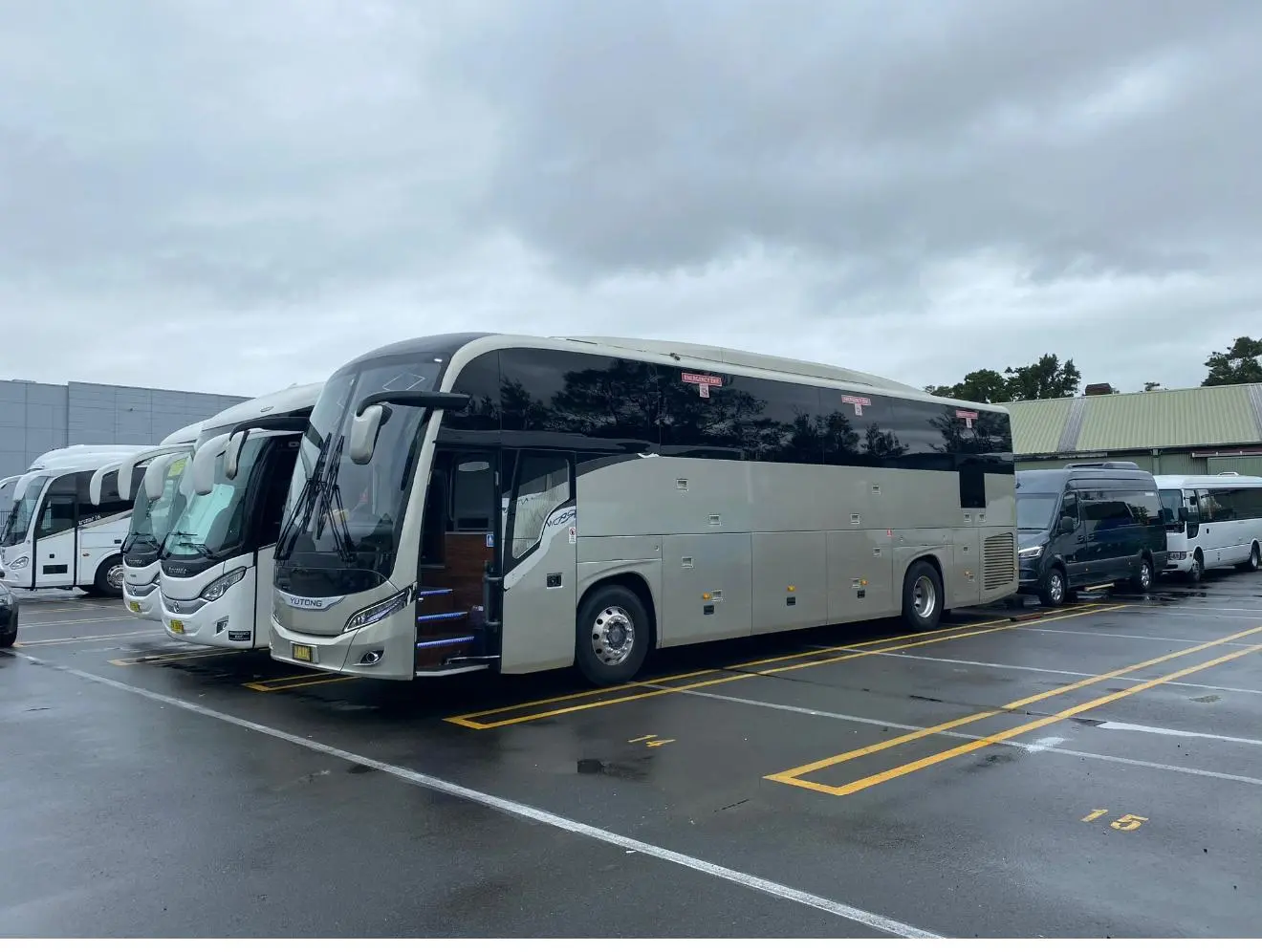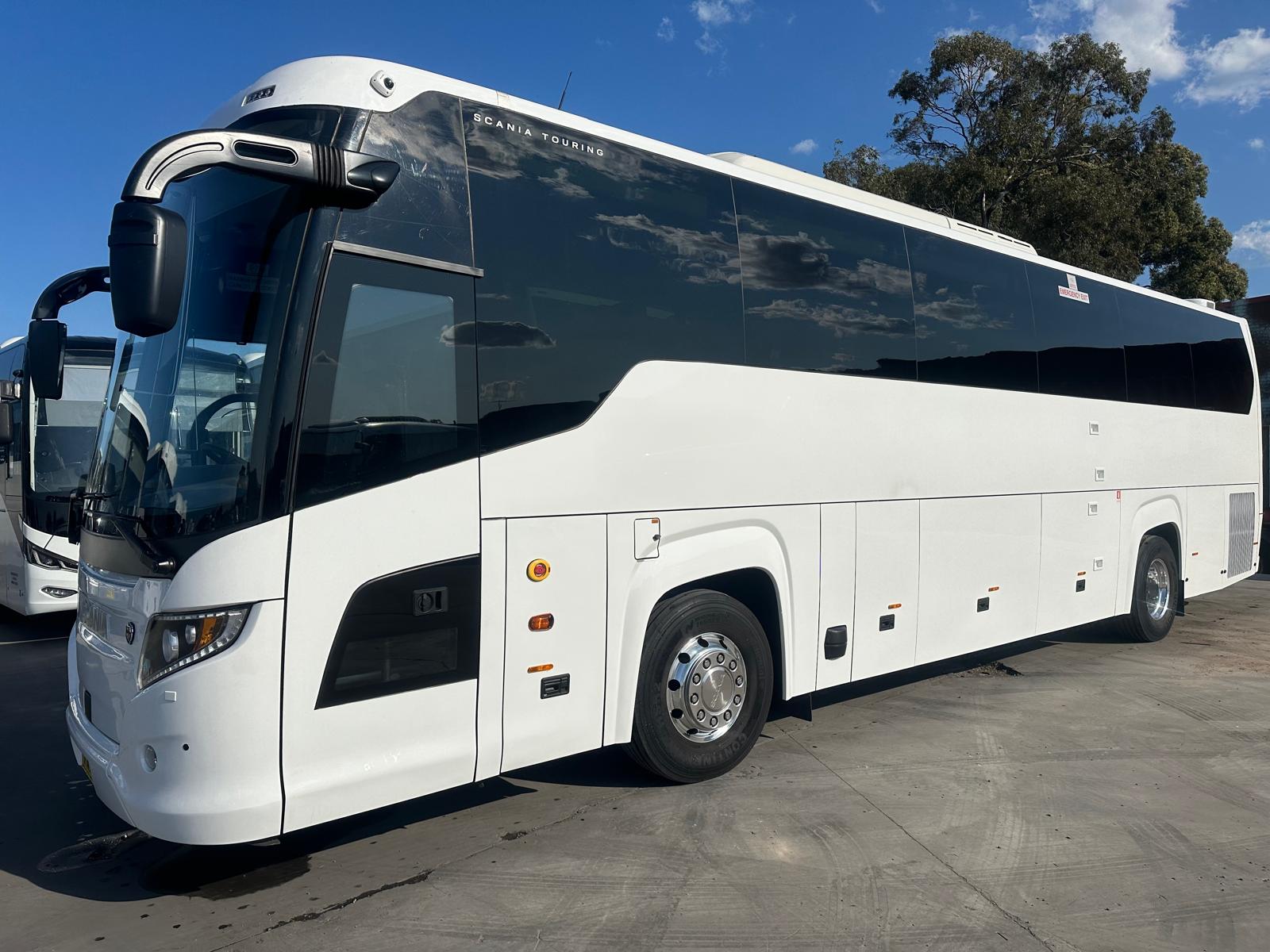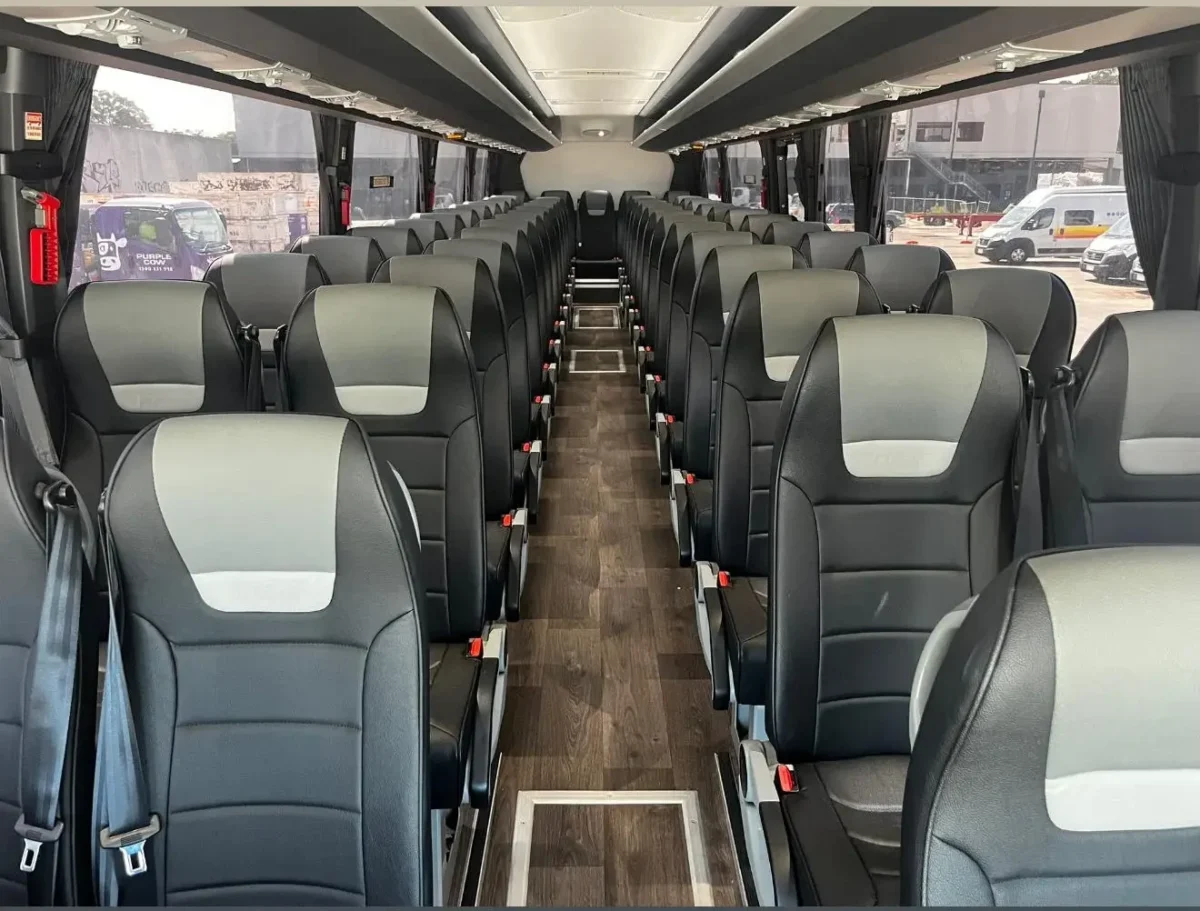
Below a certain gap length, holding the coach costs nothing extra, because minimum hire is already paying for the time. Full-size coaches and midi-coaches carry a four hour minimum, so a total window of four hours or less costs the same whether the vehicle waits or leaves. When both legs would be priced hourly at that minimum, the break-even sits at roughly twice the minimum: about eight hours for a coach, six for a minibus. Below it, holding wins on both cost and risk.
Two ways the same gap gets priced
There is a gap in almost every wedding: the ceremony finishes, photographs happen, and guests are not due at the reception for another hour or three. The vehicle has to do something during that gap, and there are only two answers.
Holding. The coach stays with the wedding for one continuous booked window. You pay the hourly rate across the whole window, including the hours it is stationary.
Releasing. The coach completes the first movement, leaves, and comes back for the second. That is two separate movements, and each one is priced in its own right.
Almost every couple assumes releasing must be cheaper, because paying for a parked bus feels wasteful. The published rate card says otherwise more often than not, and the reason is minimum hire.
The rule that decides it: minimum hire
Minimum hire is three hours on minibuses and people movers, and four hours on midi-coaches and full-size coaches. It is a floor on an hourly booking, not an estimate of how long the trip takes.
That floor applies to each hourly booking. So a released vehicle that comes back is not one booking with a hole in it. Unless it is quoted another way, it is two bookings, each carrying its own minimum.
Which produces a clean rule you can apply in about ten seconds. When both legs would be priced hourly at the minimum, the break-even total window is twice the minimum hire. Eight hours on a coach. Six hours on a minibus. Under that, holding is cheaper. Over it, releasing starts to win.
Which minimum applies to you depends on the vehicle, and the wedding coach options and their hourly rates are published with the minimum hire attached to each one.
The break-even, worked
A 53-seat executive coach is $195 an hour with a four hour minimum. All published rates are GST inclusive.
| Total window from first pick-up to release | Held: one continuous hourly booking | Released: two hourly bookings, each at the four hour minimum |
|---|---|---|
| 4 hours | $780 | $1,560 |
| 5 hours | $975 | $1,560 |
| 6 hours | $1,170 | $1,560 |
| 7 hours | $1,365 | $1,560 |
| 8 hours | $1,560 | $1,560 |
| 9 hours | $1,755 | $1,560 |
| 10 hours | $1,950 | $1,560 |
The crossover is at eight hours, exactly twice the four hour minimum. The same shape appears at every rung of the fleet ladder, only the numbers move.
| Vehicle | Hourly rate | Minimum hire | Break-even window |
|---|---|---|---|
| Toyota Commuter, 13 seats | $110 | 3 hours | About 6 hours |
| Executive minibus, 21 to 24 seats | $145 | 3 hours | About 6 hours |
| Executive midi-coach, 27 seats | $165 | 4 hours | About 8 hours |
| Luxury coach, 48 seats | $185 | 4 hours | About 8 hours |
| Executive coach, 53 seats | $195 | 4 hours | About 8 hours |
Every figure here is arithmetic on the published hourly rates and minimum hire periods rather than a quote for any actual booking. Driver, fuel, vehicle insurance and GST are already inside the hourly rate. Tolls and parking, public holiday and after-hours loading, and waiting time beyond the booked window are confirmed in advance and priced separately.
The third option most couples miss
There is a version of releasing that changes the maths, and it is worth asking about by name.
An airport or point-to-point run can be quoted as a single fixed transfer fare instead of an hourly booking, and a fare quoted that way is not charged at a minimum. If each of your two legs is genuinely a point-to-point run, the release option may be priced as two fares rather than two four hour minimums, which moves the break-even earlier.
We cannot publish what that fare would be, because it is quoted per job. What we can tell you is exactly what to ask for: price this both ways. One continuous hourly window, and two separate movements, with each movement quoted on whichever basis actually applies. Then compare two real numbers instead of one number and an assumption, rather than accepting the first shape you are offered.
The Southern Highlands case, where the maths stops mattering
Some gaps cannot be released at all, and distance is the reason.
The published figure for the Sydney to Southern Highlands run is 120 km and about 1.5 hours each way. Send the coach home between the ceremony and the reception and you have committed to three hours of driving before it is back at the venue, none of it carrying anyone.
So a two hour gap at a Highlands wedding is not a cost decision. There is no version of the day where the coach gets to Sydney and back inside two hours. The vehicle stays, and the only real question is whether the total window has been booked honestly, because waiting time beyond the booked window is priced separately.
There is a second constraint on a long-distance wedding. General standard hours for a solo driver of a fatigue-regulated heavy vehicle allow a maximum of 12 hours work with 7 continuous hours of stationary rest in any 24 hour period, and a separate standard hours table applies to solo bus and coach drivers. Three hours of empty running on a day that already contains a midday departure and a midnight return can be the difference between one driver and two. Releasing a vehicle can therefore cost more than the hours suggest.
For the shape of that day end to end, the Sydney to Southern Highlands run is the route page to read alongside this.
Where does a released coach actually go?
Worth knowing before you assume releasing solves anything in the city.
A coach may stop in a bus zone only to set down or pick up passengers. The NSW Road Rules treat a coach as a public bus for that purpose, which is what makes the set-down lawful, but the same rule stops it waiting there. No layover, no holding, no leaving the vehicle in the zone while the ceremony runs.
The City of Sydney’s Central Sydney On-Street Parking Policy is explicit that the City will not accommodate long-stay coach lay-over on-street in central Sydney.
Which means “holding” never means parking outside the venue. A held coach is somewhere the operator has arranged, and a released coach is somewhere else entirely. Both are the operator’s problem to solve, and both belong in the quote rather than in a conversation on the day.
Five questions that settle it
- How long is the total window, first pick-up to final release? Compare it against twice the minimum hire for your vehicle. That answers the cost question on its own most of the time.
- Can the vehicle physically make the round trip inside the gap? On any run outside metropolitan Sydney, work this out before anything else.
- What happens if the timeline moves? A held coach absorbs a thirty minute overrun without anyone noticing. A released coach is somewhere on the M4.
- Is either leg genuinely point to point? If so, ask for the fixed transfer fare version as well, because a fare quoted that way is not charged at a minimum.
- Does the whole day fit inside one driver’s working hours? If the window approaches twelve hours, raise it at quoting stage rather than at midnight.
Frequently asked questions
Is it cheaper to have the wedding bus wait or leave and come back?
Under a total window of about eight hours on a coach, or six on a minibus, holding is normally cheaper, because two separate hourly bookings each carry their own minimum hire. Above that, releasing starts to win. The exception is where either leg can be quoted as a fixed transfer fare instead.
What is the break-even gap?
There is no single gap number, because the cost is driven by the total window rather than by the gap itself. The usable rule is that the break-even total window is about twice the minimum hire for the vehicle: eight hours on a midi-coach or full-size coach, six hours on a minibus or people mover.
Do we pay for the hours the bus is parked?
On a held booking, yes, and that is the point of the comparison above. What you should not do is book a short window and let the vehicle sit, because waiting time beyond the booked window is confirmed in advance and priced separately. Book the window you actually need.
What are the risks of releasing the bus?
The vehicle is not on site if photographs overrun or the ceremony starts late, the return leg is exposed to Sydney traffic, and on a long-distance wedding the empty running consumes the driver’s available hours. Releasing buys back money in exchange for flexibility.
Can the coach just park outside the venue during the ceremony?
Not in a bus zone, which is set-down and pick-up only, and not on-street long-stay in central Sydney. Where the vehicle goes during a hold is arranged by the operator and should be visible in the quote.
Does a fixed transfer fare have a minimum hire?
No. Minimum hire applies to hourly bookings. A point-to-point run quoted as a single fixed transfer fare is not charged at a minimum, which is exactly why it is worth asking for both versions of your day.
Next step
Send the two times that define your day, the first pick-up and the final release, along with the guest count and the gap in the middle. Ask for it priced both ways: one continuous window, and two separate movements. Ask for both prices side by side or call the office on 02 9469 6600, and you will get a written quote with the vehicle named and the hours shown, normally within two business hours during office hours.
Sources
- NSW Government, Road Rules 2014 (NSW), rule 183 and Dictionary, https://legislation.nsw.gov.au/view/html/inforce/current/sl-2014-0758. Accessed 7 September 2026.
- City of Sydney, Central Sydney On-Street Parking Policy, https://www.cityofsydney.nsw.gov.au/-/media/corporate/files/publications/policies/central-sydney-street-parking-policy/central-sydney-on-street-parking-policy_0525.pdf. Accessed 7 September 2026.
- National Heavy Vehicle Regulator, Heavy vehicle fatigue management, bus industry, https://www.nhvr.gov.au/safety-accreditation-compliance/fatigue-management/heavy-vehicle-fatigue-management-bus-industry. Accessed 7 September 2026.