Most people booking a coach in Sydney are doing it for the first time, under time pressure, with three emailed quotes that all look roughly the same and none of which explain themselves. This guide is about closing that gap: what actually separates one operator from another, which claims you can check yourself before you pay a deposit, and how to read two quotes that are not comparing the same thing.
None of it takes long. Verifying accreditation is a short job, and so is reading a quote properly. Both are cheaper than discovering on the morning of a school excursion that the vehicle is not coming.
Start with the vehicle, not the price
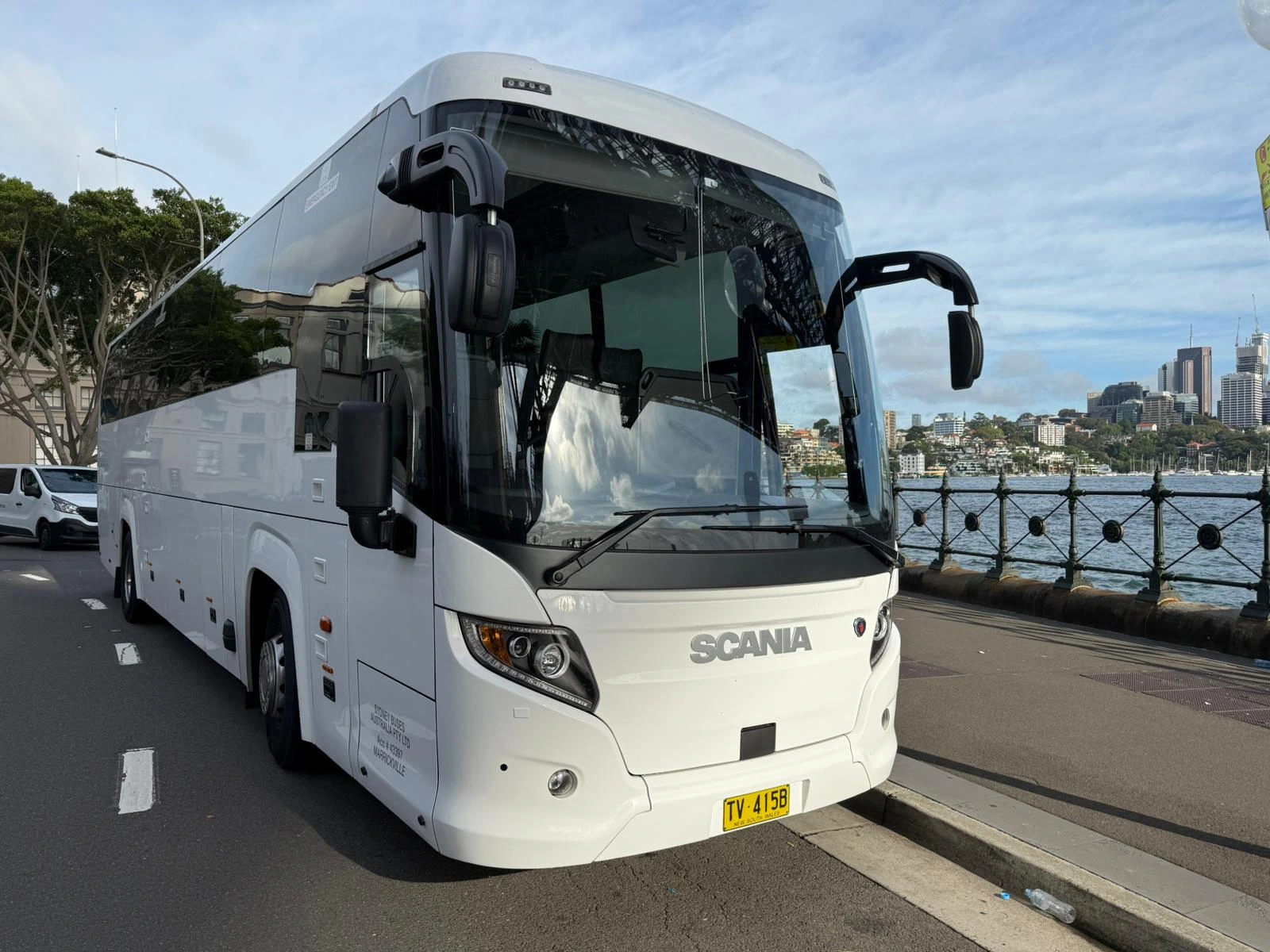
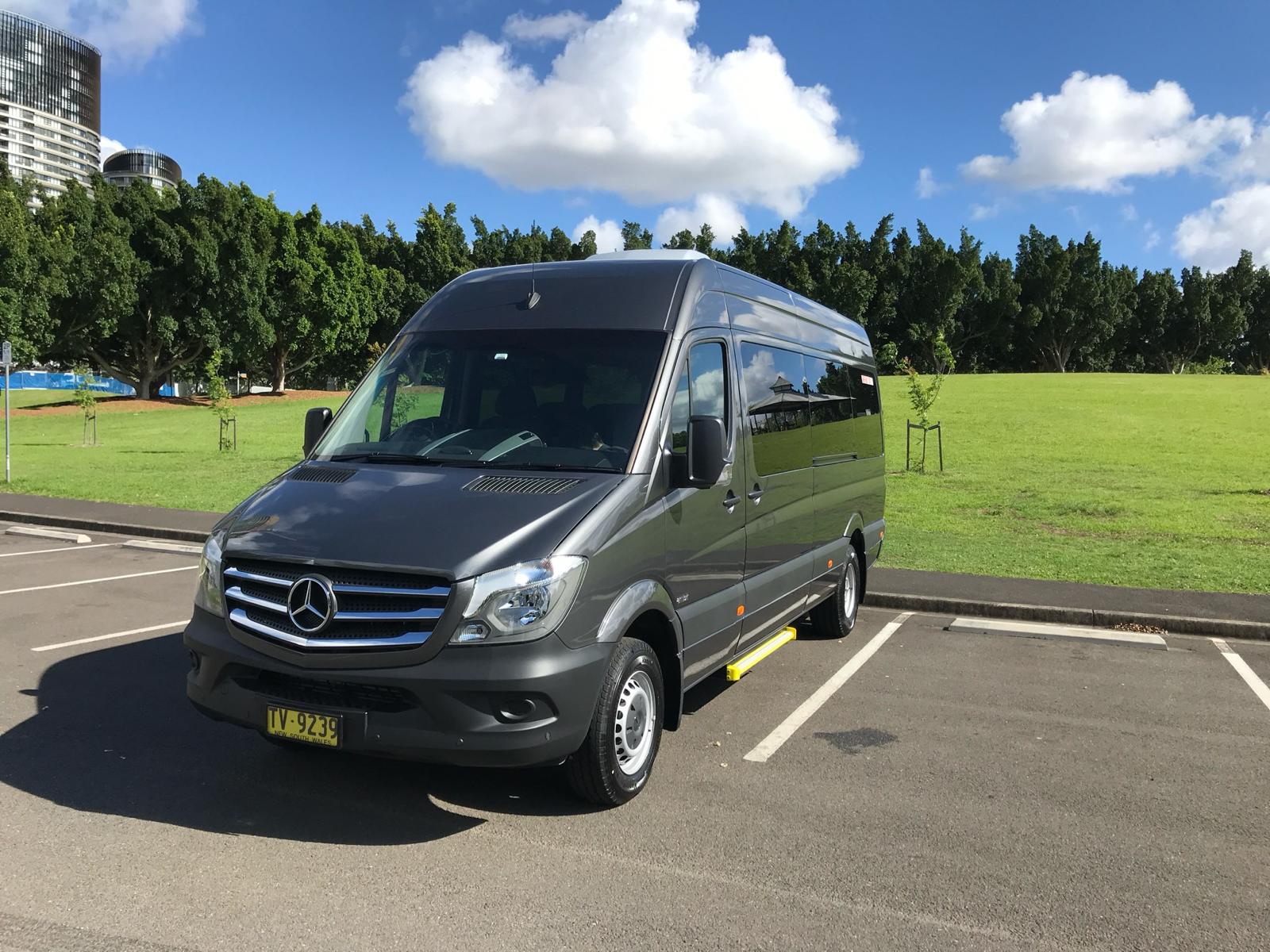
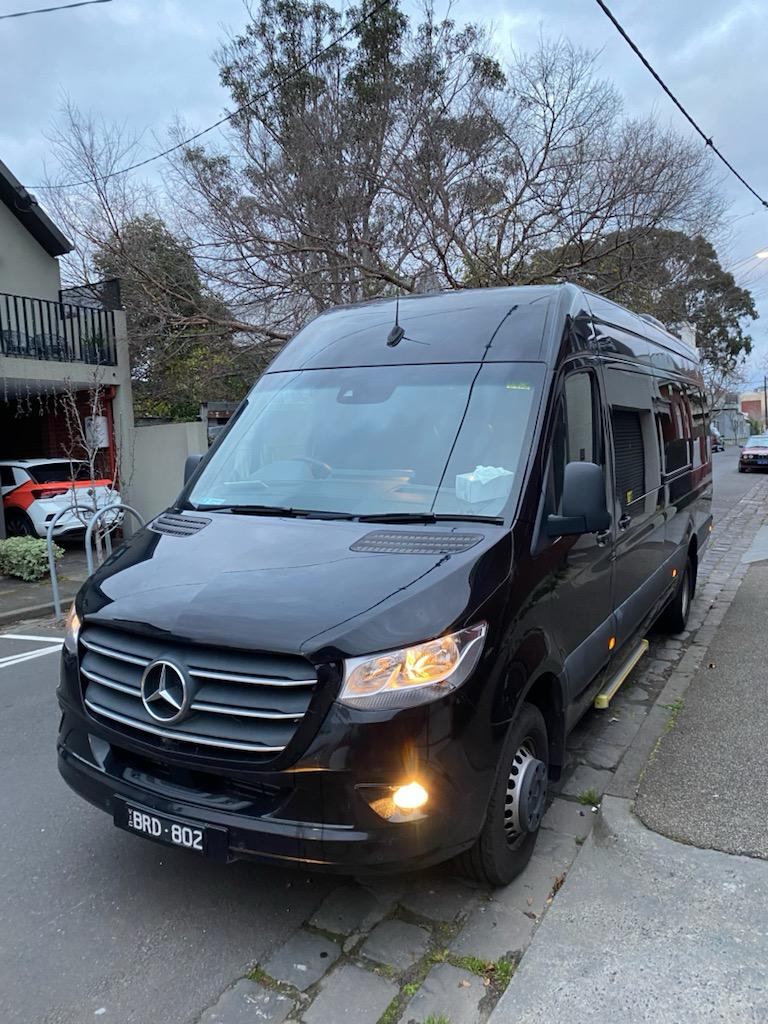
An hourly rate only means something once you know what vehicle it is attached to. The size ladder used on this site runs from a seven seat Mercedes V-Class through a 13 seat Toyota Commuter, an 11 to 14 seat high-roof Sprinter, a 21 to 24 seat executive minibus, a 27 seat midi-coach, and then into full coaches at 41, 50 to 57, and 60 seats. Past 60 passengers you are into a convoy of two or more vehicles. The full specifications sit on the fleet page.
Three things decide which rung you need, and none of them is the headcount alone.
Luggage. A 13 seat Commuter carries luggage in the cabin, shared with the passengers. A Sprinter has a rear luggage bay. A midi-coach and everything above it has an underfloor bay. If your group of twelve is going to the airport with a case each, the Commuter is the wrong vehicle even though the seats add up.
Access. Coaches need turning room and kerb space, and plenty of Sydney addresses have neither. The question that separates operators here is not whether they own a coach, it is whether they have asked your venue what it can actually take before putting a size on the quote. If your destination is tight, say so at enquiry stage rather than at the gate.
Distance. A three hour transfer around the eastern suburbs and a full day to Canberra and back are different jobs. The Canberra run is roughly 285 kilometres each way and three to three and a half hours of driving, which pushes into driver hours planning.
An operator who quotes a coach without asking about luggage or venue access is quoting a number, not planning a job.
NSW accreditation, and how to check it yourself
This is the single most useful check available to you, and it is the one people booking for the first time tend to skip.
Operating a public passenger service by bus in New South Wales requires operator accreditation from Transport for NSW under the Passenger Transport Act 2014 (NSW). It is not a membership badge or an industry association logo. It is a regulatory authorisation attached to a specific legal entity, and an operator running charter work without it is operating illegally.
Here is how to verify it in a few minutes.
1. Ask for the accredited entity name and the accreditation number. Not the trading name, not the website name. Accreditation attaches to a company or a person, so what you want is the legal entity as it appears on the certificate. For this business those details are: SYDNEY BUSES AUSTRALIA PTY LTD, accreditation number 43397, Marrickville.
2. Check that the entity is real. Search the company name on ABN Lookup, the Australian Business Register’s free public search at abr.business.gov.au. You are confirming that the entity exists, that it is currently registered, that its GST registration is active if the quote charges GST, and that any trading name you were given is connected to it. A mismatch between the name on the quote and the name on the invoice is worth a question.
3. Ask for a copy of the accreditation certificate. Any accredited operator can produce one. It is routine paperwork for tenders and school procurement, and reluctance to send it is itself the answer to your question.
4. Confirm it with the regulator if the job warrants it. Transport for NSW administers bus operator accreditation and can confirm whether an operator holds it. For a large school contract, a council job or anything going to a procurement panel, make that call rather than relying on a PDF.
5. Match the entity to a depot. An operator with a real Sydney base has an address you can look at. This one operates from 74 Edinburgh Rd, Marrickville NSW 2204. A business whose only physical trace is a mobile number and a suburb name in the page title is worth more scrutiny.
One nuance worth understanding: many operators subcontract at peak times, which is normal and legal, but the subcontracted vehicle must come from an accredited operator too. If your booking is going to a partner operator, ask to be told before the day rather than after.
Drivers
Accreditation covers the business. Drivers are a separate set of checks, and they matter more to the people on the bus.
Licence class. A heavy vehicle needs a heavy vehicle licence. The class required scales with the vehicle, so a driver licensed for a 14 seat Sprinter is not automatically licensed for a 57 seat touring coach.
Driver Authority. In New South Wales, bus drivers carrying passengers for a public passenger service must hold a Driver Authority issued by Transport for NSW in addition to their licence. It involves criminal record and medical checks. Ask whether every driver assigned to your job holds a current one.
Working with Children Check. If children are on board, the driver needs a current NSW clearance, and the organisation engaging the operator can verify it directly rather than accept an assurance. What matters at the choosing stage is whether an operator will give you the assigned driver’s details at quote stage instead of the week of the trip. Booking bus hire for school trips sets out what a school has to collect and how the check is actually done.
Fatigue and driver hours. Long-distance work is limited by how long one driver can legally be behind the wheel, including rest breaks. On a long day trip or a multi-day itinerary, ask how the schedule fits inside those limits and whether a second driver or a changeover is planned. The answer should be specific and it should exist before you book. If an operator waves this away, they are either not planning it or planning to break it.
Continuity. For multi-day work, ask whether you get the same driver throughout. It sounds minor until day three, when the driver already knows your run sheet and where the coach can actually park.
Insurance
Every operator will tell you they are insured. The useful questions are narrower than that.
Ask what cover is in place, what the sum insured is, and whether a certificate of currency can be issued naming your organisation. Schools, councils, universities and corporate procurement teams commonly require the certificate as a condition of engagement, so check what your own organisation asks for and request it at quote stage rather than chasing it the week before.
Ask what the cover applies to. Vehicle insurance and public liability are different things covering different events. On the indicative rates published on this site, vehicle insurance is inside the hourly figure along with the driver, fuel and GST, but that is a statement about what is bundled into the rate, not a substitute for reading a certificate.
Ask what happens if the vehicle fails. A mechanical breakdown on the morning of a wedding is a logistics problem, not an insurance problem. What you want to hear is a replacement plan with a named contact, not a promise that it never happens.
What a written quote should itemise
A quote that is one number and one sentence is not a quote, it is a placeholder. A real written quote should show you enough to reconstruct the price.
At minimum, it should state:
- The specific vehicle type and its seat count, not just “a bus”
- The hourly rate or day rate, and whether GST is included or added
- The minimum hire period, and how the billable hours are counted
- The pickup time, the return time, and every stop in between
- What is inside the price
- What is not inside the price, itemised rather than implied
- The deposit, the payment terms and the cancellation terms
- A contact for the day of travel
The inclusions and exclusions are where quotes diverge most. This is the split used on the rates published here:
| Inside the hourly rate | Confirmed in advance, priced separately |
|---|---|
| Professional driver | Tolls and parking |
| Fuel | Driver accommodation on multi-day trips |
| Vehicle insurance | Public holiday and after-hours loading |
| GST | Waiting time beyond the booked window |
There is nothing wrong with an operator charging separately for tolls or public holiday loading. Those are real costs. What matters is that they appear on the quote before you accept it rather than on the invoice afterwards. The phrase to listen for is “confirmed in advance”. The phrase to worry about is “we’ll sort that out on the day”.
Check the minimum hire too. On this site the smaller vehicles carry a three hour minimum and midi-coaches and full coaches carry four. A two hour job billed against a four hour minimum is not a rip-off, but it is a number you should see before you book, because it changes which vehicle is the cheaper answer. The bus hire cost page sets out the indicative rates in full.
Comparing quotes that are not like for like
Three quotes rarely describe the same job. Before you compare the numbers, normalise them.
Put them on the same vehicle. A quote for a 41 seat coach and a quote for a 60 seat coach are not competing. Here are the indicative hourly rates published on this site, GST inclusive, with the minimum hire attached:
| Vehicle | Seats | Indicative rate | Minimum hire |
|---|---|---|---|
| Mercedes V-Class | 7 | from $120/hour | 3 hours |
| Toyota Commuter | 13 | from $110/hour | 3 hours |
| Mercedes Sprinter | 11 to 14 | from $120/hour | 3 hours |
| Executive minibus | 21 to 24 | from $130/hour | 3 hours |
| Executive midi-coach | 27 | from $145/hour | 4 hours |
| Luxury coach | 41 | from $165/hour | 4 hours |
| Luxury touring coach | 50 to 57 | from $185/hour | 4 hours |
| Executive coach | 60 | from $180/hour | 4 hours |
The table is there so you can put three quotes on one line, not so you can shop the cheapest row. Two things about it are worth carrying into a comparison. The rates do not climb steadily with seat count, so a quote naming a larger vehicle is not automatically the dearer quote and should not be dismissed on the headline number. And the lowest rate on the list only wins if your group and their luggage genuinely fit the vehicle attached to it. Divide by passengers rather than by hours before you decide which quote is cheaper. These are indicative figures for budgeting; the number you pay is the one in your written quote.
Put them on the same hours. Ask each operator how they count the booked window. Does it start when the vehicle leaves its depot or when it arrives at your pickup? Does a coach that waits four hours at a venue bill for the wait, or is it released and returned? On a wedding or a conference the wait is often most of the day, and two operators can treat it completely differently.
Put them on the same trip. Tolls, parking and venue access fees are real numbers on a Sydney job. A quote that excludes them will always look cheaper than one that includes them. Add them back before comparing.
Read the review count, not just the score. A five star average from four reviews tells you very little. A rating held across a few dozen tells you more. This business currently shows 4.9 from 34 Google reviews. Read the recent ones, and read what the operator does when something goes wrong, which is more informative than the compliments.
Red flags
Any one of these is a reason to slow down.
- No accreditation number offered, or hesitation when you ask. Disqualifying, not a quibble.
- A quote with no itemised exclusions. Everything not listed is a future invoice line.
- A cash-only deposit, or a deposit to a personal account. Match the account name to the accredited entity.
- No written confirmation. A phone booking with no email trail is not a booking.
- A rate well below everything else. Fuel, a licensed driver, insurance and maintenance cost what they cost. A rate that undercuts the market by a wide margin is usually leaving something out, and the thing left out is normally on the exclusions list you were not given.
- Vagueness about who is operating the vehicle. If it is a partner operator, you should be told, and that operator should be accredited too.
- Pressure to commit before you have seen the written quote. A deposit is not a substitute for a document.
The questions worth asking
Copy these into your enquiry email. They take an operator two minutes to answer and the answers tell you almost everything.
- What is your NSW operator accreditation number, and what is the accredited entity name?
- Which specific vehicle are you quoting, and how many seats does it have?
- Where does luggage go on that vehicle?
- What is included in the rate, and what will be charged separately?
- What is the minimum hire, and when does the billable window start and finish?
- Can you supply a certificate of currency naming our organisation?
- Do all drivers on this job hold a current Driver Authority, and a Working with Children Check if children are travelling?
- How does the schedule fit inside driver hours, and is a changeover needed?
- What happens if the vehicle breaks down on the day, and who do we call?
- What are the cancellation terms?
If children are travelling, the school and excursion transport page covers the extra paperwork schools normally need. For a look at what each occasion actually requires, the services overview is the quickest way in, and service areas shows the coverage across Sydney.
Your next step
Work out your headcount, your luggage, your pickup point and your finish time, then ask two or three operators for a written quote against exactly that brief. Check the accreditation number of whichever one you prefer before you pay the deposit.
To get a quote for your trip, call 02 9469 6600 or send through the dates, the group size and the run sheet, and ask for it in writing.