Five NSW destinations work as a genuine same-day coach trip from Sydney: the Blue Mountains, the Southern Highlands, Wollongong, the Central Coast and the Hunter Valley. Port Stephens and Newcastle make a long day. Canberra, Jervis Bay and the Central West are better as overnights. Distance is rarely what decides it. What decides it is whether a coach can legally stop and park where you want the group to stand, and whether fifty people can eat somewhere without losing an hour.
Reading a day trip in coach hours, not car hours
Almost every published travel time for these destinations is a car time. Tourism bodies measure from central Sydney, assume free-flowing traffic, and assume a light vehicle that can leave when it likes.
A coach day is longer than that, for three reasons that have nothing to do with driving style.
A heavier vehicle is slower. In NSW any vehicle over 4.5 tonnes GVM is capped at 100 km/h regardless of a higher posted limit, so a full-size coach does not travel at highway speed on a 110 km/h stretch.
Driver hours are law, not preference. A charter coach carrying a paying group sits inside the Heavy Vehicle National Law fatigue regime. Under standard hours a solo driver may work a maximum of 12 hours and must take 7 continuous hours of stationary rest in any 24. That 12 hours includes driving, pre-trip checks and waiting time, not just the kilometres. It is the real ceiling on a day trip, and it is the reason a “long day” and an “impossible day” are separated by about an hour.
Passenger comfort stops are not optional on a group run. Fifty people need a break that forty-nine of them did not ask for.
The last variable is your pick-up point. The same destination is a different day depending on which side of Sydney the group starts from. Katoomba is about two hours from Sydney, but about two and a half from the eastern suburbs or the northern beaches. On a day trip that difference is an hour of the group’s day, both ways.
The distance table that governs the day
Two sets of figures matter here and they are not the same thing. The first column below is the operator’s own published planning figure where one exists. Where it does not, the figure comes from the relevant tourism body and is a car time from central Sydney.
| Destination | Published distance and driving time | Source of the figure | Same-day verdict |
|---|---|---|---|
| Blue Mountains (Katoomba) | 105 km, about 2 hrs each way, 2.5 from the eastern suburbs or northern beaches | Operator route figures | Works, and the coach access is the best documented in NSW |
| Southern Highlands | 120 km, about 1.5 hrs | Operator route figures | The easiest full day on this list |
| Hunter Valley (Pokolbin) | 165 km, 2 to 2.5 hrs each way | Operator route figures | Works, with a firm departure time back |
| Wollongong | 80 km, 80 minutes via the M1 | Destination Wollongong | Works, and it is the shortest run here |
| Central Coast | About 1 hr to Gosford, about 90 minutes to Terrigal | Visit NSW | Works |
| Newcastle | 2 to 2.5 hrs (published sources genuinely differ) | Visit NSW | A long day, and the range is the problem |
| Port Stephens (Nelson Bay) | 205 km, 2.5 to 3 hrs each way | Operator route figures | Possible, better as an overnight |
| Canberra | 285 km, 3 to 3.5 hrs each way | Operator route figures | Overnight |
| Jervis Bay (Huskisson) | About 3 hrs, roughly 190 km by road | Visit NSW, road distance verified separately | Overnight |
| Bathurst, Orange and the Central West | No verified distance or driving time is published for this route | Not published | Overnight, and ask for a quoted figure |
Four corrections are worth carrying with you, because all four circulate widely and all four will cost you an hour if you plan around them.
Katoomba is not 60 km from Sydney. That figure is the distance to Glenbrook, at the foot of the mountains. Planning a Three Sisters day on a 60 km assumption puts you an hour behind before morning tea.
Jervis Bay is not 140 km from Sydney. That number surfaces in search results and is a stale artefact. The road distance to Huskisson is around 190 km, which is why the day trip does not work.
The Grand Pacific Drive is not the 80-minute Wollongong route. The 80 km and 80-minute figure is the M1. The coastal drive is a separate, slower proposition, and it should be sold and timed as a different trip.
The Hunter Valley figure of around 160 km is to Cessnock, not Pokolbin, and there are three ways to get there. Treat 165 km and 2 to 2.5 hours as the planning figure for a Pokolbin day.
If your destination sits in the bottom four rows, you are not planning a day trip. You are planning the NSW routes we run as full-day charters as an overnight, and the maths changes completely once driver accommodation enters the quote.
Where the coach can actually stop, destination by destination
This is the section travel publishers do not write, because a car park is never the problem when you arrive in a car.
Blue Mountains. Blue Mountains City Council operates paid bus and coach parking along Echo Point Road and Panorama Drive, charged per half hour and banded by seat count. There is no requirement to book that parking today. That is changing: Council published a Visitor Bus Management Plan on 3 March 2026 which makes Echo Point the Phase 1 pilot, within about a year, for a bus booking system, a payment and accounts system, a compliance system and real-time in-bay sensors. If you are planning a 2027 trip, ask the operator whether a booking obligation has commenced.
Scenic World is a different story. It publishes no coach parking information at all, and its car park has a 2 metre clearance, which makes it unusable by a coach. It does take reservations for groups of more than 15, so the group booking and the vehicle question are two separate conversations. Ask both.
For National Parks lookouts, the published position is specific. Wentworth Falls has bus parking available. At Govetts Leap, large buses should drop off and then park near the Blue Mountains Heritage Centre, which means the coach and the group are separated for the duration of the stop.
One route note that changes a Blue Mountains itinerary: a detour applies at Victoria Pass, and Jenolan Caves Road and the Jenolan precinct are closed, scheduled to reopen late 2026. Do not build a Jenolan leg into a 2026 day trip.
Hunter Valley. The Hunter Valley Wine and Tourism Association states plainly that large groups require a booking prior to arrival. That is the operative rule. What no official body publishes is coach parking guidance, or a list of cellar doors that can take a full-size coach. Anyone who tells you cellar doors generally welcome coaches is guessing. Ring each venue, say the seat count and the vehicle length out loud, and get the answer in writing.
Port Stephens. Port Stephens Council’s Smart Parking scheme contains no bus or coach category at all, so designated coach parking at Nelson Bay is not something we can point you to. Confirm it directly with the venue or the Council. The Stockton Bight sand dunes have a firm requirement rather than a prohibition: access is by 4WD via the beach entrances at Gan Gan Road, Anna Bay or Lavis Lane, Williamtown, and every vehicle entering the Worimi Conservation Lands must be registered and display a valid Worimi Conservation Lands beach vehicle permit. In practice the coach delivers the group to a licensed 4WD, quad, camel or sandboarding operator and waits.
Your Sydney end. The trip starts and finishes in Sydney, and that end has rules too. A charter coach may stop in a bus zone to set down or pick up, but never to wait, and the City of Sydney will not accommodate long-stay coach layover on-street in central Sydney. A suburban pick-up with real kerb space usually runs better than a CBD one.
Tolls and tunnels quietly choose your route
Sydney toll roads classify vehicles by dimension, not weight or axles. Class A means 12.5 metres or less in length and 2.8 metres or less in height. Anything exceeding either limit is Class B. A full-size coach is taller than 2.8 metres, so it is Class B on every class-based Sydney toll road regardless of length. The multiplier is not uniform, so a route that looks similar on a map can price very differently.
Northbound trips are effectively routed for you. Under the Pennant Hills Road regulation, buses over 12.5 metres long or over 2.8 metres high travelling between the M1 and M2 must use the NorthConnex tunnel, unless they have a genuine destination only reachable via Pennant Hills Road. There is no exemption list and no application process, two camera gantries enforce it, and the tunnel limit is 80 km/h with average-speed cameras for heavy vehicles. Every Central Coast, Newcastle, Hunter Valley and Port Stephens run inherits that.
Clearance matters more than most organisers expect. NorthConnex, the M8, the M4-M8 Link and the M4 Tunnels are 5.1 metres. The Hills M2 is 5.0 metres. The M5 East main tunnel is 4.6 metres but the M5 East Cooks River section on the same corridor is only 4.4 metres. The Sydney Harbour, Cross City, Eastern Distributor, Lane Cove, Airport, Domain and Kings Cross tunnels are all 4.4 metres. If a vehicle carries roof-mounted equipment, measure it including that equipment.
Tolls and parking are confirmed in advance and quoted separately from the hourly rate, so ask for them itemised rather than assumed. That is worth reading alongside how a full-day charter is priced before you compare two quotes.
Three day frameworks that fit inside the hours
These are planning frameworks built on the published travel times above, not fixed timetables. Confirm the actual timings with the operator once your pick-up address and group size are known.
| Blue Mountains | Southern Highlands | Hunter Valley | |
|---|---|---|---|
| Suggested departure | 7:30am | 8:30am | 7:30am |
| Outbound travel | About 2 hrs, 2.5 from the eastern suburbs or northern beaches | About 1.5 hrs | 2 to 2.5 hrs |
| Time on the ground | About 5 hrs across two or three stops | About 6 hrs, comfortably | About 4.5 hrs, two or three venues |
| Latest sensible departure home | 4:00pm | 4:30pm | 4:00pm |
| Return travel | About 2 to 2.5 hrs | About 1.5 hrs | 2 to 2.5 hrs |
| Total elapsed for the group | About 10.5 hrs | About 9.5 hrs | About 11 hrs |
| Pressure point | Lookout parking and the Scenic World clearance | Almost none, this is the forgiving one | The return departure time, which slips |
Read the last row before the rest. Every day trip has one pressure point, and it is usually a parking constraint or a departure time that the group will want to push. Decide in advance who is allowed to move the departure time, and tell the group at the first stop.
The lunch problem that quietly ruins day trips
The single most common cause of a day trip running an hour late is not traffic. It is fifty people arriving somewhere at 12:30pm that comfortably serves twenty.
No official body publishes a list of coach-capable venues in the Blue Mountains, the Hunter or the Southern Highlands, so treat any list you find with suspicion. What works instead is a booking method: call ahead, give the exact head count and the arrival time, ask whether the kitchen can turn that number in a single seating, and ask whether they want a pre-order. A venue that hesitates is telling you something useful.
What size vehicle a day trip actually needs
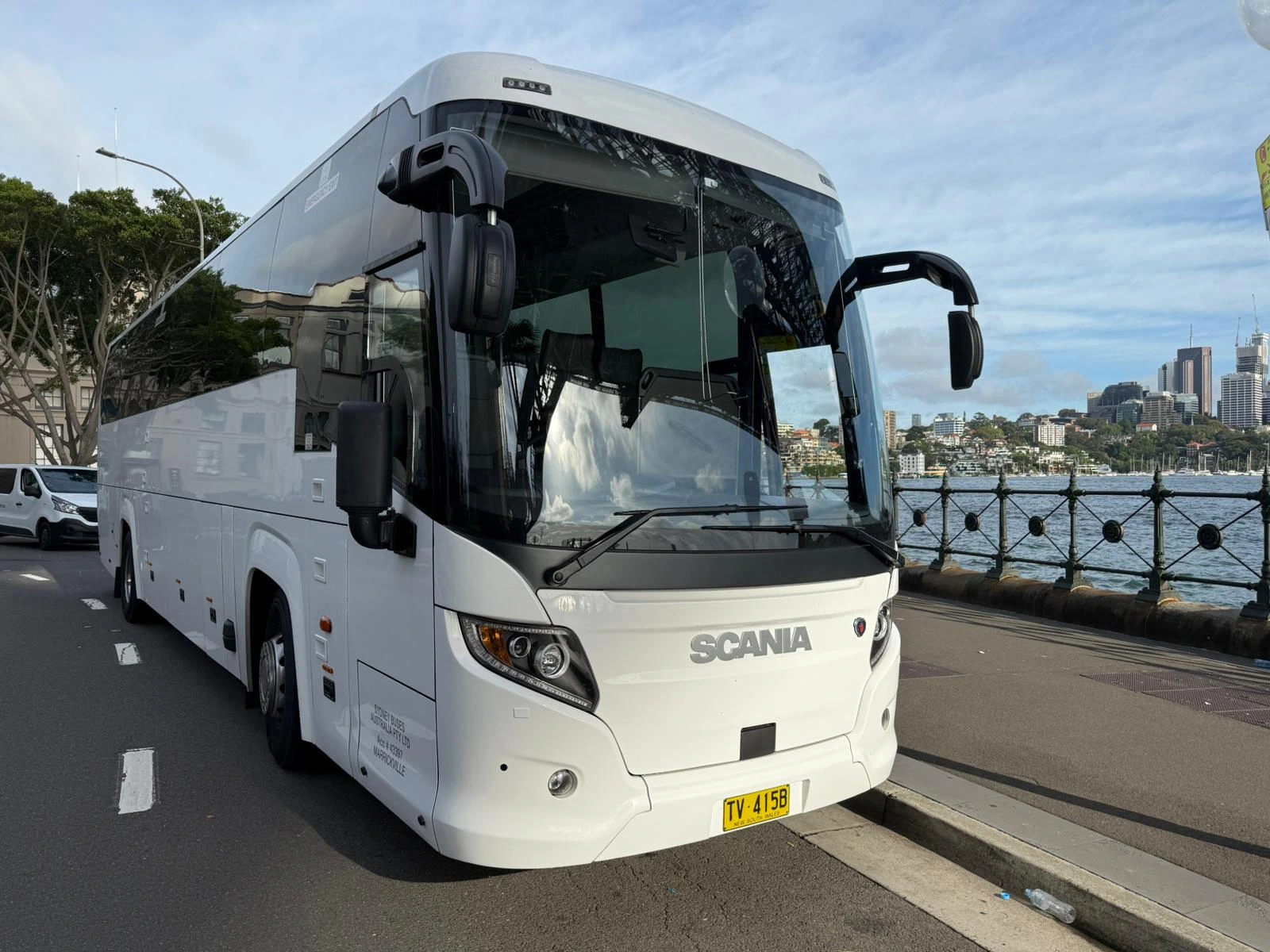
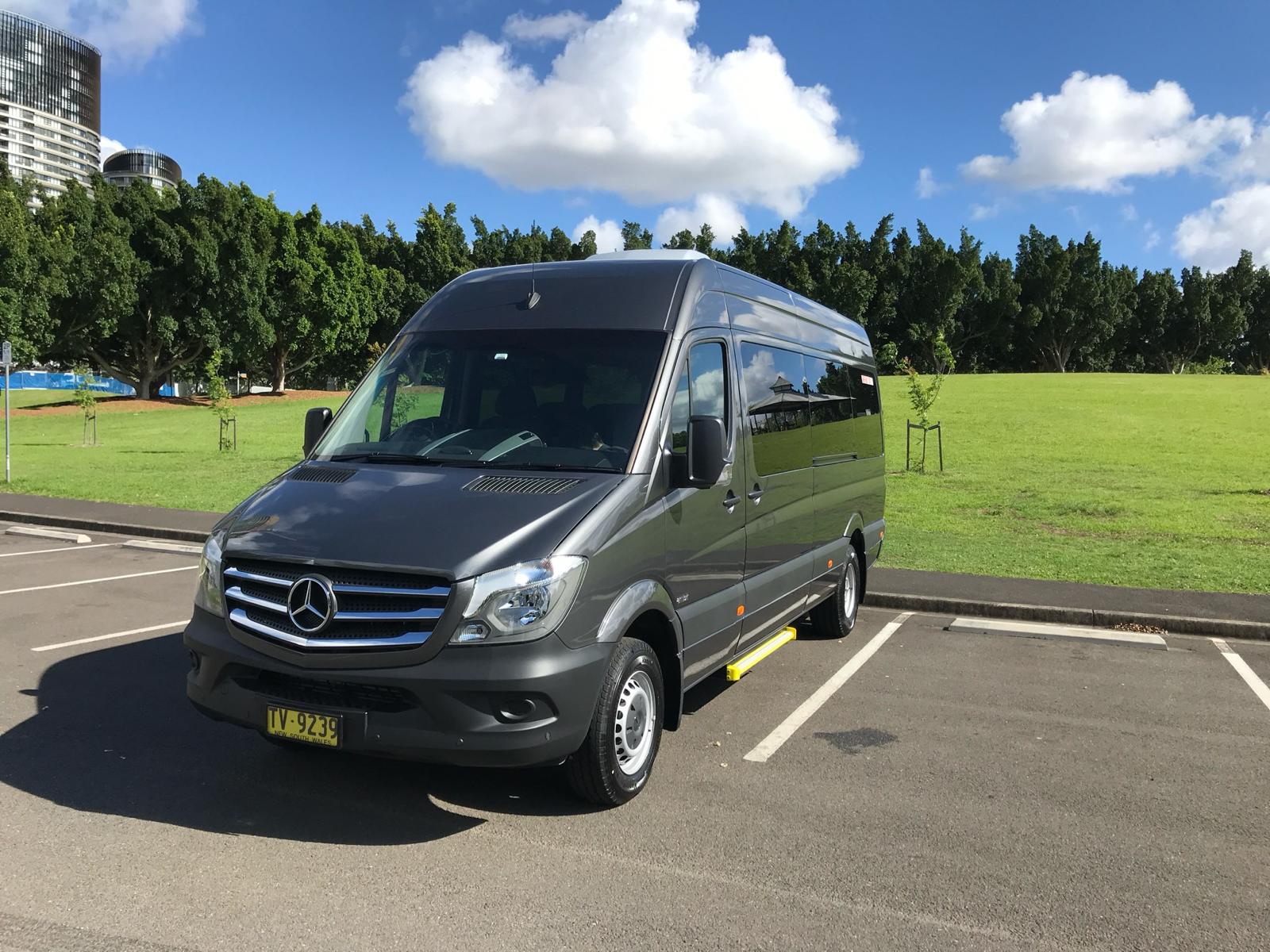
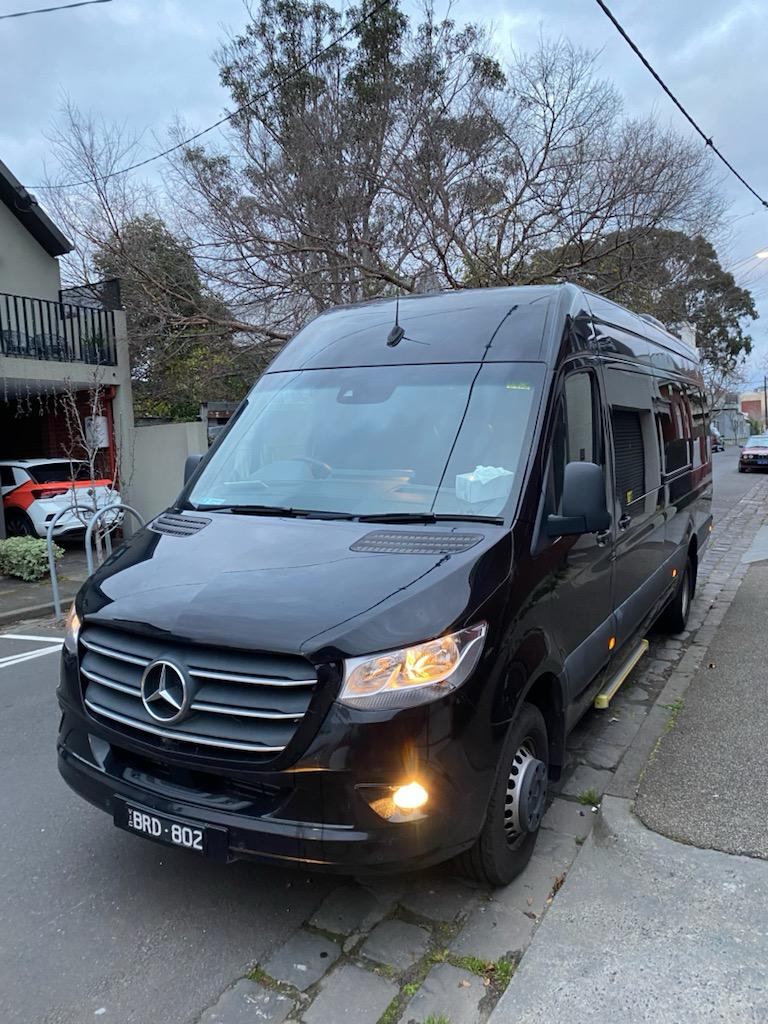
Minimum hire is 3 hours for minibuses and people movers, and 4 hours for midi-coaches and full-size coaches. Every destination in the table above comfortably exceeds both, so the minimum is not the constraint. Vehicle choice is driven by three other things: seat count with day bags, height and length for tolls and tunnels, and which car parks the vehicle can physically enter.
That last one is why a 27-seat midi-coach sometimes beats a 53-seat coach for a group of 25, and why splitting 60 people across two vehicles can open up destinations a single large coach cannot reach. Compare against the vehicle sizes we run before you settle the itinerary rather than after.
Frequently asked questions
Which day trip from Sydney works best for a first-time group?
The Southern Highlands, at 120 km and about 1.5 hours each way. It leaves the most time on the ground and it has the fewest hard access constraints on the list. The Blue Mountains is the better-known answer and the coach parking position at Echo Point is well documented, but the day is about two hours longer.
Can a coach park at Scenic World?
Scenic World publishes no coach parking information and its car park has a 2 metre clearance, which a coach cannot use. Scenic World does take reservations for groups of more than 15, so book the group with them and settle the vehicle question separately.
Do we have to book coach parking at Echo Point?
Not today. Blue Mountains City Council operates paid bus and coach parking along Echo Point Road and Panorama Drive, charged per half hour and banded by seat count, with no booking requirement. Council’s Visitor Bus Management Plan of 3 March 2026 makes Echo Point the Phase 1 pilot for a booking system within about a year, so confirm the position for any 2027 trip.
How long is too long for a one-day coach trip?
Once each leg exceeds about three hours, the day stops working. Canberra at 285 km and 3 to 3.5 hours, and Jervis Bay at around 190 km and about 3 hours, both leave too little time on the ground once you account for a solo driver’s 12-hour work limit and the comfort stops a group needs.
Why is the coach quote different for the same destination from a different suburb?
Because the driving time is different. Katoomba is about two hours from Sydney generally, and about two and a half from the eastern suburbs or the northern beaches. There is no travel surcharge inside Greater Sydney, but the extra hour each way is real time on the vehicle and it appears in the quote.
Can we add Jenolan Caves to a Blue Mountains day?
Not at present. A detour applies at Victoria Pass, and Jenolan Caves Road and the Jenolan precinct are closed, scheduled to reopen late 2026. Check the current position before including it in a 2027 itinerary.
Next step
Send the pick-up suburb, the date, the group size and the destination you are considering, and you will get a fixed written quote back within two business hours with the vehicle named and the day timed properly rather than optimistically. If the destination will not fit inside a day at your group’s start point, that is the conversation worth having before you announce the trip.
Call 02 9469 6600, Monday to Friday 7am to 6pm or Saturday 8am to 2pm, or start from the NSW routes we run as full-day charters. Most jobs need two to four weeks of lead time, and four to eight weeks over December, race days, school excursion season and long weekends. If the Blue Mountains is the likely answer, a Sydney to Blue Mountains charter is the page with the route detail.
Sources
- Blue Mountains City Council, Visitor Bus Management Plan, published 3 March 2026, https://www.bmcc.nsw.gov.au/documents/visitor-bus-management-plan. Accessed 7 September 2026.
- Hunter Valley Wine and Tourism Association, Know before you go, https://www.winecountry.com.au/plan/know-before-you-go. Accessed 7 September 2026.
- Port Stephens Council, Smart Parking, https://www.portstephens.nsw.gov.au/services/smart-parking. Accessed 7 September 2026.
- Transport for NSW, Using Sydney’s tunnels, https://www.transport.nsw.gov.au/operations/nsw-roads-network/using-sydneys-tunnels. Accessed 7 September 2026.
- Transport for NSW, Pennant Hills Road heavy vehicle road access, https://www.transport.nsw.gov.au/operations/roads-and-waterways/business-and-industry/heavy-vehicles/road-access/pennant-hills-road. Accessed 7 September 2026.
- Linkt, Vehicle classes on Sydney toll roads, https://www.linkt.com.au/help/travelling-toll-roads/vehicle-class/sydney. Accessed 7 September 2026.
- National Heavy Vehicle Regulator, Heavy vehicle fatigue management: bus industry, https://www.nhvr.gov.au/safety-accreditation-compliance/fatigue-management/heavy-vehicle-fatigue-management-bus-industry. Accessed 7 September 2026.