Group transport is a short sequence of decisions that only works in one order. The vehicle depends on your numbers. The quote depends on the vehicle. The legal pick-up point depends on the vehicle’s height and length. The schedule depends on the pick-up point. Reverse any of those and you rebook. This checklist runs the decisions in the order they genuinely lock, states what each one commits you to, and flags what it costs to revisit one late.
How to use this
Work top to bottom. Each decision has three parts: the call you are making, what it locks, and what changes if you come back to it later.
You do not need a finished itinerary to start. Decisions 1 to 3 are enough to get a fixed written quote, and the quote is usually what unlocks the approval, not the other way around.
The master checklist at the end is written to be copied straight into whatever document you are already keeping.
Decision 1: Name the fixed point
Every group trip has one moment that cannot move. A ceremony at 3pm. Doors at 7.30pm. A flight that closes. A session that starts. Find it and write it down as a hard arrival time and a place.
What it locks: the whole schedule, because a competent charter schedule is built backwards from the fixed point, not forwards from a departure time you guessed.
What it costs to change: almost nothing this early, and a great deal later. If the fixed point moves after the pick-up sequence is set, every collection time in the plan moves with it.
Write it in this form: “All 46 people must be inside the venue by 6.30pm.” That single line is more useful to an operator than a page of approximate timings.
Decision 2: Turn a head count into a vehicle class
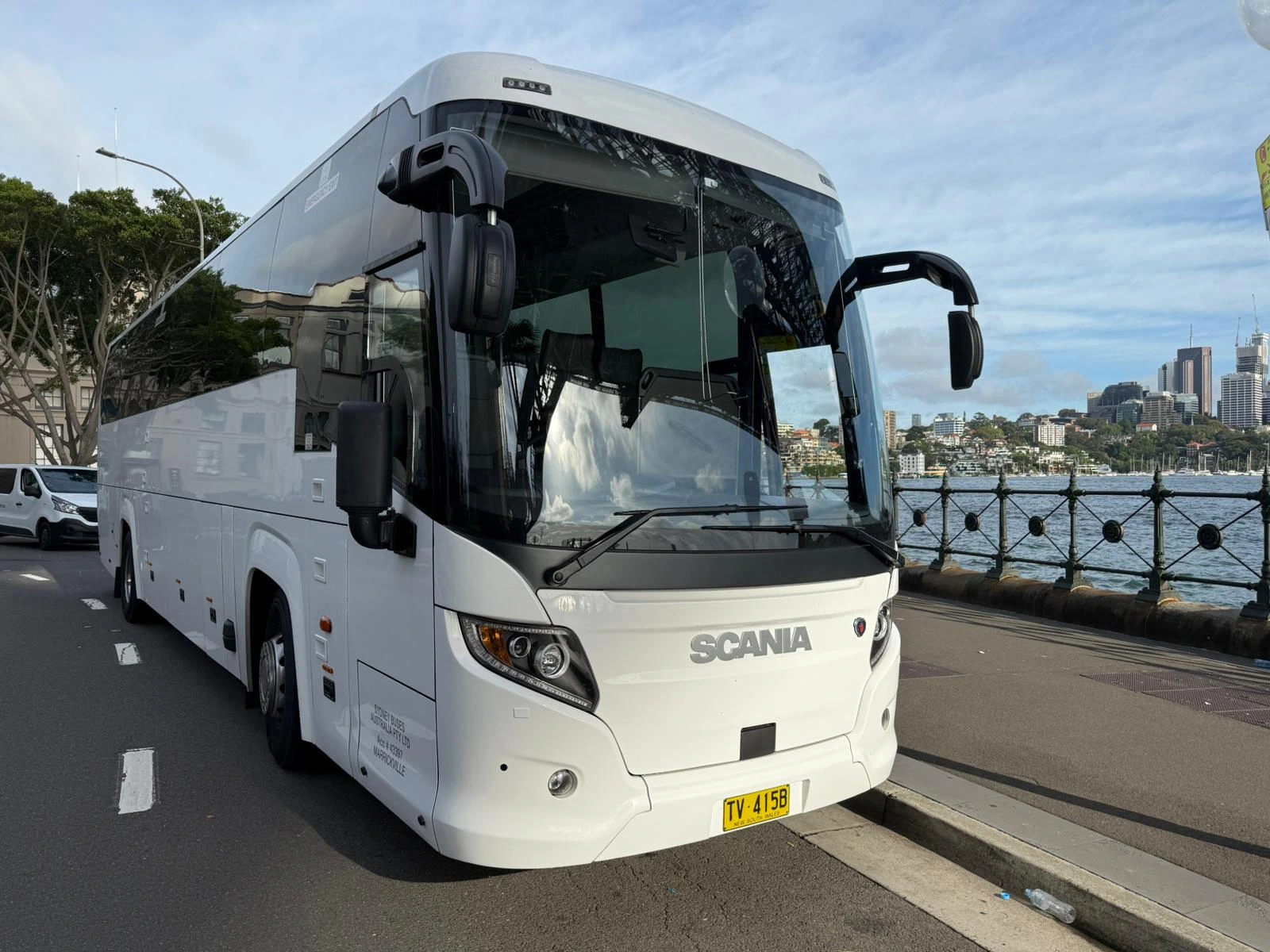
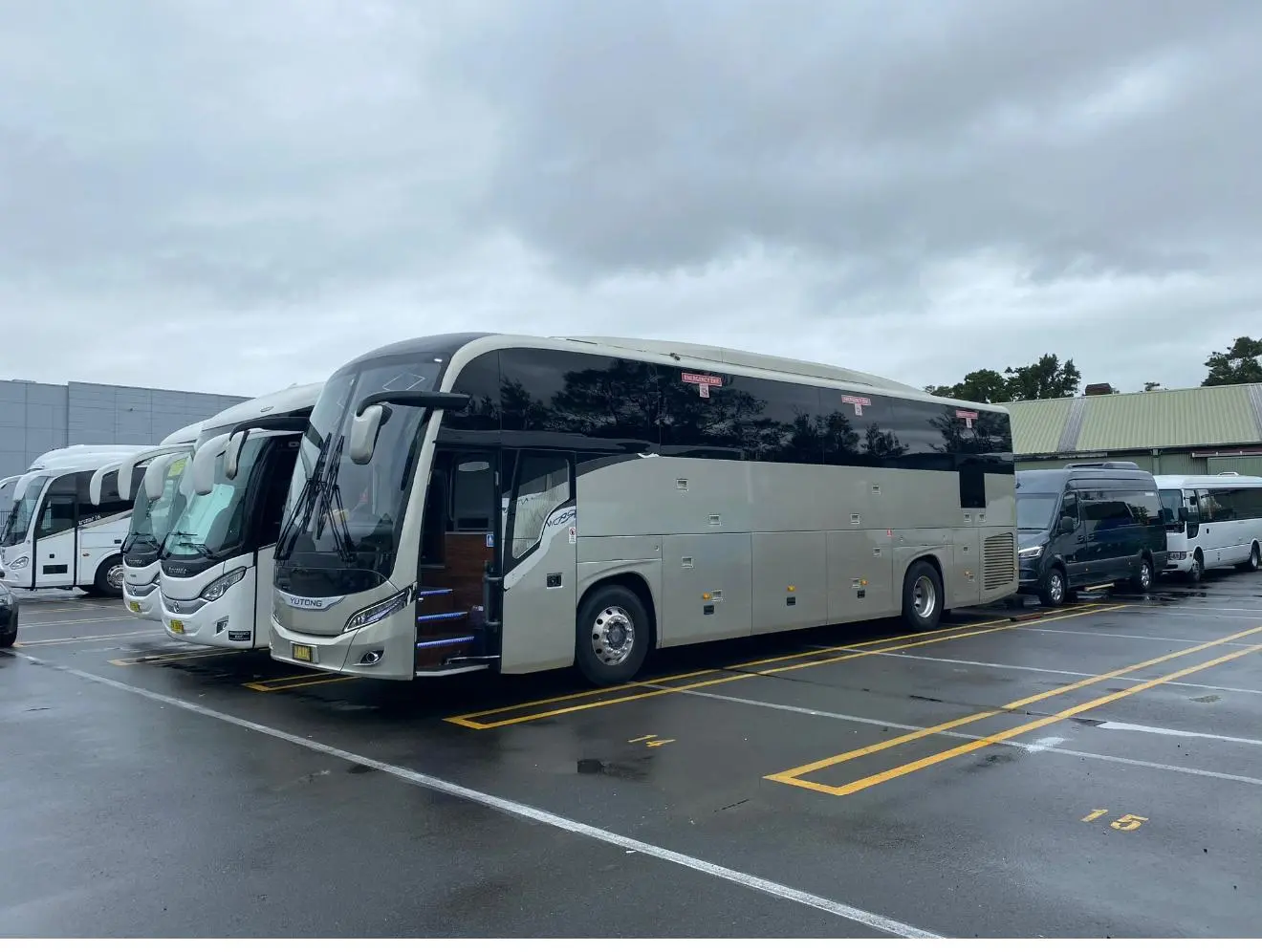
Group size is not a number, it is a band. The band picks the vehicle, and the vehicle sets the hourly rate and the minimum hire period.
| Group size | Typical vehicle | Minimum hire |
|---|---|---|
| Up to 7 | People mover | 3 hours |
| 11 to 14 | Minibus | 3 hours |
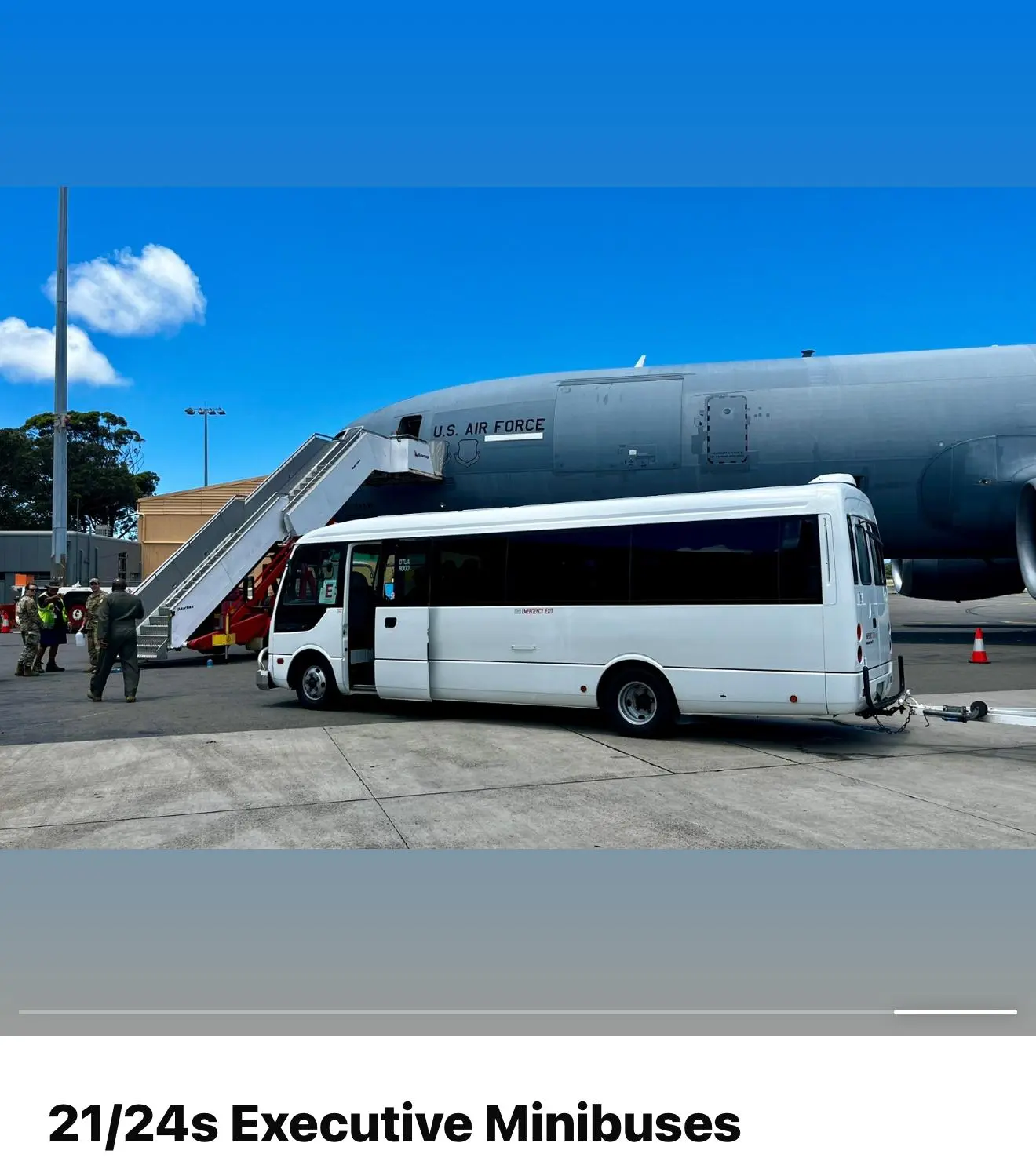
| 21 to 24 | Executive minibus | 3 hours |
| About 27 | Executive midi-coach | 4 hours |
| 48 to 57 | Full-size coach | 4 hours |
| 58 or more | Coordinated convoy | Quoted per event |
Approximate is fine. “About 40” lands on the same vehicle as 38 or 43. What does not work is a range that spans two classes, because “somewhere between 20 and 45” is two different quotes. Look at the vehicle ladder from 7 to 57 seats and pick the band you are in.
What it locks: the rate, the minimum hire, and the physical size of the vehicle, which then governs Decision 4.
What it costs to change: moving up a class changes the hourly rate and can move the minimum hire from three hours to four. Moving from one vehicle to two changes it more than that, because you are then paying for two drivers and two minimums.
The trap: luggage. Seat count is only half of capacity. A group of 25 with day bags and a group of 25 with check-in suitcases are different vehicles, because the underfloor bay becomes the constraint rather than the seats.
Decision 3: Get the quote before you get the approval
Send the pick-up suburb, the date and the approximate group size. That is enough to start, takes about two minutes, and a fixed written quote with the vehicle named comes back within two business hours during office hours.
What it locks: a real number you can put in front of an approver, instead of an estimate you will have to correct.
What it costs to change: nothing. A quote is not a booking. What costs you is going to a committee with a guess, getting a figure approved that turns out to be wrong, and having to go back.
Check five things when it arrives: the vehicle and seat count, the hours the price is built on and which minimum applies, whether GST sits inside the total, how tolls and parking are treated, and where the cancellation terms are. Driver, fuel, vehicle insurance and GST are inside the quoted rate. Tolls and parking, driver accommodation on multi-day trips, public holiday and after-hours loading, and waiting time beyond the booked window are confirmed in advance and priced separately.
Decision 4: Find a place the vehicle can legally and physically stop
This is the decision organisers skip, and it is the one that produces a coach idling around a block while 50 people stand in the wrong place.
Three questions, in order:
- Can the vehicle physically get there? A full-size coach exceeds 2.8 metres in height. That rules out most multi-storey and shopping-centre car parks before you consider anything else. Check turning room too: a street a coach cannot turn around in is not a pick-up point.
- Can it legally stop there? A coach carrying passengers for hire or reward counts as a public bus under rule 183 of the Road Rules 2014, so it may stop in a bus zone to set down or pick up passengers. It may not wait or lay over there, and the bus zone sign always governs. Set-down and pick-up only.
- Does the venue publish its own rule? Some do, and where they do, the venue rule beats your plan. The Sydney Opera House states that buses and coaches cannot park onsite and that large buses must disembark passengers on Macquarie Street. ICC Sydney directs coach drop-off to Iron Wharf Place off Darling Drive, with coach parking arranged through a dedicated ICC Sydney Event Manager.
For every other venue, ask three questions in writing and keep the reply: where does a coach set down, where does a coach wait between the drop-off and the pick-up, and is there a height limit on the approach. Waiting is the one people forget. A coach cannot circle indefinitely and it cannot sit in a bus zone.
What it locks: the walking distance for your group, and therefore the assemble time in Decision 5.
What it costs to change: on the day, roughly fifteen to twenty minutes and a lot of goodwill.
Decision 5: Set the booked window, not just the departure time
You are not buying a trip, you are buying a vehicle and a driver for a window of time. Decide whether the vehicle waits with you or is released and returns later. Both are normal and they price differently, because a held vehicle is committed for the whole period.
What it locks: the price, which is built on the booked window against the published hourly rates and minimum hire periods. Waiting time beyond the booked window is priced separately and confirmed in advance.
What it costs to change: extending on the day is the expensive version of a decision that costs nothing in advance. There is also a limit that is not commercial. Charter work sits inside the heavy vehicle fatigue regime, so a driver cannot simply agree to stay another two hours because the speeches ran long. Build the finish time you actually need into the booking.
Sydney note: if any leg runs between 8 and 9.30am or between 2.30 and 4pm, expect 40 km/h school zones on the route. Most zones operate in those windows on notified school days, the sign always governs, and they do operate on school development days even though students are not there.
Decision 6: Name the day-of contact
One person, named in the booking, whose phone is on and answered, who is not performing a role that makes them unreachable.
What it locks: who the driver calls when something needs a decision, and who calls the depot when something needs escalating.
What it costs to change: nothing in advance, everything on the day. Driver name, mobile and vehicle registration are sent 24 hours before travel. That message needs to reach a person who will still be contactable at the moment the coach arrives.
The wrong choices are predictable: the bride, the groom, the MC, the conference chair, the teacher supervising the group, and anyone else who will be mid-task at exactly the moment the coach pulls in.
Decision 7: Put it in writing
Confirm in a single email, and keep the reply:
- Vehicle type and seat count
- Date, pick-up address and pick-up time, expressed as when the vehicle should be on the kerb
- Every stop in travel order
- The hard arrival time and place
- Finish time and whether the vehicle waits or is released
- Day-of contact name and mobile
- Anything unusual: wheelchair access, children travelling, alcohol on a private function, an early start, a public holiday
- Billing details, including a purchase order number where one is required
What it locks: the thing you can point at if the day goes sideways. Verbal variations do not survive contact with a busy morning.
Decision 8: Decide the last bus
Every group trip has stragglers. Decide now, in writing, what happens to them.
State a departure time for the final service, state that it will leave at that time, and state what the alternative is for anyone who misses it. Then tell your group, twice: once when you send the details and once on the day.
What it locks: the driver’s finish time, which is not infinitely flexible under the fatigue rules, and your own peace on the night.
What it costs to change: an unresolved last bus is how a well-run event ends in a car park argument at 11.40pm.
The master checklist
Copy this block. Tick as you go.
Six to eight weeks out (four to eight weeks for December, race days, school excursion season and long weekends)
- [ ] Fixed point written as a hard arrival time and place
- [ ] Approximate group size, in a single vehicle band
- [ ] Pick-up suburb and date sent for a quote
- [ ] Written quote received, vehicle named, inclusions checked
- [ ] Budget approved
- [ ] Booking confirmed with the deposit set out in the quote
Two to four weeks out
- [ ] Pick-up address confirmed, with height and turning room checked
- [ ] Venue asked in writing where a coach sets down and where it waits
- [ ] Every stop listed in travel order
- [ ] Booked window agreed, including whether the vehicle waits or is released
- [ ] Luggage and equipment declared
- [ ] Accessibility needs declared, so an appropriate vehicle is allocated
- [ ] Day-of contact named, with a mobile that will be answered
One week out
- [ ] Head count firmed
- [ ] Run sheet sent to the operator and to your own team
- [ ] Group told the assemble time, the pick-up point and the last bus
- [ ] Billing details and any purchase order number confirmed
Twenty-four hours out
- [ ] Driver name, mobile and vehicle registration received and saved
- [ ] Day-of contact has the driver’s number in their phone, not in an email
- [ ] Weather checked and the wet plan confirmed if there is one
- [ ] Last bus time restated to the group
On the day
- [ ] Assemble time communicated as earlier than departure time
- [ ] Head count taken at each boarding
- [ ] Head count taken again before every departure from a stop
- [ ] Last bus departed on the stated time
What organisers forget most often
- Where the coach waits. Everyone plans the drop-off. Almost nobody plans the two hours in between.
- Luggage. Declared late, it changes the vehicle.
- The assemble time. Telling a group “the bus leaves at 7” reliably produces a 7.20 departure.
- The finish time. Built too tight, it collides with a fatigue limit that cannot be negotiated on the night.
- The purchase order number. Schools, councils and larger companies need it on the invoice from the start, not after.
Frequently asked questions
How far ahead should I book group transport in Sydney?
Two to four weeks covers most jobs. Allow four to eight weeks for December, race days, school excursion season and long weekends, when demand across the whole Sydney fleet tightens at once.
Can I get a quote before I know the exact numbers?
Yes. Pick-up suburb, date and approximate group size is enough to start, provided the approximation sits inside one vehicle band rather than straddling two.
Where can a coach legally stop in Sydney?
A charter coach counts as a public bus for rule 183 of the Road Rules 2014, so it may stop in a bus zone to set down or pick up passengers, subject to what the sign says. It may not wait or lay over in one. Where a venue publishes its own coach position, that position applies.
Do I need to book coach parking as well as the coach?
At some venues, yes. ICC Sydney arranges coach parking through a dedicated Event Manager. Others have no published system at all. Ask the venue directly, in writing, and treat “we will sort it on the day” as a no.
What should be confirmed in writing before the day?
Vehicle and seat count, date, pick-up address and time, stop sequence, hard arrival time, finish time, whether the vehicle waits, the day-of contact, and billing details. If it matters on the day, it belongs in an email.
Next step
Fill in the master checklist as far as you can get today, then send the trip through to the office or call 02 9469 6600. Even a half-completed checklist is enough to quote from, and the gaps in it tell us what to ask about.
Sources
- NSW Legislation, Road Rules 2014 (rule 183 and Dictionary), https://legislation.nsw.gov.au/view/html/inforce/current/sl-2014-0758. Accessed 7 September 2026.
- Sydney Opera House, Plan your excursion, https://www.sydneyoperahouse.com/schools/plan-your-excursion. Accessed 7 September 2026.
- ICC Sydney, Getting here, https://iccsydney.com.au/visitors/getting-here/. Accessed 7 September 2026.
- Transport for NSW, School zones, https://www.transport.nsw.gov.au/roadsafety/community/schools/school-zones. Accessed 7 September 2026.