Under NSW policy every planned school excursion needs a risk assessment plan, and transport is an express input. The transport section should cover six things: boarding and alighting, vehicle suitability and capacity, driver competence, the route and its stops, supervision on board, and what happens when something fails. Each risk needs a control, and each control needs evidence you can point to. The principal signs off. There is no numeric supervision ratio to apply.
What the policy actually asks for
The operative document is Excursions and variations of routine (PD-2005-0290-04), version 01.1.0 dated 6 May 2025. It absorbed the old PD/2004/0010 in January 2025, so any template on a school drive that cites the 2004 policy number needs replacing.
Three things in the policy shape the transport section. A risk assessment plan is mandatory for every planned excursion. Transport is named as an input to it. And the organiser has to check licence and insurance, confirm the licensed passenger capacity for buses, and confirm that heavy vehicles are registered appropriately.
Nothing in the policy sets numeric supervision ratios for K-12. The principal determines staffing, using average class sizes as a guide. Numeric ratios exist only for public preschools. If a template you have inherited quotes one adult per ten primary students as departmental policy, delete the citation. The staffing decision stays, but the source does not exist.
The six transport risk lines
A transport section that covers these six lines will hold up in a review. Most schools already have a house format, so use your own columns rather than adopting a supplier’s.
| Risk | What can go wrong | Controls to record | Evidence behind the control |
|---|---|---|---|
| Boarding and alighting | Students crossing traffic, loading into a live parent queue, headcount lost at the door | Named loading point away from the parent queue, staff at both doors, count on and count off | Site sketch or photo of the loading point, staff allocation in the day plan |
| Vehicle suitability and capacity | Group exceeds seating, no belts when the plan assumed belts, no accessible access | Licensed passenger capacity confirmed against headcount including staff, seatbelt fitment confirmed in writing, accessibility confirmed | Operator’s written capacity and fitment confirmation |
| Driver competence | Driver not authorised, no child-related screening, long day exceeds work limits | Bus Driver Authority confirmed, Working With Children Check number recorded for a dedicated school run, itinerary checked against driver work limits | Operator confirmation in writing, itinerary with departure and return times |
| Route and stops | No legal place to stop, venue does not admit coaches, unexpected road works | Set-down and pick-up points confirmed with the operator and the venue, alternative stop identified | Venue transport page, operator confirmation of the stop |
| Supervision on board | Students unsupervised at the rear, medical or behaviour need unmanaged, wrong bus on a multi-vehicle trip | Seating plan, staff spread across the vehicle, named staff member holding medical information, bus lists posted at the door | Seating plan and bus list in the day pack |
| Contingency | Vehicle failure, late return past bell time, student separated from the group | Operator replacement process understood, driver mobile in the day pack, school contact tree, late-return message to families drafted in advance | Driver name, mobile and registration supplied before travel |
Fill the residual risk column your school normally uses. The point of the table is that every control has something behind it, not that every cell contains a sentence.
Risk one: boarding and alighting
Most excursion incidents that get written up happen within ten metres of the vehicle, not on the road.
Two Sydney-specific things belong here. The first is the morning parent queue. A coach that loads inside the same kerb space parents are using for drop-off puts students between moving cars. Pick a loading point away from it, and if that means loading five minutes after the bell rather than five minutes before, write that into the timing.
The second is the school zone itself. Most NSW school zones are 40 km/h between 8:00 and 9:30am and between 2:30 and 4:00pm, though Transport for NSW says most, not all, and the sign always governs. Zones apply on all notified school days and, importantly for a planning day excursion, they also operate on school development days. A coach arriving at 8:20am is arriving into a 40 km/h zone with pedestrians, which is exactly the environment the control is written for.
Risk two: vehicle suitability and capacity
Confirm licensed passenger capacity against the real number: students, plus supervising staff, plus any parent helpers. On a two-vehicle booking, run the sum for each vehicle, because the split almost never lands evenly once staff are allocated.
Seatbelts deserve a specific line rather than an assumption. NSW did not adopt the bus-passenger carve-out other states rely on, so on a coach fitted with seatbelts, wearing them is mandatory in NSW for every passenger aged sixteen or over, enforceable against the passenger. The NSW driver-responsibility rule excludes bus passengers, so the driver does not commit an adult passenger’s offence. Departmental policy expresses a preference for seatbelt-fitted vehicles “where practical” rather than requiring them, so if you need belts for this trip, that is your control and it needs to be booked, not hoped for. Count belted seats including staff.
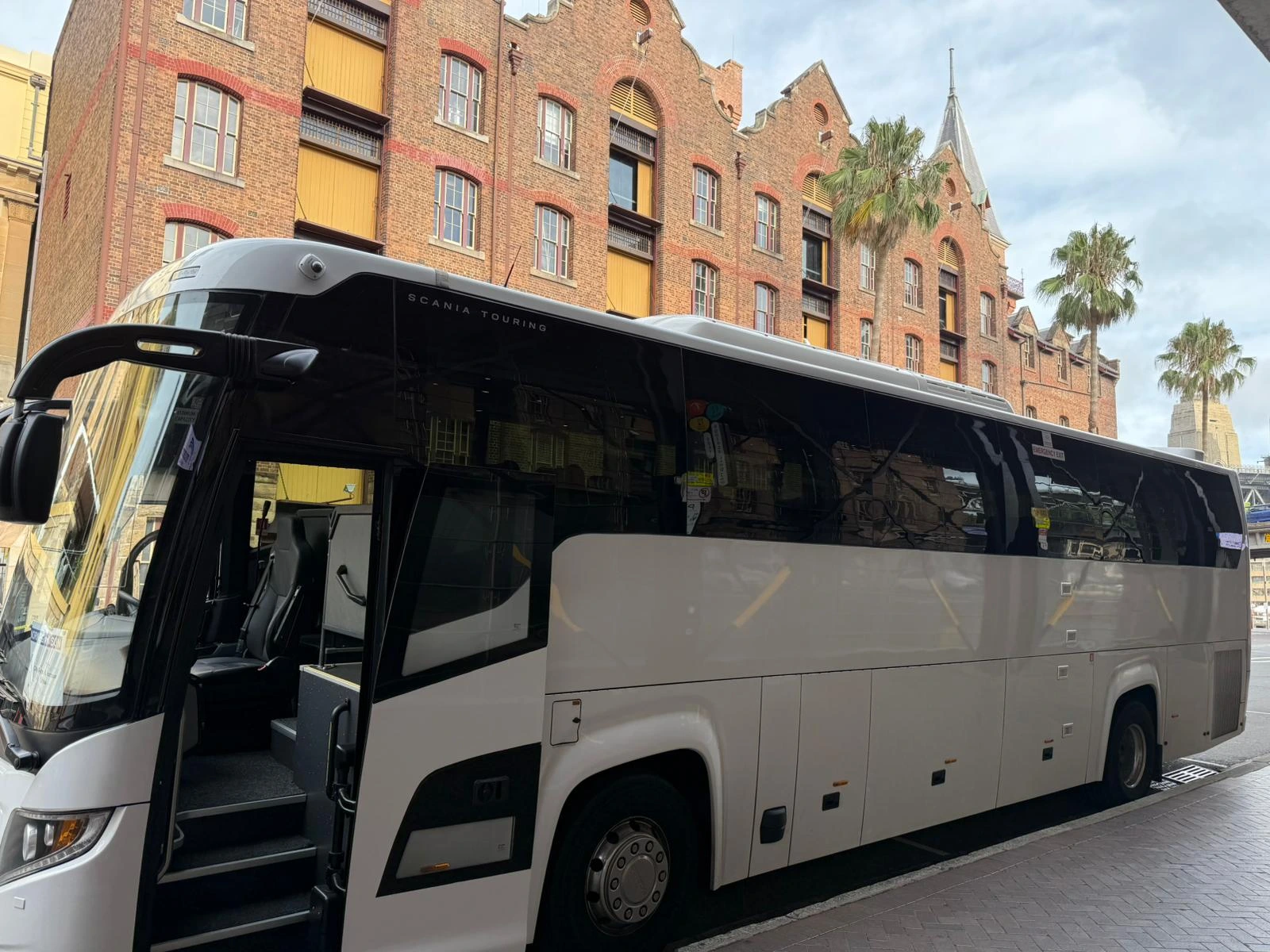
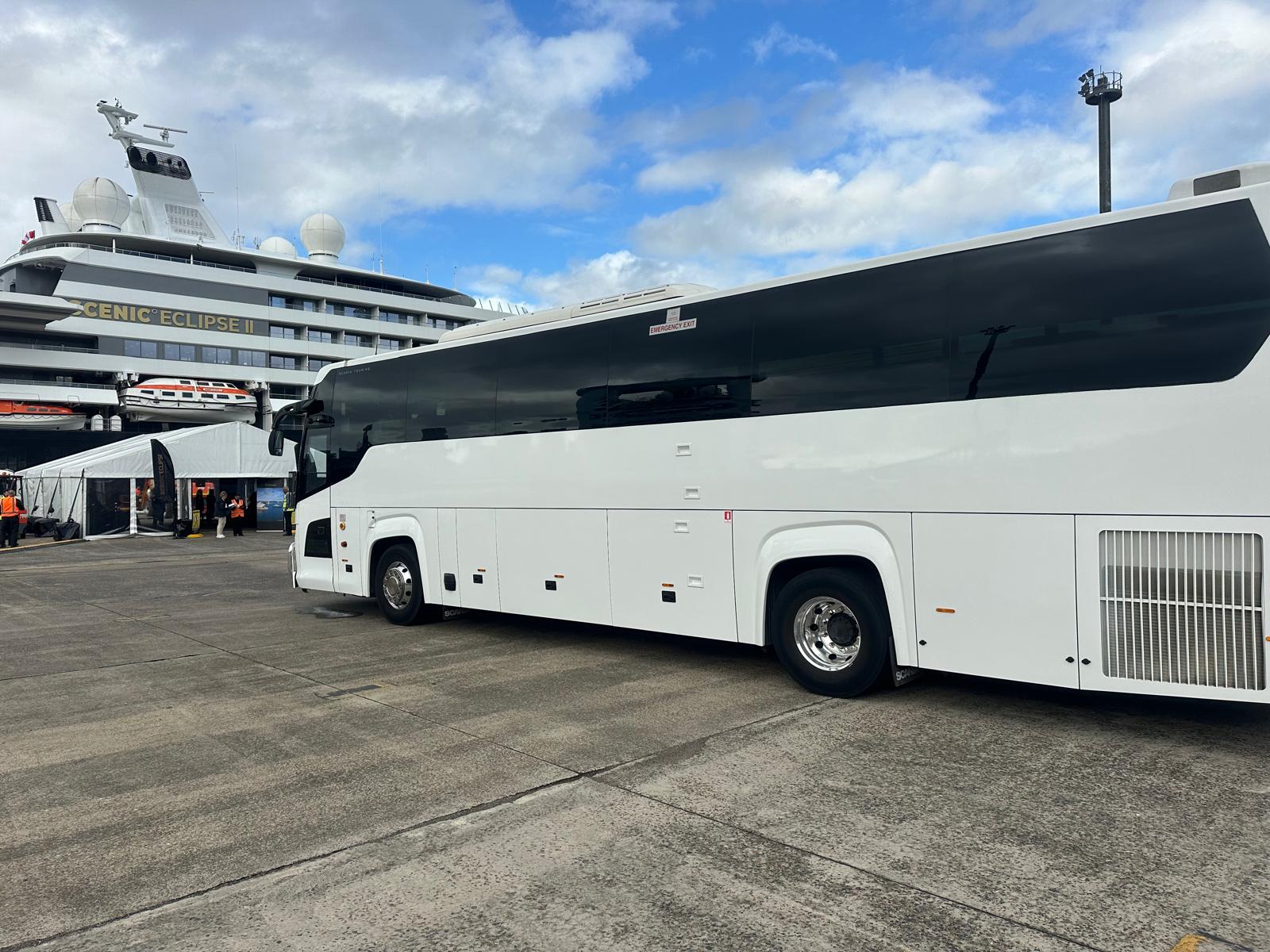
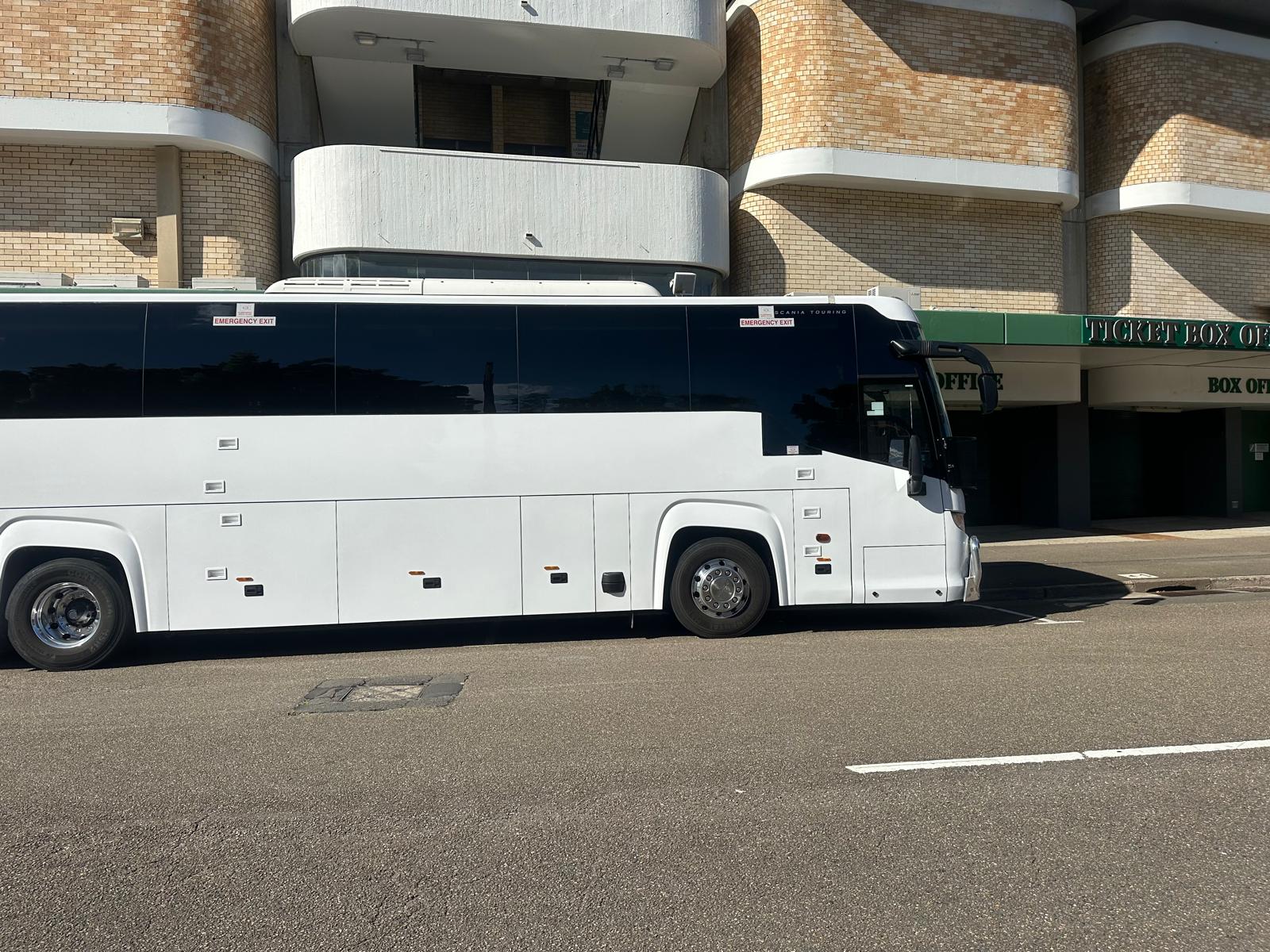
The Sydney Buses & Coaches fleet runs from seven to fifty-seven seats, excluding the driver, and vehicle seat counts are published, which makes the capacity line easy to evidence. Groups of fifty-eight and above are handled as a coordinated convoy.
Risk three: driver competence and fatigue
For the competence half, record two separate things: a current Bus Driver Authority, required to drive a bus or coach seating thirteen or more, and a Working With Children Check where the service is a dedicated school run. They are different clearances issued by different bodies and one does not imply the other.
The fatigue half matters on long-day excursions and is often written incorrectly. A commercial charter is a public passenger service, so the driver of a fatigue-regulated bus is inside the Heavy Vehicle National Law fatigue regime. There is no charter exemption once a fare is involved, and the 100 kilometre radius is a record-keeping tier rather than an exemption from work and rest limits.
What that means in a risk assessment is practical rather than legal. A day that runs 7:00am to 7:00pm with a driver who started before you did is a real constraint on your itinerary, and it is the operator’s job to tell you where the limit falls. Send the draft itinerary with the booking request and ask the operator to confirm it works for a solo driver. Note the answer.
Risk four: route and stops
This is the line most likely to be filled in with an assumption.
A charter coach counts as a public bus for the NSW bus zone rule, which means it may lawfully stop in a bus zone to set down or pick up passengers. The limit is absolute and easy to miss: set down and pick up only, no waiting and no layover, and the rule gives way to anything the bus zone sign itself says. So a bus zone can be a legal stop for your group and still be useless as a place for a coach to wait for ninety minutes while a tour runs.
Venues frequently decide this for you. The Sydney Opera House schools guidance is direct: buses and coaches cannot park onsite, and large buses must disembark passengers on Macquarie Street. That single line changes the walk time, the meeting point, the head count location and the pick-up instruction for the afternoon. Read the venue’s own transport page before writing the route line, and confirm the set-down point with the operator rather than nominating one from a map.
Risk five: supervision on board
Staffing is the principal’s decision, informed by this assessment. What the transport section can do is make that decision easy to implement.
Record where staff sit rather than only how many there are. On a fifty-seven seat coach, staff clustered at the front supervise the front. Record the bus list, because on a two-coach excursion the risk is not supervision, it is a student on the wrong vehicle at the wrong time. Record who is holding medical information and whether that person is on the same vehicle as the student concerned.
Risk six: contingency
Write down what happens if a vehicle does not arrive or fails in transit. Sydney Buses & Coaches states that if a vehicle fails, a replacement is arranged and the customer is kept informed, and that driver name, mobile and vehicle registration are sent twenty-four hours before travel. Get those details into the day pack the supervising teacher carries rather than leaving them in the coordinator’s inbox.
Add the late-return branch. Families need a message and the school needs someone rostered to send it. That is a two-line control that prevents a forty-minute traffic delay turning into thirty phone calls.
A worked example: Year 8 – inner west school, Sydney Opera House
Assume 52 students, 5 staff, one vehicle, 9:00am departure, 2:15pm return.
Capacity. 57 passengers required. A 57-seat coach is the fit and there is no spare capacity, so a late parent helper needs the operator to be told, not squeezed in. Evidence: operator’s written capacity confirmation naming the vehicle.
Loading. Bell is 8:50. Load at 8:55 from the staff car park entrance rather than the front kerb, which is still full of parent traffic inside the 40 km/h school zone. Two staff at the door, count on, count off. Evidence: site photo in the day plan.
Route and set-down. Buses and coaches cannot park onsite at the Opera House, and large buses disembark on Macquarie Street. So the plan is set down on Macquarie Street, walk in as a group, and the coach leaves the area rather than waiting at the kerb. Pick-up is a separate arrangement confirmed with the driver, at a time and place agreed before departure. Evidence: venue transport page plus the operator’s confirmation.
Driver. Driver Authority confirmed, Working With Children Check number on file. Day runs about five and a half hours of elapsed time, comfortably inside a solo driver’s limits, but the itinerary went to the operator anyway and came back confirmed. Evidence: operator email.
Contingency. Driver mobile and registration in the day pack. If the coach fails, the operator arranges a replacement and calls the coordinator. Deputy principal drafts the SMS to families if return slips past 3:00pm.
That is a transport section that a reviewer can follow without asking a single supplementary question.
Evidence: what sits behind each control
A control with no evidence is an intention. The documents that support the transport section are the same ones the school office should already be collecting from the operator: the Certificate of Accreditation, a certificate of currency, written confirmation of Driver Authority and Working With Children Check status, licensed passenger capacity and seatbelt fitment for the allocated vehicle.
Ask for them at enquiry rather than at booking. Accreditation and insurance are not job-specific, so a competent operator can send both the same day.
Frequently asked questions
Does the NSW Department of Education publish a supervision ratio for excursions?
Not for K-12. PD-2005-0290-04 has the principal determine staffing using average class sizes as a guide. Numeric ratios exist only for public preschools. Any “one to ten” figure attributed to the department for a school-age excursion is not sourced.
Who signs the transport section?
The excursion sits under the principal’s approval, so the principal or their delegate signs. The coordinator’s job is to make sure every control in the transport section has something behind it before it goes up.
Do we have to book a coach with seatbelts?
Departmental policy prefers seatbelt-fitted vehicles where practical rather than requiring them. If your assessment concludes belts are a needed control for this trip, then book a belt-fitted vehicle and record it. Where belts are fitted, NSW law requires passengers aged sixteen and over to wear them.
How do we assess a long day?
Send the draft itinerary to the operator with departure and return times and ask them to confirm it works for a solo driver under the heavy vehicle fatigue rules. A charter service is not exempt from those rules, so the answer is a genuine planning constraint rather than a formality.
What if the venue will not let a coach wait?
Plan the trip as a set-down and a separate pick-up. A coach may stop in a bus zone to set down or pick up but may not wait there, and several major Sydney venues state directly that coaches cannot park onsite. Agree the pick-up time and place with the driver before departure.
Next step
If you are drafting a transport section now, send the operator your date, pick-up point, group size and draft itinerary. A written quote naming the vehicle answers the capacity line, and the compliance documents answer the driver and operator lines.
Sydney Buses & Coaches handles school excursion transport and can supply the accreditation and check documentation a school file needs. Call 02 9469 6600 or send the trip details for a written quote.
Sources
- NSW Department of Education, Excursions and variations of routine (PD-2005-0290-04), https://education.nsw.gov.au/policy-library/policies/pd-2005-0290-04. Accessed 7 September 2026.
- NSW Legislation, Road Rules 2014, https://legislation.nsw.gov.au/view/html/inforce/current/sl-2014-0758. Accessed 7 September 2026.
- Transport for NSW, School zones, https://www.transport.nsw.gov.au/roadsafety/community/schools/school-zones. Accessed 7 September 2026.
- National Heavy Vehicle Regulator, Heavy vehicle fatigue management, bus industry, https://www.nhvr.gov.au/safety-accreditation-compliance/fatigue-management/heavy-vehicle-fatigue-management-bus-industry. Accessed 7 September 2026.
- Sydney Opera House, Plan your excursion, https://www.sydneyoperahouse.com/schools/plan-your-excursion. Accessed 7 September 2026.