A NSW school excursion file needs six things from the bus operator: a Certificate of Accreditation, confirmation the driver holds a Bus Driver Authority, Working With Children Check evidence where the run is child-related, a certificate of currency for insurance, the licensed passenger capacity of the vehicle allocated, and a written statement on seatbelt fitment. Request all six in one email at the time of booking. None of it is decorative paperwork. The transport section of your risk assessment plan is built on it.
Why the pack exists
The operative NSW policy is Excursions and variations of routine (PD-2005-0290-04), version 01.1.0 dated 6 May 2025. It consolidated the old PD/2004/0010, which no longer stands. If a template in your school’s shared drive cites the 2004 policy number, that template is out of date.
Two things in the current policy drive the document pack. First, a risk assessment plan is mandatory for every planned excursion, and transport is an express input to it. Second, the policy places specific checks on the organiser: check licence and insurance, and for buses, confirm the licensed passenger capacity and that heavy vehicles are registered appropriately.
That is the whole reason a school office collects documents rather than trusting a booking confirmation. The policy asks the coordinator to have checked, not to have assumed. Sydney Buses & Coaches handles school and excursion transport on that basis: the paperwork is expected to arrive before the trip, not after it.
The six documents, in the order to request them
| # | Document | Who issues it | What it proves | How to verify |
|---|---|---|---|---|
| 1 | Certificate of Accreditation | Transport for NSW | The operator is accredited to run a passenger service in NSW | Ask the operator for the certificate. There is no public register |
| 2 | Bus Driver Authority confirmation | Transport for NSW, via Service NSW | The allocated driver is authorised to drive a bus seating 13 or more | Written confirmation from the operator that the driver holds a current authority |
| 3 | Working With Children Check evidence | Office of the Children’s Guardian | The driver holds a current clearance | Check number and date of birth, supplied by the operator to the school |
| 4 | Certificate of currency | The operator’s insurer | Insurance is in force for the travel dates | Cross-check the expiry date against your excursion date |
| 5 | Licensed passenger capacity | The operator, per allocated vehicle | The vehicle legally seats the group you are sending | Compare against your final headcount including supervising staff |
| 6 | Seatbelt fitment statement | The operator, per allocated vehicle | Whether the vehicle has belts, and how many belted seats | Written confirmation naming the vehicle type |
Send it as one request. Splitting it across four emails over three weeks is how excursion files end up incomplete at the approval deadline.
Document one: the Certificate of Accreditation
NSW bus operator accreditation is administered by Transport for NSW under the Passenger Transport Act 1990. Accreditation covers good repute, financial viability, passenger and public safety, and depot and maintenance capacity. A Sydney charter operator holds the Long Distance, Tourist or Charter category.
Two practical points for a school office.
There is no public register you can search. That surprises people, and it is the single most common mistake in school procurement content. The verification route is to ask the operator for its Certificate of Accreditation and file the copy. If a supplier says “look us up”, there is nothing to look up.
The commercial boundary is thirteen seats. An operator running vehicles seating thirteen or more needs Transport for NSW accreditation. A vehicle seating twelve or fewer falls under the Point to Point Transport Commission instead, which is a different regime with different obligations. If your excursion is small enough to fit a twelve-seat vehicle, ask which regime the supplier is operating under before you assume the accreditation question is answered.
Sydney Buses & Coaches publishes NSW accreditation number 43397 and provides the certificate on request for tender and procurement paperwork. You can see our NSW operator accreditation alongside the other operator details a procurement form usually asks for.
Document two: the Bus Driver Authority
A Bus Driver Authority is issued by Transport for NSW through Service NSW and is required to drive a public passenger bus or coach seating thirteen or more. Behind it sits a commercial medical no more than six months old, a National Police Check no more than three months old covering all current and former names, an approved training course, and a fit-and-proper assessment. The authority runs for three years. Drivers over sixty, and drivers with diabetes, cardiac or neurological conditions, need annual medicals.
A Driver Authority is not the same thing as a Working With Children Check, and neither substitutes for the other. Ask for both by name. An operator that answers a WWCC question by describing police checks has answered a different question.
Document three: Working With Children Check evidence
This is the item most often stated incorrectly in sector content, in both directions, so it is worth being precise.
Transport is listed child-related work under section 6(2)(l) of the Child Protection (Working with Children) Act 2012. The qualifier in the legislation is transport services especially for children, and the contact with children has to be a usual part of the work and more than incidental to it.
Applied to your booking, that means a dedicated school run is captured. A general charter carrying a mixed group of adults and children is not automatically captured. So “all bus drivers need a Working With Children Check” is wrong as a statement of law, and so is “charter drivers never need one”. What matters is the character of the service you have booked.
For a school excursion, you are booking a service for children, and you should expect a current clearance. Clearances last five years and are continuously monitored, so a clearance issued three years ago is still meaningful evidence, unlike a police check with a fixed shelf life.
Workers cannot verify their own clearance. Verification runs through the Office of the Children’s Guardian employer portal, which is why the practical exchange is the operator confirming its own checks in writing and giving the school the check numbers for the file.
Sydney Buses & Coaches states that its drivers hold a current Working With Children Check plus a Driver Authority issued by Transport for NSW, and that check numbers can be supplied to a school office before the day. Ask any operator for the same, in writing, naming the allocated driver where the driver is known at the time.
One live development worth a diary note: the Office of the Children’s Guardian published a discussion paper in November 2025 proposing that the check requirement extend to point-to-point passenger services. That is a proposal, not a rule. Re-check the position before you rely on this section in a future year.
Document four: the certificate of currency
The excursion policy asks the organiser to check insurance. In practice that means a certificate of currency naming the insured entity, the class of cover and the period of insurance. The only thing a school office really has to do with it is compare the expiry date against the excursion date, including any date change you might make later in the term.
Note the entity name on the certificate against the entity name on the quote and the invoice. Where the two differ, ask why before the trip rather than after it.
Document five: licensed passenger capacity
The policy asks organisers to confirm licensed passenger capacity for buses. Do that per vehicle, not per booking, and do it against your real headcount.
The number that matters is not the number of students. It is students plus supervising staff plus any parent helpers, and it has to sit inside the seating capacity of the specific vehicle allocated. On a large group split across two vehicles, run the sum twice, because the split is rarely even once you allocate staff across both.
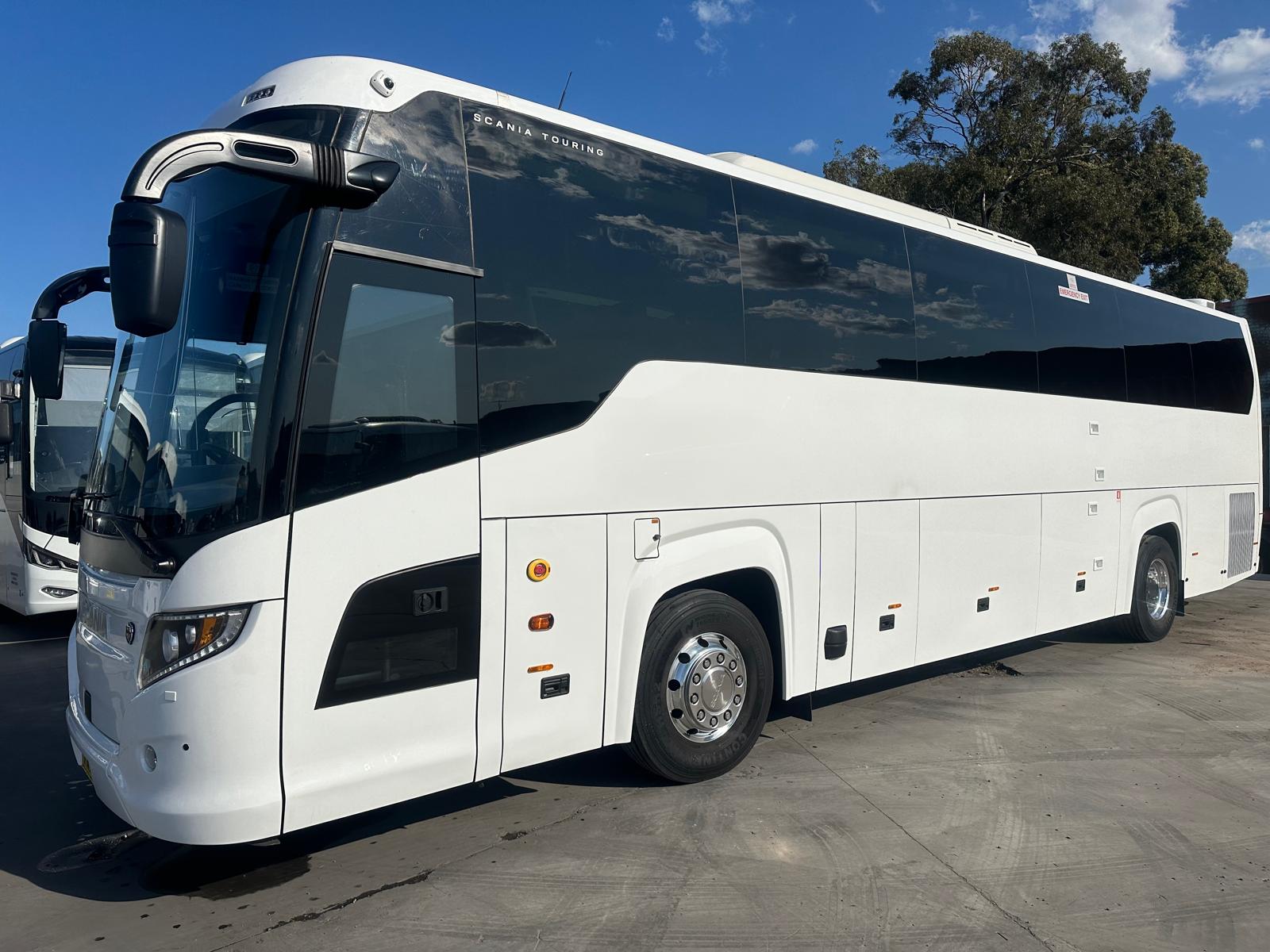
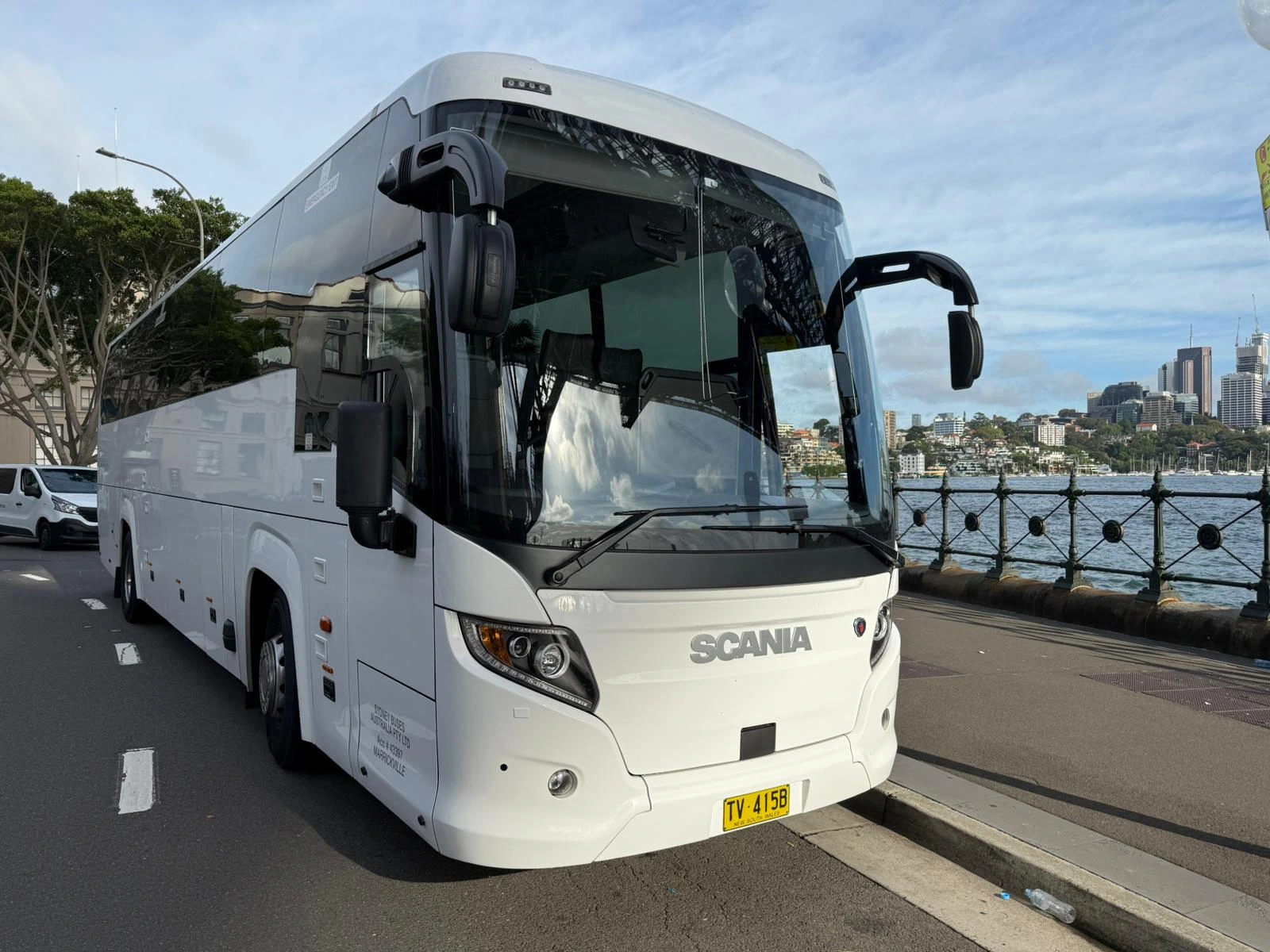
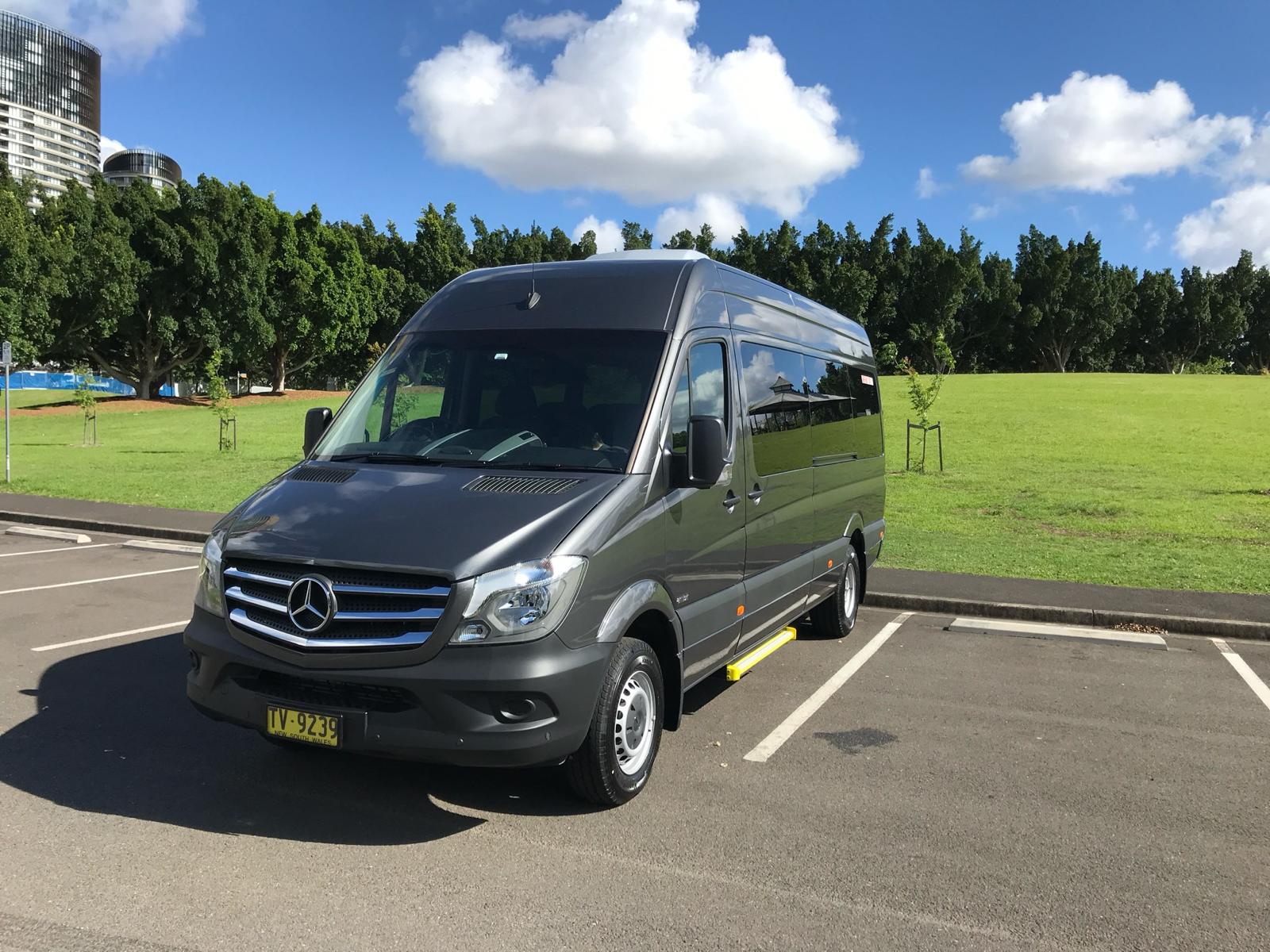
Seat counts across the Sydney Buses & Coaches fleet run from seven to fifty-seven and exclude the driver, and you can check the seat counts across the fleet when you are sizing a year group. Groups of fifty-eight or more are handled as a coordinated convoy rather than a single vehicle.
Document six: the seatbelt statement
NSW is not the same as the other states here, and the difference matters for what you tell staff and families.
Fitment is governed by Australian Design Rules. ADR 68/00 applies to heavy omnibuses built on or after 1 July 1994. ADR 68/01, which adds seatbelt reminders, applies from 1 November 2026 for new models and 1 November 2027 for new vehicles of existing models, so it is not yet in force at the time of writing.
Wearing is the part people get wrong. NSW did not reproduce the bus-passenger carve-out that other states rely on. On a coach fitted with seatbelts, wearing them is mandatory in NSW for every passenger aged sixteen or over, and that obligation is enforceable against the passenger. The NSW driver-responsibility rule expressly excludes bus passengers, so the coach driver does not commit an adult passenger’s offence. Do not tell staff the driver will police it, and do not tell families that belts are optional on a bus in NSW.
On the departmental side, PD-2005-0290-04 expresses a preference for seatbelt-fitted vehicles “where practical”. It is a preference, not a requirement. If your risk assessment says belts are needed for this particular trip, say so as your own control and book accordingly.
The count that matters when you request a belted vehicle is belted seats including supervising staff, not seats in total.
The supervision ratio trap
There are no numeric supervision ratios for K-12 in NSW departmental policy. The principal determines staffing, using average class sizes as a guide. Numeric ratios exist only for public preschools.
Sector blogs, including transport-supplier blogs, routinely publish “one adult to ten primary students” or “one to fifteen secondary” and attribute it to the department. Those numbers are not departmental policy, and quoting them in an excursion file introduces a claim your principal will not be able to source.
If a transport supplier hands you a supervision ratio, treat it as their commercial preference and take it out of the departmental section of your file. Staffing is a decision for the principal, informed by the risk assessment.
How the pack feeds the risk assessment plan
The documents are inputs, not the assessment. The transport section of the risk assessment plan uses them roughly like this:
- Operator competence: accreditation certificate on file, insurance current for the travel dates.
- Driver competence: Driver Authority confirmed, Working With Children Check number recorded where the service is a child transport service.
- Vehicle suitability: licensed passenger capacity confirmed against headcount, seatbelt fitment recorded, wheelchair access confirmed if any student or staff member needs it.
- Route and stops: pick-up and set-down points confirmed as legal and workable for the vehicle size booked.
- Contingency: what happens if a vehicle fails, who the school calls, and who tells families.
On that last point, Sydney Buses & Coaches states that if a vehicle fails, a replacement is arranged and the customer is kept informed, and that driver name, mobile and vehicle registration are sent twenty-four hours before travel. Put the driver contact into the day plan the supervising teacher carries, not just into the coordinator’s inbox.
When to request each document
Lead times published by Sydney Buses & Coaches are two to four weeks for most jobs, and four to eight weeks in peak periods, which include December, race days, school excursion season and long weekends. Build the paperwork request into that window rather than after it.
| Timing | Action |
|---|---|
| At enquiry | Ask for the Certificate of Accreditation and the certificate of currency. Neither is job-specific, so both can be supplied immediately |
| At booking | Confirm licensed passenger capacity and seatbelt fitment for the vehicle class allocated |
| At quote acceptance | Ask for written confirmation that drivers on school work hold a current Driver Authority and Working With Children Check, and how check numbers will be supplied |
| Two weeks out | Lock the headcount, including staff, and reconfirm capacity if the number moved |
| Twenty-four hours out | Record driver name, mobile and vehicle registration in the day plan |
A written quote from Sydney Buses & Coaches comes back within two business hours and names the vehicle, which is usually enough to close out items five and six early.
The NSW calendar constraint nobody plans for
Excursion dates collide with the term calendar more often than they collide with availability.
For NSW government schools in the Eastern division, 2026 terms run 2 February to 2 April, 22 April to 3 July, 21 July to 25 September, and 13 October to 17 December. In 2027 they run 3 February to 9 April, 29 April to 2 July, 20 July to 24 September, and 12 October to 20 December. Schools in the Western division, the late-start schools in far west NSW, differ in Term 1 only: students start 9 February in 2026 and 10 February in 2027. Catholic systemic and independent schools set their own dates.
The dead zone at each term boundary is wider than the published dates suggest, because school development days are staff-only. An excursion cannot fall on one. When you are working backwards from an approval deadline, count the development days out of your available window first, then check the current calendar on the departmental site before you commit a date.
What to do when a supplier will not produce the pack
You will occasionally meet resistance, usually in one of three forms.
“We are fully accredited, you can check the register.” There is no register. Ask again for the certificate.
“Our drivers all have clearances, we do not give out numbers.” A school office asking for a check number for its excursion file is a normal request in this sector. If the answer stays no, note it in the file and take the decision to the approver rather than absorbing it yourself.
“Ratios are one to ten, that is the departmental rule.” It is not. Treat the rest of that supplier’s compliance advice with the same care.
Frequently asked questions
Does the school need to see the driver’s actual Working With Children Check card?
No. The exchange that works is the operator confirming in writing that the driver holds a current clearance and supplying the check number, which is what a school office files. Workers cannot verify their own clearance, and verification runs through the Office of the Children’s Guardian employer portal.
Is a bus driver’s Driver Authority enough on its own for a school excursion?
No. A Driver Authority establishes that the driver is authorised to drive a bus seating thirteen or more. It says nothing about child-related work screening. For a dedicated school run, ask for both.
Must the coach have seatbelts for a NSW school excursion?
Departmental policy expresses a preference for seatbelt-fitted vehicles where practical rather than a requirement. If your own risk assessment concludes belts are needed for the trip, book a belt-fitted vehicle and record it as your control. Count belted seats including supervising staff.
What supervision ratio should go in the excursion plan?
Whatever the principal determines. NSW departmental policy sets no numeric ratios for K-12 and points to average class sizes as a guide. Numeric ratios exist only for public preschools, so a K-12 excursion plan should not quote one as departmental policy.
How far ahead should a school book excursion transport?
Two to four weeks covers most jobs. Peak periods, which include December, race days, excursion season and long weekends, want four to eight weeks. Requesting the compliance documents at enquiry rather than at booking buys back most of the difference.
Can the operator confirm capacity before we finalise numbers?
Yes, by vehicle class. Confirm the final licensed passenger capacity check once the headcount including staff is locked, because that is the number the policy asks you to check against.
Next step
If you are building an excursion file now, ask for the pack in one email and give the operator your date, pick-up suburb and approximate group size at the same time so the vehicle can be named in the quote.
Sydney Buses & Coaches can supply the Certificate of Accreditation, Working With Children Check numbers and Driver Authority confirmation to a school office before the day. Call 02 9469 6600, or send the trip details and ask for the compliance pack with your quote.
Sources
- NSW Department of Education, Excursions and variations of routine (PD-2005-0290-04), https://education.nsw.gov.au/policy-library/policies/pd-2005-0290-04. Accessed 7 September 2026.
- Transport for NSW, Applying for bus operator accreditation, https://www.nsw.gov.au/departments-and-agencies/transport-for-nsw/bus-operators-nsw/applying-for-bus-operator-accreditation. Accessed 7 September 2026.
- NSW Legislation, Passenger Transport Act 1990, https://legislation.nsw.gov.au/view/whole/html/inforce/current/act-1990-039. Accessed 7 September 2026.
- Service NSW, Apply for a bus driver authority, https://www.service.nsw.gov.au/transaction/apply-for-a-bus-driver-authority. Accessed 7 September 2026.
- Office of the Children’s Guardian, Who needs a Working With Children Check, https://ocg.nsw.gov.au/working-children-check/who-needs-check. Accessed 7 September 2026.
- NSW Legislation, Child Protection (Working with Children) Act 2012, section 6, https://legislation.nsw.gov.au/view/html/inforce/current/act-2012-051#sec.6. Accessed 7 September 2026.
- Transport for NSW, Seatbelts, https://www.transport.nsw.gov.au/roadsafety/topics-tips/seatbelts. Accessed 7 September 2026.
- NSW Legislation, Road Rules 2014, Part 16, https://legislation.nsw.gov.au/view/whole/html/inforce/current/sl-2014-0758. Accessed 7 September 2026.
- NSW Department of Education, School calendar 2026, https://education.nsw.gov.au/schooling/calendars/2026. Accessed 7 September 2026.
- NSW Department of Education, School calendar 2027, https://education.nsw.gov.au/schooling/calendars/2027. Accessed 7 September 2026.