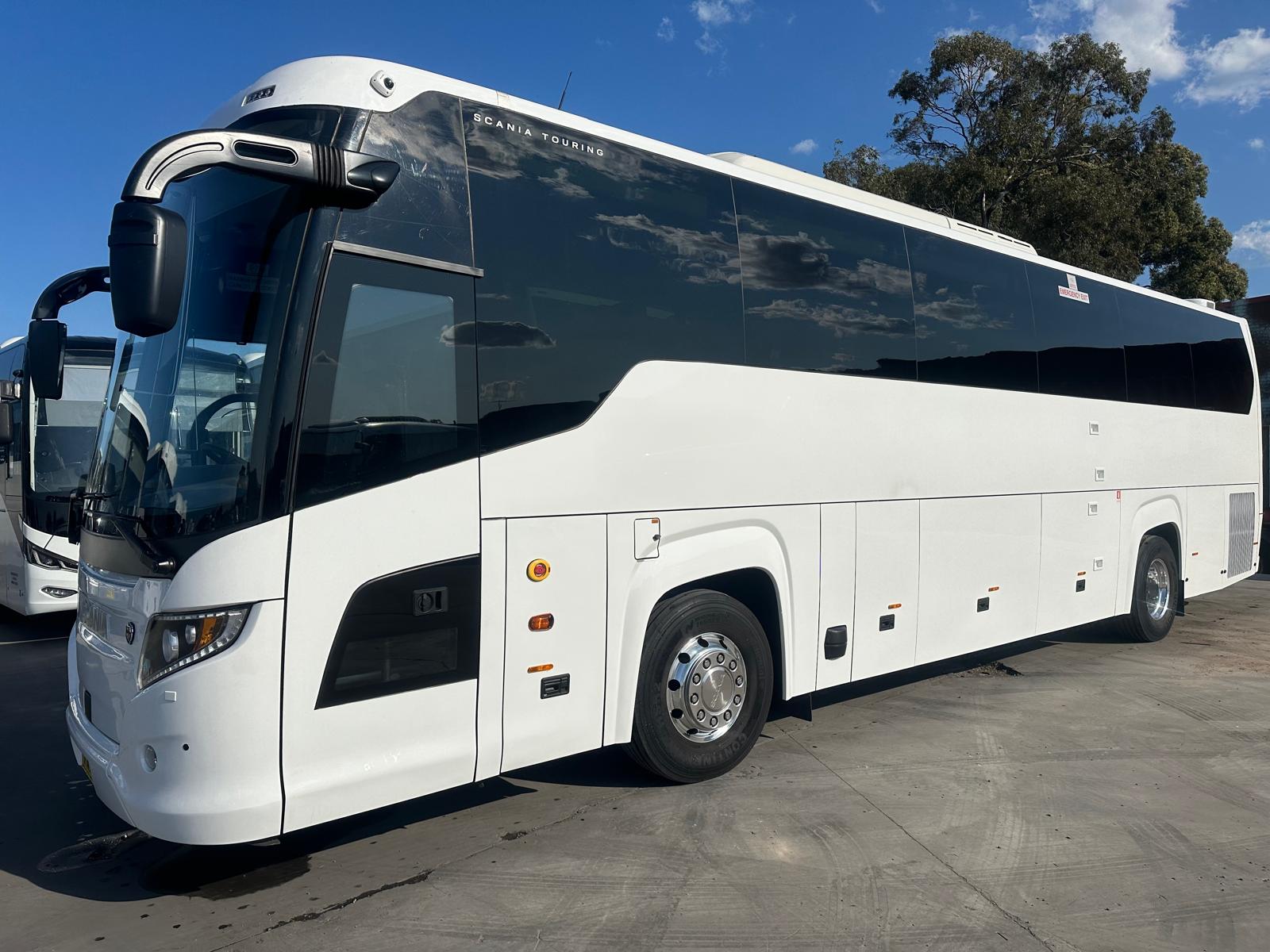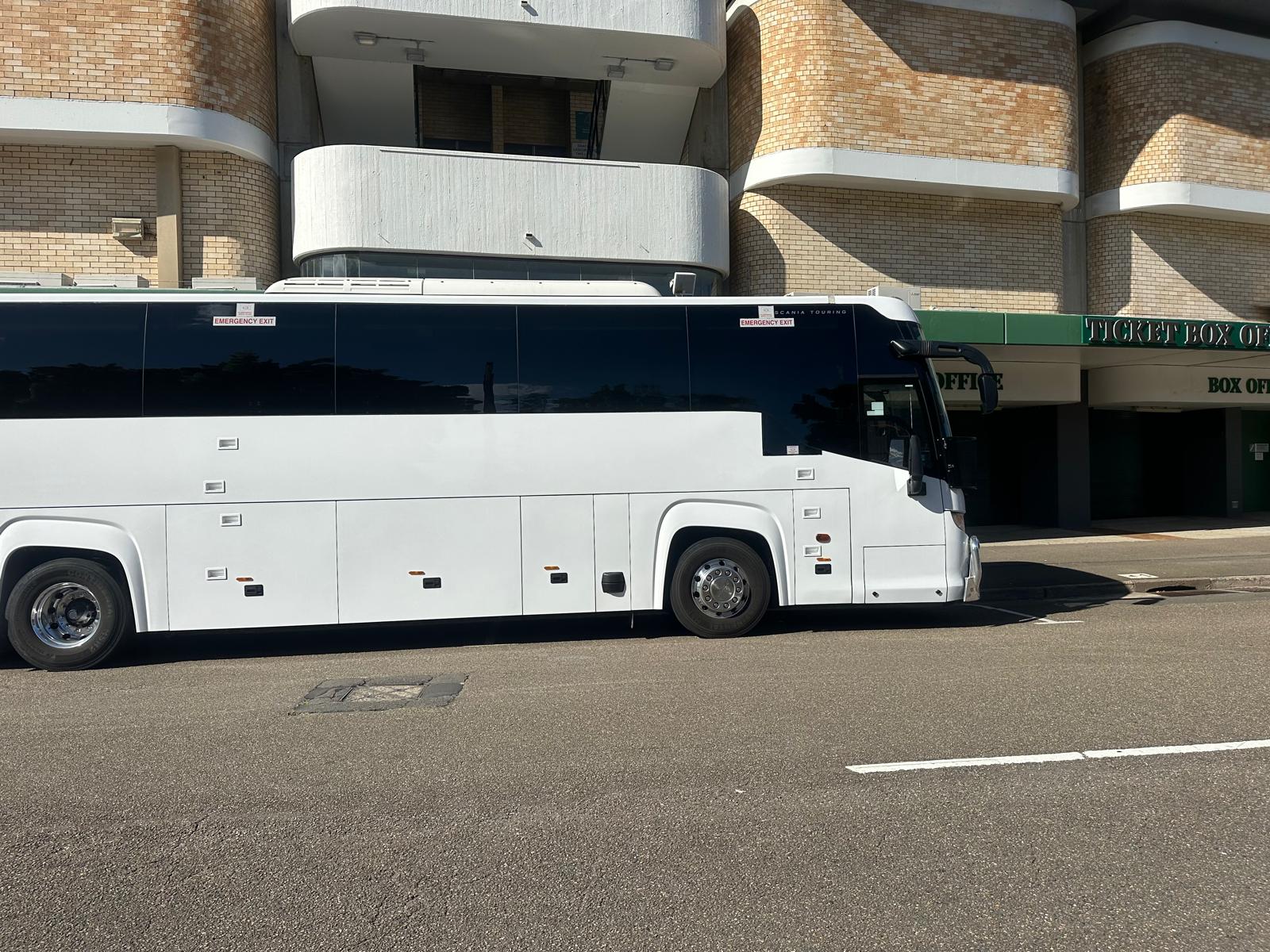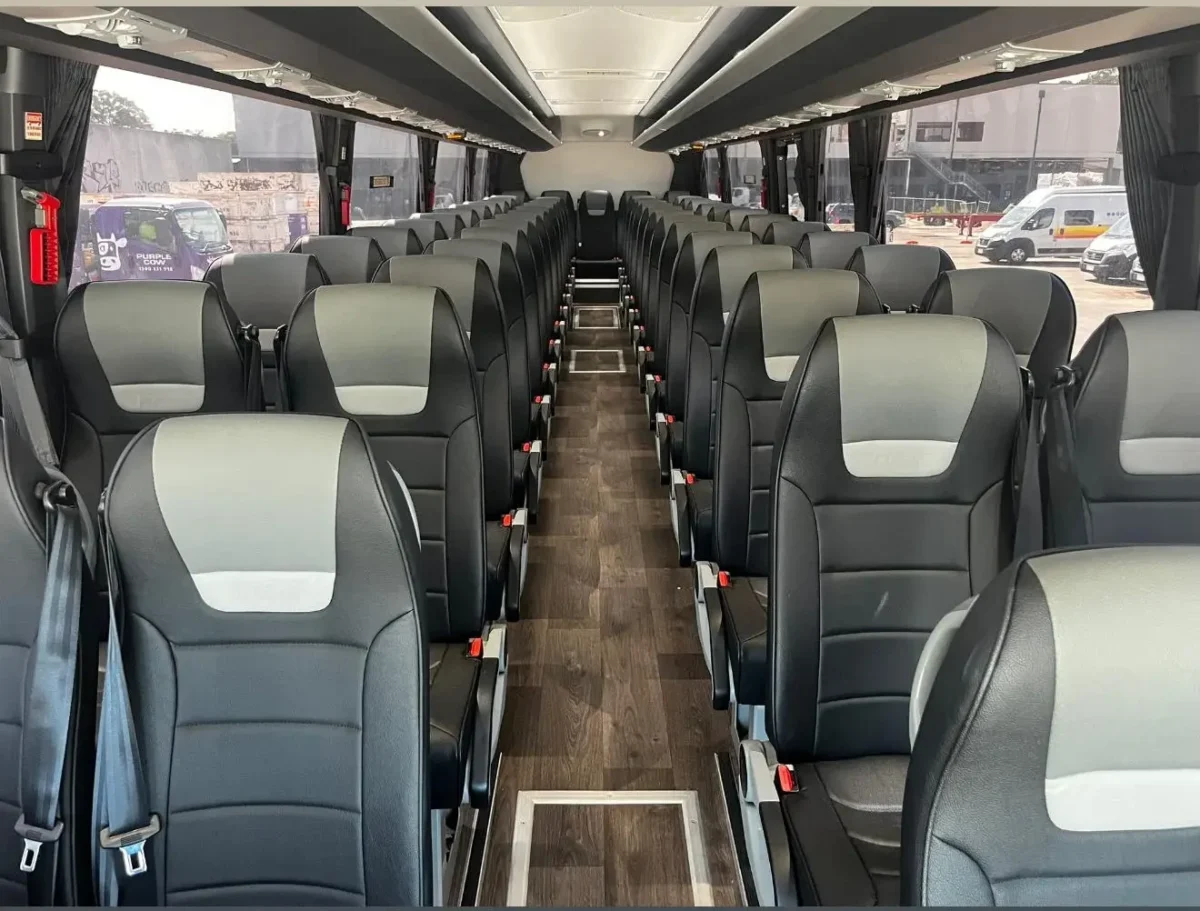
A camp group is sized by bags, not by seats. Fifty students with a duffel each, a sleeping bag each and a day pack each is a hundred and fifty items before staff, catering or group equipment goes anywhere near the vehicle. Seat capacity is the easy half of the question, and it is the half most schools solve first. Itemise the load before you book, send the list with the enquiry, and let the operator confirm the vehicle against the actual volume.
Sizing the vehicle around bags, not seats
The mistake is booking to the headcount and treating luggage as a detail. On a day excursion that works, because everyone has a day pack that goes on their lap. On a camp it does not, because the underfloor bay becomes the constraint long before the seats do.
Work it as an inventory. This is the table to fill in before you request a quote, and to send with the request.
| Item | Per student or group | Count | Where it travels | Confirmed by |
|---|---|---|---|---|
| Main bag or duffel | Per student | Underfloor | Operator | |
| Sleeping bag or bedding | Per student, if the camp does not supply it | Underfloor | Operator | |
| Day pack | Per student | On board, with the student | School | |
| Wet weather or spare footwear bag | Per student, seasonal | Underfloor | Operator | |
| Staff bags | Per staff member | Underfloor | Operator | |
| Medical and first aid | Group | On board, with the named staff member | School | |
| Catering, eskies, water | Group | Underfloor, and needs to be reachable at a stop | Operator | |
| Programme equipment | Group | Depends on size and shape, see below | Operator |
Two columns do the real work. Count turns a vague sense of “a fair bit of gear” into a number the operator can plan against. Where it travels forces the decision that otherwise gets made at 7am in a car park, which is what goes underfloor and what comes on board.
Whether it all fits is a question about the specific vehicle allocated, so ask it directly and get the answer in writing. If the answer is that the load exceeds the bay, the options are a bigger vehicle, a second vehicle, or a trailer or support vehicle if the operator can arrange one. All three are much easier to solve four weeks out than four days out.
Seat counts across the Sydney Buses & Coaches fleet run from seven to fifty-seven, excluding the driver, and you can check vehicle seat counts across the fleet when you are placing your group. Fifty-eight and above is handled as a coordinated convoy. Camp groups often land just above a vehicle boundary, and the bag inventory is what tells you whether the tight fit is workable or whether the next size up is the honest answer.
Gear that is not luggage
Programme equipment is a separate conversation from bags and needs to be raised by name, not folded into a total.
Canoe paddles, tents, camp stoves, sports equipment, musical instruments, science kits and marquees are all shapes rather than volumes, and a rigid item that will not lie flat can consume more bay than its size suggests. Catering is the other one: eskies and water containers are heavy, need to sit flat, and often have to be reachable at a rest stop rather than buried.
Tell the operator what the items are, how many, and their rough dimensions. “We have some camp gear” produces a shrug at the quote stage and a problem at the loading stage. “Twelve tents, eight paddles, four eskies and a trestle table” produces an answer.
The two-hour drive: what changes
A camp drive is not a long excursion. It is a different kind of trip.
Comfort stops become part of the plan. A group of fifty on a two hour run needs a stop, and where that stop happens should be decided in advance rather than found. It affects the arrival time, and arrival time affects the camp’s own programme.
The return leg is the hard one. Departure is organised, rested and on schedule. The return is tired, wet gear, an extra bag nobody accounted for, and a group that has been awake since six. Build more time into the return than the outbound.
Belts matter more. On a coach fitted with seatbelts, NSW requires every passenger aged sixteen or over to wear one, and the obligation is enforceable against the passenger. Below sixteen the driver’s legal duty does not extend to bus passengers, which means the arrangement for your students is your decision rather than one the law has made. Departmental policy prefers seatbelt-fitted vehicles “where practical” rather than requiring them, so if belts are part of your control set for a highway run, book them and record the decision.
The vehicle is heavy and tall. A full-size coach exceeds 2.8 metres in height, which puts it in the heavier class on Sydney toll roads that classify by dimension. Ask for tolls and parking to be estimated on the quote rather than added afterwards.
One route rule catches northbound camps. Buses over 12.5 metres long or over 2.8 metres high travelling between the M1 and the M2 must use NorthConnex, unless the destination is genuinely only accessible via Pennant Hills Road. There is no exemption list and no application process. A coach heading to the Central Coast or further north from western or northern Sydney is inside that requirement, and it is worth knowing because it shapes the route your driver will take.
Driver hours on a camp run
A commercial charter is a public passenger service, so the driver of a fatigue-regulated bus sits inside the Heavy Vehicle National Law fatigue regime. There is no charter exemption once there is a fare, and the 100 kilometre radius is a record-keeping tier rather than an exemption from work and rest limits.
Standard hours for a solo driver allow up to twelve hours work in any twenty-four hour period, with seven continuous hours of stationary rest. A fatigue-regulated bus is one built to carry more than twelve adults including the driver and weighing more than 4.5 tonnes.
For a single-day round trip that is rarely the binding constraint. Where it does bite is the shape schools sometimes propose without thinking it through: a 7:00am departure, a two and a half hour drive, a full day of activities with the coach on standby, and a late return. That is a long shift with a lot of waiting in it, and waiting is not rest in the sense the rules mean.
Send the itinerary with the booking request and ask the operator to confirm it works with one driver. If it does not, the answer is usually a different shape rather than a bigger budget: drop the group and return, or start later.
Where Sydney school camps actually go
Camp regions from Sydney, with the driving times the operator publishes for charter planning.
| Region | Distance | Coach driving time each way |
|---|---|---|
| Blue Mountains, Katoomba | 105 km | About 2 hours, 2.5 from the eastern suburbs or northern beaches |
| Southern Highlands | 120 km | About 1.5 hours |
| Port Stephens, Nelson Bay | 205 km | 2.5 to 3 hours |
For two regions the only published figures are tourism-body car times, and coach times run longer because the vehicle is heavier, the driver has legal rest requirements and a group of fifty needs comfort stops. Visit NSW puts the Central Coast at about an hour to Gosford and about ninety minutes to Terrigal, and Jervis Bay at around three hours to Huskisson. Treat those as a floor rather than a plan, and get the coach figure from the operator when you book. The published route distances and driving times cover the regions with charter figures.
The pick-up suburb changes the answer more than schools expect. The same Blue Mountains camp is about two hours from an inner western school and about two and a half from a northern beaches one, which is a full hour of difference across the round trip.
Multi-day camps
Two things change once the coach stays with the group.
Driver accommodation. On a multi-day trip this is confirmed in advance and priced separately, so it should appear on the quote before the budget goes to approval, not afterwards.
Whether the coach stays at all. For some camps the vehicle drops the group and returns for them at the end, which is two transfers. For others the coach stays on site for daily activity movements. Those are very different quotes, so say which one you want in the enquiry rather than asking for “transport to camp”.
A camp transport booking checklist
- Final headcount: students, teaching staff, support staff, any parent helpers.
- Completed luggage inventory, sent with the enquiry.
- Programme equipment listed by item and rough dimension.
- Whether the coach drops and returns, or stays with the group.
- Departure time, arrival target, and the return time you actually need.
- Comfort stop location agreed for each leg.
- Confirmation the itinerary works with one driver.
- Seatbelt fitment and licensed passenger capacity confirmed in writing.
- Tolls, parking and driver accommodation shown on the quote.
- Driver name, mobile and registration recorded in the day pack, supplied twenty-four hours before travel.
- Wet weather variation for loading and for the return.
Booking timing
Published lead times are two to four weeks for most jobs and four to eight weeks for peak periods, which include December, race days, school excursion season and long weekends. Camps cluster in Term 1 and Term 4, which puts most of them squarely in the second bracket.
Term boundaries narrow the window further. School development days are staff-only, so a camp cannot start or finish on one, and that removes days at each end of term that the published term dates do not obviously exclude.
Frequently asked questions
Will all the camp luggage fit under one coach?
That depends on the vehicle allocated and the real item count, so itemise the load and ask for written confirmation rather than assuming. A duffel, a sleeping bag and a day pack per student is three items each before staff or group gear.
Do we need a trailer?
Ask. Whether a trailer or a support vehicle can be arranged is a question for the operator about the specific job, and it is much easier to answer four weeks out than four days out. Send the inventory first, because the answer depends on it.
How long is the drive really?
Longer than the car time you looked up. Coach journey times run longer because the vehicle is heavier, the driver has legal rest requirements and a group needs comfort stops. Ask for the charter figure from your actual pick-up suburb.
Can one driver do the round trip in a day?
Often yes, but it depends on the shape of the day rather than the distance. Standard hours allow up to twelve hours work in a twenty-four hour period with seven continuous hours of stationary rest. Send the itinerary and get it confirmed.
Does the driver stay at the camp?
That depends on whether you have booked the coach to stay with the group or to drop and return. On a multi-day booking where the driver stays, accommodation is confirmed in advance and priced separately.
What goes on board with the students?
Day packs, medication and the first aid kit, held by a named staff member. Everything else goes underfloor, and the point of doing the inventory beforehand is that this gets decided in a staff meeting rather than in a car park at seven in the morning.
Next step
Send the luggage inventory with the enquiry, not after the quote. It is the one document that changes which vehicle gets allocated, and it takes ten minutes to fill in.
Sydney Buses & Coaches quotes school camp and excursion coaches in writing within two business hours with the vehicle named, and can supply accreditation and driver check documentation for your camp file. Call 02 9469 6600 with your dates, destination and group size.
Sources
- National Heavy Vehicle Regulator, Heavy vehicle fatigue management, bus industry, https://www.nhvr.gov.au/safety-accreditation-compliance/fatigue-management/heavy-vehicle-fatigue-management-bus-industry. Accessed 7 September 2026.
- National Heavy Vehicle Regulator, Bus and coach driver fatigue and health and wellbeing, https://www.nhvr.gov.au/safety-accreditation-compliance/chain-of-responsibility/regulatory-advice/bus-and-coach-driver-fatigue-and-health-and-wellbeing. Accessed 7 September 2026.
- Transport for NSW, Pennant Hills Road heavy vehicle access, https://www.transport.nsw.gov.au/operations/roads-and-waterways/business-and-industry/heavy-vehicles/road-access/pennant-hills-road. Accessed 7 September 2026.
- NSW Department of Education, Excursions and variations of routine (PD-2005-0290-04), https://education.nsw.gov.au/policy-library/policies/pd-2005-0290-04. Accessed 7 September 2026.
- NSW Legislation, Road Rules 2014, Part 16, https://legislation.nsw.gov.au/view/whole/html/inforce/current/sl-2014-0758. Accessed 7 September 2026.