A multi-day coach itinerary is not built by listing places and joining them up. It is built by placing the fixed points first, then testing each day against the driver’s available hours, then discovering that the day which breaks is almost never the long driving day. It is the low-mileage local day with an early start and a late dinner. Here is the method, and a day budget you can run on your own draft before you send it to anyone.
Currency note. The Heavy Vehicle National Law changed on 1 August 2026. This article describes the position after those changes. Last verified 7 September 2026.
The constraint everything else hangs off
Charter work sits inside the heavy vehicle fatigue regime. The NSW exemption for drivers of fatigue-regulated buses does not apply where the bus is driven to provide a public passenger service, and under the Passenger Transport Act 1990 a charter service is a public passenger service, carried for a fare. So the limits apply in full.
For a solo driver under general standard hours: 12 hours work and 7 continuous hours stationary rest in any 24 hours, 72 hours work and 24 continuous hours stationary rest in any 7 days, and 144 hours work in any 14 days. There is also a separate standard hours table for solo bus and coach drivers, under which a 7 day period requires 6 night rest breaks and a 28 day period allows 288 hours of work with four periods of 24 continuous hours stationary rest. A driver works to one table or the other, never a blend.
The word that does the damage is work. It is not driving time. It includes pre-departure checks, the empty run from the Marrickville depot, loading, waiting while the group is off the vehicle, and the return at the end. A driver sitting in a car park for two hours while a group is on a cruise is working, not resting.
One more, because it appears in a lot of old proposals: the 100 kilometre radius is a record-keeping tier, not an exemption. The hours apply in full inside it.
Step one: find the anchors
An anchor is anything in the itinerary with a start time somebody else controls. A cruise departure. A booked activity. A fixture or a ceremony. A seated lunch for the whole group. A check-in time. A flight.
Write those down first, with their times, before you write a single driving leg. Everything else in a tour is flexible, and treating flexible items as fixed is how organisers end up with an itinerary that cannot be repaired.
The count matters as much as the times. One anchor a day is comfortable. Two is a real day. Three is usually a day that will not survive contact with reality.
Step two: work out what each day can hold
This is the practical tool. Start every day with 12 hours of available work and subtract until you run out.
| Day budget line | Planning allowance | Your day |
|---|---|---|
| Driver sign-on and pre-departure checks | 30 minutes | |
| Depot to first pick-up, or accommodation to first movement | Varies by suburb and hour | |
| Loading at each pick-up | About 10 minutes for 25 people, longer for 50 with luggage | |
| Driving legs | From published route figures, not from a mapping app | |
| Comfort stops | About 20 minutes per 2 hours of driving | |
| Waiting while the group is off the vehicle | The full duration. This is work | |
| Set-down and return to depot or accommodation | 30 minutes and up | |
| Remaining margin | Should not be under 30 minutes |
If the margin comes out under thirty minutes, the day is not built. It is hoped. If it comes out negative, you have found the day that needs fixing, and you have found it at planning stage rather than at 9pm on a Tuesday.
Use published route figures rather than a mapping app for the driving legs. A coach is a heavier vehicle, the driver has legal rest requirements, and a group needs comfort stops. The operator publishes Katoomba at 105 km and about two hours each way, Pokolbin at 165 km and two to two and a half hours, the Southern Highlands at 120 km and about an hour and a half, Nelson Bay at 205 km and two and a half to three hours, and Canberra at 285 km and three to three and a half hours. Those are the numbers a day budget should use.
Step three: run the budget on the day you think is easy
Take a four day NSW tour. Day one travels out to Port Stephens, 205 km and two and a half to three hours. Day two stays local. Day three transfers to the Hunter Valley. Day four returns to Sydney, 165 km and two to two and a half hours from Pokolbin.
Most organisers look at day one and worry about it. Day one is fine. Here is day two, the local day with barely any driving in it.
| Time | Movement | Counts as |
|---|---|---|
| 8:00am | Driver sign-on, checks | Work |
| 8:30am | Collect group from accommodation | Work |
| 9:00am | Set down at Anna Bay for the 4WD dunes transfer | Work |
| 9:15 to 11:30am | Group with the dunes operator. Coach waits | Work, 2 hours 15 minutes |
| 11:45am | Group rejoins the coach | Work |
| 12:00 to 1:30pm | Group at lunch. Coach waits | Work, 1 hour 30 minutes |
| 2:00 to 4:00pm | Group on a cruise. Coach waits | Work, 2 hours |
| 4:30pm | Return to accommodation | Work |
| 5:00pm | Sign-off |
Nine hours of work, of which maybe ninety minutes is actually driving. The day fits, with three hours of margin.
Now add the thing every group asks for on the second night: a 7:30pm transfer to dinner and a 10:00pm return. Sign-off moves to 10:30pm. The day is now fourteen and a half hours. It does not fit, and no amount of goodwill changes that.
That is the lesson of multi-day touring in one table. The waiting is the work. A day with 60 km of driving and three anchors is a longer working day than a 285 km transfer with none.
Step four: chain the days
Days do not stand alone. The 7 continuous hours of stationary rest have to fit between the end of one day and the start of the next, so a late finish on day two moves the earliest possible start on day three.
That is why an itinerary with a late dinner on Tuesday and an 8am departure on Wednesday is not two separate problems. It is one problem, and it is usually solved on Tuesday.
Two chaining rules worth writing on your draft.
The overnight location decides the next morning. Where the group sleeps determines how much of Wednesday is spent getting back to where the programme starts. Choosing accommodation for the group’s convenience without checking it against the next day’s first anchor is one of the most common and most expensive planning mistakes.
On a tour longer than about six days, the weekly limits start to bind. Seventy-two hours of work and 24 continuous hours of stationary rest in any 7 days means a genuine rest period has to be placed in the itinerary, not left to chance. On a long tour, that rest day is a design decision. Make it deliberately and put it somewhere the group also benefits from a slower day.
Step five: fix the day that breaks
There are only four levers, and it is worth knowing them before somebody offers you one.
- Move an anchor. Bring the dinner forward, or move the cruise to the morning. Cheapest fix, and almost always available if you ask early enough.
- Remove an anchor. Three fixed items in a day is usually one too many.
- Change the overnight location. Shortens the next morning’s dead running.
- Resource the day differently. A second vehicle for the evening movement, or additional driver resourcing. This one has a cost, which is exactly why it belongs at quote stage.
Shaving the driving leg is not on the list, because it does not work. The driving time is what it is, and pretending otherwise just moves the failure later in the day.
What this article cannot give you, and what to ask for instead
Published route figures exist for legs starting from Sydney. The inter-regional legs on a touring itinerary, Port Stephens to the Hunter Valley, the Blue Mountains to the Southern Highlands, and so on, are not published here, and this article will not estimate them.
Ask your operator for the driving time on each leg at planning stage, in writing, before the itinerary is locked. A leg time is an input to the day budget, not a detail to be sorted out later. An operator that can give you leg times quickly is an operator that has built the itinerary properly.
For the Sydney-origin figures used above, see the published Sydney coach routes and driving times.
How the itinerary becomes a price
Once the days fit, the pricing is straightforward, and the lines are worth knowing so you can compare two proposals properly.
Included in the rate: the professional driver, fuel, vehicle insurance and GST.
Confirmed in advance and priced separately: tolls and parking, driver accommodation on multi-day trips, public holiday and after-hours loading, and waiting time beyond the booked window.
Two of those deserve emphasis on a tour. Driver accommodation is a real, named line, once per night, and it should appear as its own figure rather than folded into a total. Waiting time beyond the booked window is the line that a badly built itinerary generates, which is the commercial argument for doing the day budget properly at planning stage.
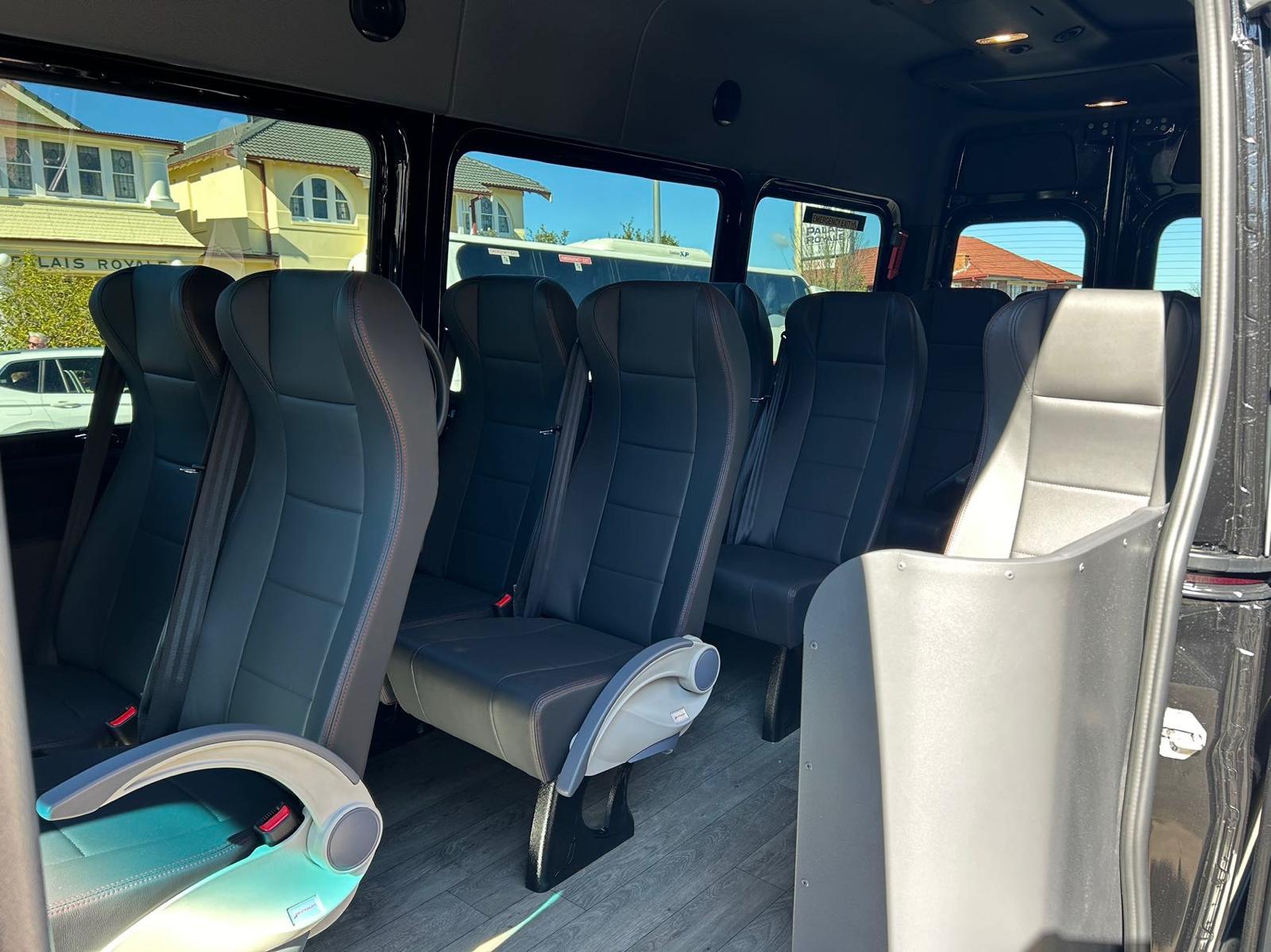
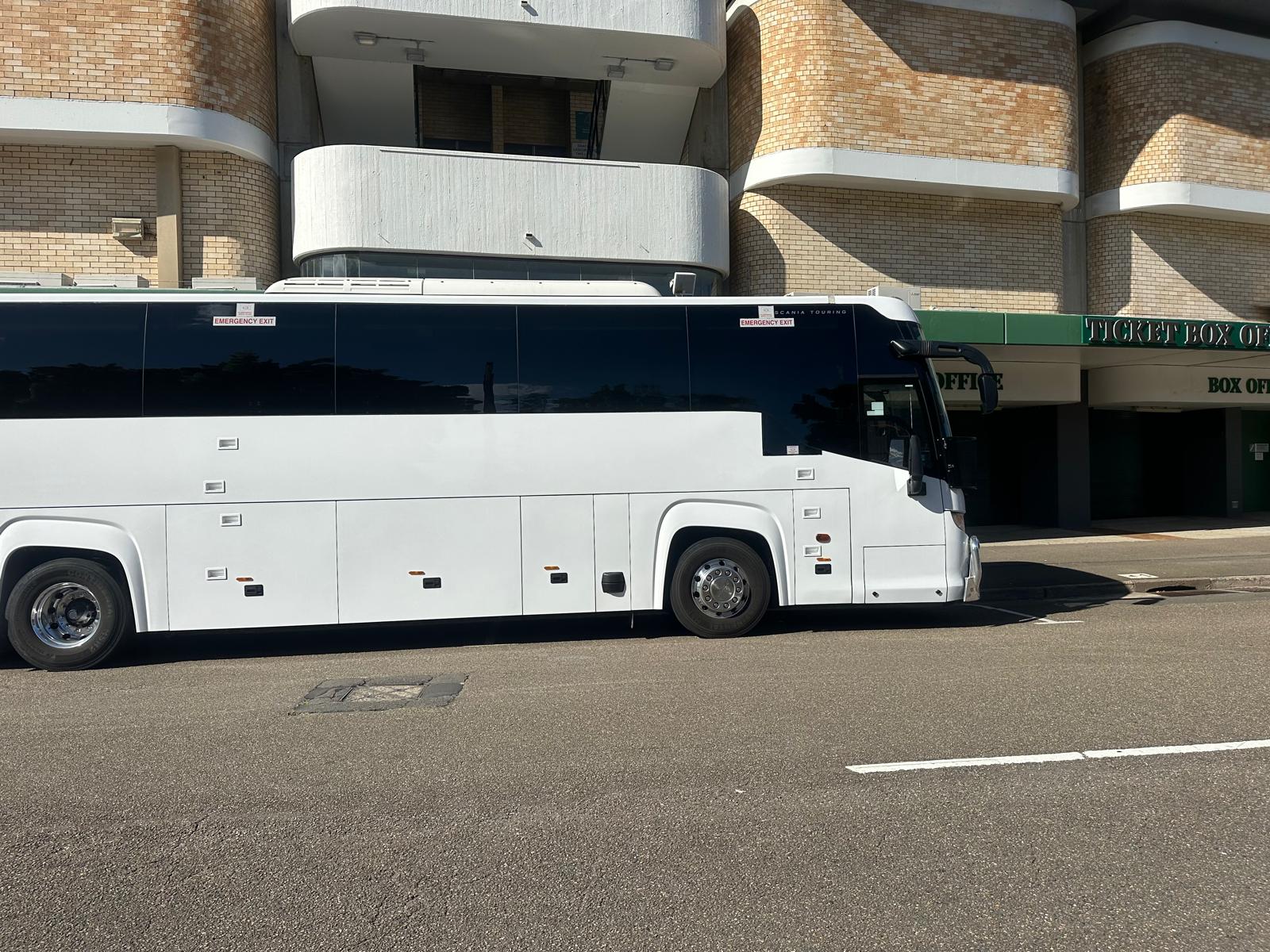
Vehicle choice is also a tour-specific decision rather than a seating one. Minimum hire is three hours for minibuses and people movers and four hours for midi-coaches and full-size coaches, which is irrelevant on a tour, but luggage volume across several days is not. Seat counts and minimum hire across the fleet is the starting point, and the question to ask is about the underfloor bay on the specific vehicle named in your quote.
On lead time, published guidance is two to four weeks for most jobs and four to eight weeks for peak periods including December, race days, school excursion season and long weekends. A multi-day tour has accommodation and activity bookings on their own timetables, so start earlier than that.
The tour itself is quoted through charter bus and coach hire in Sydney with a driver included, against a named vehicle and a stated itinerary. That pairing is what makes any of the above checkable before you commit.
Frequently asked questions
How do you build a multi-day coach itinerary?
Place the fixed points first, then fill the driving legs from published route figures, then test each day against the driver’s twelve hour work ceiling using a day budget. Fix the days that do not fit by moving or removing an anchor rather than by shortening the drive, then chain the days so the 7 continuous hours of stationary rest fit between them.
What limits how much fits into each day of a tour?
Work hours, not distance. A solo driver may work up to 12 hours in any 24, and work includes pre-departure checks, depot legs, loading, waiting while the group is off the vehicle, and the return at the end. That is why a local day with three anchors can be a longer working day than a long transfer.
Why does a day with almost no driving cause problems?
Because waiting counts as work. A coach sitting in a car park while a group is on a cruise, at lunch and at a dinner is accumulating hours on the driver’s day at the same rate as driving does.
How does driver accommodation work on a multi-day tour?
The driver stays where the group stays or nearby, and each night is a named line in the quote, listed among the items confirmed in advance and priced separately. Ask for it as its own figure so you can see it and split it across the group.
How long can a tour run before a driver needs a full rest day?
The weekly limits start to bind on a tour longer than about six days. Standard hours allow 72 hours of work in any 7 days and require 24 continuous hours of stationary rest in that period. On a long tour that rest period is a design decision, so place it deliberately.
Can the operator apply for extra hours to make an itinerary fit?
Not in the way older advice suggests. Basic Fatigue Management and Advanced Fatigue Management are closed to new applicants and have been replaced by Alternative Compliance Hours under ACA-Fatigue within the Heavy Vehicle Accreditation scheme. Any proposal that offers to apply for BFM to make your itinerary work predates 1 August 2026.
Next step
Send us the draft itinerary with the anchors and their times, not just the destinations. We will put a day budget against each day, tell you which one does not fit, and give you the four options for fixing it before anything is booked. Call 02 9469 6600 or send the trip details and a fixed written quote with the vehicle named comes back within two business hours.
Sources
- National Heavy Vehicle Regulator, “Heavy vehicle fatigue management: bus industry”, https://www.nhvr.gov.au/safety-accreditation-compliance/fatigue-management/heavy-vehicle-fatigue-management-bus-industry. Accessed 7 September 2026.
- NSW Legislation, “Heavy Vehicle National Law (NSW)”, https://legislation.nsw.gov.au/view/whole/html/inforce/current/act-2013-042. Accessed 7 September 2026.
- NSW Legislation, “Passenger Transport Act 1990 (NSW)”, https://legislation.nsw.gov.au/view/whole/html/inforce/current/act-1990-039. Accessed 7 September 2026.