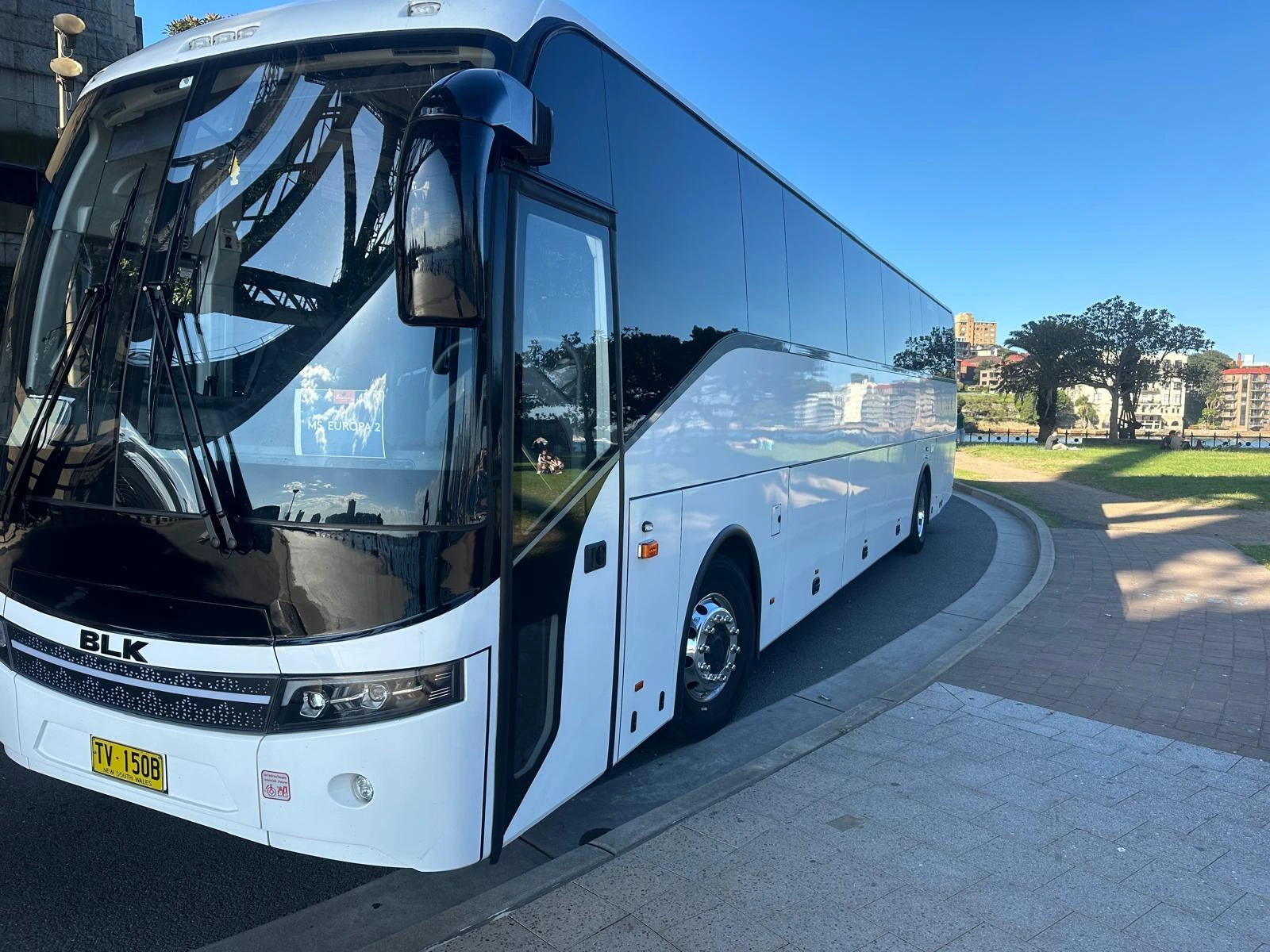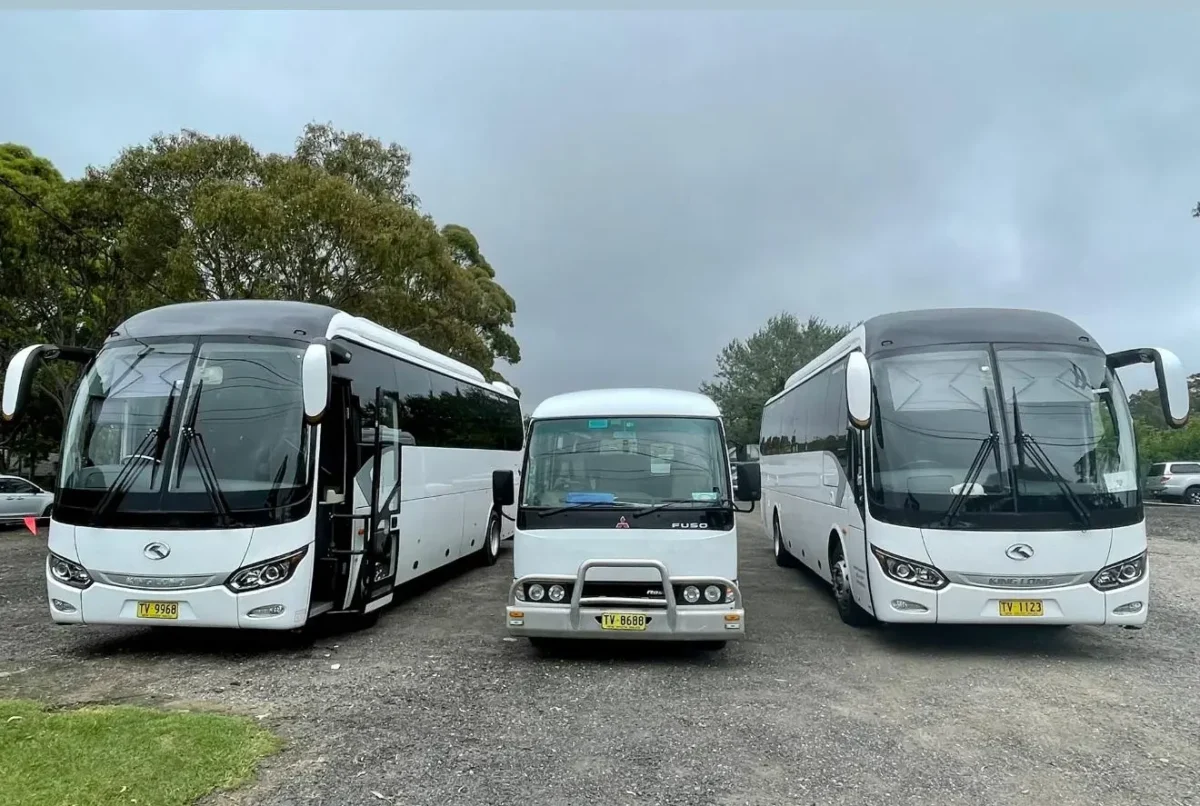
A departure run is built backwards from the airline’s check-in cut-off for the specific flight, and it is harder than the arrival run because the group is scattered across a hotel rather than funnelled through one door. Two Sydney constraints set the shape of it: a coach cannot wait outside a CBD hotel for an hour, and kerbside set-down at Sydney Airport’s Departures level is brief. So the coach arrives to load, not to wait, and the group must be downstairs before it does.
Departure day is the harder half
Arrivals get all the attention. Departures fail more often, for a reason that is easy to miss: on arrival the group is already together, because an aircraft delivered them that way. On departure they are in thirty different rooms, checking out at thirty different moments, with more luggage than they arrived with. Conference groups are the worst case, because some delegates have extended their stay, some are leaving on different flights, and the last session usually ends closer to the departure window than anyone planned. The transport is fine. The assembly is what runs late.
The plan that works treats the coach as a fixed appointment and everything else as the variable. The vehicle turns up at a stated time, loads, and leaves. It does not sit outside absorbing the group’s drift, because in central Sydney it is not allowed to.
Where a coach can actually wait in central Sydney
This is the constraint most organisers do not know about, and it is the reason a coach cannot simply be there from 7am.
A bus zone is set-down and pick-up only. Under the Road Rules 2014, a public bus may stop in a bus zone to set down or pick up passengers, and the New South Wales Dictionary treats a coach as a public bus for that purpose. The rule allows the stop, not the wait, and the sign on the zone can restrict it further. A coach may not park or lay over in a bus zone.
George Street is not an option. The central spine of the CBD is a car-free pedestrian boulevard, with extension works staged along it. A hotel with a George Street address needs its loading point identified on a side street, and that identification belongs in the booking rather than in a conversation with the driver on the morning.
There is a sanctioned CBD layover. Transport for NSW operates the King Street Wharf Bus and Coach Layover, accessed via Lime Street, open 24 hours a day with a maximum stay of 24 hours. It is restricted to Transport for NSW accredited bus and coach operators running vehicles seating more than twelve adults, entry is by number-plate recognition, and prior registration by email is required. That is where a coach can legitimately hold before a CBD hotel departure.
Darling Harbour has its own arrangements. Drop-off for the precinct is at Iron Wharf Place off Darling Drive, and at Zollner Circuit. Coach parking at ICC Sydney is arranged through a dedicated ICC Sydney Event Manager rather than booked online, so a conference departing from an ICC hotel should have that conversation through the event manager well in advance.
The practical translation of all four: agree the exact loading point and the exact loading time in writing, and get the group downstairs before the coach arrives rather than after.
Build the departure schedule backwards
Same discipline as an early morning run, different failure points.
- Airline check-in and bag-drop cut-off for the specific flight number and date, confirmed with the operating carrier. This is the only fixed point and it is not the bus company’s to set.
- Group check-in and bag-drop time at the terminal, scaled to headcount and bag count rather than treated as a constant.
- The walk from the set-down point into the departures hall, allowing properly for anyone with mobility needs or a heavy load.
- Set-down at the terminal. Kerbside at Sydney Airport’s Departures level is a brief set-down with the driver remaining at the vehicle, so it is one unload, not a sorting session.
- The drive, using the operator’s figure for that hour of the day rather than an off-peak estimate. Transport for NSW’s traffic volume reporting defines the weekday afternoon peak as 3:00 to 7:00pm for data purposes, and most New South Wales school zones operate 8:00 to 9:30am and 2:30 to 4:00pm on notified school days at 40 km/h, with the sign always governing. A mid-afternoon departure run meets both.
- Loading at the hotel, including moving luggage from a store room to the kerb.
- The assembly buffer. The gap between “coach arrives” and “everybody is present” is the number that ruins departure days. Make it explicit, and give the group a time that is earlier than the loading time.
Publish the resulting schedule to the group as times against their names, not as a general announcement. People turn up for a personal instruction.
Staggered departures: one run or several
Most conference and tour groups do not leave on one flight. The decision is the same one that applies to staggered arrivals, run in reverse.
| Situation | Usual approach |
|---|---|
| All flights inside a narrow window | One run, timed to the earliest check-in cut-off. The later travellers wait at the terminal, which is a better place to wait than a hotel lobby with the bags already downstairs. |
| Flights spread across several hours | Two or more runs. Each wave gets its own loading time, and nobody sits at the terminal for half a day. |
| A few early departures and a large main group | A small vehicle for the early wave and a coach for the main group. Cheaper than dragging the coach out twice. |
| Departures from two different Sydney Airport terminals | Treat them as separate movements. Sequencing two terminals inside one run compresses the second group’s margin. |
| A hard hotel checkout time with a late flight | Bags stored by the hotel, group free until a nominated loading time, one late run. Confirm the storage arrangement with the hotel in writing. |
The one rule that holds across all of these: time each run to the earliest check-in cut-off in that wave, not to the average.
Bags, checkout and the things hotels decide
Three questions belong to the hotel rather than the transport operator, and asking them early prevents most departure-day chaos: what the standard checkout time is and whether it can be extended for the group; whether there is secure group luggage storage, where it is, and how long it takes to move that luggage to the loading point; and where the hotel actually wants a coach to load, which may not match the map.
On the transport side, size the vehicle on the departure bag count rather than the arrival one. Groups leave Sydney with more than they arrived with, particularly after a conference. Vehicle sizes and published rates are set out on the fleet page, and a departure run can be quoted as a single fixed transfer fare rather than hourly, in which case it is not charged against a minimum hire block.
Build the departure manifest
Send this to the operator rather than a headcount:
> Departure [date], from [hotel and exact loading point]. > Wave 1: flight [number], [operating carrier], [terminal], check-in cut-off [time], [passengers], [checked cases]. > Repeat per wave. > Hotel checkout time: [time]. Luggage storage: [yes or no, and where]. > Loading point confirmed with hotel: [yes or no]. > Ground contact on the day: [name and Australian mobile number].
That document is what turns a departure into a schedule. Sydney airport transfers for groups covers the run itself, and for a multi-day event it is worth planning departure day alongside the rest of the conference and corporate transport rather than bolting it on at the end.
Frequently asked questions
What time should the coach arrive at the hotel?
Early enough that loading finishes before the departure time you calculated backwards from the check-in cut-off, and late enough that it is not waiting on a CBD street where it cannot legally sit. Give the group an assembly time earlier than the loading time.
Can the coach wait outside our hotel while people check out?
Generally no. A bus zone permits a coach to set down or pick up, not to wait, and central Sydney does not accommodate on-street coach layover. A coach holding before a CBD job uses the King Street Wharf Bus and Coach Layover, accessed via Lime Street, which requires prior registration and Transport for NSW accreditation.
Our hotel is on George Street. Where does the coach go?
Not George Street. The central CBD spine is a pedestrian boulevard, so the loading point has to be a nearby side street agreed with the hotel and written into the booking before the day.
Should we run one departure or several?
Time a single run to the earliest check-in cut-off in the group. If that leaves later travellers waiting for hours at the terminal, split it into waves. Two terminals almost always means separate movements.
What about late checkout and luggage storage?
Both are hotel decisions, so confirm them in writing well before departure day. Where the hotel can store bags, the group stays free until a nominated loading time, which beats an early checkout with everyone sitting in the lobby.
How long do we get to unload at the airport?
Kerbside drop-off at Sydney Airport’s Departures level is a brief set-down and the driver must remain with the vehicle, so bags need to be organised on board and unloaded in one movement rather than sorted on the footpath.
Next step
Send the hotel, the departure date, each flight with its check-in cut-off, the headcount per wave and the bag count, and we will build the loading times and quote the runs, usually within two business hours during office hours, Monday to Friday 7am to 6pm and Saturday 8am to 2pm.
For a conference departing across a full day, call 02 9469 6600 and we will schedule the waves together rather than quoting each one in isolation.
Sources
- Sydney Airport, “Drop-off”, https://www.sydneyairport.com.au/dropoff. Accessed 7 September 2026.
- Transport for NSW, “King Street Wharf Bus and Coach Layover”, https://www.transport.nsw.gov.au/operations/roads-and-waterways/business-and-industry/buses/operators/king-street-wharf-bus-and. Accessed 7 September 2026.
- NSW Government, “Road Rules 2014”, https://legislation.nsw.gov.au/view/html/inforce/current/sl-2014-0758. Accessed 7 September 2026.
- ICC Sydney, “Getting here”, https://iccsydney.com.au/visitors/getting-here/. Accessed 7 September 2026.
- Transport for NSW, “School zones”, https://www.transport.nsw.gov.au/roadsafety/community/schools/school-zones. Accessed 7 September 2026.