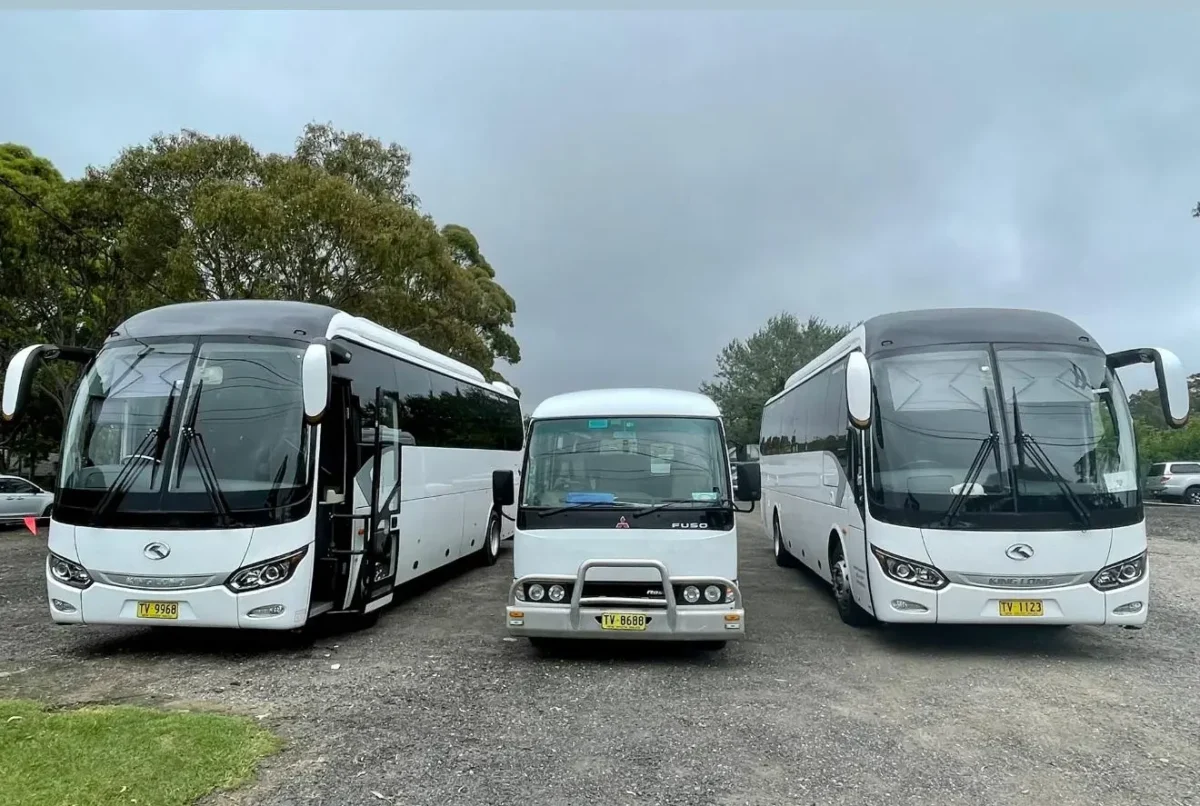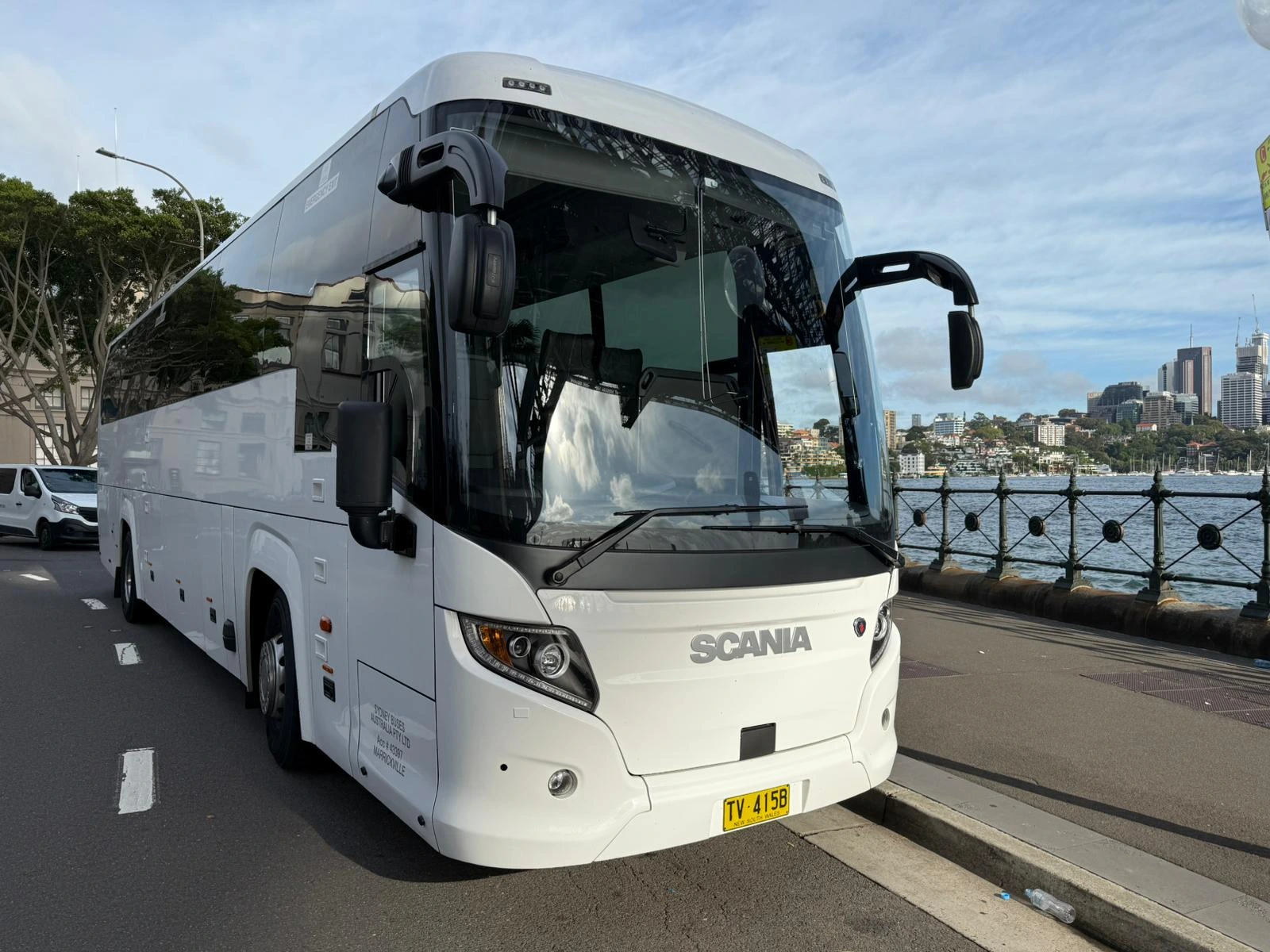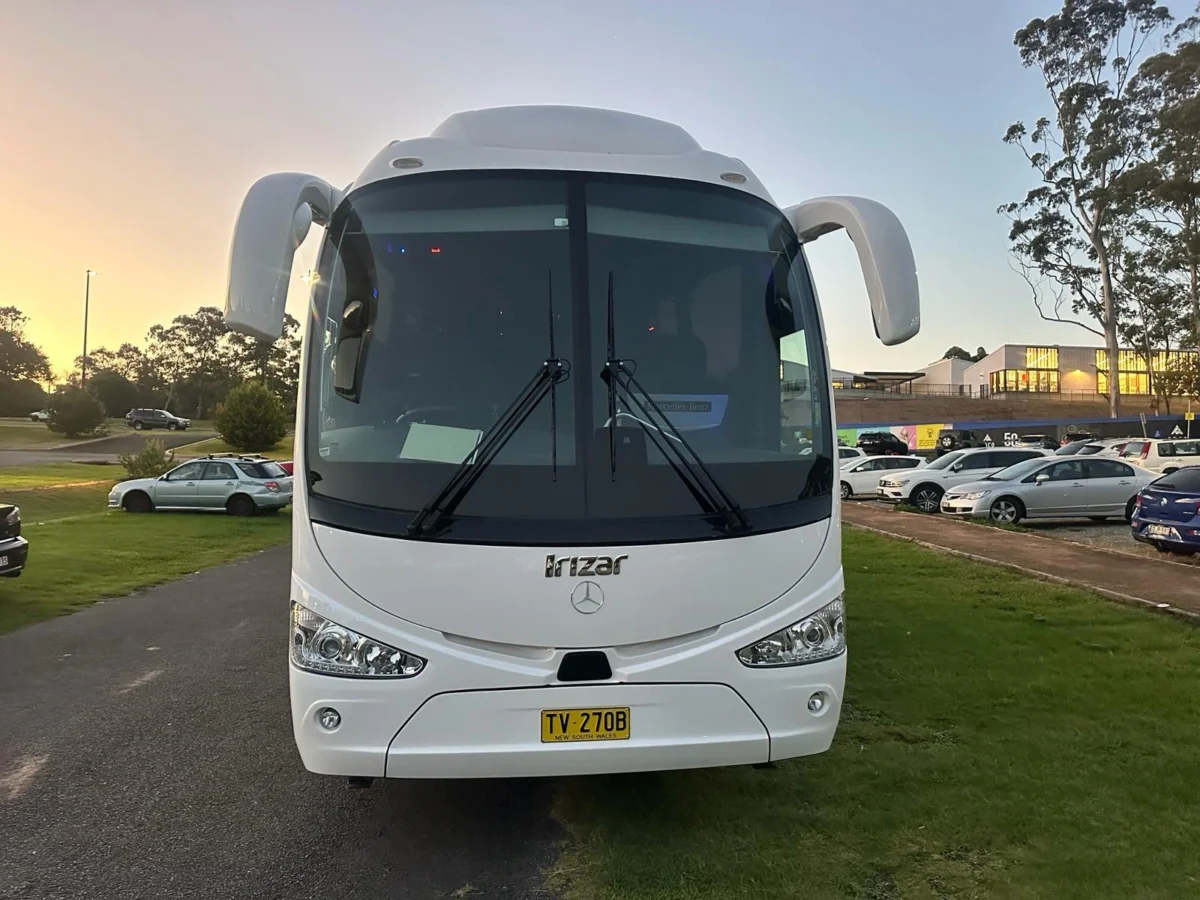
Community event transport is two jobs, not one. Volunteers arrive before the site opens and leave after it closes, while attendees arrive and leave in concentrated peaks. Plan them separately, then size the shuttle by loop time rather than by headcount: a vehicle running a 20 minute round trip moves three loads an hour, so 24 seats becomes about 72 people an hour. That figure, not the guest list, is what tells you whether one vehicle is enough.
What makes a community event different
Three things separate a volunteer-run community or charity event from a corporate one, and all three affect the transport.
The budget is fixed before the numbers are. A grant, a council allocation or a fundraising target sets the ceiling months before anyone knows how many people are coming. The transport line has to be defensible at a number you cannot yet verify.
The organiser is a volunteer. Often several volunteers, each holding part of the plan, none of them full time on it. That makes written confirmation more valuable than usual, because the person who booked the bus may not be the person standing at the gate.
The attendance number is genuinely uncertain. Not uncertain in the way a wedding RSVP is uncertain. Uncertain in the way a free public event on a day that might rain is uncertain.
Everything below is built around those three constraints.
Volunteers and attendees are separate transport problems
Volunteers need to be on site before anyone else and cannot leave until the pack-down is finished. Attendees arrive in a rush at the start and leave in a bigger rush at the end.
If you try to serve both with one vehicle and one schedule, you get a coach sitting idle for six hours between two runs, charged for the whole time, while the attendee peak is under-served.
Split them.
- Volunteers: one early run in, one late run out. Small vehicle, fixed times, named list.
- Attendees: a shuttle running repeated loops through the arrival and departure peaks, with nothing scheduled in the quiet middle unless the site needs it.
- Specific groups: a residential aged care group, a supported group or a school contingent may need their own vehicle rather than a shuttle seat, because their boarding time does not fit a tight loop.
The shuttle capacity worksheet
This is the calculation most community events skip, and it is the one that decides whether the plan works.
- Time the loop. Drive it. Set-down point to car park or station and back, including the time to load and unload at both ends. Call it L minutes.
- Loads per hour equals 60 divided by L.
- People per hour per vehicle equals loads per hour multiplied by the seat count.
- Peak demand is the number of people you expect to move in the busiest hour, not across the day.
- Vehicles needed equals peak demand divided by people per hour per vehicle, rounded up.
A worked version, using a 24-seat executive minibus and a 20 minute loop: three loads an hour, 72 people an hour. If 200 people arrive in the first hour, one vehicle does not do it and three do. If the loop is 30 minutes instead, that same vehicle moves 48 people an hour and you need more.
Two things lengthen L more than organisers expect: loading time when the queue is disorganised, and the walk between the set-down point and the gate. A marshal at each end with a clipboard is the cheapest capacity increase available.
Working to a fixed grant
Published hourly rates, GST inclusive, run from $110 an hour for a 12-seat Toyota Commuter, $145 for a 21 to 24-seat executive minibus, $165 for a 27-seat executive midi-coach, $185 for a 48-seat luxury coach and $195 for a 53-seat executive coach. Minimum hire is three hours for minibuses and people movers and four hours for midi-coaches and full-size coaches. Groups needing 58 seats or more are quoted per event as a coordinated convoy.
Build the budget line like this.
| Line | How to work it out |
|---|---|
| Shuttle hours | Peak arrival window plus peak departure window plus the gap if the vehicle must stay |
| Vehicle rate | Hourly rate for the vehicle that fits your loop, from the published rates |
| Volunteer runs | Usually a separate smaller vehicle, charged against its own minimum |
| Tolls and parking | Confirmed in advance and priced separately. Route dependent |
| After-hours or public holiday loading | Confirmed in advance and priced separately. Applies to many community event dates |
| Waiting beyond the booked window | Priced separately, which is why an honest run sheet is cheaper than an optimistic one |
| Contingency | A margin for one extra hour, because events run late |
Professional driver, fuel, vehicle insurance and GST are already included in the quoted rate, so those are not separate lines. How Sydney bus hire is costed sets out the structure if you need to show a committee where the numbers come from.
One structural tip for grant applications: quote the shuttle as capacity rather than as a vehicle. “Transport capacity for approximately 70 people per hour across the arrival and departure peaks” survives a change in attendance estimate. “One 24-seat bus” does not.
Planning when you do not know the numbers
Uncertain attendance is normal. Handle it with structure rather than with optimism.
Book the certain part first. The volunteer runs and the minimum viable shuttle are known quantities. Confirm those and hold them.
Set a decision date for the rest. Pick a date far enough ahead to still add a vehicle, and put it in the committee’s calendar. Ask the operator what notice it needs to add or release a vehicle, and get the answer before you book.
Watch the lead time. Published lead times are two to four weeks for most jobs and four to eight weeks for peak periods including December and long weekends. A community event on a long weekend in December is in the four to eight week band, so the decision date has to sit before that.
Read the cancellation terms. They are set out in the written quote. A volunteer committee that has not read them is exposed in a way it does not realise.
Have a plan for over-attendance that is not a bus. Staggered departures announced from the stage, a second exit route, or simply telling people that the last shuttle leaves at a stated time.
Accessibility is not an add-on at a public event
A public community event will have attendees who use wheelchairs, frames and prams. Plan for it in the shuttle rather than in an apology.
Confirm whether a vehicle with a boarding device is available on your date and how many allocated wheelchair spaces it has. Most charter coaches have a fixed seat for every passenger and carry no allocated space, so this has to be specified rather than assumed. Then think about the loop: a vehicle with a boarding device cannot run a 20 minute turnaround while also serving lift users, so give it its own schedule rather than putting it in the rotation.
Also publish the practical information in your event material: where the accessible set-down point is, how far it is from the entrance, what the surface is, and how to request assistance on the day. Details on vehicles are on accessible bus hire in Sydney.
Where a coach can actually stop in Sydney
The set-down point is fixed by the venue and the law, not by convenience.
Under the NSW Road Rules a charter coach counts as a public bus, so it may stop in a bus zone to set down or pick up passengers but may not wait or park there. Between runs, accredited operators can use the King Street Wharf Bus and Coach Layover via Lime Street, which is open 24 hours with a 24 hour maximum stay. That is the operator’s arrangement, but it explains why a shuttle disappears between loops rather than idling at your gate.
Three major community event venues publish their coach arrangements.
- Sydney Olympic Park. Coaches use Coach Pod C off Edwin Flack Avenue, accessed from Uhrig Road via Carter Street. The booking is purchased online, is valid only for the date and location shown, and pre-booking closes at 11:59pm the day before the event. Put that cut-off in the committee’s calendar, because it is a hard deadline that arrives while everyone is focused on the site.
- Allianz Stadium, Moore Park. During events, private coaches should access Driver Ave via Lang Rd rather than Moore Park Rd. Coach parking at the southern end of Driver Ave depends on availability and cannot be reserved, so do not build a plan that assumes a space.
- ICC Sydney. Coach drop-off is at Iron Wharf Place off Darling Drive, with Zollner Circuit also in use, and coach parking is arranged through a dedicated ICC Sydney Event Manager rather than booked directly.
For a park, a showground or a council reserve with no published arrangement, ring the venue or the council and ask where a coach can legally set down, whether a temporary arrangement is possible for the day, and who to speak to about it. Do that before you print the programme, because the answer determines where you tell people to meet.
Frequently asked questions
How many buses do we need?
Work it from the loop rather than from the headcount. Time the round trip, divide 60 by that figure to get loads per hour, multiply by the seat count, and compare the result with the number of people arriving in your busiest hour.
Can we book one vehicle now and add another later?
Ask the operator what notice it needs to add a vehicle, and set a decision date accordingly. Published lead times are two to four weeks for most jobs and four to eight weeks in peak periods, so the decision date has to sit ahead of that band.
Should volunteers travel on the same shuttle as attendees?
Usually not. Volunteers need an early arrival and a late departure, which is a different schedule and often a different vehicle. Combining them tends to mean paying for a large vehicle to sit idle in the middle of the day.
What is the cheapest way to move a lot of people?
Fewer stops, a shorter loop, and marshals at both ends. Loop time is the variable you control, and it has more effect on capacity than the size of the vehicle.
Do we need to plan for wheelchair access at a free public event?
Plan for it. Confirm whether a vehicle with a boarding device is available on your date, give it its own schedule rather than putting it in a fast rotation, and publish the accessible set-down point in your event information.
Next step
Send the event date, the venue, the expected peak numbers and the loop you have in mind, and we will work out how many vehicles that loop actually needs and put a written quote in front of your committee within two business hours. Call 02 9469 6600, or see event and function bus hire in Sydney.
Sources
- Sydney Olympic Park Authority, “Bus and coach parking”, https://www.sydneyolympicpark.com.au/parking/bus-and-coach-parking. Accessed 7 September 2026.
- Allianz Stadium, “Transport and plan your visit”, https://www.allianzstadium.com.au/plan-your-visit/transport. Accessed 7 September 2026.
- ICC Sydney, “Getting here”, https://iccsydney.com.au/visitors/getting-here/. Accessed 7 September 2026.
- NSW Legislation, “Road Rules 2014 (NSW)”, https://legislation.nsw.gov.au/view/html/inforce/current/sl-2014-0758. Accessed 7 September 2026.
- Transport for NSW, “King Street Wharf Bus and Coach Layover”, https://www.transport.nsw.gov.au/operations/roads-and-waterways/business-and-industry/buses/operators/king-street-wharf-bus-and. Accessed 7 September 2026.