When a group lands across several flights, the choice is between holding one vehicle for the whole spread, running two or more separate movements, or putting two vehicles on the job. The right answer is arithmetic, not judgement. Work out the spread between the first and last group member reaching the kerb, price the hold against a second run using the operator’s published rates and waiting terms, and take the cheaper one that still gets everybody to the destination on time.
Build the arrival spread first
Before any pricing conversation, build the one number that decides everything: the spread.
The spread is not the gap between the first and last scheduled landing. It is the gap between the first and last group member standing complete at the meeting point with their bags. Those are different numbers, and the second one is always wider.
Set it out as a simple manifest, one row per flight:
| Flight | Operating carrier | Terminal | Scheduled arrival | Passengers | Checked cases |
|---|---|---|---|---|---|
| Flight 1 | |||||
| Flight 2 | |||||
| Flight 3 |
Then add three things the spreadsheet will not tell you.
The terminal mix. A group arriving into two different terminals is not one pick-up with a hold. It is two pick-ups. At Sydney Airport that matters more than usual, because T3 publishes no passenger meeting point and separates Bus Pickup from Coach Pickup, so a T3 leg needs its meeting point agreed with the operator in advance.
The processing tail. An international arrival has more sequential steps than a domestic one, and a large party is not through until its slowest member is through. If one of your flights is international and the others are domestic, the spread widens at that end.
The risk of a delay. A spread built on scheduled times is a best case. Ask what happens to the plan if the last flight slips by ninety minutes, because that is the scenario that turns a comfortable hold into an expensive one.
Get the delay terms before you model anything
A staggered arrival is the scenario where vague waiting terms cost real money, so settle them first.
At Sydney Airport a vehicle that is not actively collecting waits at the bus holding area on Ross Smith Avenue, because commercial vehicles must not be left unattended at terminal frontages at any time. The hold is therefore a commercial arrangement, not a coach sitting quietly at the kerb for free. Three things belong in writing before you compare options: what waiting is included, what waiting beyond that costs, and what happens if one flight is cancelled. Our position is that waiting time beyond the booked window is confirmed in advance and priced separately, so ask for the figure and put it into the arithmetic below rather than assuming it.
There is also a non-commercial limit. A charter driver on a fatigue-regulated bus operates inside the Heavy Vehicle National Law work and rest hours, so a long hold consumes the driver’s available hours for the rest of the day. That is why an operator may accept a two-hour hold and decline a five-hour one. It is a legal constraint, not a negotiating position.
The three options, priced
Our published rates are GST inclusive and include the driver, fuel and vehicle insurance. Minimum hire is three hours for minibuses and people movers and four hours for midi-coaches and full-size coaches. An airport run can instead be quoted as a single fixed transfer fare, and a fare quoted that way is not charged against a minimum.
| Vehicle | Seats | Hourly rate | Minimum hire |
|---|---|---|---|
| Toyota Commuter | 12 | $110 | 3 hours |
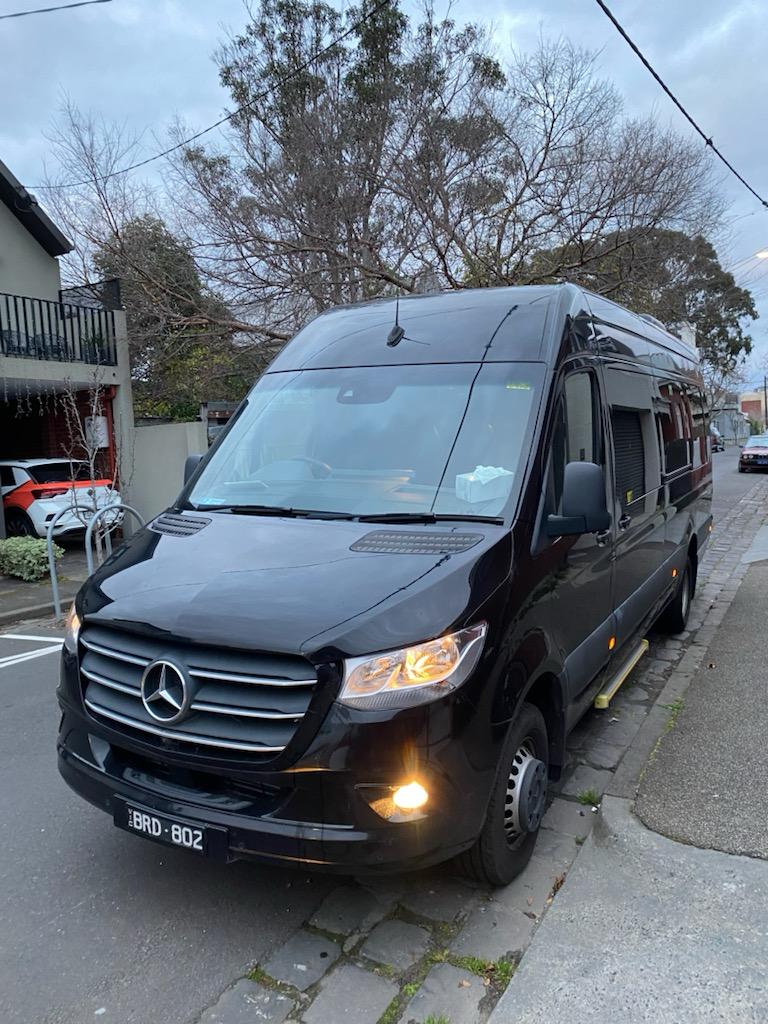
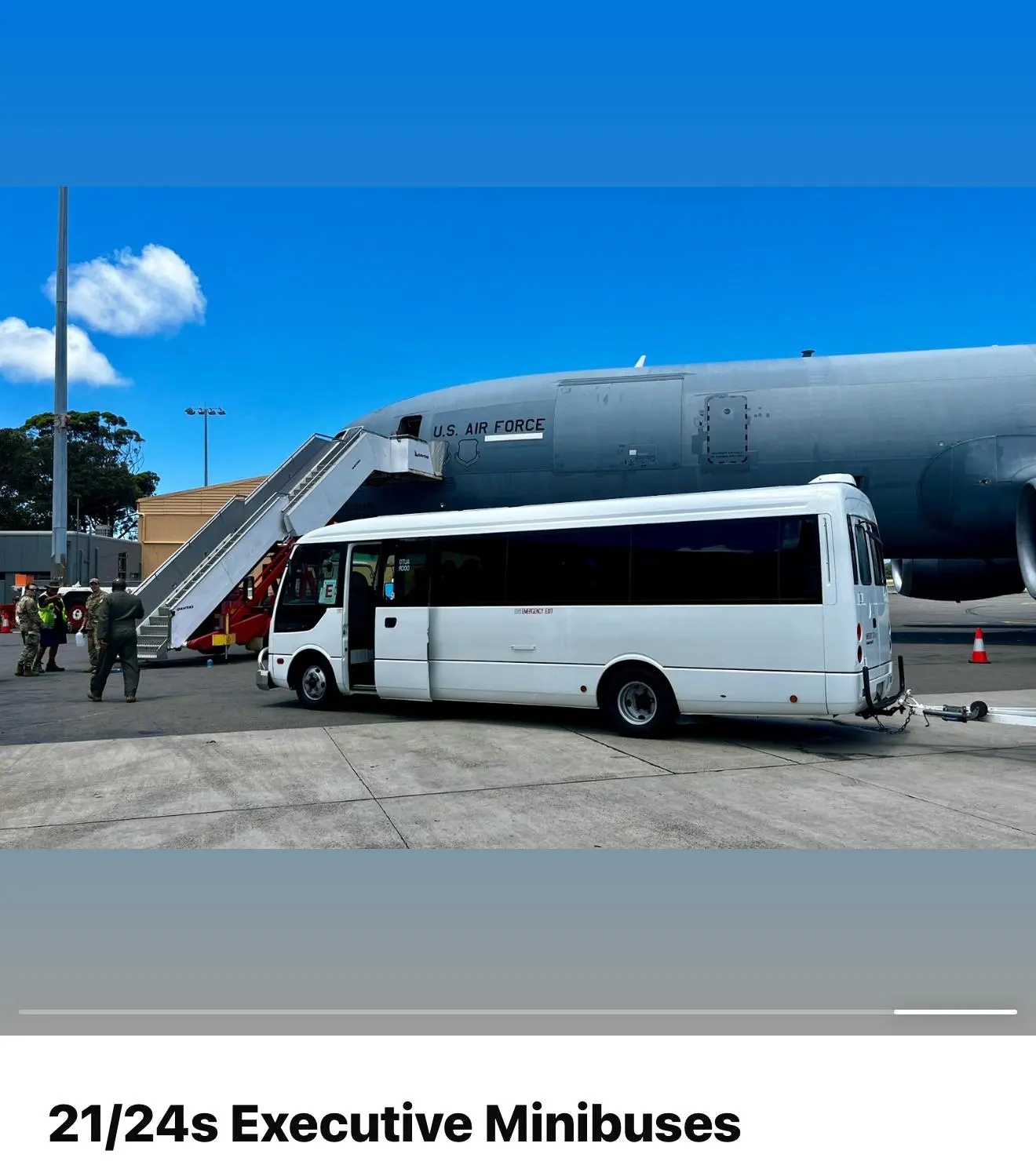
| Executive minibus | 21 to 24 | $145 | 3 hours |
| Executive midi-coach | 27 | $165 | 4 hours |
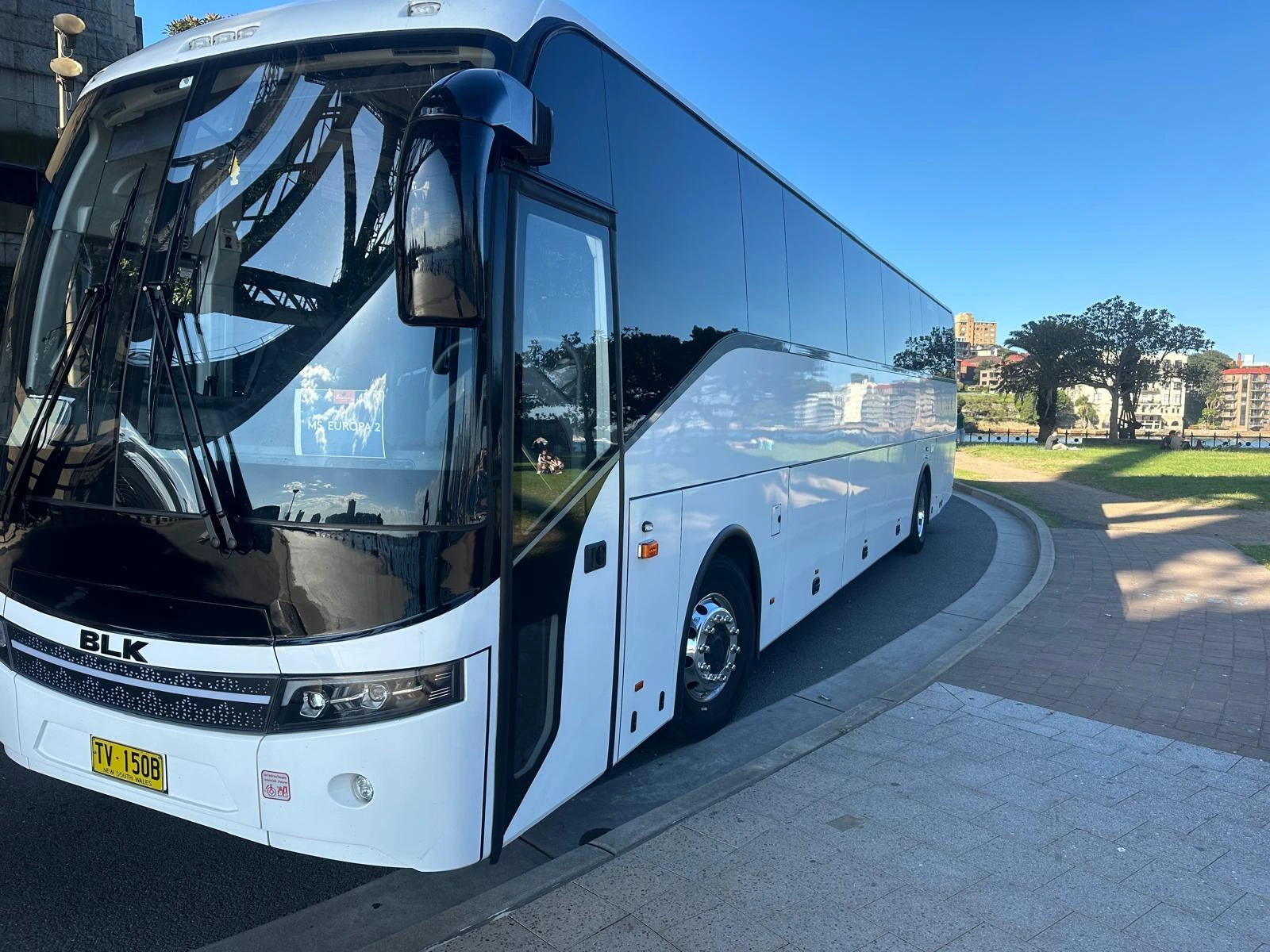
| Luxury coach | 48 | $185 | 4 hours |
| Executive coach | 53 | $195 | 4 hours |
Seat counts exclude the driver. Against that, the three structures:
Option A, one vehicle held for the whole spread. One vehicle, one driver, one arrival at the destination. Cost is the transfer plus the hold. Works when the spread is short and the group must arrive together.
Option B, one vehicle, two or more separate runs. The vehicle collects the first wave, delivers, returns and collects the second. Cost is two movements rather than one plus a hold. Works when the spread is long and the destination is close enough that the round trip fits inside it.
Option C, two vehicles. Two collections, two deliveries, no waiting. Costs the most on paper and the least in risk. Works when the spread is long, the group is large, or a delay on one flight cannot be allowed to strand the rest.
A worked example
Forty-four delegates arriving into Sydney for a conference, across three flights on the same morning. Two are domestic into the same terminal, one is international.
The manifest gives a scheduled spread of roughly three hours between the first and last landing. Add the processing tail on the international arrival and the realistic kerbside spread is wider than that.
Now run the three options.
Option A, hold one 48-seat coach. One transfer fare plus a hold covering the full kerbside spread. At a published $185 per hour, an hourly booking runs to a four-hour minimum before any hold is counted, so the question is whether the operator’s waiting charge across a spread of three-plus hours is smaller than a second movement. Insert the operator’s waiting figure and the comparison resolves itself. The delegates on the first flight also sit at the airport for the duration, a soft cost conference organisers consistently underestimate.
Option B, two runs with the same coach. Two movements, each priced as a transfer. Viable only if the round trip to the hotel and back fits inside the spread with margin. If it does not, Option B silently becomes Option A with worse timing.
Option C, two coaches. Two vehicles sized to the two waves, so a 27-seat midi-coach at $165 per hour and a 21 to 24 seat executive minibus at $145 per hour might cover it, or two transfer fares if quoted point to point. Nobody waits, and a delay on the international flight affects one vehicle rather than all forty-four people.
Run that arithmetic and the pattern is consistent: short spreads favour holding, long spreads favour splitting, and a hard destination deadline favours splitting regardless of price.
The decision rule, without a spreadsheet
If you want the short version, use the minimum hire block as your yardstick, because it is the unit the pricing is built on.
- Spread comfortably inside the minimum hire block (three hours for a minibus, four for a coach): hold one vehicle. You are paying for that block anyway.
- Spread pushing past the booked window: you are into separately priced waiting time. Get the figure and compare it against a second movement.
- Spread longer than a full return trip to the destination: run two movements with one vehicle.
- Two terminals, or a hard arrival deadline at the destination: two vehicles, regardless of the arithmetic. Trying to serve two Sydney Airport terminals with one held vehicle is where these plans usually fail.
- Any wave large enough to fill a vehicle on its own: two vehicles. You are not paying a premium for the second one so much as removing the hold entirely.
Published hourly rates and minimum hire are on the pricing page, the vehicle sizes available on the fleet page, and group airport transfers in Sydney covers the service.
What to send the operator
A staggered arrival is quoted badly when it is described vaguely. Send this:
> Group of [total] arriving [date] across [number] flights. > Flight [number], [operating carrier], [terminal], scheduled [time], [passengers], [checked cases]. > Repeat per flight. > Destination: [address]. > Required arrival time at destination: [time], and whether the group must arrive together. > Please quote three ways: one vehicle held across the spread, one vehicle running separate movements, and two vehicles. Please state the waiting charge that applies beyond the booked window.
Asking for all three prices in one request costs you nothing and turns the decision into a comparison rather than a negotiation.
Frequently asked questions
Should we hold one coach or run two trips?
Compare the operator’s waiting charge across the realistic kerbside spread against the cost of a second movement, then add the soft cost of early arrivals sitting at the airport. Short spreads favour holding; long spreads favour a second run.
What does waiting actually cost?
Ask for it in writing before you book. Waiting time beyond the booked window is confirmed in advance and priced separately in our quotes, so the number should be in the quote rather than discovered on the day.
Can one vehicle collect from two different Sydney Airport terminals?
It can, but it is rarely the right plan for a split group. Each terminal is a separate collection with its own meeting point, and T3 publishes no meeting point at all. Two waves into two terminals usually justifies two vehicles.
How wide is the spread, really?
Wider than the gap between scheduled landings. Measure from the first group member at the meeting point to the last one, and expect an international arrival to have a longer tail than a domestic one.
What happens if one of the flights is delayed?
That depends on the delay terms in the booking, which is why they belong in writing before the deposit. A long hold also runs into the driver’s legal work and rest hours, so an operator may offer a second movement instead of an open-ended wait.
Next step
Send the full arrival manifest, one line per flight, with the destination and the time the group needs to be there. We will quote the hold, the two-run option and the two-vehicle option side by side, with the waiting charge stated, usually within two business hours.
For conference and event arrivals spread across a whole day, call 02 9469 6600 and we will build the movement plan rather than quoting the legs separately.
Sources
- Sydney Airport, “Resources for registered limousines, buses and coaches”, https://www.sydneyairport.com.au/corporate/partner-with-us/commercial-vehicles/resources-for-registered-limousines-buses-and-coaches. Accessed 7 September 2026.
- Sydney Airport, “Pick-up”, https://www.sydneyairport.com.au/pickup. Accessed 7 September 2026.
- National Heavy Vehicle Regulator, “Heavy vehicle fatigue management, bus industry”, https://www.nhvr.gov.au/safety-accreditation-compliance/fatigue-management/heavy-vehicle-fatigue-management-bus-industry. Accessed 7 September 2026.