A NSW snow trip is not a day trip from Sydney. The ski fields sit well beyond Canberra, which the operator publishes at 285 km and three to three and a half hours each way, and even a Canberra return consumes most of a solo driver’s legal working day. Plan on two nights as a minimum. Then plan the vehicle around the gear rather than the head count, because a ski group generates two to three bulky items per person instead of one.
Currency note. Alpine road and chain requirements change every season and are deliberately not stated in this article. The Heavy Vehicle National Law changed on 1 August 2026 and the fatigue position described here is the position after those changes. Last verified 7 September 2026.
Why a snow trip is never a day trip
Start with the only published figure on that corridor. Sydney to Canberra is 285 km and three to three and a half hours each way. A Canberra return is therefore six to seven hours of driving, which against a twelve hour work ceiling leaves roughly three and a half to four and a half hours on the ground once the depot legs, loading and comfort stops are accounted for.
The ski fields are considerably further than Canberra. Whatever the exact figure for your pick-up suburb and destination, the arithmetic has already failed before you add a single run down a mountain.
There is a second reason, and it is the one that matters more in practice. Snow days are short. A group that arrives at a resort in the early afternoon has bought a couple of hours of daylight, and it then has to load wet, tired people back onto a coach for a long drive home at exactly the point in the day when the driver is deepest into their hours. Two nights turns that into two real days on the snow with the driving split either side.
The rules underneath this are not optional. Charter work sits inside the heavy vehicle fatigue regime, because the NSW exemption for fatigue-regulated buses does not apply where the bus is driven to provide a public passenger service, and a charter service is one. Under standard hours a solo driver may work up to 12 hours in any 24 with 7 continuous hours of stationary rest, and 72 hours in any 7 days with 24 continuous hours of stationary rest. Work includes loading, waiting and the depot legs, not just the driving.
Gear is the constraint, not seat count
This is where snow trips differ from every other charter a group is likely to have booked.
| Item, per person | Typical count | Why it matters for loading |
|---|---|---|
| Skis or snowboard | 1 | Long and rigid. Cannot be compressed or repacked |
| Poles | 1 pair | Travels with the skis, awkward loose |
| Boot bag | 1 | Rigid, bulky, and the item people most underestimate |
| Clothing and soft bag | 1 | The only forgiving item in the list |
| Helmet, goggles, outerwear | Usually inside the boot bag | Adds volume to an already rigid item |
Run the numbers for your group. Twenty-five people on a conference trip present roughly twenty-five bags, all of them soft and squashable. The same twenty-five people on a snow trip present something closer to fifty to seventy-five items, most of which do not compress at all.
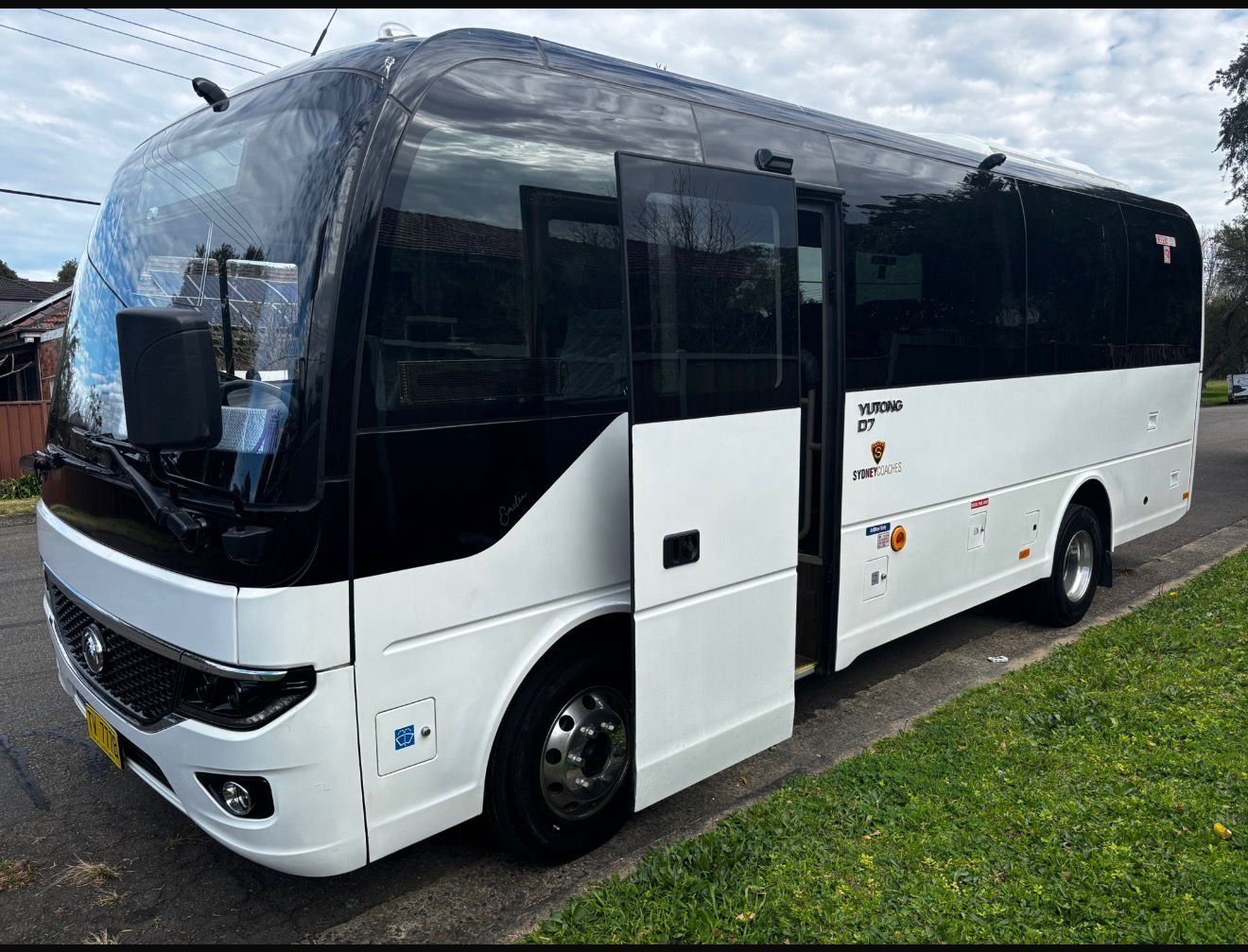
That is why the vehicle for a snow group is often a size larger than the head count alone would suggest. A 27-seat midi-coach carrying 25 skiers is not the same proposition as the same vehicle carrying 25 delegates, and the difference is entirely below the floor.
Three practical decisions follow.
Count the items before you ask for a quote. Give the operator the head count and the item count, not just the head count. That is the single most useful thing an organiser can do on a snow booking.
Ask the capacity question against a named vehicle. Underfloor bay capacity is a property of a specific vehicle, not of a seat band, so ask for it to be confirmed against the vehicle named in your quote.
Consider hiring at the destination. Hiring skis, boards and boots on arrival removes most of the rigid volume from the problem and can change which vehicle you need. For a group that is mostly beginners, this is often the better answer on every axis, not only transport.
Roads, chains and conditions: what this article will not tell you
Alpine road access, chain requirements and conditions are set season by season and change with the weather. Anything published about them in September is not a fact in July. So this article does not state them, and you should be sceptical of any transport article that does.
Do this instead.
- Check the current season’s published requirements for your travel dates with the National Parks service that manages the alpine area and with the resort or accommodation you are travelling to. Do it when you book, and again in the week before you travel.
- Ask your operator to confirm in writing that the vehicle named in your quote is equipped and compliant for the conditions applying on your travel dates.
- Ask what happens if a road is closed on your planned departure day. This is not a hypothetical, and it is not only an inconvenience question. A delayed departure eats into the driver’s available hours, which can change the return leg. Get the contingency agreed before you travel rather than negotiated in a car park.
None of the three takes long. All three are the difference between a plan and a hope.
When to book
Snow is the sharpest seasonal peak in the NSW group travel calendar, and the peak inside the peak is the winter school holidays.
Published lead times are two to four weeks for most jobs, and four to eight weeks for peak periods. Treat the entire snow season as a peak period, and treat the school holiday fortnight as the part that closes out first.
For NSW government schools, Eastern division, the relevant dates are:
- 2026: Term 2 ends Friday 3 July, Term 3 begins Tuesday 21 July.
- 2027: Term 2 ends Friday 2 July, Term 3 begins Tuesday 20 July.
Two caveats worth stating. Western division “late start” schools differ only in Term 1, so the winter window is the same. Catholic systemic and independent schools set their own dates, so a mixed group may not share a holiday period. These dates were last checked on 7 September 2026 against the Department of Education calendars linked below, and should be re-checked before you rely on them.
If your trip has to fall inside that fortnight, book at the outer end of the published lead time rather than the inner one, and lock accommodation before transport if you have to choose.
What a multi-night snow charter includes
A snow trip is a continuous commitment of a vehicle and a driver across several days, not a series of separate day hires. Minimum hire, three hours for minibuses and people movers and four hours for midi-coaches and full-size coaches, is not the operative constraint here.
Included in the rate: the professional driver, fuel, vehicle insurance and GST.
Confirmed in advance and priced separately: tolls and parking, driver accommodation on multi-day trips, public holiday and after-hours loading, and waiting time beyond the booked window.
Driver accommodation is a named line rather than a hidden one. On a two night snow trip that is two nights, and it should appear in the written quote as its own figure so you can see it and split it across the group.
For the published route figures on this corridor, see the published Sydney coach routes and driving times. For the vehicle side of the gear problem, full-size coach hire in Sydney sets out the fleet, and charter bus and coach hire in Sydney with a driver included is where a multi-night trip is quoted.
Frequently asked questions
Can a group do a snow trip from Sydney in one day?
Realistically, no. Canberra alone is 285 km and three to three and a half hours each way on the published figures, and the ski fields are considerably further. A return day trip would consume a solo driver’s twelve hour work ceiling before the group had any usable time on the snow. Plan on two nights as a minimum.
How much ski gear can a coach carry?
That depends on the specific vehicle’s underfloor bay, so it should be confirmed against the vehicle named in your quote rather than assumed from the seat count. What you can do in advance is count the items: skis or a board, poles, a boot bag and a clothing bag per person, which is two to three bulky items each rather than one.
What are the chain requirements for a coach going to the NSW snow?
They are set season by season and change with conditions, so this article does not state them. Check the current season’s published requirements with the National Parks service and your resort for your travel dates, and ask your operator to confirm in writing that the named vehicle is equipped and compliant for those dates.
When should we book a group snow trip?
Published lead times are two to four weeks for most jobs and four to eight weeks for peak periods. Treat the whole season as peak. The NSW government school winter holiday fortnight, which falls between 3 and 21 July in 2026 and 2 and 20 July in 2027 for Eastern division schools, is the part that fills first.
Is it cheaper to hire ski gear at the resort than to bring it?
That is a resort question rather than a transport one, but it has a real transport consequence. Hiring on arrival removes most of the rigid, non-compressible volume from the luggage bay, which can mean a smaller vehicle or a less constrained one. For a group of beginners it is usually worth pricing both ways.
Who pays for the driver’s accommodation?
The client, as a named line in the quote. Driver accommodation on multi-day trips is listed among the items confirmed in advance and priced separately, so on a two night trip it should appear as two nights in the written quote.
Next step
Send us the head count and the gear count, the pick-up suburb and the travel dates, and we will quote against a named vehicle with the luggage capacity confirmed rather than assumed. Ask us at the same time what the contingency is if an alpine road closes on your return day. Call 02 9469 6600 or send the trip details and a fixed written quote comes back within two business hours.
Sources
- National Heavy Vehicle Regulator, “Heavy vehicle fatigue management: bus industry”, https://www.nhvr.gov.au/safety-accreditation-compliance/fatigue-management/heavy-vehicle-fatigue-management-bus-industry. Accessed 7 September 2026.
- NSW Legislation, “Heavy Vehicle National Law (NSW)”, https://legislation.nsw.gov.au/view/whole/html/inforce/current/act-2013-042. Accessed 7 September 2026.
- NSW Department of Education, “School calendar 2026”, https://education.nsw.gov.au/schooling/calendars/2026. Accessed 7 September 2026.
- NSW Department of Education, “School calendar 2027”, https://education.nsw.gov.au/schooling/calendars/2027. Accessed 7 September 2026.