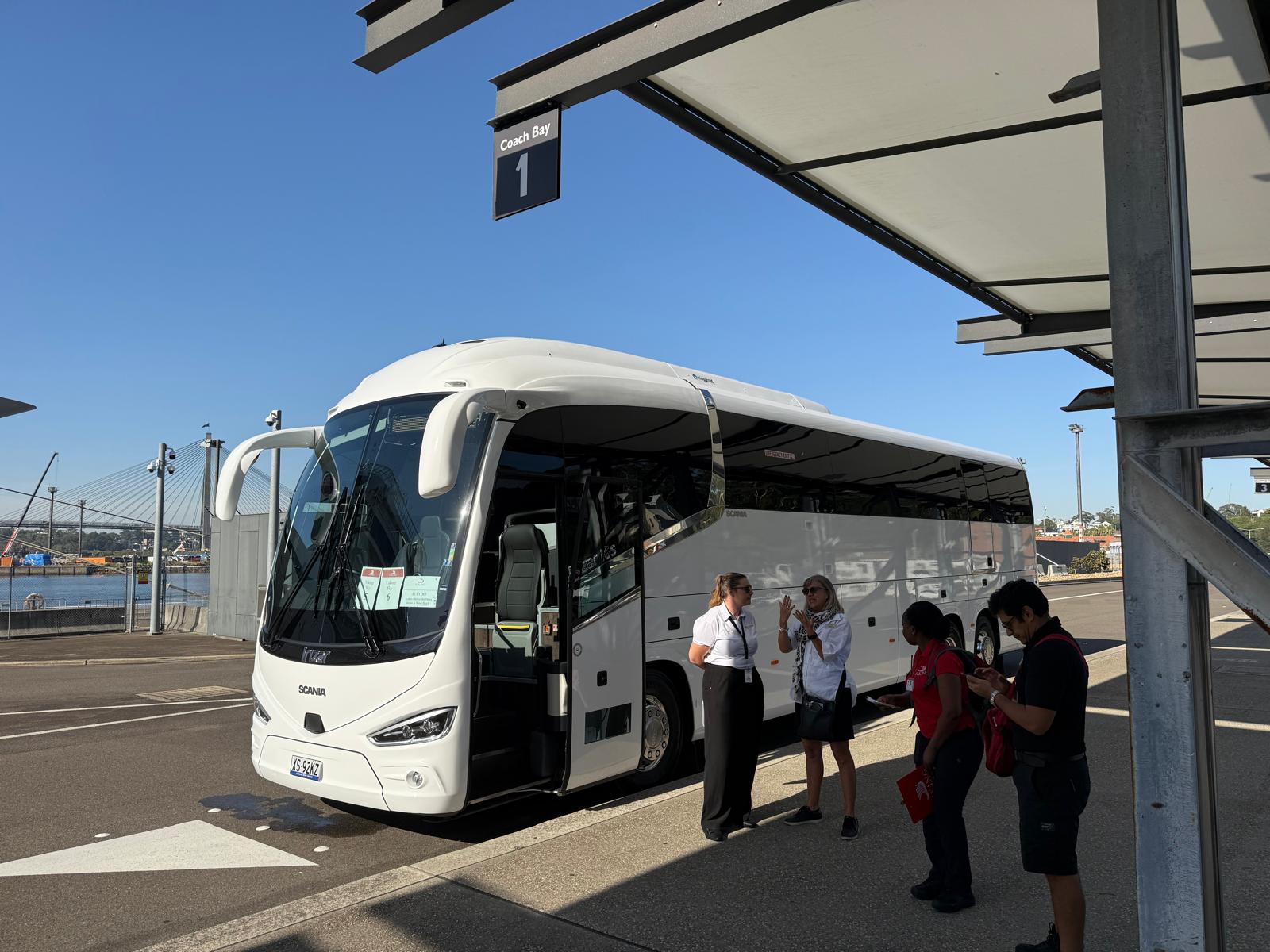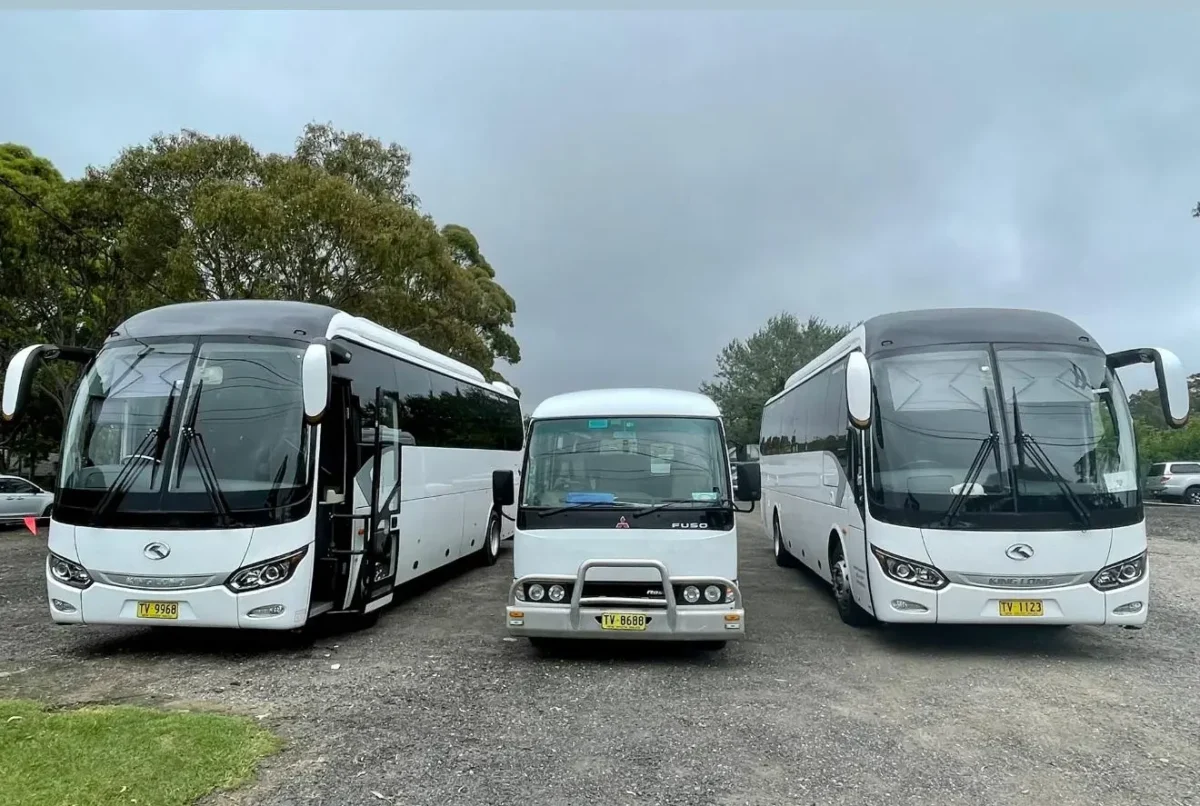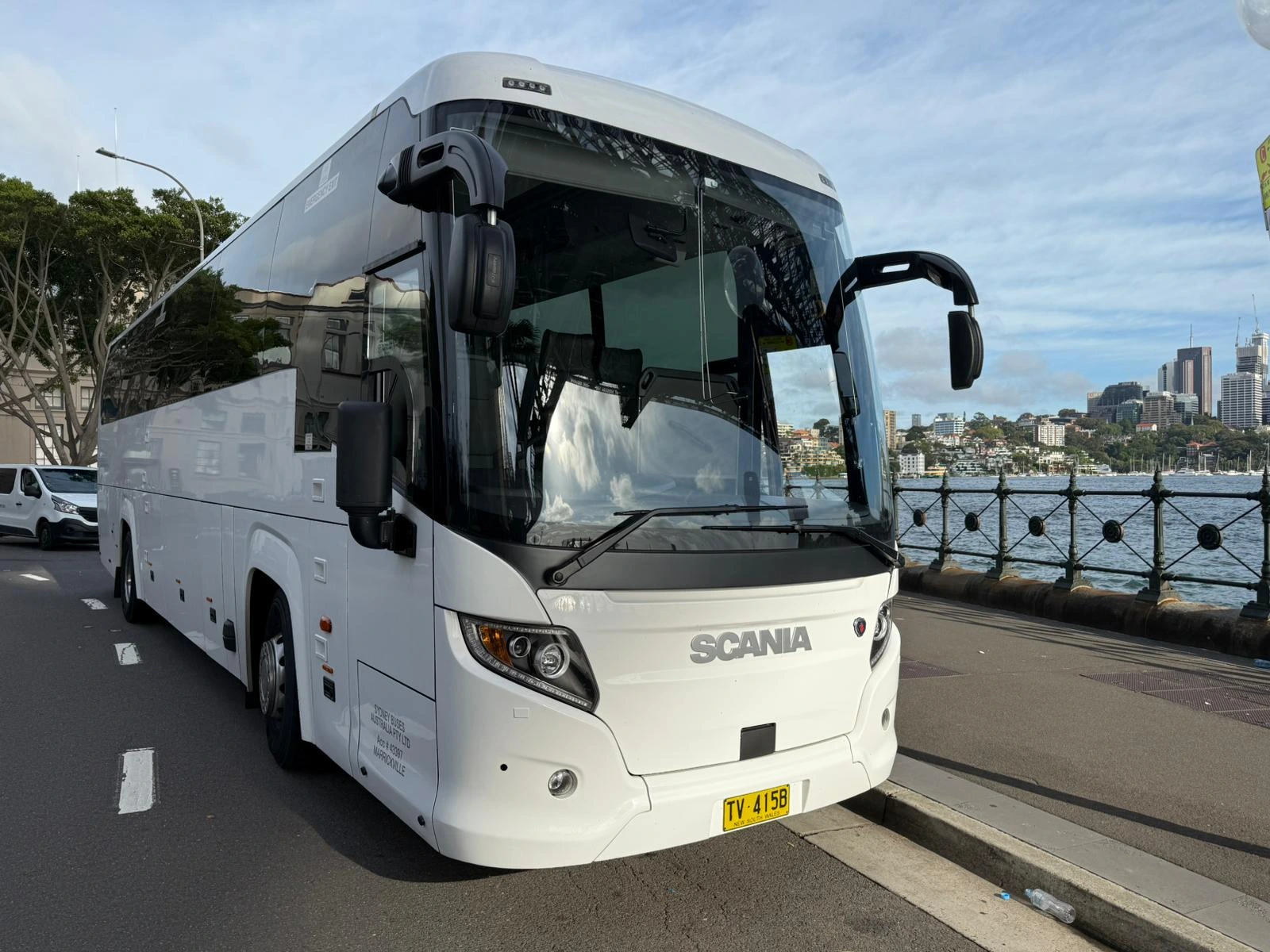
Most faith and cultural group transport in Sydney is a pick-up loop problem rather than a vehicle problem. The congregation lives across several suburbs, the venue has nowhere for a coach to wait, and the group spans ages from primary school to ninety. Solve it by consolidating people into two or three collection points, sizing one vehicle to the whole loop, and confirming where the coach can legally stop at each end. The vehicle choice follows from that, not the other way around.
Three different jobs, often confused
Groups usually describe all of this as “we need a bus”. They are three separate bookings with different economics.
The recurring service run. A weekly or fortnightly loop collecting members who cannot drive to a regular service or gathering. Short, predictable, and repeated.
The occasional group outing. A day trip, a retreat, a visit to another congregation, a pilgrimage or a cemetery visit. One-off, longer, and planned in advance.
The annual event movement. A festival, a feast day, a combined service, a cultural celebration where several hundred people arrive at once. Short, intense, and needing a shuttle rather than a single trip.
Work out which one you are actually booking before you ask for a price, because the answer changes what a sensible quote looks like.
Designing the pick-up loop
The single biggest saving available to a community group is fewer stops.
A loop with nine doorstep pick-ups across four suburbs takes far longer than the same nine people meeting at three points, and time is what you are buying. Every extra stop adds the approach, the boarding, and the pull-out, and on a Sunday morning that adds up quickly.
Design it like this.
- Map where people actually live, not where you assume they live. Ask.
- Pick two or three collection points with somewhere safe to stand, somewhere to sit, and parking for members who can drive part of the way.
- Order the loop geographically, so the vehicle is never doubling back.
- Set fixed times per point and publish them, so nobody waits 20 minutes on a footpath.
- Keep doorstep pick-ups for the small number who genuinely cannot reach a collection point, and consider a second smaller vehicle for those.
- Check where the vehicle can stop at each point and at the destination.
That last item has a rule behind it. Under the NSW Road Rules, a charter coach counts as a public bus, so it may stop in a bus zone to set down or pick up passengers, but it may not wait or park there. A loop that assumes the coach can idle outside for ten minutes while stragglers arrive is not a loop that works. Fixed times, published in advance.
Coverage across the six Greater Sydney regions carries no travel surcharge inside Greater Sydney, so a loop that crosses from one region to another is about the run sheet rather than a geographic penalty. Check the Greater Sydney pick-up areas when you are designing it.
Mixed ages and mixed mobility
A congregation is the most mixed group most operators carry, and the planning has to reflect that.
Older members. Boarding takes longer, and the walk from the legal set-down point to the entrance matters more than the seat quality. Ask which members use a frame or a stick, and put the answer in the booking rather than discovering it at the kerb.
Members using a wheelchair. If someone travels in their chair, you need a vehicle with a boarding device and an allocated space, confirmed in writing for the specific vehicle on your date. Most charter coaches have a fixed seat for every passenger and carry no allocated space at all, so this is something to specify. Details are on accessible bus hire in Sydney.
Children and young families. Two NSW rules matter here. On a coach fitted with seatbelts, wearing them is required for every passenger aged 16 and over. And for younger children, the driver duty that requires an approved child restraint does not extend to passengers on a vehicle that meets the Road Rules definition of a bus, which is more than 12 adult seats including the driver. There is no equivalent relief on a minibus of 12 seats or fewer, which is not a bus for those rules. Treat the bus position as a permission rather than as advice: many groups still choose to bring restraints for very young children, and that decision belongs to the families and the committee.
Carers and helpers. Count them. Published seat counts exclude the driver, so every helper occupies a seat that a member cannot.
The recurring run, and what it really costs
This is where volunteer committees are most often caught out.
Minimum hire is three hours for minibuses and people movers and four hours for midi-coaches and full-size coaches. A 45 minute loop before a service and a 45 minute loop afterwards is 90 minutes of driving inside a booking that is charged against a minimum. That is not a penalty, it is how charter works, and knowing it changes the design.
Three ways groups make the arithmetic work.
- Combine the two loops into one booking rather than two separate ones, with the vehicle staying with the group between them where the timing allows.
- Add something to the same booking. A visit, a shared meal, a second gathering. If you are paying for the hours, use them.
- Right-size the vehicle. A 13-seat vehicle at $110 an hour and a 27-seat midi-coach at $165 an hour are different propositions. Count the actual regular riders rather than the hopeful number.
Professional driver, fuel, vehicle insurance and GST are included in a quote. Tolls and parking, public holiday and after-hours loading, and waiting time beyond the booked window are confirmed in advance and priced separately. Ask for those to be set out explicitly, because a recurring booking on a public holiday weekend is exactly where a surprise appears.
On funding, the honest answer from a transport operator is that we can give you a fixed written quote naming the vehicle and itemising what is included, and how the cost is shared between the group, a collection, a fund or an individual is a decision for your committee.
Annual festivals and one-off movements
A large annual gathering is a shuttle, not a charter, and it needs a different plan: staggered arrivals, a fixed set-down point, a holding arrangement for the vehicle between runs, and a staggered return so 300 people are not all leaving at once.
Check the date against Sydney’s confirmed event calendar before you commit. In 2027 the Sydney Festival runs 7 to 25 January, the Mardi Gras Parade is on Saturday 6 March along Oxford Street, Flinders Street and Anzac Parade with the parade from 7:30 to 9:30pm, the Sydney Royal Easter Show runs 19 to 30 March, Vivid Sydney runs 28 May to 19 June, and City2Surf is on Sunday 8 August over 14 km from the CBD to Bondi. Any of those can close the roads your loop uses, and City2Surf in particular lands on a Sunday morning across the eastern suburbs.
One correction worth carrying to your committee: the Easter Show falls entirely within March in 2027, not April.
What to confirm before you commit
- [ ] Which of the three jobs you are booking, and for how many people.
- [ ] The loop, with fixed times per collection point.
- [ ] Where the vehicle can legally stop at each point and at the destination.
- [ ] Vehicle confirmed in writing, with seat count and any boarding device named.
- [ ] Helpers and carers counted into the headcount.
- [ ] The hours booked, and what happens if the group runs late.
- [ ] Cancellation terms, which are set out in the written quote.
- [ ] For a recurring booking, how far ahead it is held and what notice is needed to skip a week.
- [ ] The operator’s NSW bus operator accreditation number and Certificate of Accreditation. Accreditation is administered by Transport for NSW under the Passenger Transport Act 1990 and applies to vehicles seating 13 or more. There is no public register, so the certificate is the verification route.
- [ ] Driver name, mobile and vehicle registration before travel.
If your group runs a dedicated youth or children’s transport service rather than a general congregation loop, ask the operator about Working With Children Checks specifically. Transport is a child-related work category where the work is especially for children and contact is a usual part of and more than incidental to it, so a dedicated youth run is treated differently from a mixed-age congregation run. Clearances last five years and are continuously monitored, and workers cannot self-verify, so verification runs through the employer rather than through a photograph of a card. This is an area where your committee should take its own advice rather than rely on a general article.
Frequently asked questions
Can we book the same bus every week?
Ask the operator whether a recurring booking can be held and whether the same vehicle and driver can be allocated. Raise it at enquiry rather than after a few weeks, because a standing arrangement is easier to set up than to retrofit.
Is it cheaper to do doorstep pick-ups or collection points?
Collection points, almost always. You are buying hours, and every extra stop consumes them. Keep doorstep pick-ups for members who genuinely cannot reach a collection point.
How do we handle a congregation spread across many suburbs?
Two or three collection points on a geographic loop, with published times, and a second smaller vehicle if one cluster sits well outside the loop. Design the loop first and choose the vehicle afterwards.
Do we need a bus with a wheelchair lift?
Only if a member travels in their wheelchair. If members transfer to a seat and frames are stowed, the requirement is different. Confirm the specific vehicle in writing either way.
Can we bring food for a shared meal?
Food and non-alcoholic drinks are fine on all vehicles. Alcohol is permitted on private function bookings by prior arrangement only, and never on school or youth charters.
How far ahead should we book a festival movement?
Published lead times are two to four weeks for most jobs and four to eight weeks for peak periods including December and long weekends. A large annual event with a fixed date deserves the longer figure, and earlier if it coincides with a major Sydney event.
Next step
Tell us the loop you are trying to run, the number of regular riders and any access requirements, and we will size the vehicle and put a written quote with the hours and inclusions in front of your committee within two business hours. Call 02 9469 6600, or see the charter services available across Sydney.
Sources
- NSW Legislation, “Road Rules 2014 (NSW)”, https://legislation.nsw.gov.au/view/html/inforce/current/sl-2014-0758. Accessed 7 September 2026.
- Office of the Children’s Guardian, “Who needs a Working With Children Check”, https://ocg.nsw.gov.au/working-children-check/who-needs-check. Accessed 7 September 2026.
- NSW Government (Transport for NSW), “Applying for bus operator accreditation”, https://www.nsw.gov.au/departments-and-agencies/transport-for-nsw/bus-operators-nsw/applying-for-bus-operator-accreditation. Accessed 7 September 2026.