Build a seniors club day trip backwards from the comfortable travel time, not forwards from the destination. Decide how long the group will happily sit, subtract two driving legs and the comfort stops, and see what is left for the actual outing. That usually rules out anything more than about two hours each way. Then confirm who is travelling, because a group with several members using frames boards more slowly and needs the schedule to say so.
Who is actually travelling
Committees tend to plan the trip and count the numbers afterwards. Reverse it.
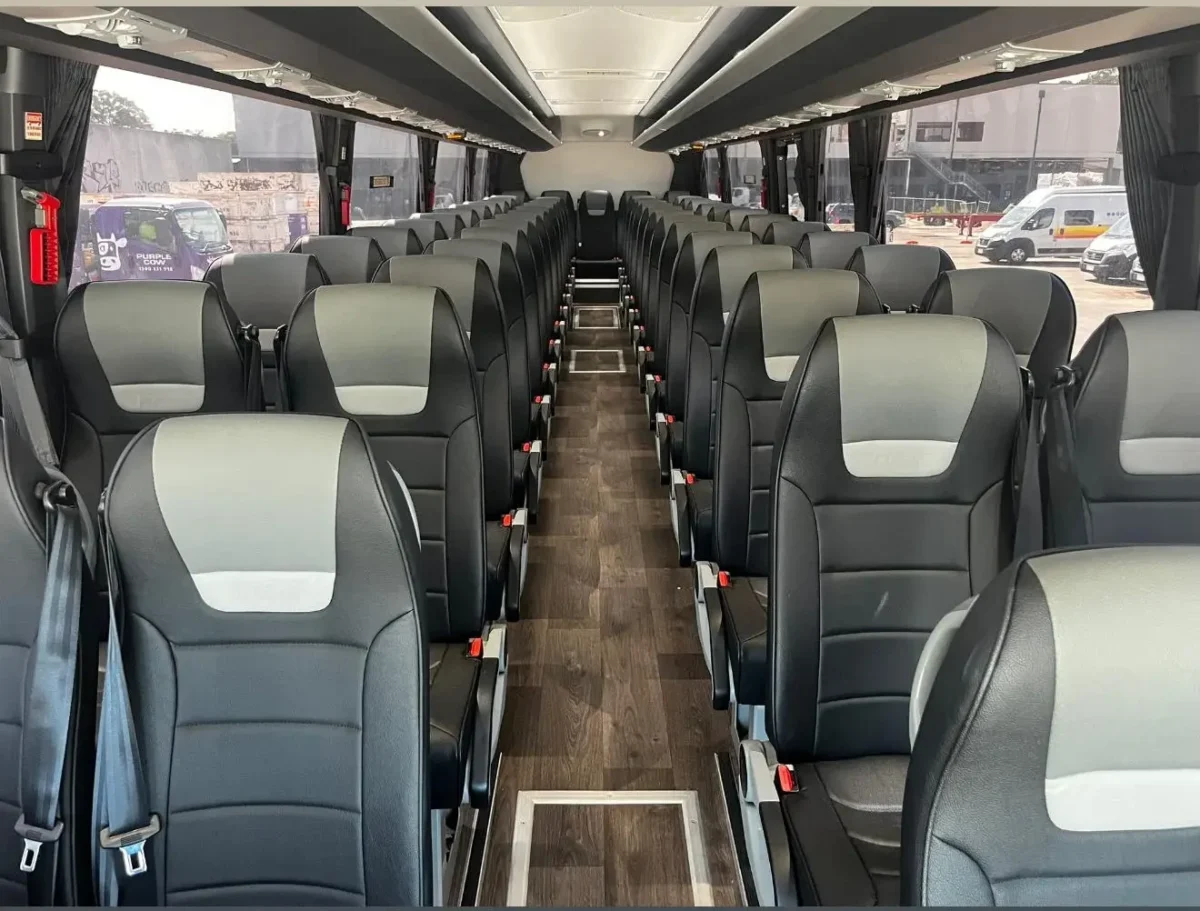
Before you pick a destination, get a proper count: total members travelling, how many use a walking frame or a stick, how many use a wheelchair and whether they travel in it or transfer to a seat, and whether anyone is bringing a carer or a partner who needs a seat. Published seat counts exclude the driver, so everybody else on board needs one.
That count does two things. It sizes the vehicle honestly, and it tells you how much time each stop will really take, which is the number that decides whether your itinerary works.
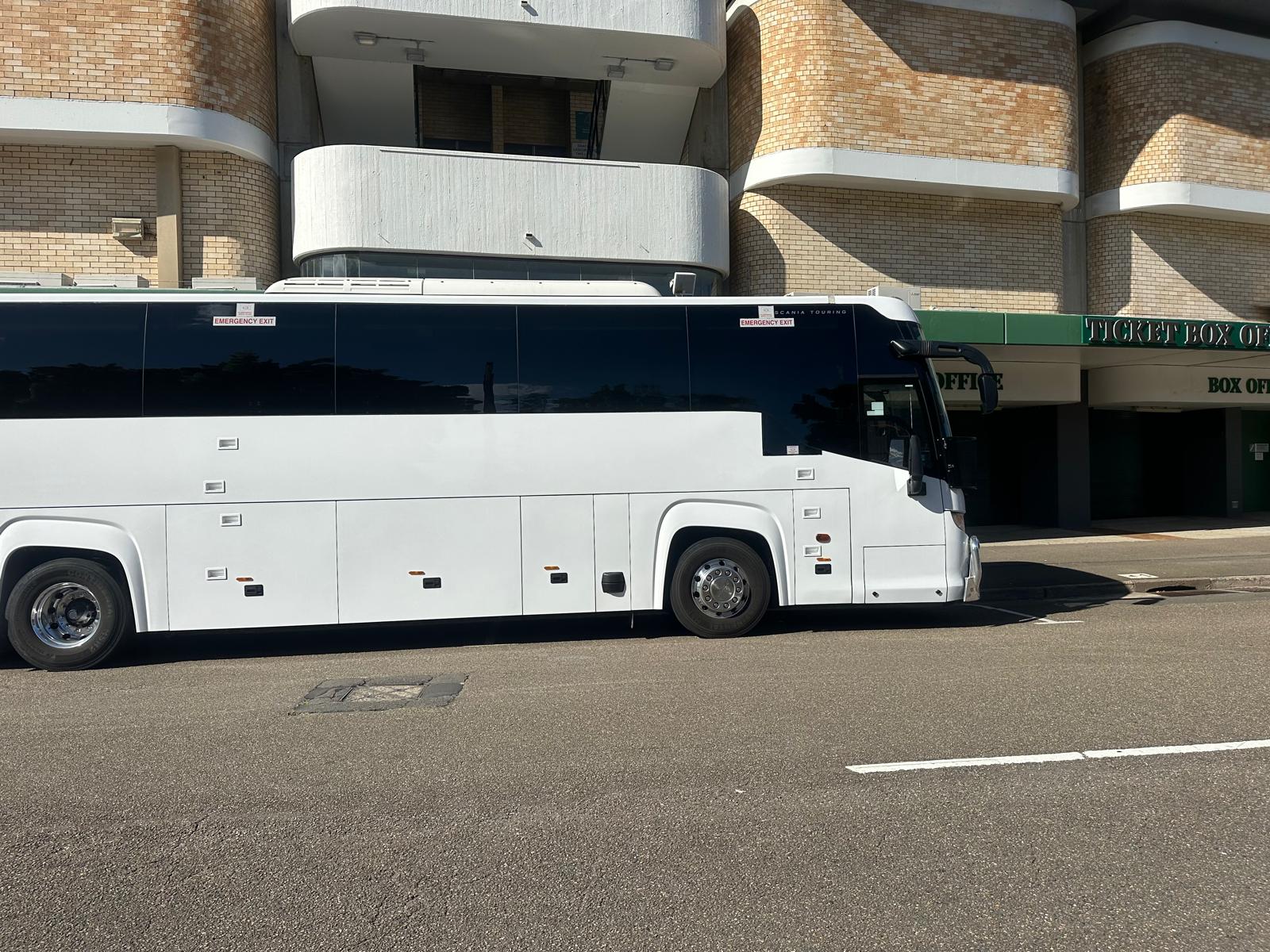
If anyone travels in their wheelchair, you need a vehicle with a boarding device and an allocated space, confirmed in writing for the specific vehicle on your date. Most charter coaches have a fixed seat for every passenger and no allocated space, so this is something to specify rather than assume. Details are on accessible bus hire in Sydney.
Choosing a destination the group can actually enjoy
These are the real coach figures out of Sydney. Use them rather than a car navigation estimate, because a coach with a group and comfort stops does not travel like a car.
| Destination | Distance | Driving time each way | Verdict for a club day trip |
|---|---|---|---|
| Wollongong | About 80 km | Around 80 minutes via the M1 | Comfortable full day with time to spare |
| Southern Highlands | 120 km | About 1.5 hours | The most workable full day for most clubs |
| Blue Mountains, Katoomba | 105 km | About 2 hours, 2.5 from the eastern suburbs or northern beaches | A long day. Workable, but plan the stops carefully |
| Hunter Valley, Pokolbin | 165 km | 2 to 2.5 hours | A long day, better for a more mobile group |
| Port Stephens, Nelson Bay | 205 km | 2.5 to 3 hours | Usually an overnight rather than a day trip |
| Canberra | 285 km | 3 to 3.5 hours | Overnight territory for a seniors group |
The published route pages set out the published day trip routes from Sydney if you want to compare them properly, and a Southern Highlands day by coach covers the region most clubs land on.
For general distance context, tourism bodies publish car times measured from central Sydney in free-flowing traffic. Those are useful for a rough sense of direction and misleading for planning a coach day, which is why the table above uses coach operating figures instead.
The shape of a comfortable day
Write the itinerary as blocks with times, not as a list of places.
- Departure and boarding. The slowest block of the morning if several members use frames. Start the clock when the doors open, not when the coach arrives.
- First leg. No more than about 90 minutes before a stop, and less if the group tells you otherwise.
- Morning comfort stop. A timed block with a confirmed accessible toilet, not a hopeful pull-in at a service station.
- Arrival and the walk in. The distance from where the coach legally stops to the entrance is part of the trip, and at some venues it is the hardest part.
- The main activity. With a seat available for anyone who needs one, and a clear meeting time and place.
- Lunch. Booked, with the group size confirmed and the access checked.
- Afternoon comfort stop. Yes, another one.
- Return leg and drop-off. Slowest boarding of the day, in the afternoon, when people are tired.
Two rules keep this honest. Every stop costs a boarding and an alighting, so removing one stop removes two movements. And the afternoon always runs slower than the morning, so give the return more time than the departure rather than less.
The driver’s day is a real limit
Charter work sits inside the heavy vehicle fatigue regime, and it shapes what you can ask for.
Under standard hours a solo driver may work a maximum of 12 hours with 7 continuous hours of stationary rest in any 24 hour period. A separate standard hours table applies specifically to bus and coach solo drivers, and a driver uses one table or the other rather than mixing them. A common misunderstanding worth correcting on your committee: operating within 100 km of base is a record-keeping tier, not an exemption. Work and rest limits apply in full.
The practical effect is that a 6am departure and an 8pm return is a long day that has to be built deliberately, and that “we will just add another stop on the way home” is not always available. Send your draft itinerary to the operator and ask whether it works within the driver’s hours before you publish it to members.
Costing it per member
Clubs need a per-head figure before they can sell seats, and the arithmetic is simple once you know the structure.
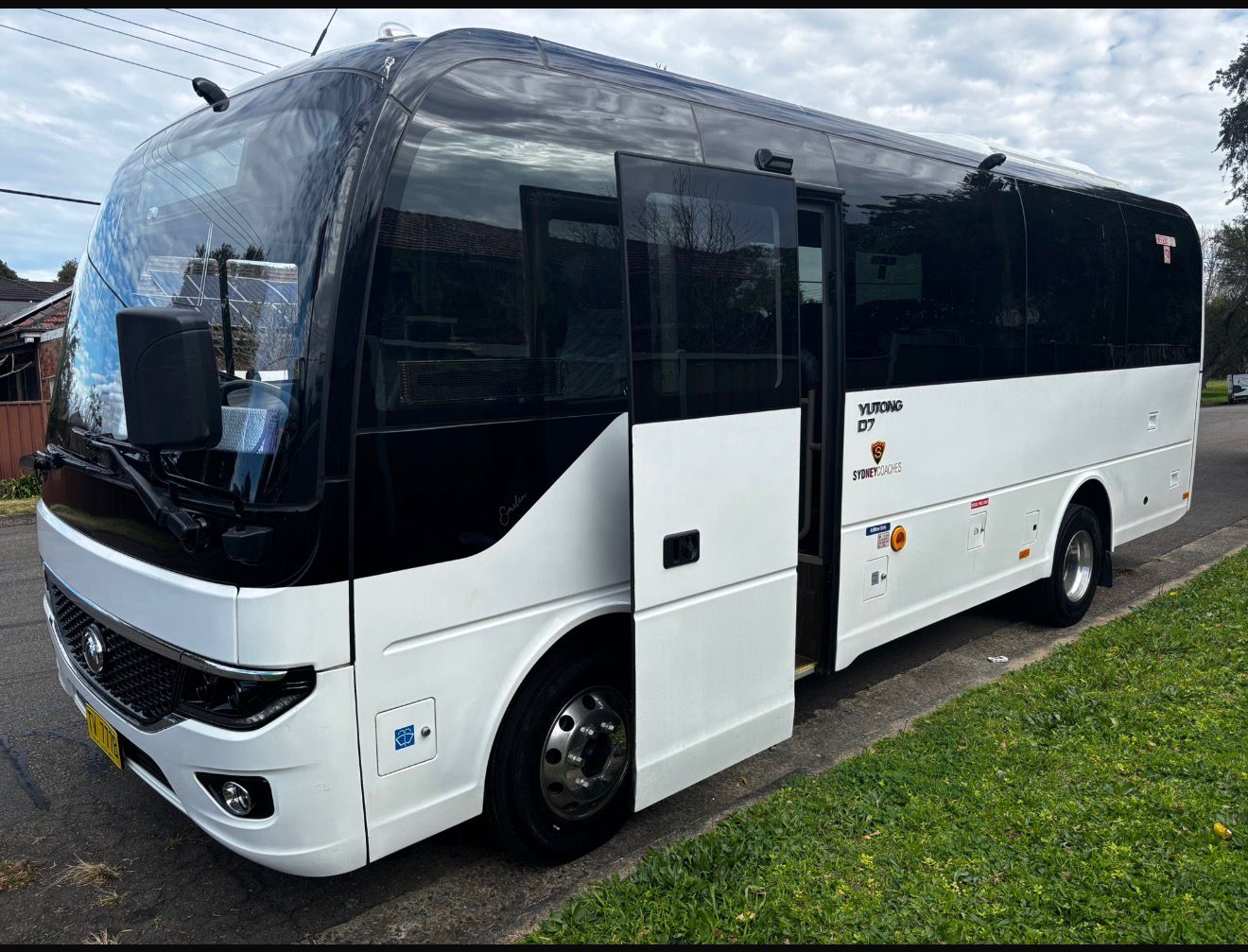
Published hourly rates, GST inclusive, run from $110 an hour for a 13-seat Toyota Commuter through $165 for a 27-seat executive midi-coach to $185 for a 48-seat luxury coach and $195 for a 53-seat executive coach. Minimum hire is three hours for minibuses and people movers and four hours for midi-coaches and full-size coaches. Groups of 58 or more are quoted per event as a coordinated convoy.
The method:
- Work out the booked hours. Count from the first pick-up to the final drop-off, including comfort stops and waiting time at the destination, then add a margin.
- Multiply by the hourly rate for the vehicle that fits your headcount. A 40-member group needs a 48-seat coach at $185 an hour, so a nine hour day is 9 by $185.
- Add the separately confirmed items. Tolls and parking are confirmed in advance and priced separately, and so are public holiday and after-hours loading and waiting time beyond the booked window.
- Divide by the number of paying members, not by the seat count. This is where clubs get caught, because an empty seat is still a seat you paid for.
- Add your own margin for the shortfall. Most clubs set a per-head price assuming slightly fewer travellers than they hope for.
Two cost notes specific to a day trip. Coach parking at Echo Point in Katoomba is paid, charged per half hour along Echo Point Road and Panorama Drive and banded by seat count, so a long stop at the lookout carries a cost that belongs in your per-head figure. And professional driver, fuel, vehicle insurance and GST are already included in the quoted rate, so those are not extras to budget for separately.
Before you take money from members
Confirm these first. A club that has collected 40 deposits has already committed itself.
- [ ] Written quote with the vehicle named and the hours stated.
- [ ] Cancellation terms read and understood. They are set out in the written quote.
- [ ] The deposit required, and when the balance falls due.
- [ ] Vehicle confirmed against your headcount, with carers counted in.
- [ ] Access requirements confirmed in writing if any member travels in a wheelchair.
- [ ] Comfort stops agreed and accessible facilities confirmed at each.
- [ ] Lunch booking made for the confirmed number, with access checked.
- [ ] Destination arrival time coordinated with any venue that takes group bookings.
- [ ] Pick-up point and time published to members, with a named contact for the day.
Published lead times are two to four weeks for most jobs and four to eight weeks for peak periods including December, race days and long weekends. Booking process is straightforward: send the trip with the pick-up suburb, date and group size, receive a fixed written quote naming the vehicle within two business hours, confirm with the deposit set out in the quote, and receive the driver name, mobile and vehicle registration 24 hours before travel.
Two Blue Mountains details that change the plan
If Katoomba is the destination, two published facts are worth knowing before you build the day.
Echo Point. Blue Mountains City Council operates paid bus and coach parking along Echo Point Road and Panorama Drive, charged per half hour and banded by seat count. The Council adopted a Visitor Bus Management Plan, published on 3 March 2026, which makes Echo Point the Phase 1 pilot for a future bus booking and payment system within a year. There is no booking requirement today, but this is an area to re-check close to your travel date rather than to assume is unchanged.
Scenic World. The car park has a 2 m clearance, which a coach cannot use, and the venue publishes no coach parking information. It takes reservations for groups of more than 15, so make the group booking and ask the coach access question in the same conversation.
Things to tell members before the day
- The pick-up point and time, with a landmark, and a request to arrive ten minutes early.
- That on a coach fitted with seatbelts, wearing them is required in NSW for every passenger aged 16 and over.
- What the walk is like at the destination, in plain terms.
- Where the comfort stops are and roughly when.
- That food and non-alcoholic drinks are fine on board. Alcohol is a separate arrangement, permitted on private function bookings by prior arrangement only.
- A named contact on the day, with a mobile number.
Frequently asked questions
How long can a seniors group comfortably travel in one leg?
That depends on your members, and the committee usually knows better than any operator. What we can give you is the real driving time: around 80 minutes to Wollongong, about 1.5 hours to the Southern Highlands, about 2 hours to Katoomba. Add comfort stops to whichever you choose rather than treating the driving time as the whole leg.
How many comfort stops should we plan?
Plan at least one in each direction as a timed block with a confirmed accessible facility, and be ready to add more. Ask the members rather than guessing, and put the stops in the published itinerary so nobody has to ask for one.
How do we work out the cost per member?
Multiply the booked hours by the hourly rate for a vehicle that fits your headcount, add the separately confirmed items such as tolls and parking, then divide by the number of paying members rather than by the seat count. Get the actual figure from a written quote before you publish a price.
What happens if fewer members travel than we expected?
The vehicle cost does not change with the passenger count, so the per-head figure rises. Most clubs build a small buffer into the member price for exactly this reason, and set a minimum number below which the trip is rescheduled.
Do we need an accessible coach?
Only if a member travels in their wheelchair. If members transfer to seats and their frames are stowed, the requirement is different. Either way, tell the operator at enquiry so the right vehicle is allocated.
How far ahead should a club book?
Two to four weeks for most dates, four to eight weeks for December, long weekends and race days. Club trips with a fixed lunch booking are worth locking in earlier, because the coach and the restaurant have to agree.
Next step
Send the destination, the date, the pick-up suburb and your member numbers, and we will come back with a written quote naming the vehicle and an itinerary that fits the driver’s hours and the group’s comfort stops. Call 02 9469 6600, or start with the published day trip routes from Sydney.
Sources
- National Heavy Vehicle Regulator, “Heavy vehicle fatigue management: bus industry”, https://www.nhvr.gov.au/safety-accreditation-compliance/fatigue-management/heavy-vehicle-fatigue-management-bus-industry. Accessed 7 September 2026.
- Blue Mountains City Council, “Visitor Bus Management Plan”, https://www.bmcc.nsw.gov.au/documents/visitor-bus-management-plan. Accessed 7 September 2026.
- NSW Legislation, “Road Rules 2014 (NSW)”, https://legislation.nsw.gov.au/view/html/inforce/current/sl-2014-0758. Accessed 7 September 2026.
- Destination Wollongong, “Getting here”, https://www.destinationwollongong.com.au/. Accessed 7 September 2026.