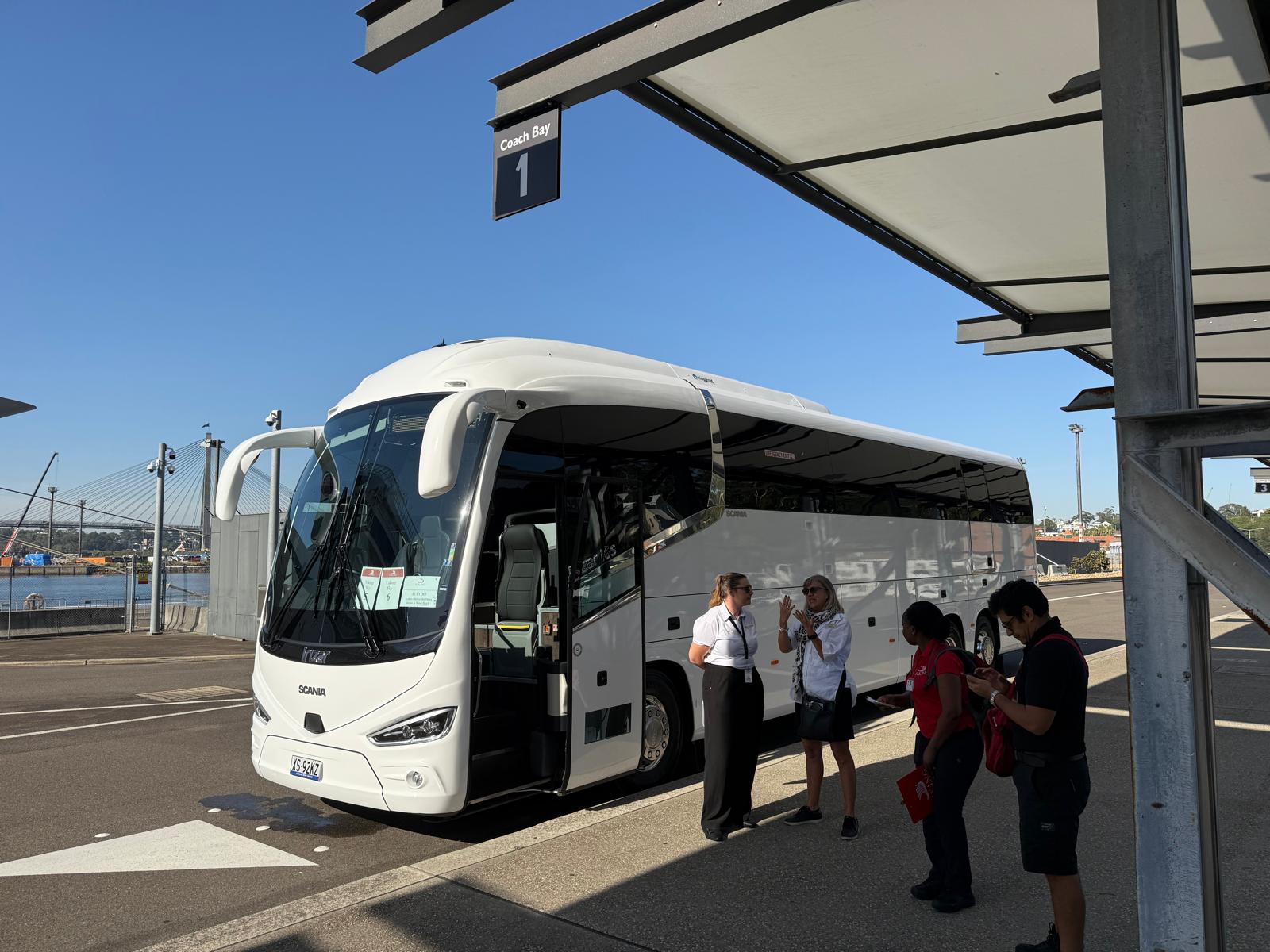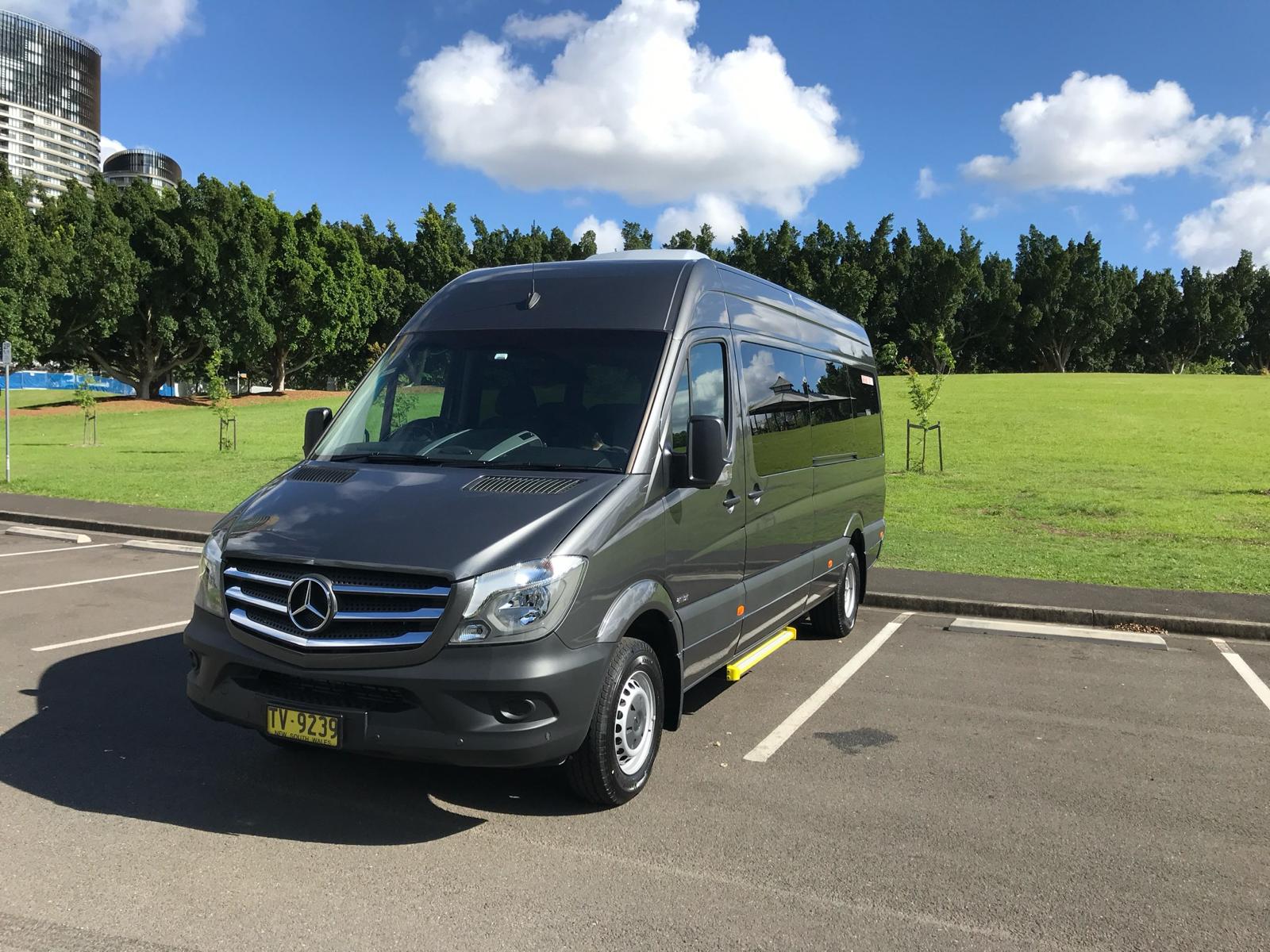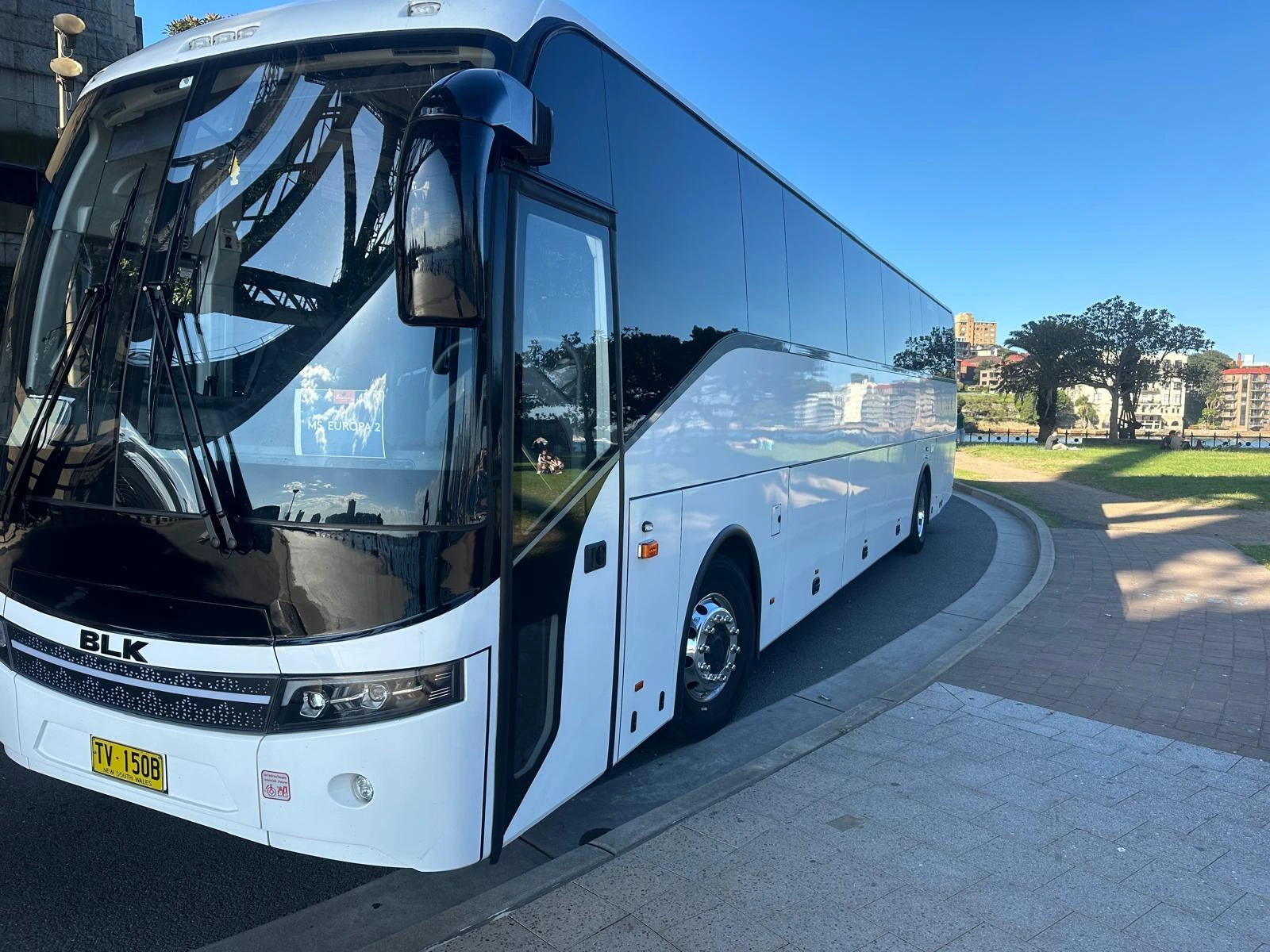
Production transport is booked against a call sheet, and a call sheet is not a transport plan. The conversion has three steps: turn call times into passenger movements, decide where the vehicle lives between them, and check the total span against one driver’s available hours. That last step is the one that catches productions out, because a 16 hour shoot day cannot be covered by a single driver under the NSW fatigue rules no matter what anyone is willing to pay.
Turning a call sheet into a transport plan
A call sheet tells you when people are needed. A transport plan tells the operator when a vehicle moves and where it is in between. Convert it field by field.
| Call sheet says | Transport plan needs | The question it forces |
|---|---|---|
| Crew call 05.30 at unit base | Assemble 05.15, depart 05.30, from pick-up point, to unit base | Where is the pick-up point, and is it one point or several? |
| Unit move to Location 2 after lunch | A movement with a reference, an assemble time and a set-down surface | Does the vehicle carry crew only, or crew and gear? |
| Company moves | Each is a separate movement, referenced M1, M2, M3 | How long is the gap either side, and does the vehicle wait or leave? |
| Wrap approx 21.00 | A latest realistic departure, not an approximate one | What is the span from the driver’s sign-on to sign-off? |
| Weather cover | A wet-weather set-down point and who decides to use it | Agreed with the location, in advance. |
Two conversions do most of the work.
“Approx” becomes a latest departure. Production schedules use approximate wrap times because that is honest. A transport booking needs a latest departure it is resourced to, and you can always release the vehicle early. You cannot extend it late.
Call time becomes assemble time plus departure time. Publish the assemble time to crew and give the operator both. On a pre-dawn call with gear, the gap between them is not padding, it is loading.
Book the span, not the trips
Almost all production transport should be quoted as hourly as-directed across a stated span rather than as point-to-point transfers. You are holding a vehicle and a driver against a schedule that will move, which is exactly what as-directed hire is for.
Minimum hire is three hours for minibuses and people movers and four hours for midi-coaches and full-size coaches. On a shoot day you are well past that, and the practical question is not the minimum but the span.
The exception is a genuine single transfer: crew from the airport to a unit base, or a wrap run to one drop point. An airport or point-to-point run can be quoted as a single fixed transfer fare, and a fare quoted that way is not charged at a minimum. Ask which basis you are being quoted on rather than assuming.
Why a 16 hour day is not a 16 hour driver
This is the constraint that changes how you plan, so it is worth understanding rather than working around.
Charter driving in NSW sits inside the heavy vehicle fatigue regime. NSW exempts drivers of fatigue-regulated buses from the Chapter 6 fatigue requirements, but that exemption does not apply where the bus is driven to provide a public passenger service, and a charter service is expressly a public passenger service under the Passenger Transport Act 1990. A commercial crew bus is inside the regime.
Under general standard hours, a solo driver has a maximum of 12 hours work in any 24 hours, with 7 continuous hours of stationary rest. There is also a separate standard hours table specifically for solo bus and coach drivers, under which a 7 day period requires 6 night rest breaks. A driver works to one table or the other, not a blend.
Three consequences for a production.
The driver’s day is longer than the shoot day. It starts at sign-on at the depot and ends after the vehicle is back, with empty running at both ends. A 14 hour shoot is already a longer driver span than 14 hours.
Waiting on set is work, not rest. A driver parked at the unit base for six hours between the morning run and the wrap run is working. Rest under the tables is continuous and stationary and measured in hours. This is the single most common misunderstanding on production bookings.
Consecutive nights are a rostering problem, not a booking problem. The night rest break requirement in the bus and coach table is what makes a run of night shoots harder to resource than a run of day shoots. Raise a multi-night block at quote stage, not on the second night.
None of this means a long shoot day cannot be covered. It means the coverage has to be designed and resourced in advance, which is a quote-stage conversation. Ask the question directly: does this span fit inside one driver’s available hours, and if not, what are the options.
If you are reading older advice, note that Basic Fatigue Management and Advanced Fatigue Management are closed to new applicants and have been replaced by Alternative Compliance Hours under ACA-Fatigue within the Heavy Vehicle Accreditation scheme. Anything suggesting an operator can apply for BFM to stretch your day predates 1 August 2026.
Where the vehicle lives between call and wrap
On a Sydney shoot with a morning run and a wrap run eight hours apart, the vehicle has to be somewhere, and “outside the location” is usually not an option.
A coach may stop in a bus zone to set down or pick up passengers, but it may not wait or lay over there. The City of Sydney has adopted a policy position that it will not accommodate long-stay coach layover on-street in central Sydney. So a crew bus cannot simply hold at a city kerb across a shoot day.
Transport for NSW operates the King Street Wharf Bus and Coach Layover, accessed via Lime Street, open 24/7 with a 24 hour maximum stay, restricted to accredited bus and coach operators and requiring prior registration by email. For a harbour or CBD location, that is the realistic answer to the layover question.
At the Sydney Opera House, buses and coaches cannot park onsite and large buses must disembark passengers on Macquarie Street. If your location is the forecourt or the surrounds, that is where the crew gets off and where they get back on.
Two implications for your budget and your plan. First, the gap between movements is a staging decision that belongs in the plan, written as “vehicle to layover between M2 and M3” rather than left blank. Second, the span you are buying includes the gap, which is why an eight hour hold costs what it costs whether the vehicle is at the unit base or across town.
Location access and vehicle sizing
Production locations are frequently harder to reach than the address suggests. The same rules that apply to constrained site access apply here.
| Unit | Usually the right vehicle | Why |
|---|---|---|
| Small crew, up to 13 | Van or small minibus | Reaches narrow streets, laneways and residential locations. |
| 14 to 24 | Minibus, 21 to 24 seats | Best balance for city and suburban locations with awkward access. |
| 25 to 27 | Midi-coach, 27 seats | Check turning circle and overhead clearance at every location. |
| 28 to 57 | Full-size coach | Exceeds 2.8 metres in height, which is a real constraint on car park entries, awnings and temporary structures. |
| Above 58 | Coordinated convoy, quoted per event | Needs a lead vehicle and one point of instruction, not two separate bookings. |
Before booking, establish the last sealed trafficable surface at each location, whether the vehicle can turn there, and the overhead clearance on the approach. Send a photograph or a pin rather than an address. A location manager’s recce photo is worth more to an operator than any amount of description.
Gear, and what travels with the crew
Underfloor bay volume rather than seat count is usually the binding constraint once cases appear. Count the gear into the vehicle sizing, not around it.
Say at booking what is travelling: cases, stands, flight cases, wardrobe, catering. Confirm what can and cannot be carried before the day rather than at the kerb at 5am. Food and non-alcoholic drinks are fine on all vehicles.
The pre-dawn call and the after-hours loading
Public holiday and after-hours loading is a named cost, confirmed in advance and priced separately alongside tolls, parking, driver accommodation on multi-day trips, and waiting time beyond the booked window. Included in every quote are the driver, fuel, vehicle insurance and GST.
For production, that structure matters because your movements sit at both ends of the day. Ask for the loading as its own line rather than absorbed into an hourly rate, so the production accountant can see it and so successive shoot days are comparable.
Book during office hours: Monday to Friday 7am to 6pm and Saturday 8am to 2pm. Published lead times are two to four weeks for most jobs and four to eight weeks for peak periods. Driver name, mobile and vehicle registration are sent 24 hours before travel, which should go straight onto the call sheet.
Frequently asked questions
How is production transport costed?
Usually as an hourly as-directed hire across the span of the shoot day, with the vehicle held between movements. Minimum hire is three hours for minibuses and people movers and four hours for midi-coaches and full-size coaches. A single airport or wrap transfer can instead be quoted as a fixed transfer fare, which is not charged at a minimum.
Can one driver cover a 16 hour shoot day?
Not under general standard hours, which cap a solo driver at 12 hours work in any 24 with 7 continuous hours of stationary rest. Waiting at the unit base counts as work, not rest. Raise the span at quote stage so the day is resourced properly.
Can the crew bus wait outside the location all day?
Not at a Sydney city kerb. A coach may set down and pick up but may not wait or lay over, and the City of Sydney will not accommodate long-stay coach layover on-street. For CBD and harbour work, the accredited layover option is at King Street Wharf via Lime Street.
What notice do you need for a shoot?
Two to four weeks covers most jobs, and four to eight weeks applies to peak periods. Multi-night blocks and anything with a driver changeover should be raised as early as possible, because the constraint is the driver roster rather than the vehicle.
Can we add a unit move on the day?
On an as-directed booking, often yes. Escalate it to the operator’s operations line rather than agreeing it with the driver, because an added movement changes the span and the span is what the fatigue rules measure.
Next step
Send the call sheet, or just the crew call, the unit moves and the honest latest wrap, and ask whether the span fits inside one driver’s available hours. That answer shapes the budget before the schedule is locked, which is the useful order. Start with corporate bus and coach hire in Sydney, or see coach hire in Sydney and the vehicle classes available for seat counts. Call 02 9469 6600 and a written quote comes back within two business hours.
Sources
- National Heavy Vehicle Regulator, “Heavy vehicle fatigue management: bus industry”, https://www.nhvr.gov.au/safety-accreditation-compliance/fatigue-management/heavy-vehicle-fatigue-management-bus-industry. Accessed 7 September 2026.
- NSW Legislation, “Heavy Vehicle National Law (NSW)”, https://legislation.nsw.gov.au/view/whole/html/inforce/current/act-2013-042. Accessed 7 September 2026.
- Transport for NSW, “King Street Wharf Bus and Coach Layover”, https://www.transport.nsw.gov.au/operations/roads-and-waterways/business-and-industry/buses/operators/king-street-wharf-bus-and. Accessed 7 September 2026.
- City of Sydney, “Central Sydney On-Street Parking Policy”, https://www.cityofsydney.nsw.gov.au/-/media/corporate/files/publications/policies/central-sydney-street-parking-policy/central-sydney-on-street-parking-policy_0525.pdf. Accessed 7 September 2026.