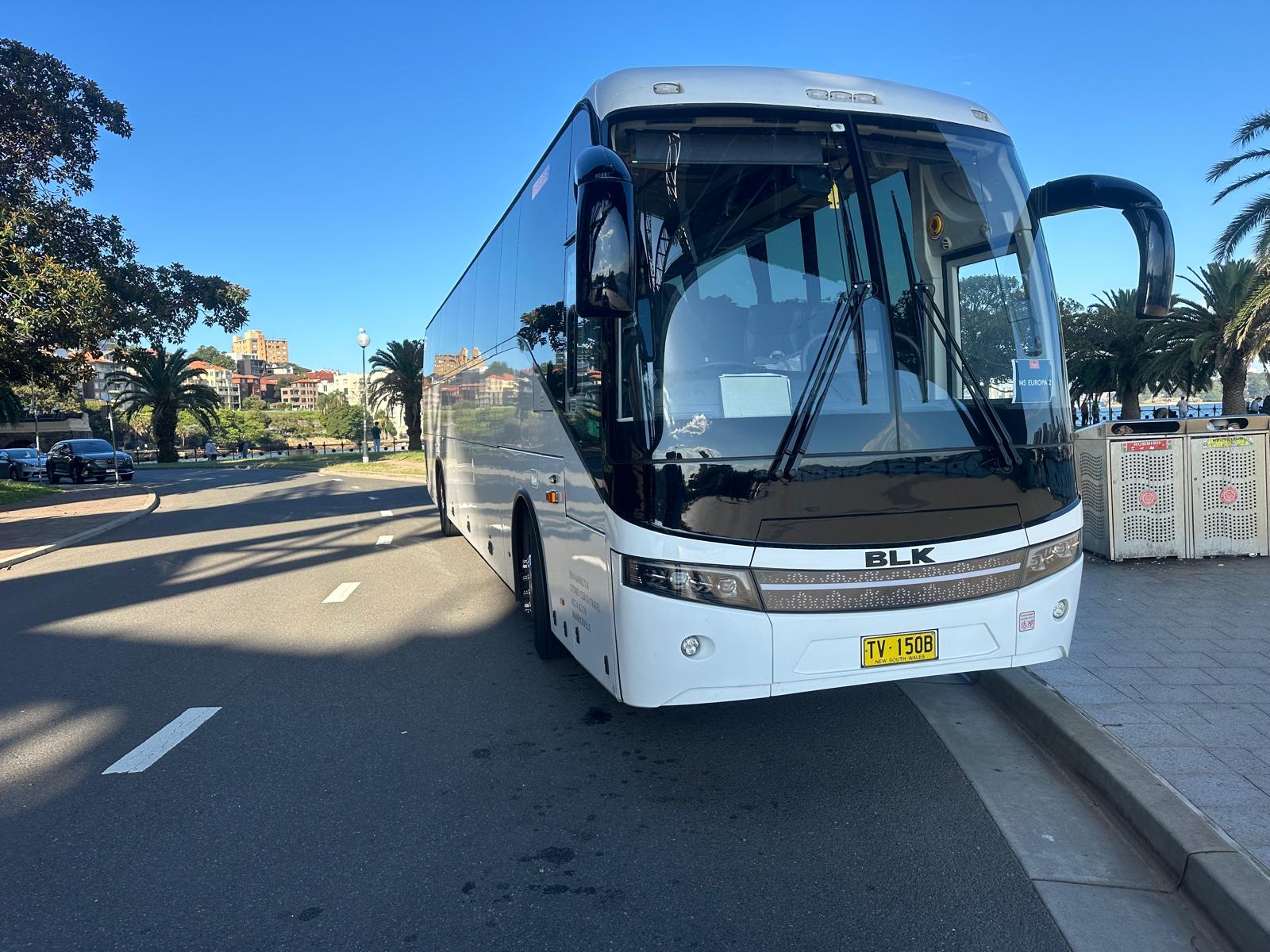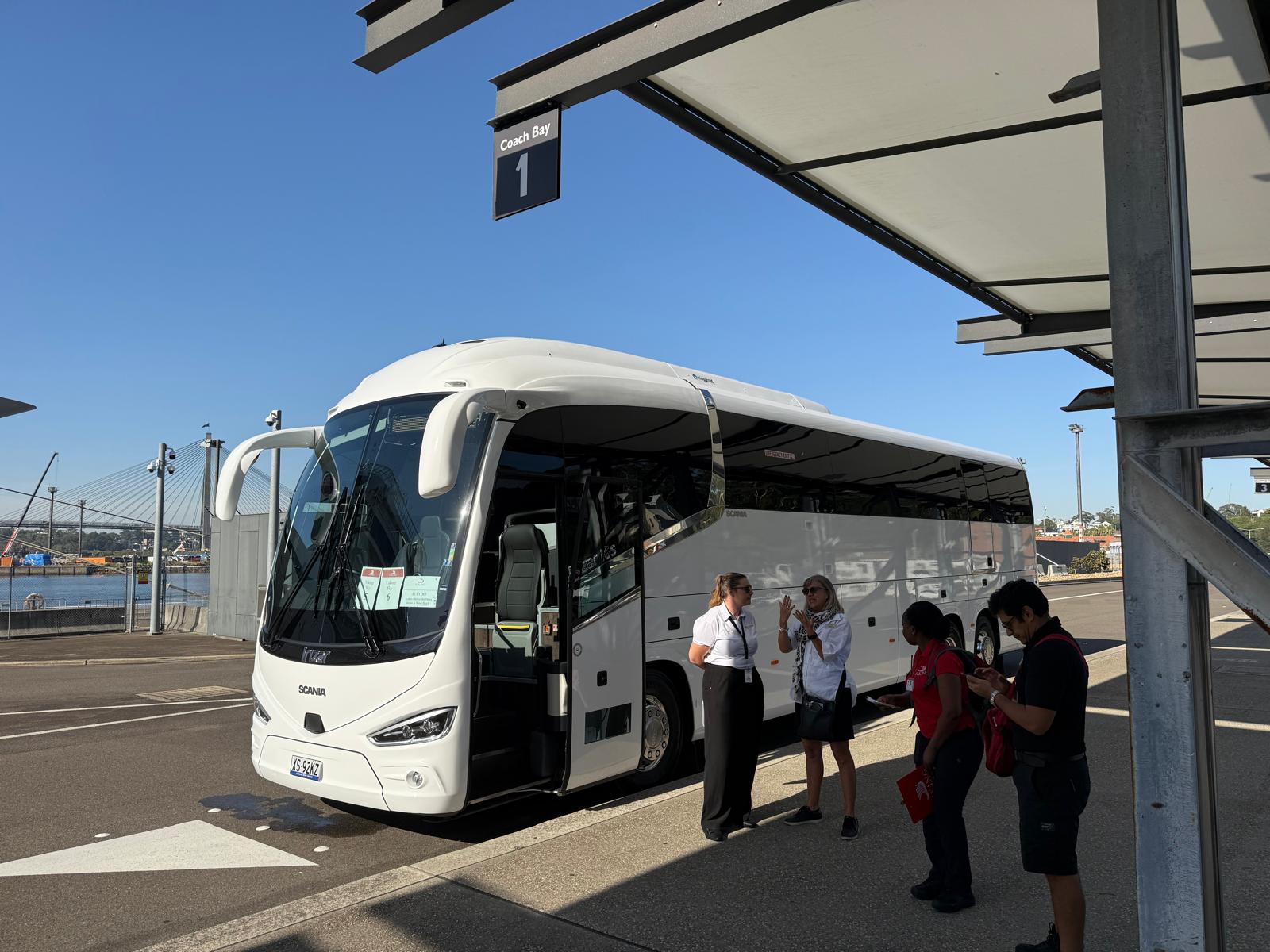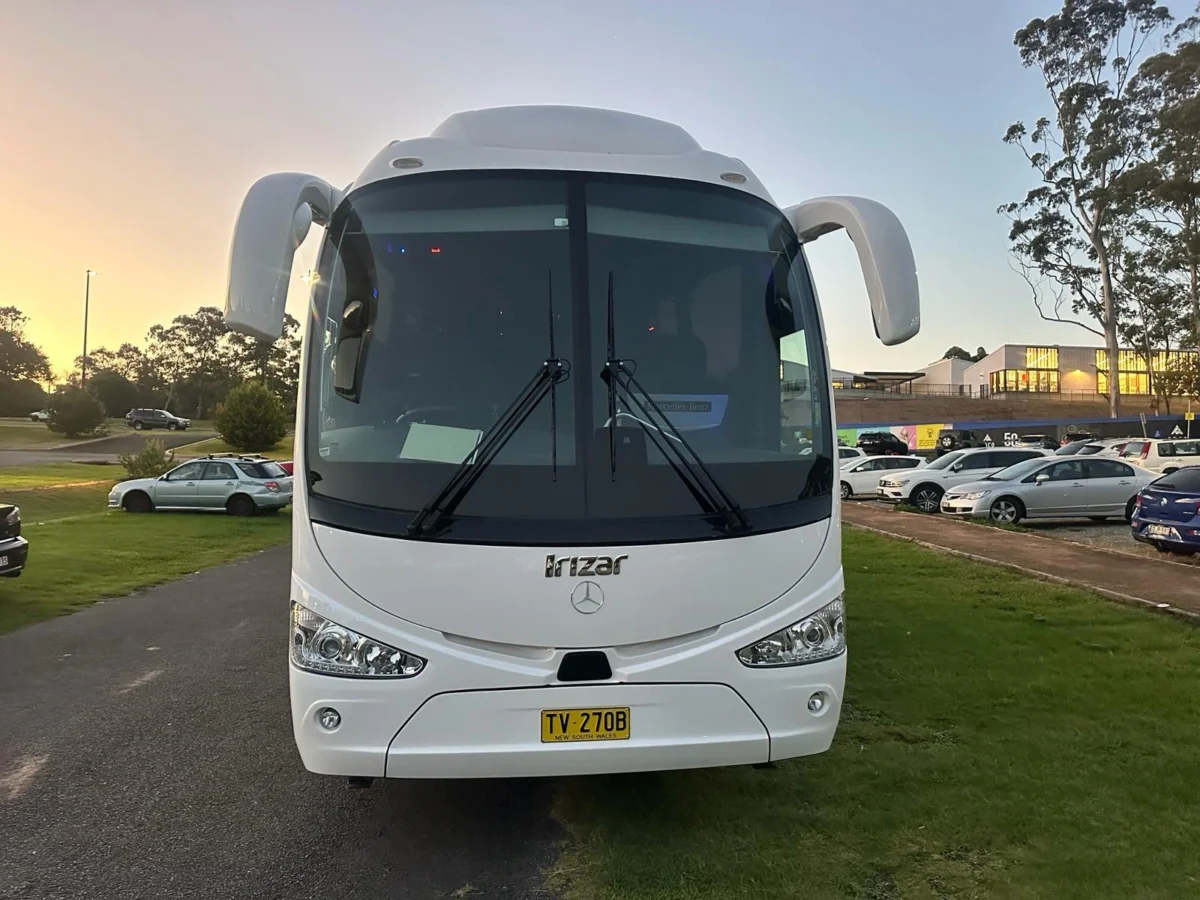
Onboard features belong to the individual vehicle, not to a category or a brochure word. Two coaches with the same seat count can differ on charging, climate zones, public address, recline and whether there is a restroom at all. So the answer worth having is a written specification for the vehicle assigned to your dates. Ask for it feature by feature, get the answers in the quote, and treat anything unconfirmed as absent.
Why a fleet cannot publish one amenity list
Fleets are assembled over time. Vehicles are bought at different points, built to different specifications by different manufacturers, and often bought for the work they were doing at the time rather than the work they do now. A vehicle specified for airport shuttling and a vehicle specified for touring can carry the same number of passengers and have very little else in common inside.
This is why “luxury coach” tells you almost nothing on its own, from any operator. It is a category name, not a specification. The published fleet here uses tier names in exactly that way: executive minibus, executive midi-coach, luxury coach, executive coach, luxury touring coach. Those names describe where a vehicle sits in the range and what it costs per hour. They do not, by themselves, promise a particular feature on a particular vehicle on a particular day.
The honest position is that amenity fit-out varies across any fleet and has to be confirmed per vehicle. That is less satisfying than a table of ticks, and it is the only version that will still be true when your group boards. The vehicles in our fleet list seat counts and hourly rates, which are firm; the interior specification is a question to ask about the vehicle allocated to your booking.
The specification questions to send
Copy this into your enquiry. It takes an operator two minutes to answer and it removes the single most common source of disappointment on charter work.
| Feature | The question to ask | What a useful answer looks like |
|---|---|---|
| Charging | Are USB or power outlets fitted, and is it one per seat, one per pair, or a shared point? | A count and a location, not “yes” |
| Air conditioning | Is it fitted, is it zoned front and rear, and can the saloon be pre-cooled before boarding? | Confirmation for the assigned vehicle, plus who controls it |
| Public address | Is a PA fitted, is there a handheld microphone, and does it reach the rear rows? | A yes tied to the vehicle, plus whether it is tested pre-departure |
| Seat recline | Do the seats recline, and by roughly how much? | A direct answer. Recline is not implied by the vehicle tier |
| Headrests | Are headrests fitted to every seat, and are any missing or damaged? | A pre-departure check, not an assumption |
| Onboard restroom | Is there a working restroom on the assigned vehicle, and is it available for the whole trip? | A vehicle-specific yes or no. Never assume a coach has one |
| Luggage racks | Are overhead racks fitted in the saloon, and what will they take? | A description of what fits, given the group’s cabin bags |
| Wifi and screens | Fitted or not, and if fitted, is it a supported feature or a nice-to-have? | Honesty. An unsupported feature is worth knowing about in advance |
| Boarding and access | Is there a lift, hoist or ramp, and is there an allocated space? | A vehicle-specific answer, since fit-out varies |
| Curtains or blinds | Fitted or not, which matters on afternoon westbound runs | A simple yes or no |
Two rules make the list work. Ask about the assigned vehicle, not the model. And treat silence as a no, because an operator who does not confirm a feature has not committed to it.
Put the specification in the quote, not in the conversation
A feature agreed by phone is not a feature. Ask for the ones that matter to be written into the quote as terms alongside the vehicle name.
Our written quotes name the vehicle rather than a model family and come back within two business hours, and the driver’s name, mobile number and the vehicle registration are sent 24 hours before travel. That gives you two useful checkpoints: one at quoting, when you can specify, and one the day before, when you can confirm.
Prioritise. Nobody needs a ten-point specification for a forty minute transfer. Pick the two or three that would actually change your day:
- A conference or a guided tour lives or dies on the PA and the microphone. Specify it, and ask for it to be tested before departure.
- A corporate roadshow or a long airport run turns on charging. Ask whether outlets are per seat or shared, because a shared point for 40 people is not a charging solution.
- A long inland run in summer turns on air conditioning and window blinds, and on whether the saloon is pre-cooled before the group boards.
- A multi-hour leg with older passengers or children turns on the restroom question and the stop pattern, which are two different things worth answering together.
Long NSW runs are where specification stops being cosmetic
For a thirty minute transfer, interior specification is a preference. Over three hours it becomes the trip.
The routes that matter most out of Sydney are all long enough to expose it. Canberra is 285 km and 3 to 3.5 hours each way on our operating figures. Port Stephens is 205 km and 2.5 to 3 hours. The Hunter Valley is 165 km and 2 to 2.5 hours. Katoomba is 105 km and around two hours, closer to two and a half from the eastern suburbs or northern beaches. On any of those, a group without charging arrives with flat phones, and a group that assumed a restroom finds out that it assumed.
The restroom question is worth separating from the stop question. Even where a vehicle has a restroom, a long run has planned stops anyway, because commercial charter in NSW sits inside the heavy vehicle fatigue regime and drivers have enforceable work and rest requirements. So ask both: what is fitted on the assigned vehicle, and what the stop pattern for your itinerary looks like. The second answer often matters more than the first.
Accessibility is a specification question too
Wheelchair-equipped vehicles with hoists are available, and the right question is which specific vehicle carries what, on your date.
The regulatory background is worth a line, because a lot of published content on this is wrong. There is no charter or tour bus exemption from the Disability Standards for Accessible Public Transport. There is a narrower carve-out: a coach on which every passenger uses a fixed seat need not provide an allocated wheelchair space. Other duties continue, including access paths, boarding devices, signage, information and direct assistance. Where an allocated space is provided, the Standards set minimum dimensions of 800 mm by 1300 mm with 1410 mm of headroom, and a boarding ramp at least 800 mm wide with a slope not exceeding 1 in 12 unassisted, on a boarding device supporting 200 kg.
For a booking, that translates into three questions: does the assigned vehicle have a lift, hoist or ramp; is there an allocated space; and what assistance is provided at boarding. Accessible bus hire in Sydney is the place to raise it at enquiry stage rather than on the day.
What is settled fleet-wide
A short list of things that do not vary by vehicle, so you can stop asking about them.
- Food and non-alcoholic drinks are fine on all vehicles.
- Alcohol is permitted on private function bookings by prior arrangement only, and never on school or youth charters.
- Every quote includes the professional driver, fuel, vehicle insurance and GST.
- Tolls and parking, driver accommodation on multi-day trips, public holiday and after-hours loading, and waiting time beyond the booked window are confirmed in advance and priced separately.
Frequently asked questions
Does every charter coach have a toilet?
No, and it should never be assumed from the vehicle’s size or tier name. Restroom fit-out varies by individual vehicle. Ask whether the vehicle assigned to your dates has one, and ask separately about the planned stop pattern for your itinerary, since long runs include stops regardless.
Will there be USB charging on board?
Only if it is fitted to the assigned vehicle, so ask the question specifically and ask how many outlets there are. A shared point is a different proposition from an outlet per seat. For a long run or a corporate group, put the answer in the written quote.
Can I rely on the PA system?
Ask for it to be confirmed for the assigned vehicle and tested before departure, especially for a guided tour or a conference transfer where a briefing has to reach the back rows. Specify the microphone as well as the system, since they are separate items.
What does “luxury coach” actually include?
On our published fleet it is a tier name attached to a seat count and an hourly rate, not a feature list. That is true of the term generally, from any operator. Ask feature by feature about the vehicle assigned to your booking and treat anything unconfirmed as not present.
What if an amenity is not working on the day?
Raise it with the driver immediately rather than after the trip, and follow up with the office. The better protection is upstream: name the features that matter in the written quote so there is a documented specification rather than a recollection of a phone call.
Next step
Tell us the group size, the route and the two or three onboard features that would actually change your day, and we will name the vehicle and confirm its specification in writing within two business hours. Call 02 9469 6600, or start with coach hire in Sydney.
Sources
- Australian Human Rights Commission, “Public transport frequently asked questions”, https://humanrights.gov.au/our-work/disability-rights/public-transport-faq. Accessed 7 September 2026.
- Federal Register of Legislation, “Disability Standards for Accessible Public Transport”, https://www.legislation.gov.au/F2005B01059/latest/text. Accessed 7 September 2026.
- National Heavy Vehicle Regulator, “Heavy vehicle fatigue management, bus industry”, https://www.nhvr.gov.au/safety-accreditation-compliance/fatigue-management/heavy-vehicle-fatigue-management-bus-industry. Accessed 7 September 2026.