You do not need a finished plan to get a Sydney charter priced and moving. Three things start it: the pick-up suburb, the travel date and an approximate group size. Stops, exact timings, the final head count and the return details can all follow. What cannot be left open is the date and the rough size band, because those two decide which vehicle is allocated. Everything downstream of them is a detail that can be added later.
Nobody has a finished plan at the point they need to book
Sydney events get planned in a fixed order, and transport is rarely near the front of it. A wedding commits the ceremony and reception venues first, then works out how guests move between them, and settles the guest list last. A conference books the venue, then the dinner, then discovers it needs to move 90 delegates across the city on the Tuesday evening. A school picks the destination and the term week, then finds out which classes are going.
In every case the date is real long before the itinerary is, and the date is the thing that runs out. Waiting until the plan is tidy is the most common reason an organiser ends up with a larger vehicle than they wanted, or two vehicles instead of one.
What has to be settled, and what can move
| Detail | Status at enquiry | When it can be finalised |
|---|---|---|
| Travel date | Must be fixed | Not later. A date change is a new availability question |
| Approximate group size | Must be roughly right, within the vehicle band | Exact numbers, usually a week or two out |
| Pick-up suburb | Must be known | Street address can follow |
| Pick-up time | Can be approximate | Once the venue or the arrival time is confirmed |
| Stops | Can be unknown | Any time before the final week |
| Must-arrive-by time | Can be unknown | As soon as the venue confirms. This is the one worth chasing |
| Return or finish time | Can be uncertain | Quote it as an option and confirm later |
| Luggage | Can be estimated | Before the final week, because it can change the vehicle |
| Final passenger names | Never needed for a quote | Not required at all |
| Billing details or purchase order | Ideally at confirmation | Before the invoice is raised |
Read that table as permission. Two thirds of it can be blank in your first email and the quote will still come back with a vehicle named and a fixed price attached.
The one variable you cannot leave open
Group size is where a genuinely provisional enquiry can go wrong, because it is the only detail that changes which physical object turns up.
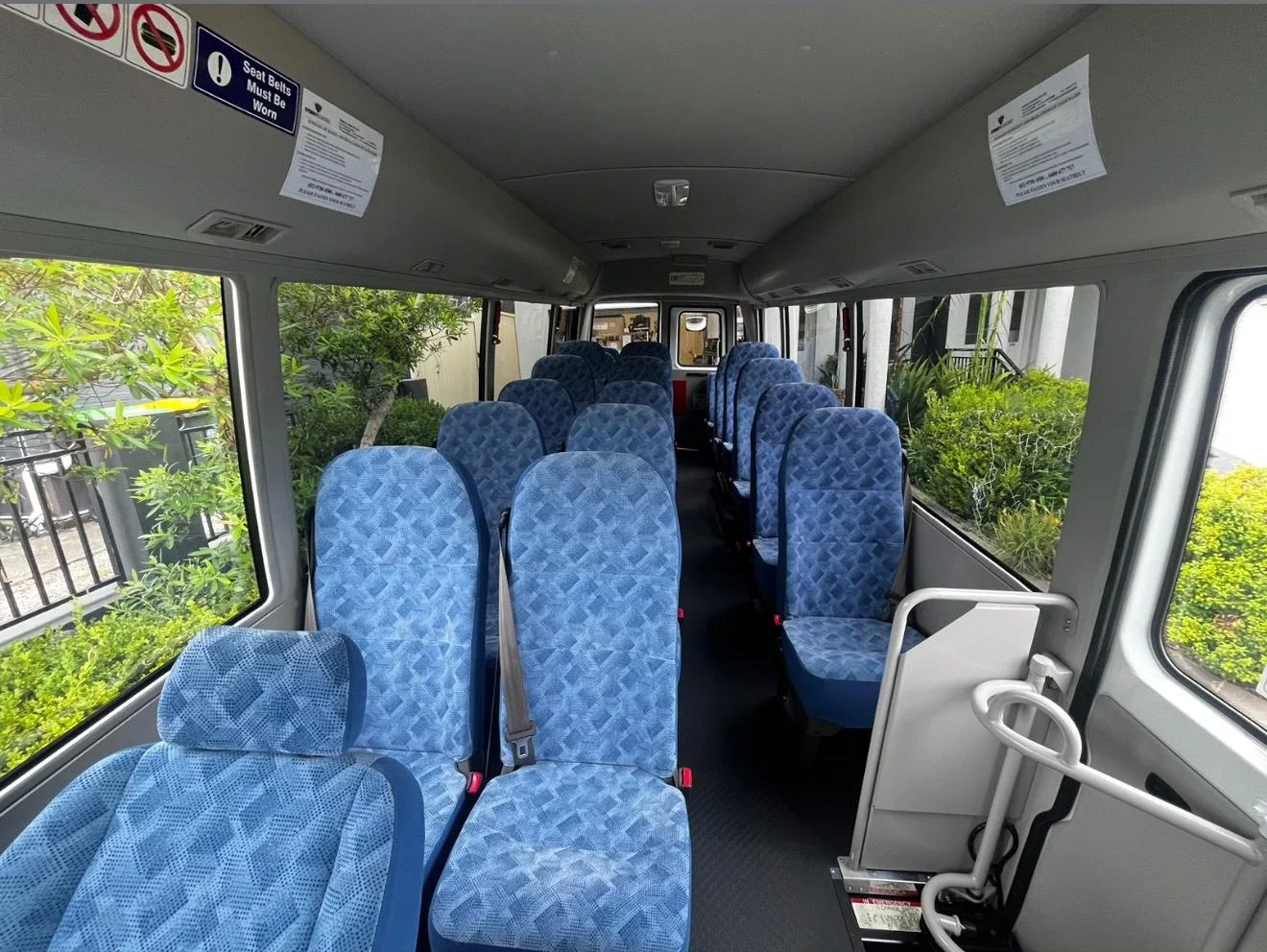
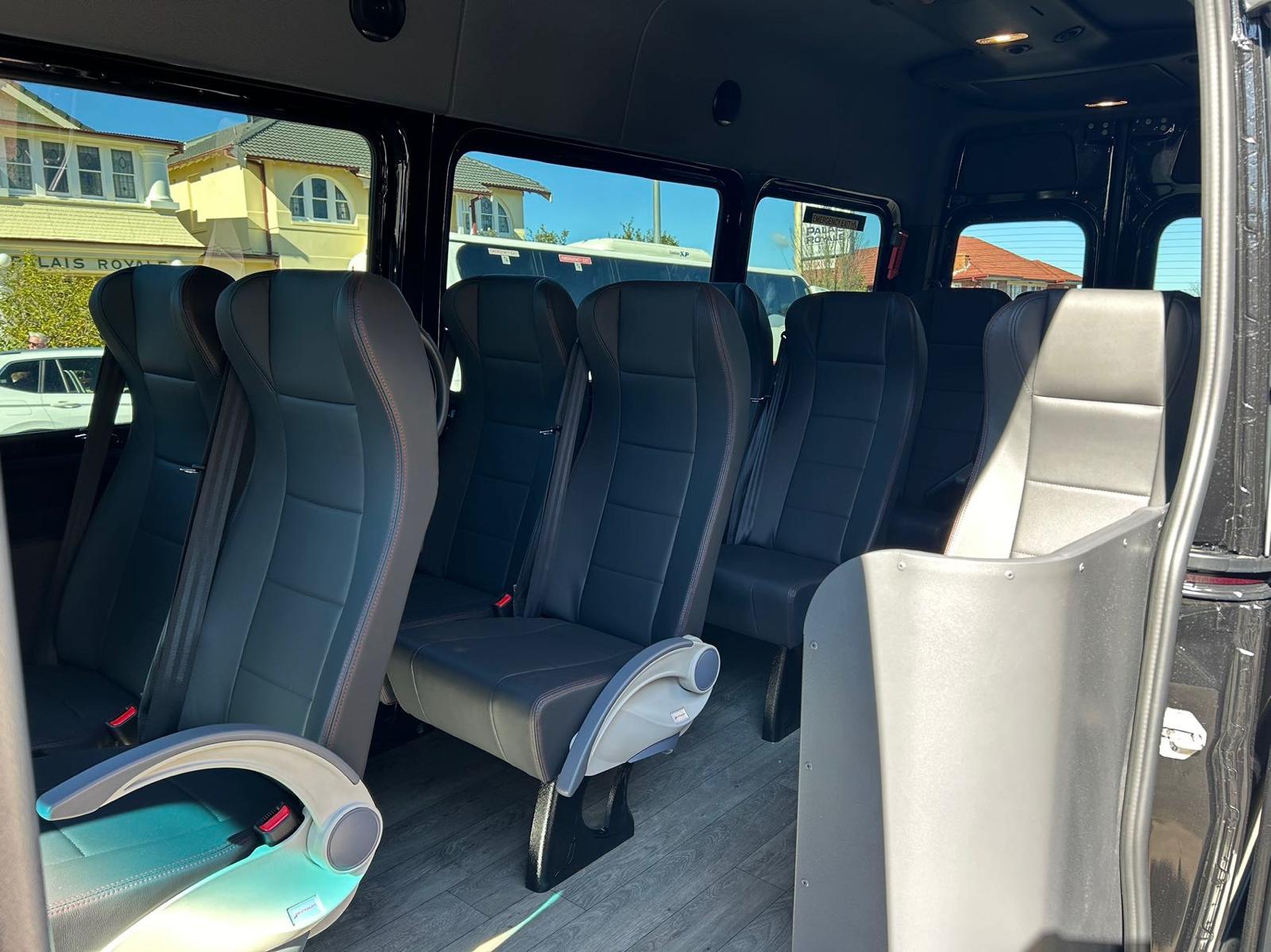
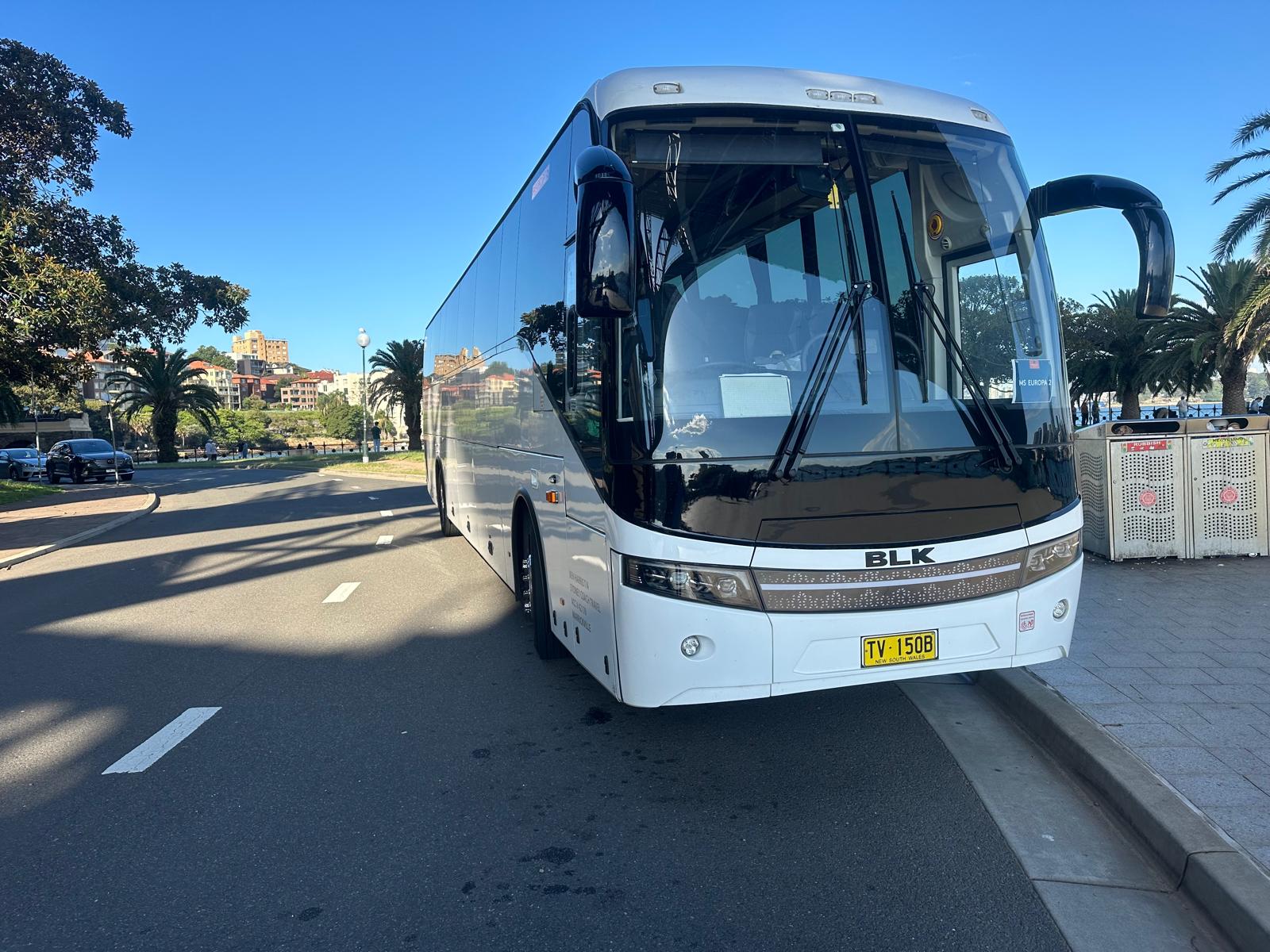
The fleet ladder runs from a 7-seat people mover to a 57-seat coach, with anything from 58 passengers handled as a coordinated convoy. Each step up changes the hourly rate and, at the midi-coach and full-size coach end, the minimum hire moves from three hours to four. So “about 25” and “about 45” produce two completely different quotes, while “about 25” and “27” produce the same one.
You do not need the number. You need the band. Look at the vehicle sizes the quote will land on, pick the band you are confident about, and say plainly if you might cross into the next one. An operator that knows you might grow from 24 to 30 can quote both, rather than quoting one and rebuilding it later.
Luggage belongs in the same conversation, because on a full group the underfloor bay becomes the constraint rather than the seat count. If you do not yet know whether people are bringing suitcases or day bags, say so.
How to enquire while things are still open
Three ways to start, depending on how much you actually know.
1. Date and size only. “Saturday 14 November, about 40 people, pick-up somewhere in the inner west, itinerary to follow.” That is a complete and workable enquiry. It returns a vehicle, a rate and a structure you can plan around.
2. Date, size and the hard constraint. Better, if you have one. “Saturday 14 November, about 40 people, pick-up in Newtown, must be at the reception venue in the CBD by 5:30pm. Return timing not settled.” The must-arrive-by is worth more than anything else you could add, because the schedule gets built backwards from it.
3. Two scenarios. Useful when the plan genuinely has a fork in it. “Option A: one pick-up, straight to the venue. Option B: two pick-ups with a stop at the church.” Ask for both to be priced. It costs the operator very little and it lets you take the decision with numbers in front of you rather than after.
What is not useful is an enquiry with no date, or a size range spanning two vehicle classes with no indication of which end is likelier. Those produce a range instead of a quote, and a range cannot be compared to anything.
Why waiting is the expensive option
Two to four weeks is normal notice for most Sydney charter work, and four to eight weeks is what peak periods need: December, race days, the school excursion season and long weekends.
Those windows do not pause while you finish planning. What disappears first is not availability in general but the specific vehicle that fits your group. A party of 25 that could have travelled on one 27-seat midi-coach ends up on a 48-seat coach, or split across two minibuses with two sets of pick-up logistics. Neither is a disaster and both cost more than the thing you actually wanted.
The asymmetry is worth stating plainly. Enquiring early with an incomplete plan costs you one email. Enquiring late with a complete plan costs you the vehicle.
What locks, and when
Once a deposit is paid, the date, the vehicle class and the driver allocation are held. That is the fixed part.
Inside those, the working details stay adjustable for most of the life of the booking. Stops can be added or dropped. Timings can shift. Numbers can firm up. Luggage can be revised. Each of those becomes harder as the date approaches, not because of a policy but because a diary with less slack in it has fewer ways to absorb a change. The practical rule is to raise anything you know as soon as you know it, in writing, rather than saving it all for one tidy email in the final week.
Frequently asked questions
Can I book before the itinerary is settled?
Yes. Pick-up suburb, date and approximate group size is enough to get a fixed written quote with a vehicle named. The rest can follow.
What is the minimum I need to send?
Those three details. It takes about two minutes and the quote comes back within two business hours during office hours.
Can times change after we confirm?
Timings, stops and numbers can usually be adjusted, and the earlier you raise a change the more easily it is absorbed. Tell the office in writing rather than the driver on the day.
What if our numbers grow into a bigger vehicle?
Say at enquiry stage that you might cross a size band and ask for both to be quoted. A vehicle change later is a diary question, so it is much easier three weeks out than three days out.
Does a quote hold the date?
No. A quote is a price with a vehicle attached to it. The booking is held when the deposit set out in the quote is paid, which matters most on peak Sydney dates where quoting and confirming can be a week apart.
Should we get transport quoted before the venue is locked in?
If the date is fixed, yes. The date is the scarce thing, not the itinerary.
Next step
Send what you actually know today and leave the rest blank. Pick-up suburb, travel date and roughly how many people is enough to start the booking with what you have, or call 02 9469 6600 during office hours, Monday to Friday 7am to 6pm and Saturday 8am to 2pm. The quote comes back with a vehicle named, and the details fill in from there.