Group transport for a funeral is usually three short movements: from a meeting point to the service, from the service to the wake, and home afterwards. The second one is the one families most often leave unarranged, and it is the one that separates people at the point they most want to stay together. To arrange it you need four things: the date and times, the two or three addresses, the number of people, and whether anyone needs a wheelchair lift or has difficulty with steps.
What to have ready when you call
You do not need a finished plan. These five items are enough to get a vehicle held and a written quote issued.
- The date, and the time of the service.
- The addresses. Meeting point, the place of the service, and the wake if there is one.
- The number of people travelling, including children. An approximate number is fine to start.
- Whether anyone uses a wheelchair, a walking frame or has difficulty with steps. This decides the vehicle, so it is worth saying early.
- A contact number for the person coordinating, who may not be the closest family member.
If a funeral director is involved, they often hold the addresses and timings already, and it is reasonable to ask them to pass those details on rather than gathering them yourself.
The transfer between the service and the wake
This is the part that gets forgotten, and it is the part that causes the most difficulty on the day.
After a service, a group that arrived together disperses. Some people have cars, some do not, some are not in a state to drive, and the wake is often 20 minutes away at a house, a club or a function room. Without a vehicle, older relatives and people who travelled with someone else end up stranded at the kerb while the rest of the group leaves.
Arranging that leg costs little and removes the problem entirely. Three practical points.
Allow more time than the order of service suggests. People do not leave a service promptly. They speak to each other. Build in a wait after the stated finish time rather than a departure at it.
Agree where the vehicle waits, and for how long. On a public road, a coach may stop in a bus zone to set down or pick up passengers but may not wait or park there. So the vehicle either has somewhere off-street to stand or it leaves and returns at an agreed time. Settle that with the venue and the operator in advance.
Decide whether the vehicle is needed at the end of the wake. Many families arrange the outbound legs and leave the return to chance. If several people cannot drive, a return run at a stated time is worth arranging at the same time as everything else.
Choosing the vehicle
Match the vehicle to the number travelling and to where it has to stop.
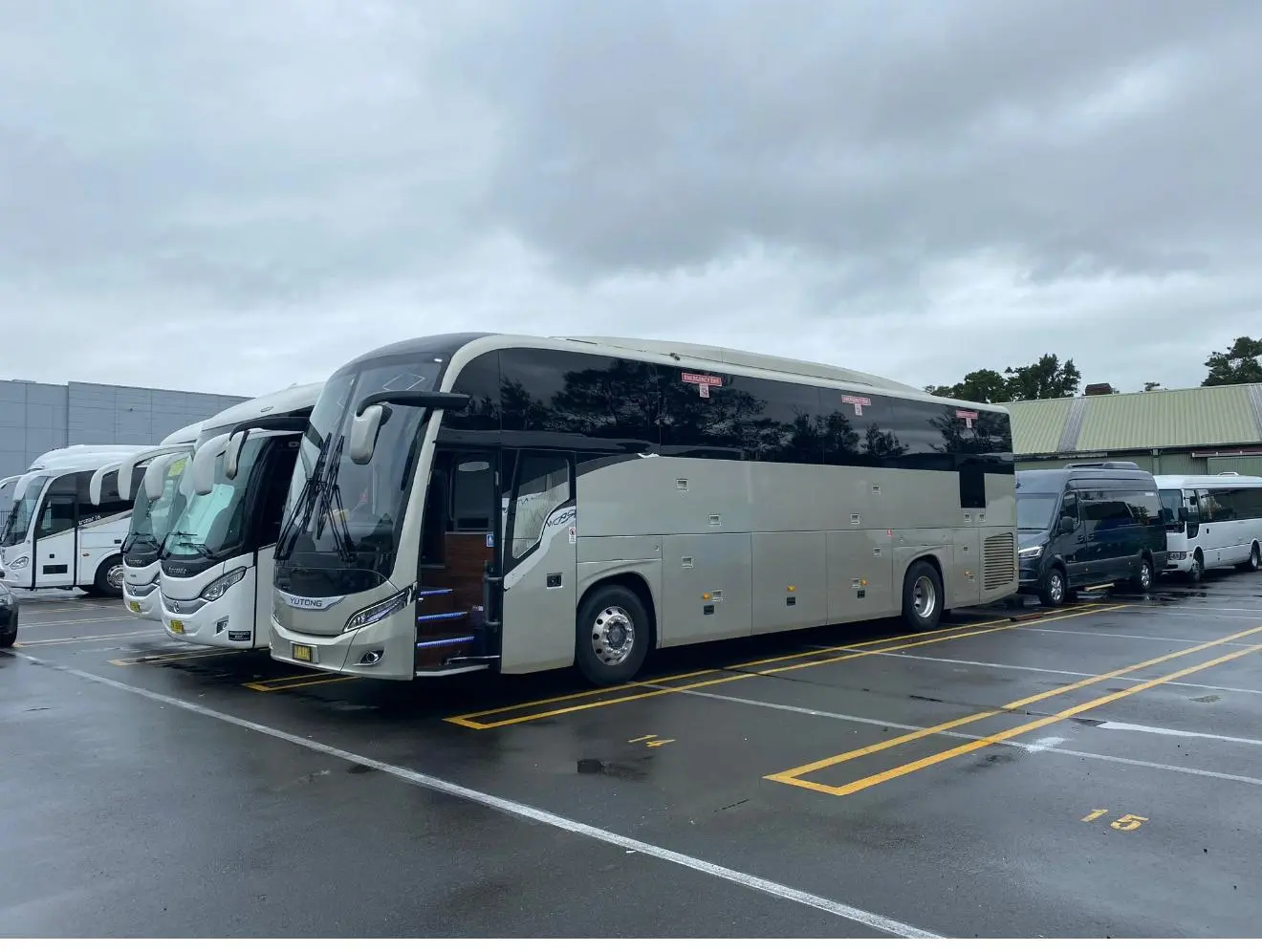
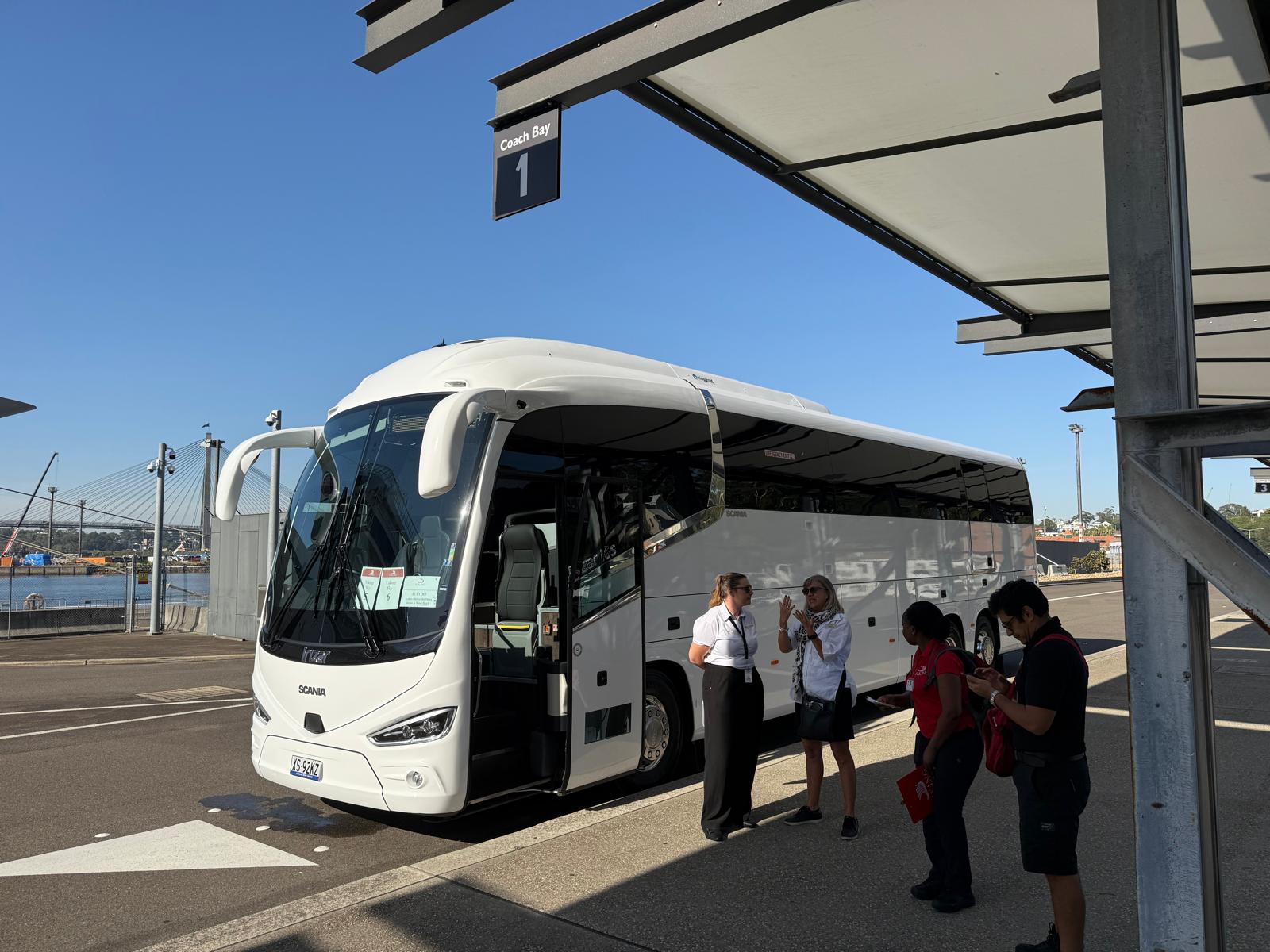
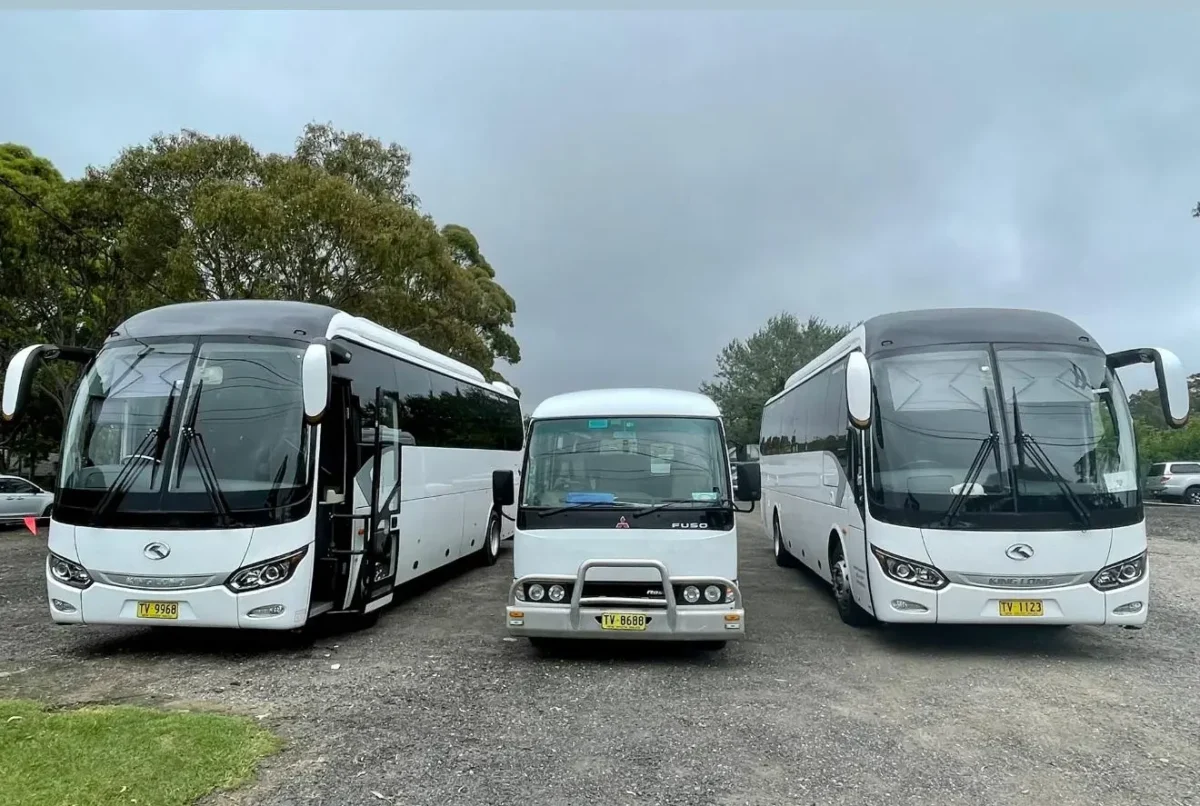
Seat counts exclude the driver, so count everyone else who will be on board. The published fleet runs from a 7-seat people mover through minibuses at 13 to 24 seats, a 27-seat midi-coach, and coaches from 48 to 57 seats. Groups of 58 or more are handled as more than one vehicle. You can check the vehicles and their seat counts if you would rather work it out before ringing.
Two practical considerations usually matter more than the seat count.
Access at the venue. Cemeteries, crematoria and small chapels vary widely in what they can take. Narrow internal roads, low tree cover, tight turning circles and limited standing space are all common. Ask the venue or the funeral director where a coach can enter, set down and turn, and pass that answer to the operator before the vehicle is allocated. A smaller vehicle that reaches the chapel door is often better than a larger one that stops at the gate.
Steps. For a group with several older mourners, the height of the step into the vehicle and the distance from the set-down point to the door matter more than the interior.
If anyone in the family uses a wheelchair
Say so when you first call, because it determines which vehicle can be allocated.
If someone travels in their wheelchair, the vehicle needs a boarding device and an allocated wheelchair space. Most charter coaches have a fixed seat for every passenger and carry no allocated space, because section 9.8 of the Transport Standards means one is not required in that configuration. The Standards do apply to buses and coaches, so the right question is what the vehicle assigned to your date actually has rather than whether charter buses are accessible in general. Sydney Buses and Coaches states that vehicles with a wheelchair lift or ramp are available and that access needs are confirmed before booking.
If someone transfers from a chair or a frame to a seat, the chair or frame still needs somewhere to travel, and the transfer needs a little time at each end. Both are easy to plan for and difficult to solve on the day.
Timing the day
A simple structure that works for most services.
| Movement | What to allow for |
|---|---|
| Meeting point to the service | Board early. People arrive at different times and nobody should be rushed |
| Arrival at the venue | The walk from where the vehicle can set down to the chapel or graveside |
| Wait during the service | Agree whether the vehicle stands nearby or leaves and returns |
| Service to the wake | A wait after the stated finish time, then the transfer |
| Return | A stated time, told to everyone in advance |
One rule to mention to the group beforehand: on a coach fitted with seatbelts, wearing them is required in NSW for every passenger aged 16 and over.
What is included, and what is confirmed separately
Professional driver, fuel, vehicle insurance and GST are included in a quote. Tolls and parking, public holiday and after-hours loading, and waiting time beyond the booked window are confirmed in advance and priced separately. Minimum hire is three hours for minibuses and people movers and four hours for midi-coaches and full-size coaches, so a short series of movements across a morning is normally within one booking rather than three.
A quote is issued in writing with the vehicle named. Cancellation terms are set out in that quote, which is worth reading, because funeral arrangements sometimes move.
Frequently asked questions
How quickly can this be arranged?
Ring and ask about your specific date rather than working from a general lead time. The published lead times of two to four weeks apply to planned bookings and are not the right answer for a funeral, and availability depends on what is already scheduled. Office hours are Monday to Friday 7am to 6pm and Saturday 8am to 2pm.
What size vehicle do we need?
Count everyone travelling, excluding the driver, then check the venue can take that vehicle. Where a cemetery or chapel has a tight approach, a smaller vehicle that reaches the door is usually the better choice.
Can the bus wait during the service?
It depends on the venue. On a public road, a coach may stop to set down and pick up but may not wait or park in a bus zone. Ask the venue whether there is somewhere off-street for the vehicle to stand, and if there is not, agree a return time instead.
Can we add the wake at short notice?
Ask when you book, and give the address if you have it. Adding a known leg to an existing booking is simpler than arranging a separate vehicle later in the day.
Do you carry wheelchairs?
Wheelchair-equipped vehicles with hoists are available and access needs are confirmed before booking. Mention it on the first call so the right vehicle is allocated.
What if the date changes?
Tell us as soon as you know. Cancellation and change terms are set out in the written quote, and a date that moves is easier to handle early than late.
Next step
If you would like a vehicle held, call 02 9469 6600 with the date, the addresses and an approximate number, and a written quote naming the vehicle will follow. The office hours and direct line are published if you would prefer to know when someone will answer before you ring.
Sources
- NSW Legislation, “Road Rules 2014 (NSW)”, https://legislation.nsw.gov.au/view/html/inforce/current/sl-2014-0758. Accessed 7 September 2026.
- Federal Register of Legislation (Australia), “Disability Standards for Accessible Public Transport 2002”, https://www.legislation.gov.au/F2005B01059/latest/text. Accessed 7 September 2026.