Lunch is what makes a coach day trip run late, not traffic. A venue that serves twenty people comfortably will take well over an hour to serve fifty, and that hour comes out of the afternoon. No official body publishes a list of coach-capable venues anywhere in New South Wales, so the answer is never a name someone gives you. It is a set of questions asked before you book, and a booking made in writing.
Why lunch is the real timing risk
Organisers spend hours on travel times and minutes on lunch. Then the day runs late, and everyone blames the road.
Look at what actually happens. Fifty people arrive at once. They queue at one counter or wait on one kitchen. Someone needs a gluten-free option that was not flagged. Two people go to find a chemist. The group reassembles fifteen minutes after the driver expected them, and every subsequent stop shortens.
The compounding effect is what hurts. A lunch stop that overruns by 40 minutes does not cost you 40 minutes. It costs you the last stop of the day, because there is no slack at the back end of a coach itinerary. A solo driver’s 12-hour work limit under standard hours counts waiting time as work, so the driver’s clock is running through lunch whether the group is on the vehicle or not.
And there is a direct cost. Waiting time beyond the booked window is confirmed in advance and priced separately from the hourly rate, so a repeatedly overrunning day appears on the invoice. Worth reading against how waiting time is quoted before you build the itinerary.
The one rule that is actually published
For the Hunter Valley, there is a clear published position. The Hunter Valley Wine and Tourism Association states that large groups require a booking prior to arrival. That is not a suggestion or a courtesy. It is the operative rule for the region.
What no official body publishes, for the Hunter or anywhere else, is a list of venues that can take a coach, or coach parking guidance for cellar doors. Anyone who tells you cellar doors generally welcome coaches is guessing, and the guess is what strands a group in a car park at 1pm.
So treat the region-level advice as the floor: book ahead, always, everywhere. Then qualify the specific venue yourself.
Ten questions that qualify a venue
Ask these in one call. A venue that answers all ten quickly is a venue that has done this before, and that is the single most useful signal available to you.
- Can you seat and serve fifty people arriving together at a set time?
- Can the kitchen turn that number in one seating, or would it be split?
- Do you want a pre-order, and by when?
- Can a 12.5 metre coach set down at the entrance, and where does the vehicle then go?
- Is there anywhere for the driver to park legally nearby, or does the coach need to leave and return?
- How long do you need from arrival to everyone being finished?
- What is your deposit and cancellation position for a group this size?
- How many toilets are available to the group?
- Is there step-free access from the set-down point to the dining area?
- Can you handle dietary requirements if I send them a week ahead?
Question four is the one nobody asks and the one that matters most. A venue can be perfect inside and unreachable outside. Question five is its twin. If the coach has to leave and return, you have created a second timing dependency you did not know about.
Get the answers by email, not by phone alone. A booking that exists only in someone’s memory is not a booking.
How long a group lunch really takes
These are planning ranges, built from service style rather than measured data. Use them to set the itinerary, then confirm with the venue.
| Service style | 20 people | 50 people | What decides it |
|---|---|---|---|
| Pre-ordered set menu, seated | 60 minutes | 75 to 90 minutes | Kitchen capacity, not table count |
| Buffet or shared platters | 50 minutes | 70 to 80 minutes | Number of serving points |
| Counter service, order individually | 60 minutes | 100 minutes or more | One queue, one register |
| Packed lunch eaten at the venue | 30 minutes | 40 minutes | Toilets and seating |
| Catered lunch carried on the coach | 30 minutes | 40 minutes | Where the group can sit |
The pattern is clear enough to plan by. Anything that funnels fifty people through a single point takes roughly twice as long as the same venue takes at twenty. Anything pre-ordered or pre-packed barely changes with group size.
If the day is tight, the counter-service option is the one to remove. It is the most common choice and the worst performer.
The option most groups forget
Food and non-alcoholic drinks are permitted on all vehicles in the fleet. That opens a genuinely useful alternative: carry the lunch and use a stop with parking, shade and toilets rather than a venue with a kitchen.
For school groups, community groups and any itinerary with a tight afternoon, this is often the better plan. It removes the kitchen from the critical path entirely. It also removes the risk of a venue mishandling the booking.
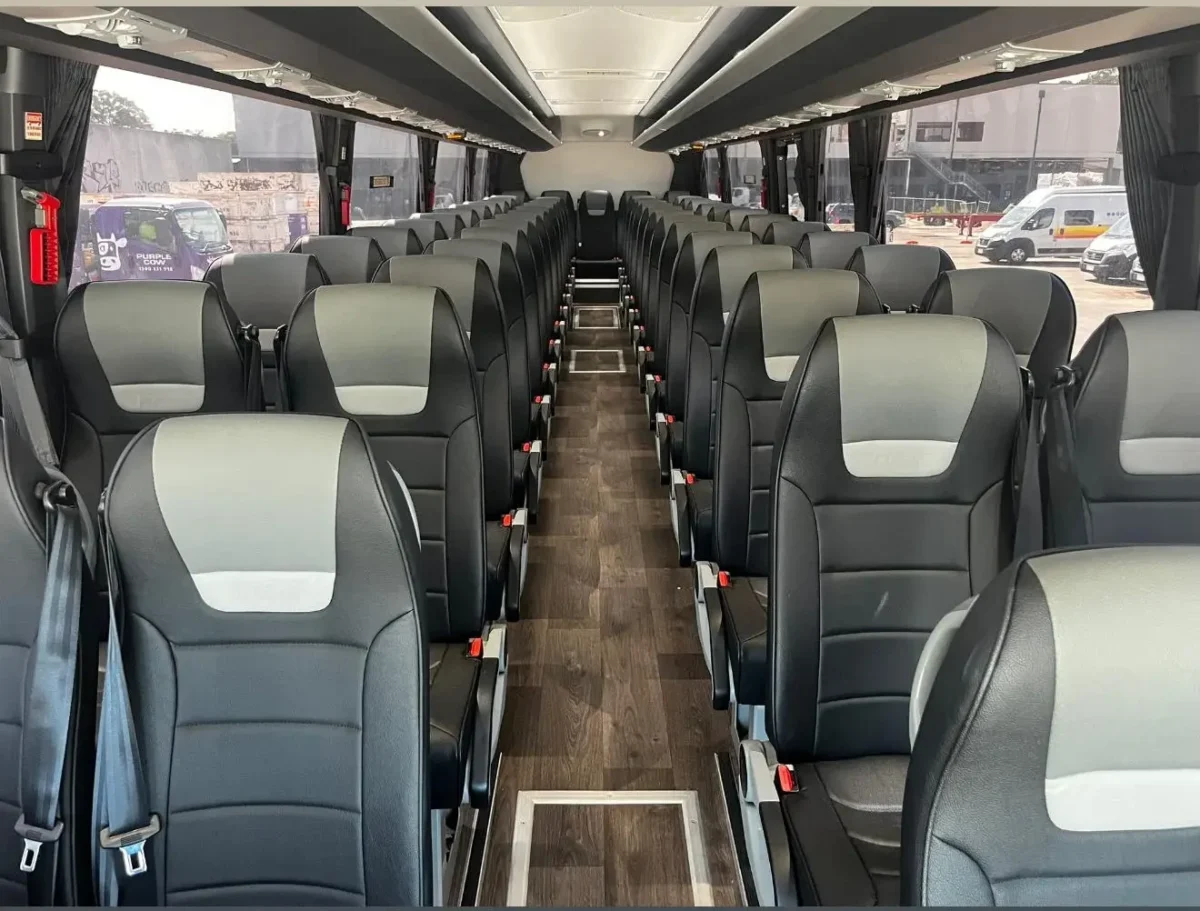
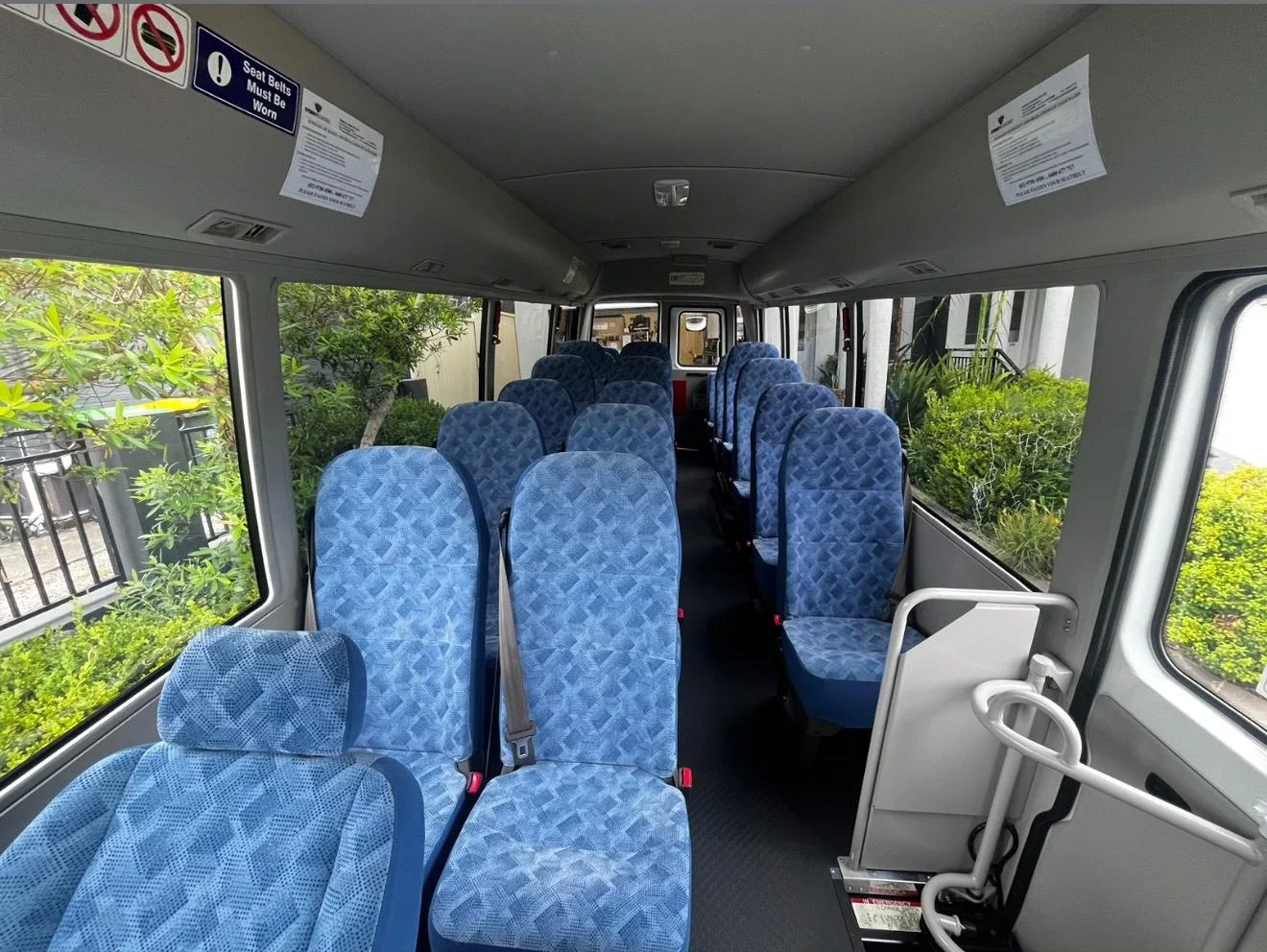
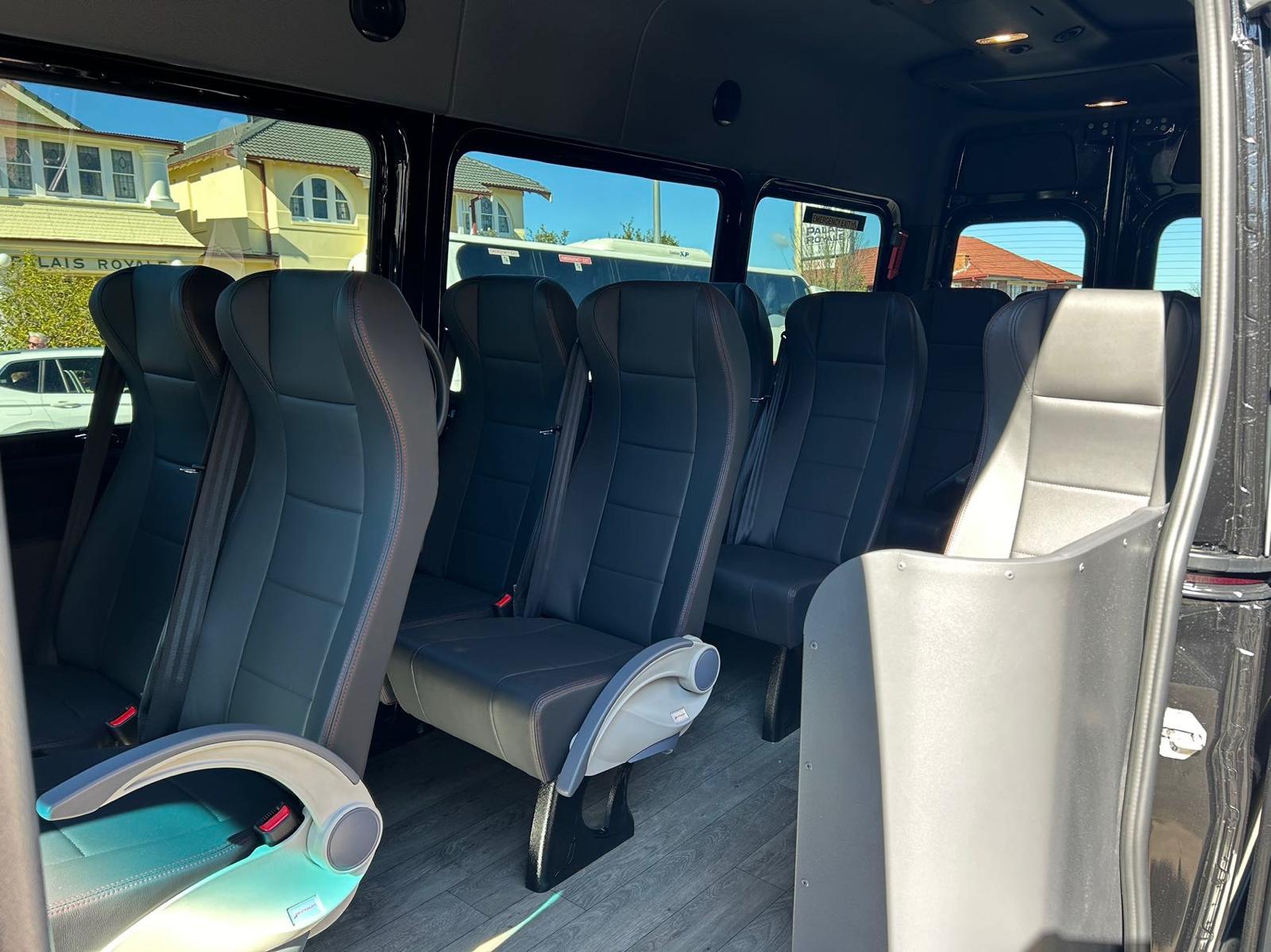
Two conditions apply. Alcohol is permitted on private function bookings by prior arrangement only, and never on school or youth charters. And you still need a stop with proper facilities, which is a parking question rather than a catering one. Raise both when you enquire, and check the vehicles we run if onboard space matters for the catering you are carrying.
The three destinations where this bites hardest
Blue Mountains. The good news is that the coach has somewhere to be. Blue Mountains City Council operates paid bus and coach parking along Echo Point Road and Panorama Drive, charged per half hour and banded by seat count, so a Katoomba lunch stop works logistically. The complication is Scenic World, which publishes no coach parking information and has a car park with a 2 metre clearance that a coach cannot use. It does take reservations for groups of more than 15. Book the group with them, and plan the vehicle separately.
Hunter Valley. The published requirement is that large groups book prior to arrival. Beyond that, no coach parking guidance and no list of coach-capable cellar doors is published by any official body. Qualify each venue individually with the ten questions above, and confirm in writing.
Southern Highlands. Nothing specific to the region is published in our verified sources. The advantage here is time rather than infrastructure: at 120 km and about 1.5 hours each way, the day has more slack than any other destination on the list, so a lunch overrun does less damage. That is not a reason to skip the booking.
Building lunch into the run sheet
Six steps, in this order.
- Fix the return departure time from the destination first. Everything else is fitted around it.
- Pick the lunch window and treat it as a fixed appointment with the venue, not a floating intention.
- Book in writing, with the head count, the arrival time and the dietary list.
- Confirm the coach set-down and where the vehicle goes during the meal.
- Tell the group the reassembly time twice: on arrival and fifteen minutes beforehand.
- Name one person, not the driver, who is responsible for getting everyone back on board.
Step six is the one that saves the day. The driver is managing a legal work clock and a 12.5 metre vehicle in a car park. Chasing stragglers is not their job, and a group that thinks it is will be late.
Frequently asked questions
Do coach groups need to book lunch in advance?
Yes, everywhere, and in the Hunter Valley it is the published requirement. The Hunter Valley Wine and Tourism Association states that large groups require a booking prior to arrival. Elsewhere, no official body publishes coach-capable venue lists, so booking ahead is the only way to know.
How long should a lunch stop be for 50 people?
Allow 75 to 90 minutes for a pre-ordered seated meal, 70 to 80 minutes for a buffet, and well over 100 minutes if the group has to queue at a counter individually. A packed or carried lunch takes about 40 minutes. Confirm the figure with the venue rather than assuming.
What happens if we just turn up with a coach group?
Sometimes it works. More often the venue splits the group across two seatings, the day loses an hour, and the last stop is dropped. In the Hunter Valley it is contrary to the published guidance for large groups, and a venue is entitled to turn you away.
Can we eat on the bus instead?
Yes. Food and non-alcoholic drinks are permitted on all vehicles in the fleet. Alcohol is permitted on private function bookings by prior arrangement only, and never on school or youth charters. Carrying lunch removes the kitchen from your critical path and is often the better option for school and community groups.
Which venues in the Blue Mountains or Hunter Valley can take a coach?
No verified list exists, and no official body publishes one, so this article names none. Use the ten qualifying questions above, ask about coach set-down as well as seating, and get the answer in writing before you commit the itinerary.
Next step
Send the pick-up suburb, the date, the group size and the destination, and you will get a fixed written quote back within two business hours with the vehicle named and the day timed with a realistic lunch window rather than an optimistic one. If your chosen venue cannot take a coach at the front, that is worth knowing before the group is told about it.
Call 02 9469 6600, Monday to Friday 7am to 6pm or Saturday 8am to 2pm, or start from the NSW day trip routes we run.
Sources
- Hunter Valley Wine and Tourism Association, Know before you go, https://www.winecountry.com.au/plan/know-before-you-go. Accessed 7 September 2026.
- Blue Mountains City Council, Visitor Bus Management Plan, https://www.bmcc.nsw.gov.au/documents/visitor-bus-management-plan. Accessed 7 September 2026.
- National Heavy Vehicle Regulator, Heavy vehicle fatigue management: bus industry, https://www.nhvr.gov.au/safety-accreditation-compliance/fatigue-management/heavy-vehicle-fatigue-management-bus-industry. Accessed 7 September 2026.