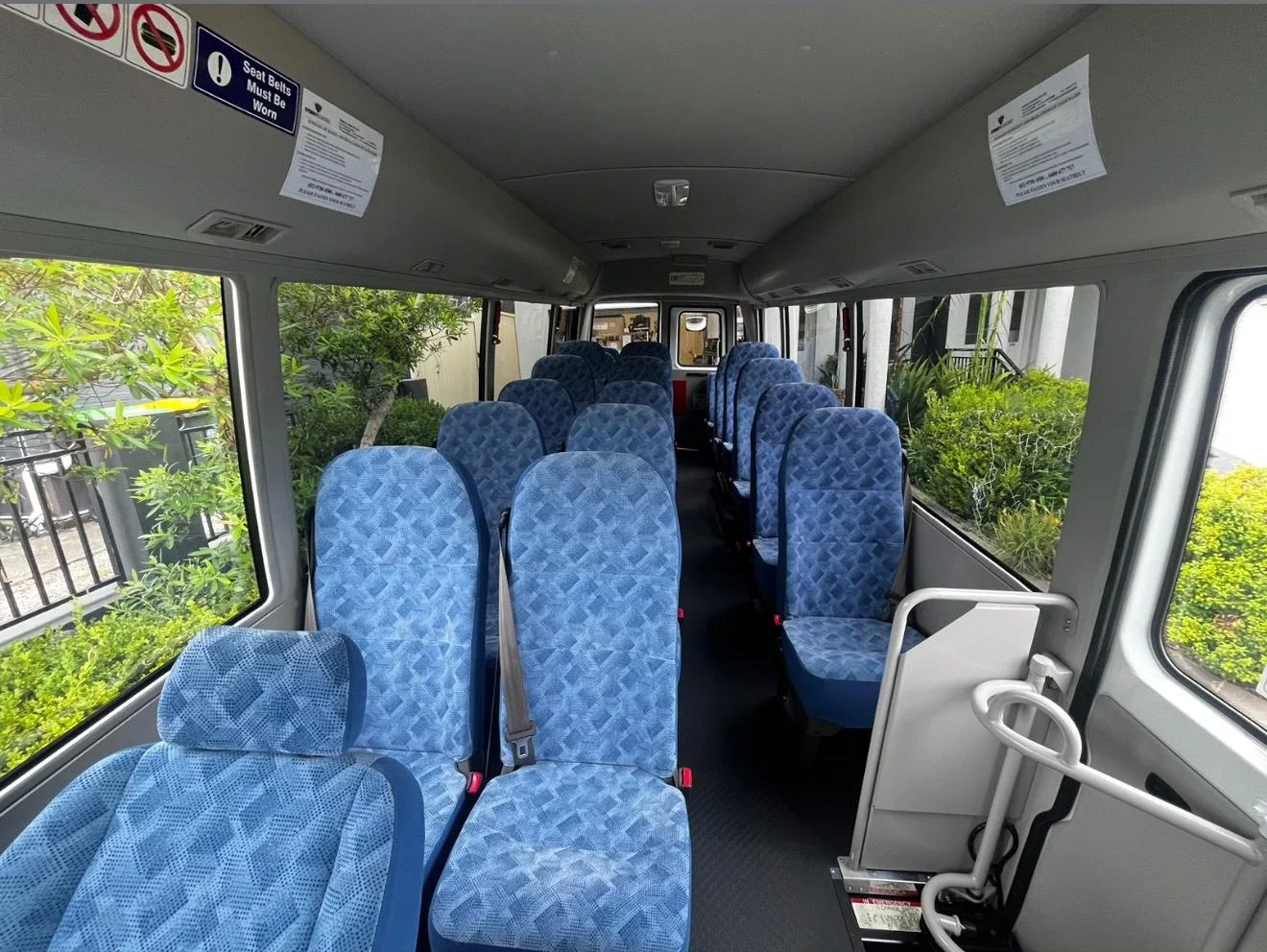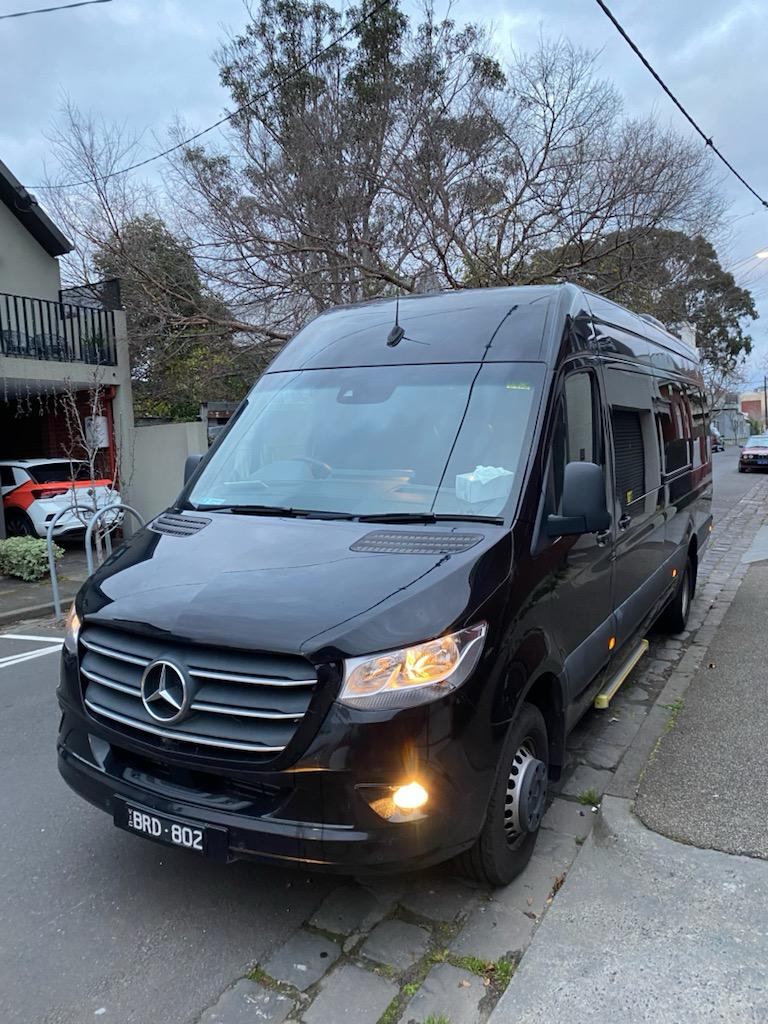
Plan the transport at the same time as the venue, not afterwards. Confirm four things in writing: the vehicle type assigned to your dates, whether it carries a wheelchair lift or ramp, how many allocated wheelchair spaces it has, and how much boarding time is built into the schedule. Then confirm the venue’s coach set-down point and how far it is from the accessible entrance. Under the current NSW excursion policy, transport is an express input to the mandatory risk assessment plan, so this work belongs in the file.
Start with the policy that actually applies
The operative NSW Department of Education document is “Excursions and variations of routine”, PD-2005-0290-04, version 01.1.0 dated 6 May 2025. The older PD/2004/0010 was consolidated into it on 30 January 2025 and no longer stands, so if your school template still cites the old number, update that first.
Three points shape an accessible excursion. A risk assessment plan is mandatory and transport is an express input, so access arrangements sit inside the assessment. Organisers must check licence and insurance, and for buses confirm licensed passenger capacity and appropriate heavy vehicle registration. And there are no numeric supervision ratios for K-12: the principal determines staffing using average class sizes as a guide, with numeric ratios existing only for public preschools. Sector blogs quote figures like one to ten for primary as though they were departmental policy. They are not. The policy also states a preference for seatbelt-fitted vehicles “where practical”, which is a preference rather than a requirement.
How the accessibility rules apply to an excursion coach
There is a genuine carve-out here and it is easy to misapply. The Australian Human Rights Commission states that the Disability Standards for Accessible Public Transport 2002 do not apply to dedicated school bus services. An excursion charter is not one. The Standards do apply to buses and coaches, with no charter or tour bus exemption: the excluded conveyances are charter boats including water taxis, limousines and self-drive rental cars, which is where the persistent claim that a charter coach falls outside them appears to have come from.
The provision that bites is section 9.8: an operator need not supply an allocated wheelchair space where every passenger uses a fixed seat. That describes most charter coaches, and it covers the allocated space and nothing more. Duties for access paths, boarding devices, signage, information, direct assistance and equivalent access continue, and the Standards sit under the Disability Discrimination Act 1992.
So do not assume the excursion coach is accessible, and do not accept that it does not need to be. Ask what the vehicle assigned to your dates has, and put the answer in the file. This is background, not legal advice.
Choosing the vehicle
Students travelling in a wheelchair need an allocated space, a boarding device rated for the combined mass of chair and occupant, and a securement system. The Transport Standards specify an allocated space of at least 800 mm by 1300 mm and a boarding device that must support 200 kg, so measure the chair rather than relying on the model name. Students who transfer to a fixed seat need transfer time and a plan for where the chair travels, since a folded manual chair goes in a coach luggage bay and a powered chair usually does not. Students boarding on the steps need handrails and time. Count teachers, learning support officers and parent helpers as passengers, because published seat counts exclude the driver.
One rule catches small-group excursions. On a vehicle meeting the Road Rules definition of a bus, over 12 adult seats including the driver, the driver is not required to ensure a child under 7 is in an approved child restraint. There is no equivalent relief on a minibus of 12 seats or fewer, which is not a bus for those rules. Treat that as a permission rather than a safety recommendation.
Boarding time is the scheduling risk
Boarding runs over, and it is almost never in a quote. Do not use a published average, including one from an operator who has not run your vehicle. Measure your own: time one boarding from doors open to belt fastened, count each student who uses the boarding device separately, time alighting on its own, add the walk from the legal set-down point to the entrance, then apply the total at every stop. An excursion with a venue and a lunch stop contains four of those movements. Then check the day against the fixed points that will not move: the venue’s entry time, the lunch booking, and the bell at the end of the school day. If it does not fit, remove a stop rather than compressing the boarding.
Sydney venues publish where a coach can stop
- Sydney Opera House. Buses and coaches cannot park onsite, and large buses must disembark passengers on Macquarie Street.
- Sydney Olympic Park. Coaches use Coach Pod C off Edwin Flack Avenue, accessed from Uhrig Road via Carter Street. The booking is purchased on the Sydney Olympic Park Authority site, is valid only for the date and location shown, and closes at 11:59pm the day before.
- Scenic World, Katoomba. The car park has a 2 m clearance a coach cannot use, and the venue publishes no coach parking information. Reservations are taken for groups of more than 15.
- Blue Mountains lookouts. NSW National Parks states bus parking is available at Wentworth Falls, and that at Govetts Leap large buses should drop off and park near the Blue Mountains Heritage Centre.
For any venue that publishes nothing, ask where a coach legally sets down, how far that point is from the accessible entrance, and what the surface is. Record the answers in the risk assessment plan.
What belongs in the excursion file
| Item | Why the file needs it |
|---|---|
| Written quote naming the vehicle type | Evidence of licensed passenger capacity for the vehicle allocated |
| Accreditation number and Certificate of Accreditation | Policy requires an operator check, and there is no public register to search |
| Certificate of currency for insurance | Policy requires an insurance check, in the name of the entity on your quote |
| Access specification in writing | Boarding device fitted, allocated spaces, securement system |
| Driver credential position | Bus Driver Authority, plus a Working With Children Check where the work is child-related |
| Driver name, mobile and vehicle registration | Confirms a specific vehicle and person have been allocated |
| Venue access notes | Set-down point, distance to the accessible entrance, surface |
| Boarding time allowance per stop | Makes the timing defensible in the risk assessment plan |
On driver credentials, be precise. A Bus Driver Authority is required to drive a public passenger bus or coach seating 13 or more. A Working With Children Check is a separate clearance from the Office of the Children’s Guardian, and transport is a child-related work category where contact is a usual part of and more than incidental to the work. A dedicated school run is captured; a general charter carrying a mixed adult and child group is not automatically captured. Clearances last five years, are continuously monitored, and cannot be self-verified. Sydney Buses and Coaches states its drivers hold a current Working With Children Check plus a Driver Authority, and that check numbers can be supplied to a school office before the day.
Timing the booking around the NSW school year
Excursion season is a capacity constraint, and accessible vehicles are a smaller pool than the general fleet.
For NSW government schools in the Eastern division, 2026 Term 4 runs Tuesday 13 October to Thursday 17 December. In 2027, Term 1 runs Wednesday 3 February to Friday 9 April, Term 2 Thursday 29 April to Friday 2 July, Term 3 Tuesday 20 July to Friday 24 September, and Term 4 Tuesday 12 October to Monday 20 December. Western division schools start Term 1 later, and Catholic systemic and independent schools set their own dates. School development days are staff-only, so the usable window at each end of a term is narrower than the term dates suggest.
Published lead times are two to four weeks for most jobs and four to eight weeks for peak periods including school excursion season, so work to the longer figure. School zones are 40 km/h and most operate 8:00 to 9:30am and 2:30 to 4:00pm on notified school days, with the sign always governing.
Frequently asked questions
Does a school excursion coach have to be wheelchair accessible?
The Transport Standards apply to buses and coaches and there is no charter or tour bus exemption, and the dedicated school bus service carve-out does not cover an excursion charter. Section 9.8 is narrower: an operator need not provide an allocated wheelchair space where every passenger uses a fixed seat. Other duties continue. Ask about the specific vehicle and record the answer. This is background rather than legal advice.
What supervision ratio does the Department require?
There are no numeric supervision ratios for K-12. The principal determines staffing using average class sizes as a guide, and numeric ratios exist only for public preschools.
Does every charter driver need a Working With Children Check?
Not as a blanket rule in either direction. A dedicated school or child transport run is captured. A general charter carrying a mixed group is not automatically captured. Ask the operator for its position and have your office verify through the Office of the Children’s Guardian rather than accepting a self-declaration.
Next step
Send the excursion date, the venue, the student and staff numbers and the access requirements, and we will confirm in writing which vehicle is allocated, what boarding device it carries and what the credential pack contains. Call 02 9469 6600, or start with school bus hire in Sydney and accessible bus hire in Sydney. The office contact details are published.
Sources
- NSW Department of Education, “Excursions and variations of routine (PD-2005-0290-04)”, https://education.nsw.gov.au/policy-library/policies/pd-2005-0290-04. Accessed 7 September 2026.
- Federal Register of Legislation (Australia), “Disability Standards for Accessible Public Transport 2002”, https://www.legislation.gov.au/F2005B01059/latest/text. Accessed 7 September 2026.
- Australian Human Rights Commission, “Public transport frequently asked questions”, https://humanrights.gov.au/our-work/disability-rights/public-transport-faq. Accessed 7 September 2026.
- Office of the Children’s Guardian, “Who needs a Working With Children Check”, https://ocg.nsw.gov.au/working-children-check/who-needs-check. Accessed 7 September 2026.
- Sydney Opera House, “Plan your excursion”, https://www.sydneyoperahouse.com/schools/plan-your-excursion. Accessed 7 September 2026.
- Sydney Olympic Park Authority, “Bus and coach parking”, https://www.sydneyolympicpark.com.au/parking/bus-and-coach-parking. Accessed 7 September 2026.
- NSW Department of Education, “School calendar 2026”, https://education.nsw.gov.au/schooling/calendars/2026. Accessed 7 September 2026.