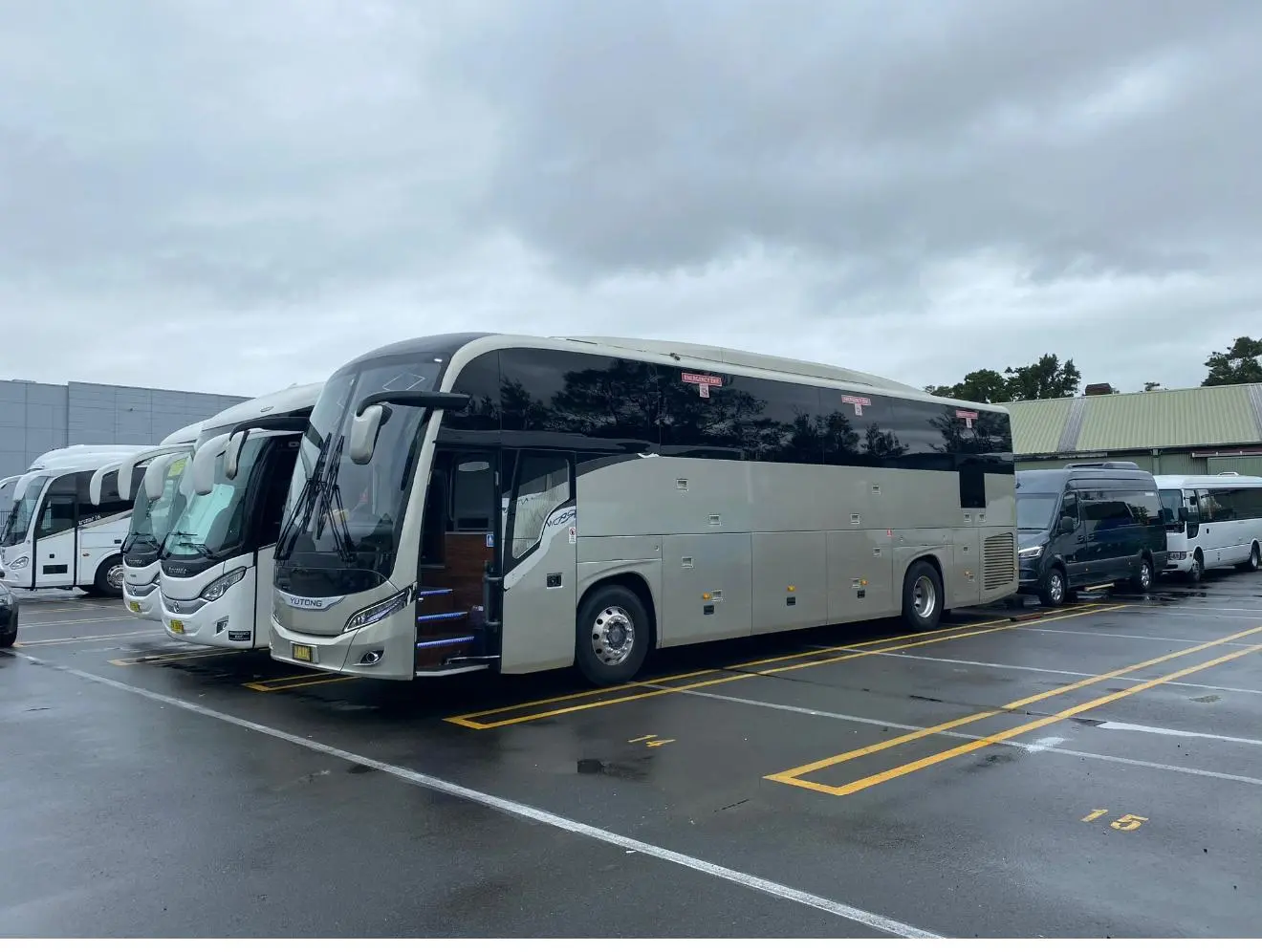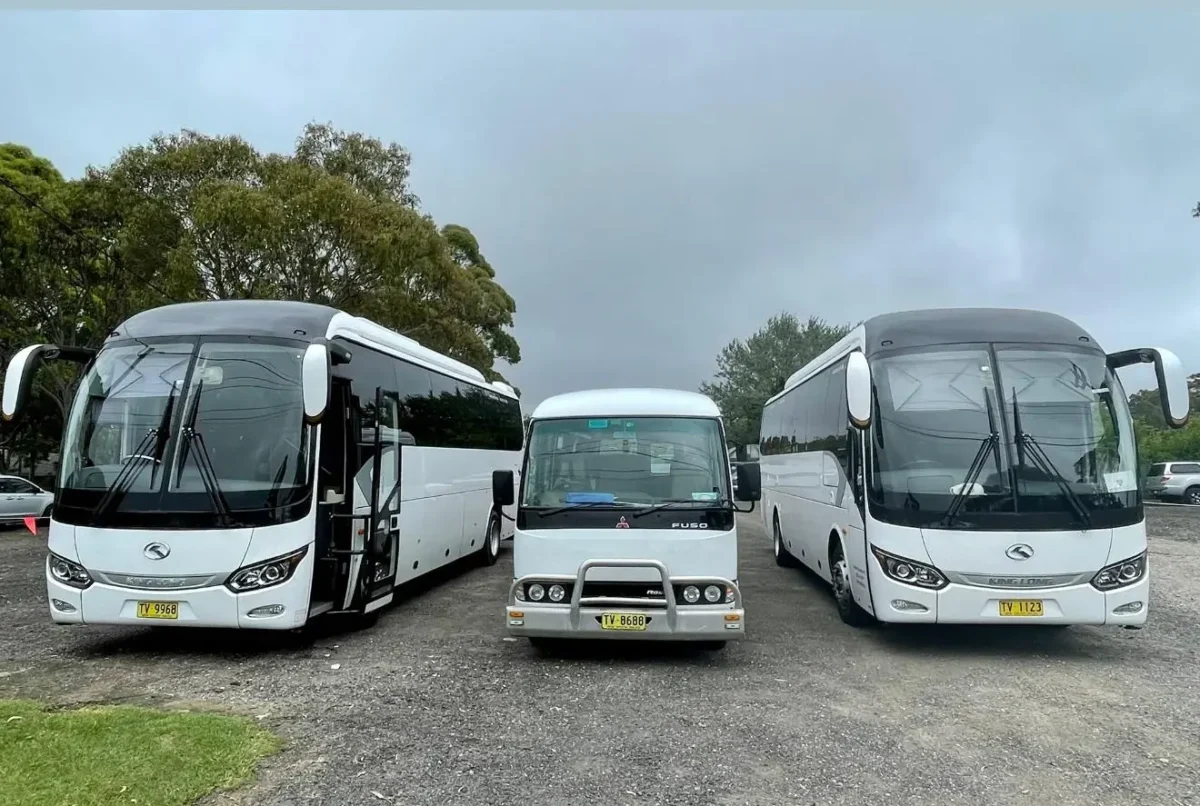
Confirm four things in writing before you pay a deposit: which vehicle is assigned to your dates, whether it carries a wheelchair lift or ramp, how many allocated wheelchair spaces it has, and how much boarding time is built into the schedule. Most Sydney charter coaches have a fixed seat for every passenger and no allocated space, so accessibility is something you specify rather than assume. Sydney Buses and Coaches states that wheelchair-equipped vehicles with hoists are available and that access needs are confirmed before booking.
Who this plan is for
This guide is written for the person who ends up owning the transport: a disability service coordinator, an aged care activities officer, a Probus or church outing organiser, a support coordinator sizing a day out for a group with mixed needs.
The common failure is not a refusal. It is a plan built as though everyone boards in the same way and at the same speed, then meeting a group where three people use the lift, two transfer from a frame, and one venue’s set-down point is 200 m from the door. All of that is plannable, and almost none of it survives being left to the day.
Confirm the vehicle, not the category
“Accessible” is not a vehicle class. It is a set of fittings and measurements on one particular bus. The difference between a good enquiry and a vague one is whether you ask about a category or a vehicle.
Ask: does the vehicle you will assign to my dates have a lift or a ramp, how many allocated wheelchair spaces does it have, what securement system is fitted, and what is the boarding time allowance in the schedule. Ask for those four answers in the written quote rather than in a phone call, so the answer travels with the file.
The quote should also name the vehicle. A quote that says “a 25-seater” has not been priced against your trip. A quote that names a vehicle type can be checked against the published fleet and its seat counts, and the seat count question can then be separated from the access question, which is where most sizing errors start.
How the Transport Standards actually apply to charter
This is worth getting right, because the internet gets it wrong consistently.
The Disability Standards for Accessible Public Transport 2002 apply to buses and coaches. There is no charter or tour bus exemption. The conveyances excluded from the Standards are charter boats including water taxis, limousines including chauffeured hire cars, and self-drive rental cars. The frequently repeated claim that charter and tour coaches fall outside the Standards appears to come from misreading “charter boats”, and it should not be relied on by anybody.
What does exist is narrower. Section 9.8 provides that an operator need not supply an allocated wheelchair space where every passenger uses a fixed seat, which describes most Sydney charter coaches and is why a coach with 53 fixed seats is not required to carry one. It is a provision about the allocated space only. Duties covering access paths, boarding devices, signage, information, direct assistance and equivalent access continue to apply. The Standards sit under the Disability Discrimination Act 1992, so the risk is a discrimination exposure rather than a fine, and the Australian Human Rights Commission states they do not apply to dedicated school bus services, a real but narrow carve-out that does not extend to a general charter.
The practical conclusion for a coordinator: do not ask whether charter buses must be accessible. Ask whether the vehicle assigned to your dates has a lift or ramp and an allocated space, and get the answer in writing. None of the above is legal advice. If your organisation needs a position on its own obligations, that is a question for your own adviser.
The measurements to check the chair against
The Transport Standards specify the following. These are the figures against which an accessible vehicle is built, and the ones to compare a passenger’s chair against before travel.
| Element | Specification | What you compare it with |
|---|---|---|
| Allocated space | Minimum 800 mm by 1300 mm | Occupied width and length of the chair, measured, not estimated |
| Head room over the allocated space | Minimum 1410 mm | Seated height of the passenger |
| Doorway unobstructed vertical opening | At least 1410 mm | Seated height at the point of entry |
| Boarding ramp width | Minimum 800 mm | Widest point of the chair including hand rims |
| Ramp slope, unassisted | Not exceeding 1 in 12 | Whether the passenger self-propels or is assisted |
| Boarding device capacity | Must support 200 kg | Combined mass of chair, occupant and anything carried |
Two standards get quoted in this area that do not answer an accessibility question. ADR 58 is the construction standard for omnibuses designed for hire and reward, and ADR 59 is a rollover crashworthiness standard. Neither is an accessibility standard. Separately, the NSW wheelchair-accessible vehicle framework sits under the Point to Point Transport Act 2016 and applies to taxis and hire vehicles rather than to buses, so asking a bus operator for a WAV certificate will not get you what you need.
Build boarding time into the itinerary
Boarding time is the single thing that breaks accessible itineraries, and it is almost never in a quote.
We have deliberately not published a figure. A boarding time measured on somebody else’s vehicle with somebody else’s passengers is not a planning number. Build your own instead:
- Time one boarding on the same vehicle type, from doors open to belt fastened.
- Repeat for every passenger who uses the lift rather than averaging a single observation.
- Time alighting separately, because it is a different sequence.
- Add a measured allowance for ambulant passengers using the steps with a handrail.
- Add the walk from the legal set-down point to the venue entrance, on the surface that is actually there.
- Enter the total in the run sheet as a named block with a start and finish time.
Then repeat the arithmetic at every stop. A four-stop day carries four boardings and four alightings, and that is the difference between a comfortable outing and one where people are rushed at the kerb.
Ask your operator for its own observed range on the specific vehicle. Anyone who has actually run the vehicle can give you one.
Sydney kerbs, layovers and the walk from the door
The vehicle is only half the access question. Where it can legally stop determines how far your group travels on foot, and Sydney has some firm rules.
Bus zones are set-down only. Under the NSW Road Rules, a charter coach counts as a public bus and may stop in a bus zone to set down or pick up passengers, unless the sign says otherwise. It may not wait and it may not park. For a group where boarding takes real time, that constraint shapes the day: the coach sets down, leaves for a layover, and returns at a nominated time.
The city has one formal layover. Transport for NSW operates the King Street Wharf Bus and Coach Layover, entered via Lime Street, open 24 hours with a maximum stay of 24 hours and restricted to accredited operators running vehicles seating more than 12 adults. Entry requires prior registration, so it is the operator’s arrangement rather than yours, but it is worth knowing when you agree a return time.
Some venues publish their own rule. The Sydney Opera House states that buses and coaches cannot park onsite and that large buses must disembark passengers on Macquarie Street. That single sentence fixes the walking distance for a mixed-mobility group before you have chosen anything else.
Vehicle height decides the drop-off point. Royal Randwick sets down coaches over 3.1 m high on the eastern side of Darley Road outside TAFE NSW Randwick, while mini buses under 3.1 m use the infield car park. Rosehill Gardens uses a different threshold of 3.4 m. A smaller, lower vehicle can put a group much closer to the entrance, which sometimes matters more than the extra seats on a full-size coach.
For any venue not covered above, ask three questions in advance: where does a coach legally set down, how far is that point from the accessible entrance, and what is the surface. Gravel, a cambered kerb and a long uphill approach are real obstacles that do not appear on a map.
The pre-booking checklist
Work through this before the deposit. Every line either changes the vehicle or changes the timing.
- [ ] Total passengers, split into ambulant, mobility aid stowed, and travelling in a wheelchair.
- [ ] Occupied width, occupied length and combined mass for each wheelchair, measured.
- [ ] Whether any passenger transfers to a fixed seat, and where the chair travels if they do.
- [ ] Carers and support workers counted in the headcount, with seating positions noted.
- [ ] Equipment list: frames, oxygen, transfer boards, assistance animals.
- [ ] Written confirmation of the vehicle type assigned, lift or ramp fitted, and number of allocated spaces.
- [ ] Securement system confirmed, and whether a shoulder belt is available at the allocated space.
- [ ] Boarding time allowance stated in the schedule, per stop.
- [ ] Set-down point identified at every venue, with the distance and surface to the accessible entrance.
- [ ] Toilet and comfort stop points agreed, with an accessible facility confirmed at each.
- [ ] A named contact for the day, and the driver’s name, mobile and vehicle registration before travel.
- [ ] What happens if a vehicle fails: Sydney Buses states that a replacement is arranged and the customer is kept informed, so ask what the replacement would be in access terms.
Note one NSW rule while you are writing the brief: on a coach fitted with seatbelts, wearing them is mandatory for every passenger aged 16 or over. That is worth telling a group in advance rather than at the kerb.
What a good written confirmation contains
The point of doing this before you book is that the answer becomes a document. A confirmation worth having names the vehicle type, states the boarding device fitted and the number of allocated spaces, sets out the boarding allowance in the timing, and identifies the set-down point at each venue. Sydney Buses publishes a written quote with the vehicle named within two business hours, and sends the driver name, mobile and vehicle registration 24 hours before travel. Use that as the minimum standard, whoever you book with. If the vehicle facts are not written down, they have not really been confirmed.
Frequently asked questions
Are charter buses exempt from the accessibility standards?
No. The Transport Standards apply to buses and coaches, and the excluded conveyances are charter boats, limousines and self-drive rental cars. The narrower and correct point is section 9.8: an operator need not provide an allocated wheelchair space where every passenger uses a fixed seat. Other duties, including access paths, boarding devices, information and direct assistance, continue to apply. This is background rather than legal advice.
How many wheelchair positions can a vehicle carry?
It depends on the individual vehicle, not on the vehicle class. Ask for the number of allocated spaces on the vehicle assigned to your dates, and ask for it in the written quote.
How much extra time should I allow for boarding?
Allow a measured figure rather than a guess. Time a boarding on the same vehicle type, count each lift user separately, time alighting on its own, and add the walk from the set-down point to the door. Then apply the total at every stop in the day.
Can the driver help a passenger board?
Ask the operator directly and get the answer in writing. Direct assistance is one of the duties the Transport Standards address, but what a particular operator’s drivers do at the kerb should be agreed before travel rather than assumed on the day.
What if a venue has no accessible set-down point?
Solve that before the vehicle. Confirm where a coach can legally stop, measure the distance to the accessible entrance, check the surface, and if the answer is unworkable, either move to a lower and smaller vehicle or change the stop.
Do we need to tell the operator about carers?
Yes, and count them in the headcount. Carers and support workers occupy seats, often need to sit adjacent to the person they support, and can change which vehicle fits the group.
Next step
Tell us the passenger split, the wheelchair measurements and the venues, and we will confirm in writing which vehicle is allocated, what boarding device it carries and how much boarding time is built into the schedule before you commit. Call 02 9469 6600, or read how accessible bus hire in Sydney is arranged here. The office hours and the direct line are published if you would rather work it through by phone.
Sources
- Federal Register of Legislation (Australia), “Disability Standards for Accessible Public Transport 2002”, https://www.legislation.gov.au/F2005B01059/latest/text. Accessed 7 September 2026.
- Australian Human Rights Commission, “Public transport frequently asked questions”, https://humanrights.gov.au/our-work/disability-rights/public-transport-faq. Accessed 7 September 2026.
- NSW Legislation, “Road Rules 2014 (NSW)”, https://legislation.nsw.gov.au/view/html/inforce/current/sl-2014-0758. Accessed 7 September 2026.
- Transport for NSW, “King Street Wharf Bus and Coach Layover”, https://www.transport.nsw.gov.au/operations/roads-and-waterways/business-and-industry/buses/operators/king-street-wharf-bus-and. Accessed 7 September 2026.
- Sydney Opera House, “Plan your excursion”, https://www.sydneyoperahouse.com/schools/plan-your-excursion. Accessed 7 September 2026.
- Australian Turf Club, “Travel and parking at Royal Randwick”, https://www.australianturfclub.com.au/travel-parking-at-royal-randwick/. Accessed 7 September 2026.