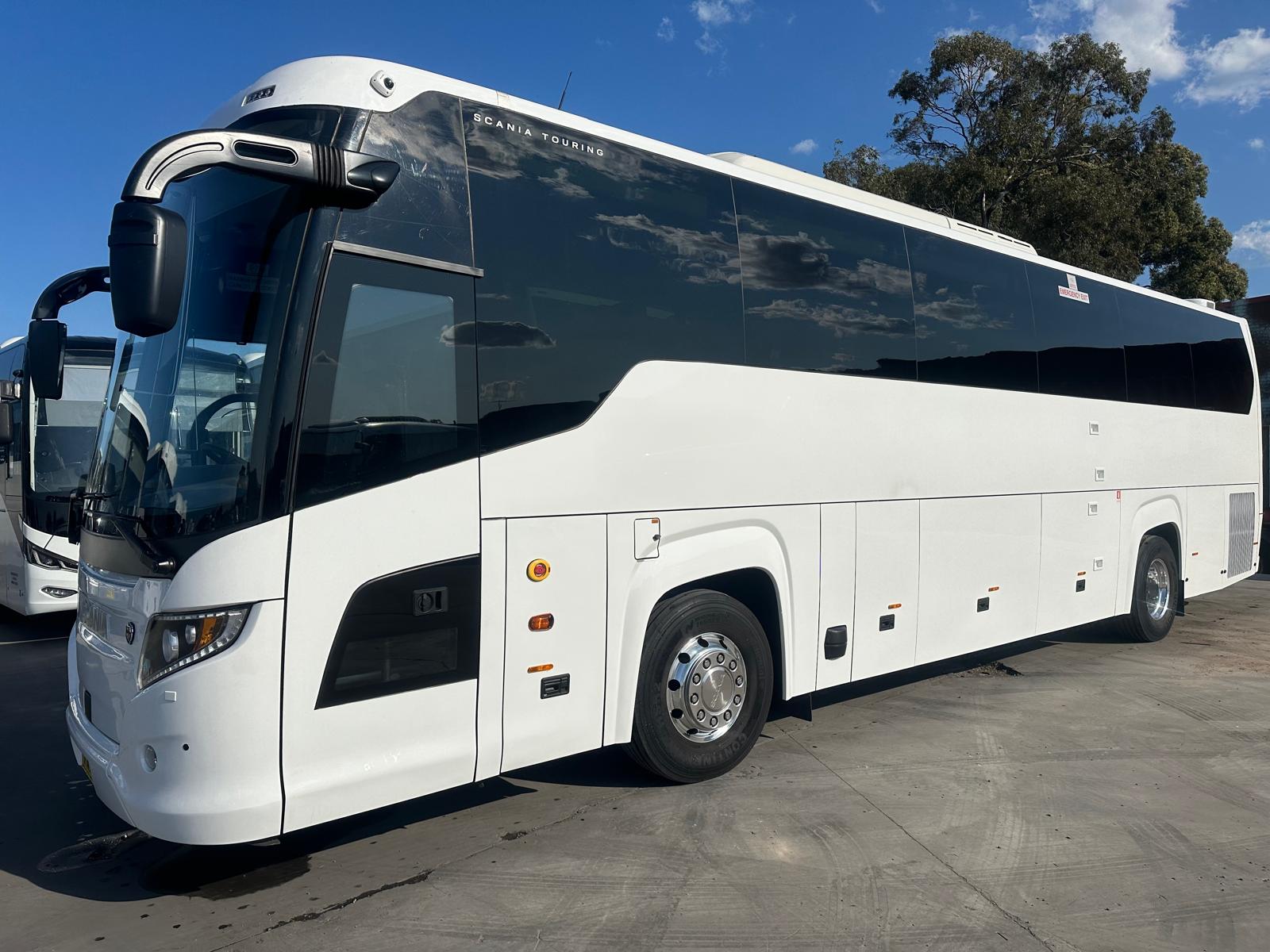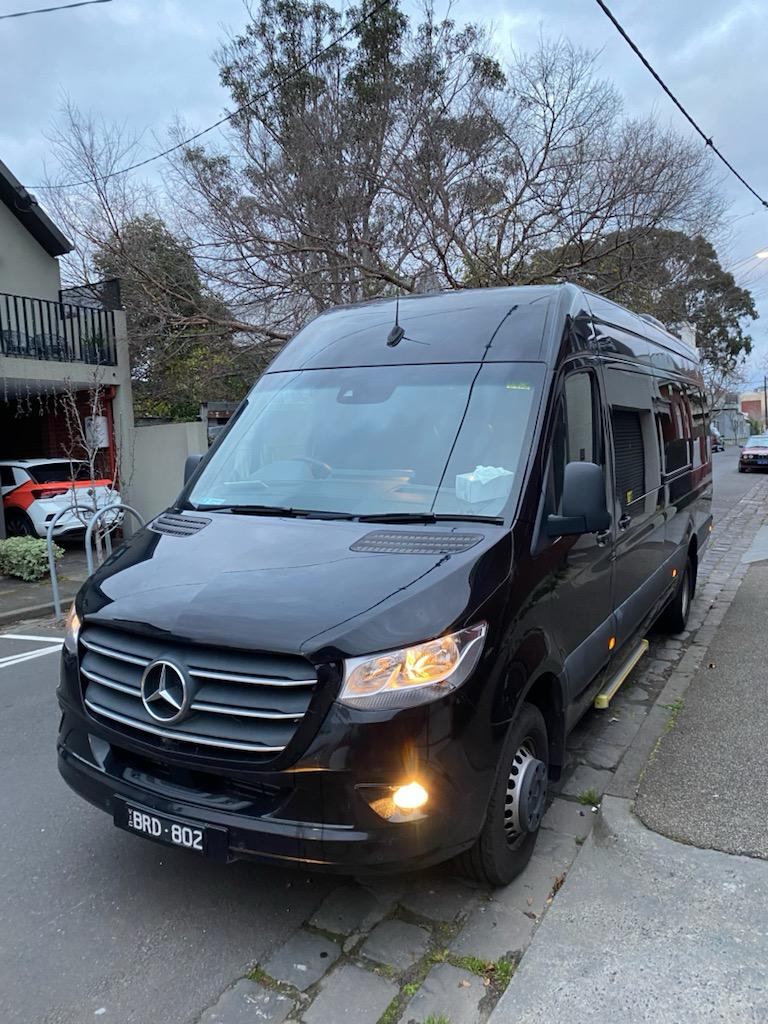
Boarding is the part of an accessible itinerary that people forget to schedule, and it is the part that makes the day run late. The fix is not a rule of thumb. It is to measure your own group boarding the actual vehicle, count each lift user separately, time alighting on its own, add the walk from the legal set-down point to the entrance, and then apply that total at every stop rather than only at departure. A day with four stops carries eight of these movements.
Why a published boarding time would not help you
You will find figures quoted online. Ignore them, and do not accept one from us either.
Boarding time varies with the boarding device fitted, the chair, the passenger, the kerb, the weather, whether the vehicle can get its door alongside the footpath, and how many people are boarding in sequence. A number produced on a different vehicle at a different kerb is not a planning input. It is a number that makes a plan feel finished while leaving it wrong.
What travels between groups is the method. Measure once properly and you will have a figure that is worth more than any published average, and it will keep being right for the vehicles and venues you use regularly.
Before you can time anything
Two facts have to be settled first, because they change the movement you are timing.
Which boarding device is fitted. A powered lift and a ramp are different sequences, need different amounts of clear footpath, and take different amounts of time. Ask which one is on the vehicle assigned to your dates.
Who boards how. Split the group three ways on paper: passengers travelling in a wheelchair, passengers whose mobility aid is stowed while they use a fixed seat, and passengers boarding on the steps with a handrail. These are three different durations, and averaging them produces a number that describes nobody.
Measuring your own boarding time
Do this once, on a real outing, with a phone stopwatch and a notebook.
- Start at door open. Not at “the bus arrived”. The clock starts when the door opens and the driver begins the boarding sequence.
- Time each lift user separately. Stop the clock when that passenger is in the allocated space, secured, and belted. Write the number next to the person’s initials, not as a group average.
- Time the step boarders as a block. From the first foot on the step to the last person seated.
- Time alighting on its own. It is a different sequence and often a different duration, and it happens just as many times as boarding does.
- Time the device cycle at both ends. Deploying and stowing the ramp or lift is part of the stop, and it happens whether one person or four uses it.
- Record the conditions. Kerb or road level, footpath width, weather, and whether the vehicle got its door alongside the kerb or had to work from the traffic side.
You now have a per-stop boarding budget for your group and your vehicle. Write it at the top of the run sheet and reuse it.
The stop block: what a single stop actually costs
Every stop in a mixed-mobility itinerary contains more than the visit. Build each one as a block.
| Component | What it covers | Where the figure comes from |
|---|---|---|
| Approach and positioning | Getting the vehicle to the legal set-down point and opening the door | Operator estimate for that venue |
| Device deploy | Ramp or lift out and ready | Your measured figure |
| Alighting | Every passenger off, in sequence | Your measured figure, per person for lift users |
| Device stow | Ramp or lift returned and door closed | Your measured figure |
| Walk in | Set-down point to the accessible entrance, on the real surface | Walk it yourself or ask the venue |
| The actual visit | The reason you came | The venue’s guidance |
| Walk out | Entrance back to the pick-up point | Same as walk in, plus a margin if people are tired |
| Boarding | Device deploy, board and secure, device stow | Your measured figure |
The two components organisers most often leave out are the device cycle and the walk. Both are fixed costs that repeat at every stop, and together they are usually larger than anyone expects.
The walk is part of the boarding budget in Sydney
A charter coach counts as a public bus under the NSW Road Rules, which means it may stop in a bus zone to set down or pick up passengers but may not wait or park there. So the vehicle sets down, departs, and returns at an agreed time. Where it sets down is therefore fixed by the venue and the law, not by convenience, and the walk from that point is a real part of your timing.
Several Sydney venues publish exactly where that point is.
- Sydney Opera House. Buses and coaches cannot park onsite, and large buses must disembark passengers on Macquarie Street. That fixes the walking distance before you have chosen anything else.
- ICC Sydney. Coach drop-off is at Iron Wharf Place off Darling Drive, with Zollner Circuit also in use, and coach parking is arranged through a dedicated ICC Sydney Event Manager rather than booked directly.
- Royal Randwick. Coaches over 3.1 m high set down on the eastern side of Darley Road outside TAFE NSW Randwick, while mini buses under 3.1 m use the infield car park. For a mixed-mobility group, choosing a lower vehicle can shorten the walk substantially.
- Rosehill Gardens. A different threshold applies, 3.4 m, with set-down along the western side of Arthur Street. Do not carry one racecourse’s number across to the other.
For any venue that publishes nothing, ring and ask three questions: where can a coach legally set down, how far is that point from the accessible entrance, and what is the surface. Gravel, a cambered kerb, a long uphill approach and a set of steps with no adjacent ramp are all normal, and all of them belong in the timing before the day rather than in the apology afterwards.
Designing the day around the boarding budget
Once you have a per-stop block, the itinerary designs itself, and it usually gets shorter.
Fewer stops, longer at each. Two well-chosen stops with time to spare beat four stops with people being hurried onto a lift. The boarding cost is per stop, so removing a stop removes two full movements.
Put the hardest access first. Energy is highest at the start of the day, and if something takes longer than planned you still have room to recover.
Do not schedule a tight connection. A booked venue entry time or a ferry departure turns your boarding budget into a countdown. If you must have one, put a whole spare block in front of it.
Watch the fixed constraints on the driving legs. Under standard hours, a solo driver may work a maximum of 12 hours with 7 continuous hours of stationary rest in any 24 hour period, so a very long day is a real limit rather than a preference. School zones are 40 km/h and most operate 8:00 to 9:30am and 2:30 to 4:00pm on notified school days, with the sign always governing, which is worth knowing if your route passes schools at either end of the day. For the driving legs themselves, use the published route distances and driving times rather than a car navigation estimate.
Build the return the same way as the departure. The end of the day is when people are most tired and boarding is slowest, and it is the movement most often given the least time.
A quick sanity check before you send the itinerary
- Does every stop have its own boarding block, or does one block cover the whole day?
- Is alighting timed separately from boarding?
- Is the device cycle counted at both ends of every stop?
- Is the walk from the legal set-down point included, with the surface known?
- Is there a spare block before anything with a fixed time?
- Does the return leg get the same allowance as the outbound?
- Has the operator seen the run sheet and confirmed the timing is workable for the vehicle allocated?
If the answer to the last question is no, send it. An operator reading a run sheet before the day will tell you which block is optimistic, and that conversation is far cheaper than finding out at the third stop.
Frequently asked questions
How much longer does an accessible itinerary take?
More than most first drafts allow, and the honest answer is that it depends on your group and your vehicle. Measure a real boarding, apply the figure at every stop rather than only at the start, and count alighting separately. The total is usually the reason a plan needs a stop removed.
Does the driver deploy the lift, or do we?
Ask the operator, and get the answer before the day. It affects both the timing and who needs to be standing where at each stop.
Can we keep the coach at the kerb while people board slowly?
Not in a bus zone. A public bus may stop there to set down or pick up passengers only, not to wait or park. Plan the day as set down, depart, return at an agreed time, and agree that return time with the operator rather than assuming the vehicle can linger.
Is it better to book a bigger coach so everyone fits?
Not always. A taller vehicle is excluded from some set-down points, which lengthens the walk. At Royal Randwick, for instance, the 3.1 m threshold decides whether the group is dropped on Darley Road or inside the infield car park. Size the vehicle to the group, then check the stop.
What if we are running late by the second stop?
Cut a stop rather than compressing boarding. Compressed boarding is where people get hurt and where the group stops enjoying the day. Agree in advance with the group which stop is the one you would drop.
Next step
Send us the run sheet with your stops and your measured boarding figures, and we will tell you where the timing is tight for the vehicle allocated to your dates and what the realistic version looks like. Call 02 9469 6600, or read how accessible bus hire in Sydney is planned here.
Sources
- Sydney Opera House, “Plan your excursion”, https://www.sydneyoperahouse.com/schools/plan-your-excursion. Accessed 7 September 2026.
- ICC Sydney, “Getting here”, https://iccsydney.com.au/visitors/getting-here/. Accessed 7 September 2026.
- Australian Turf Club, “Travel and parking at Royal Randwick”, https://www.australianturfclub.com.au/travel-parking-at-royal-randwick/. Accessed 7 September 2026.
- NSW Legislation, “Road Rules 2014 (NSW)”, https://legislation.nsw.gov.au/view/html/inforce/current/sl-2014-0758. Accessed 7 September 2026.
- National Heavy Vehicle Regulator, “Heavy vehicle fatigue management: bus industry”, https://www.nhvr.gov.au/safety-accreditation-compliance/fatigue-management/heavy-vehicle-fatigue-management-bus-industry. Accessed 7 September 2026.
- Transport for NSW, “School zones”, https://www.transport.nsw.gov.au/roadsafety/community/schools/school-zones. Accessed 7 September 2026.