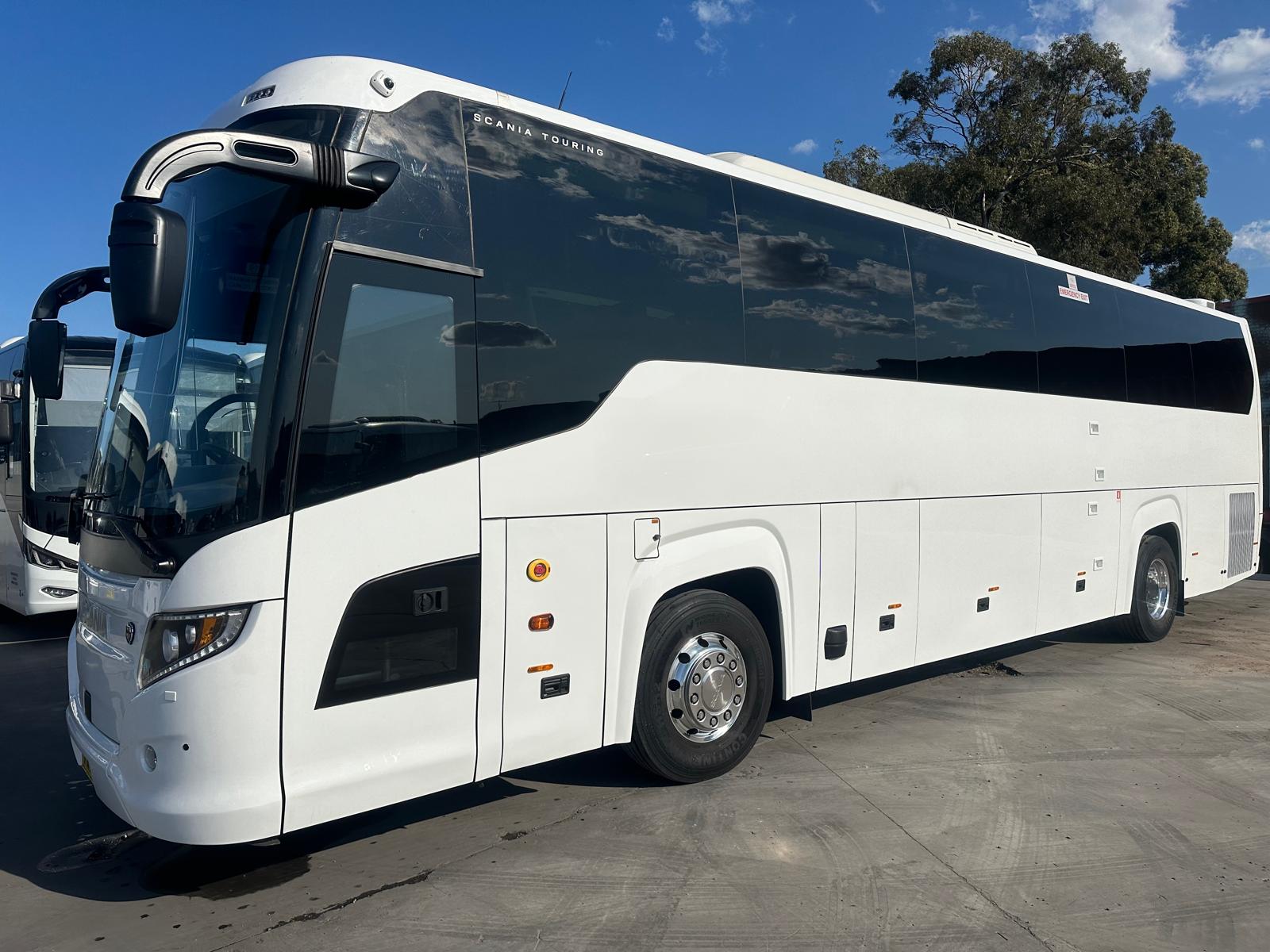
Ask the access question on the RSVP, before you book anything. Then solve it in this order: where the vehicle can legally stop at each address, how far that point is from the door, what the surface is, and only then which vehicle. A smaller lower vehicle that reaches the entrance often serves older guests better than a full-size coach parked at the gate. Boarding takes real time at both ends of the night, and the late return is the harder half.
Ask early, ask everyone, name nobody
The awkwardness of asking is why this gets skipped, and it is solved by asking everybody the same question.
Put one line on the RSVP: “We are running a shuttle to and from the venue. Let us know if you would find steps difficult, use a walking frame or wheelchair, or would prefer a seat near the door, so we can plan the right vehicle.” That normalises the answer, gathers what you need rather than a diagnosis, and arrives early enough to change the booking.
Follow up individually with anyone who flags something. For a wheelchair you need occupied width, occupied length, combined mass, and whether the person travels in the chair or transfers to a seat. Ask plainly. People who use mobility equipment answer these questions constantly and would rather be asked than guessed at.
Walk the route before you book it
The vehicle matters less than where it can stop, and Sydney venues vary enormously.
Go to each address and answer four questions. Where can a coach legally stop? Under the NSW Road Rules a charter coach counts as a public bus and may stop in a bus zone to set down or pick up passengers, but it may not wait or park, so the pattern is set down, depart, return at an agreed time. How far is that point from the door, measured on foot? What is the surface, given that gravel driveways, grass verges and cambered kerbs are common at Sydney and Hunter Valley function venues? And what happens after dark, when lighting, unfenced edges and a wet lawn change the same route completely?
Ask the venue coordinator the same questions. Venues often have a closer set-down point they will open for a coach if asked in advance, and they rarely volunteer it.
Choosing the vehicle
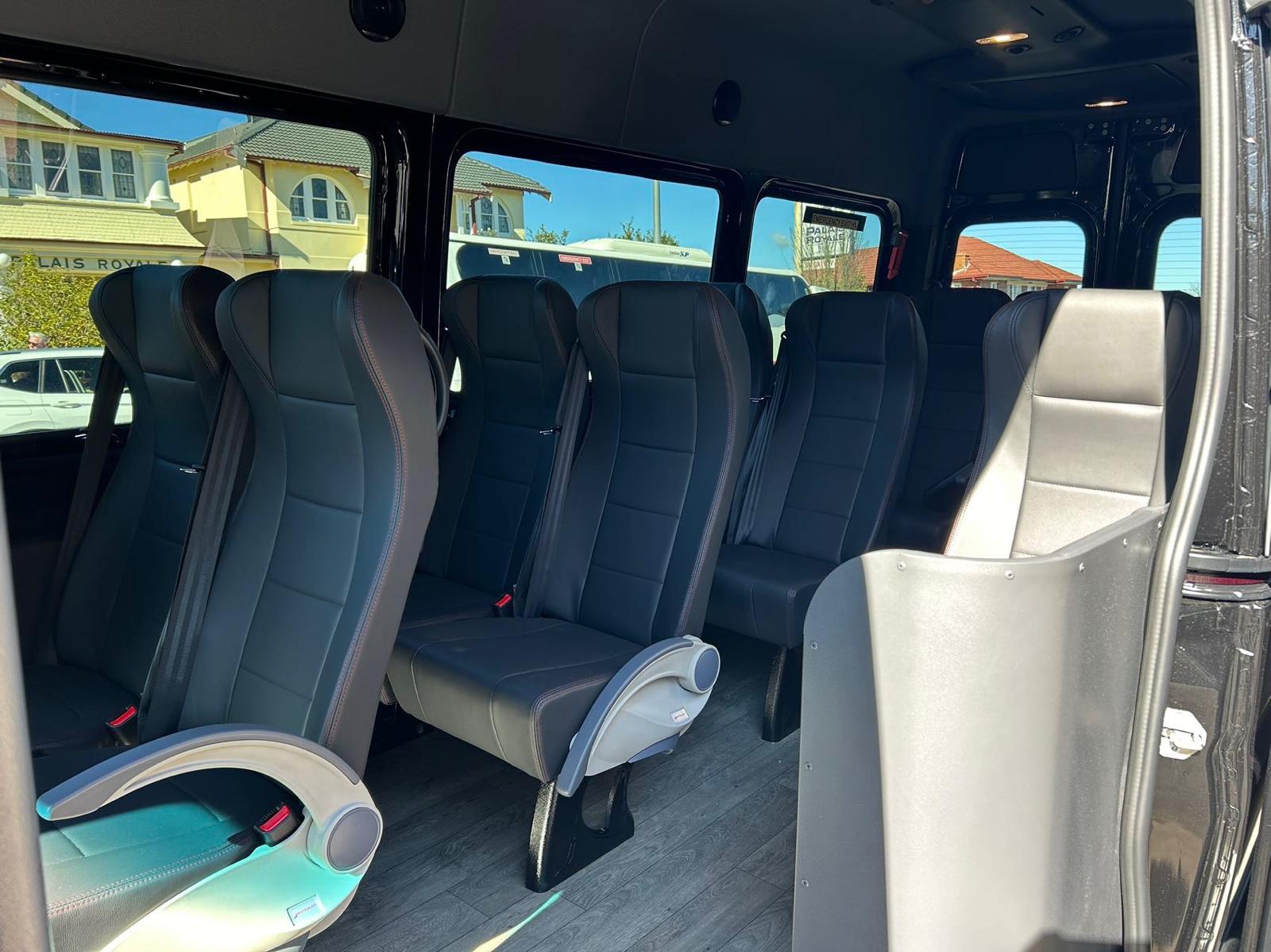
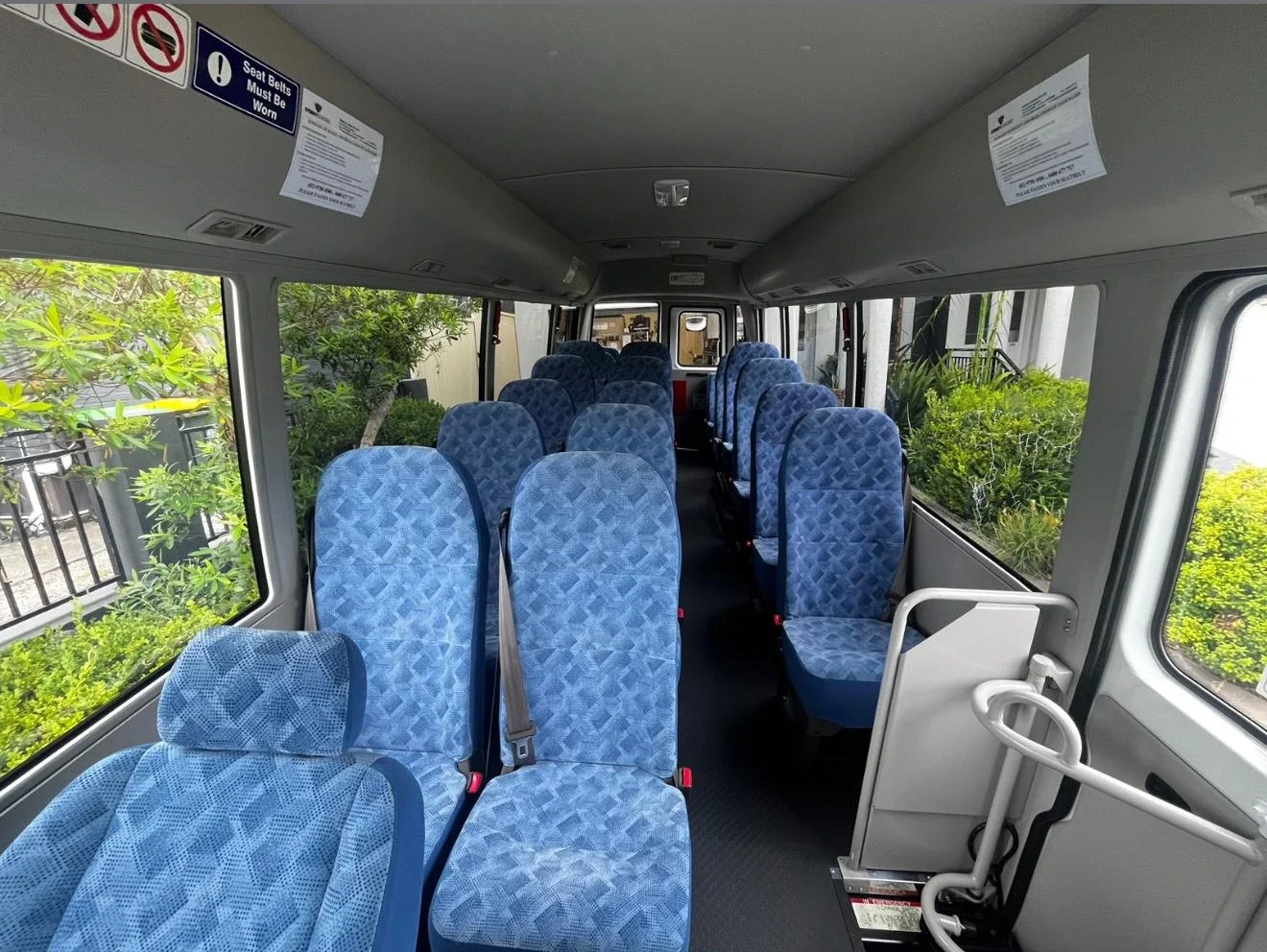
A smaller, lower vehicle can get closer. Height and length decide access at many venues, and a minibus that reaches the entrance beats a full-size coach at the gate for anyone who finds a long walk difficult. Look at the published fleet and seat counts in terms of what fits the driveway, not only what fits the guest list.
If a guest travels in their wheelchair, you need a vehicle with a boarding device and an allocated space. The Transport Standards set a ramp minimum width of 800 mm at a slope not exceeding 1 in 12 unassisted, and a boarding device that must support 200 kg. Confirm in writing that the vehicle assigned to your date carries one. If a guest transfers to a seat instead, plan where the chair or frame travels and who stows it, at both ends of the night.
Worth knowing: the Transport Standards apply to buses and coaches, and there is no charter or tour bus exemption. Section 9.8 is the real provision, under which an operator need not provide an allocated wheelchair space where every passenger uses a fixed seat. That is why most charter coaches carry none, and why you ask about your vehicle rather than the category. This is background, not legal advice.
Two vehicles usually beat one
For a genuinely mixed guest list, the cleanest answer is often two vehicles.
Run a smaller accessible vehicle on a shorter loop closer to the door with a schedule of its own, and the main coach for everyone else. Guests who need more time get an unhurried boarding rather than a queue of 40 people behind them, and the main shuttle keeps to a tight run sheet.
It also fixes the late return, where most wedding transport plans fail. At the end of the night people are tired, it is dark, the surface is worse than it was at 3pm, and boarding takes longer than it did on arrival. A second vehicle running an earlier departure lets older guests leave when they want to rather than when the last bus goes.
Build the timing, do not assume it
There is no useful published average for boarding time. Measure it if you can, at a family event beforehand, and if you cannot, ask the operator for its observed range on the vehicle allocated to your date. Then build the run sheet in blocks.
| Block | What it covers | Notes |
|---|---|---|
| Pick-up | Hotel or meeting point, boarding, departure | Longest boarding of the day if anyone uses a lift |
| Transfer | Drive to the ceremony | Use realistic road times, not free-flowing estimates |
| Set down | Arrival, alighting, walk to the ceremony | Include the walk from the legal stop |
| Gap | Vehicle departs to a layover | A coach cannot wait in a bus zone |
| Ceremony to reception | Return, board, transfer, set down | Two more boardings if the venues differ |
| Early return | An earlier run home | The block that serves older guests |
| Final return | Last run, in the dark | Slowest boarding of the night |
Two constraints belong in the same plan. A solo driver under standard hours may work a maximum of 12 hours with 7 continuous hours of stationary rest in any 24 hour period, which is a real limit on a long day at a regional venue. And waiting time beyond the booked window is priced separately, so a run sheet with realistic gaps is cheaper than one that assumes everything runs early.
Telling guests what to expect
A short note with the invitation or on the wedding website removes most of the day’s confusion. Include where the shuttle leaves from and when, with a landmark; where it sets down and roughly how far that is from the ceremony; what the surface is between the two, in plain terms; the return times, including the earlier run; that on a coach fitted with seatbelts, wearing them is required in NSW for every passenger aged 16 and over; and a named person to call on the day who is not the couple.
If alcohol is planned on board, arrange it with the operator in advance. It is permitted on private function bookings by prior arrangement only, and never on school or youth charters.
Frequently asked questions
How do I ask guests about mobility without making it awkward?
Ask everybody the same question on the RSVP, phrased around what would help rather than around a condition, then follow up privately with anyone who flags something.
Do I need a wheelchair accessible bus for the whole wedding?
Usually not for the whole guest list. A common solution is one accessible or smaller vehicle running a shorter loop closer to the entrance, plus a main coach for everyone else.
Can the bus wait at the door while guests board slowly?
Not in a bus zone, where a public bus may stop only to set down or pick up. At a private venue it depends on the driveway, so ask the venue where the vehicle can stand and for how long, and confirm with the operator.
Next step
Send the venue addresses, the guest numbers and any access requirements from your RSVPs, and we will build a run sheet with realistic boarding time and confirm which vehicle can get closest to each entrance. Call 02 9469 6600, or start with wedding bus hire in Sydney and the detail on accessible bus hire in Sydney.
Sources
- NSW Legislation, “Road Rules 2014 (NSW)”, https://legislation.nsw.gov.au/view/html/inforce/current/sl-2014-0758. Accessed 7 September 2026.
- Federal Register of Legislation (Australia), “Disability Standards for Accessible Public Transport 2002”, https://www.legislation.gov.au/F2005B01059/latest/text. Accessed 7 September 2026.
- Transport for NSW, “King Street Wharf Bus and Coach Layover”, https://www.transport.nsw.gov.au/operations/roads-and-waterways/business-and-industry/buses/operators/king-street-wharf-bus-and. Accessed 7 September 2026.
- National Heavy Vehicle Regulator, “Heavy vehicle fatigue management: bus industry”, https://www.nhvr.gov.au/safety-accreditation-compliance/fatigue-management/heavy-vehicle-fatigue-management-bus-industry. Accessed 7 September 2026.