A NSW Class C car licence covers a vehicle carrying up to 12 adults including the driver and with a gross vehicle mass of up to 4.5 tonnes. Both limits apply at once, and a vehicle that breaches either one is outside Class C. Seat count is the limit everybody checks. GVM is the limit that catches people out, because a number of vehicles marketed as twelve seaters weigh more than 4.5 tonnes fully specified.
Step one: count the seats the way the rule counts them
The phrase is “12 adults including the driver“. It is not “12 passengers plus a driver”.
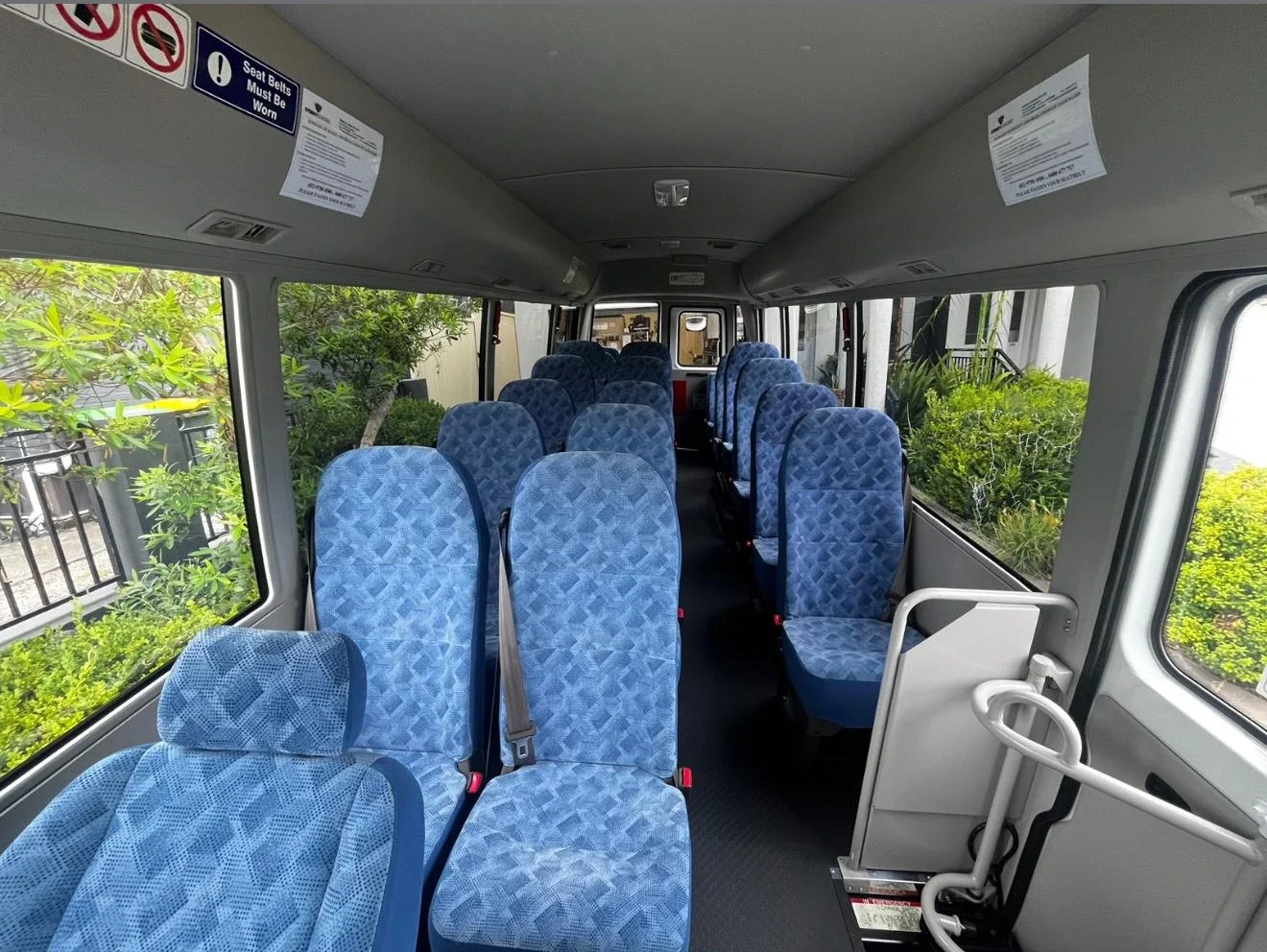
That single word changes the answer for a lot of vehicles. A vehicle advertised as a “12 seater” may mean twelve passenger seats plus a driver’s seat, which is thirteen adults including the driver, and outside Class C on the seat limit alone.
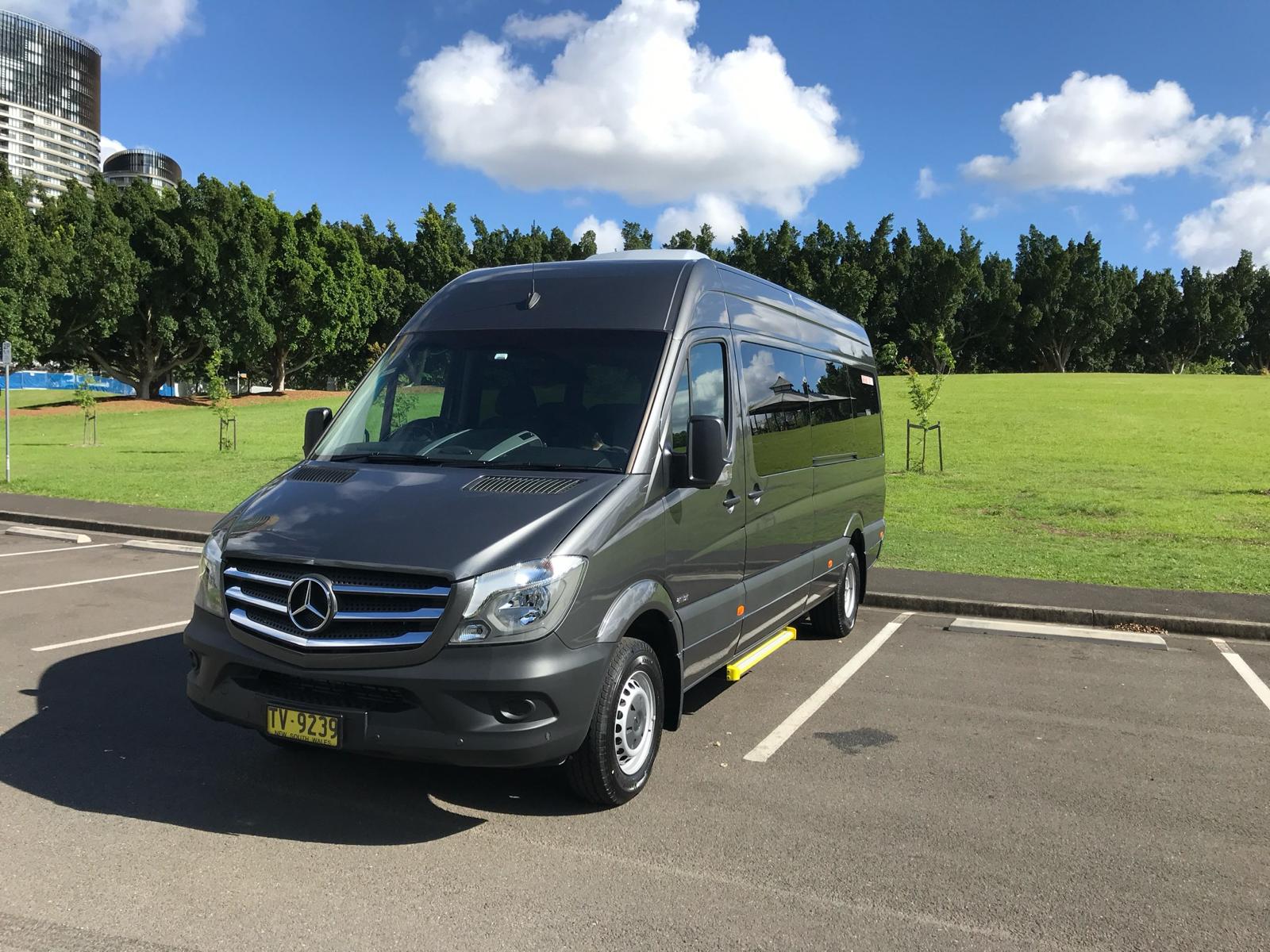
Charter fleets usually publish seat counts excluding the driver, which is the sensible convention for a buyer counting a group but the wrong convention for counting a licence class. Sydney Buses publishes its fleet and seat counts on that basis, so when you read a 13 seat Toyota Commuter, the licence-relevant number is fourteen adults including the driver. When you read an 11 seat Mercedes Sprinter, the licence-relevant number is twelve including the driver, which sits right on the Class C boundary and makes the weight question decisive rather than academic.
Count your own vehicle the same way before you go any further.
Step two: read the compliance plate
Gross vehicle mass is a property of the vehicle, not something you can infer from how it looks or how many seats it has. It is printed on the compliance plate, usually on a door frame or in the engine bay.
If the plate says 4.5 tonnes or less and the vehicle carries no more than 12 adults including the driver, it is a Class C vehicle. If either number is over, it is not, no matter how ordinary the van looks in a car park.
This is the step people skip, and it is the reason so much online content saying “you can drive a 12 seater on a car licence in Australia” is wrong for specific vehicles.
The NSW classes above Class C
Above the Class C boundary, licence classes are set by gross vehicle mass and axle count, not by seats. There is no seat-based rule above 12, which is why “what licence do I need for a 20 seater” has no seat-based answer.
| Class | Defining limits |
|---|---|
| C | Up to 4.5t GVM, and up to 12 adults including the driver |
| LR | Up to 8t GVM, carrying more than 12 adults including the driver |
| MR | Rigid vehicle, 2 axles, over 8t GVM |
| HR | Rigid vehicle, 3 or more axles, over 8t GVM, and expressly includes articulated buses |
The practical instruction that follows is short: check the compliance plate for GVM, then count the axles. Those two facts, in that order, determine the class. A seat number on a brochure determines nothing above 12.
The second question: are you carrying passengers for a fare?
Licence class and commercial authorisation are separate questions, and answering one does not answer the other.
Under the Passenger Transport Act 1990, a public passenger service is the carriage of passengers for a fare or other consideration. Once a service falls into that category, two more requirements appear that have nothing to do with what is on your licence card.
Operator accreditation. A service using vehicles seating 13 or more requires Transport for NSW bus operator accreditation, assessed against good repute, financial viability, passenger and public safety, and depot and maintenance capacity. Twelve seats or fewer falls to the Point to Point Transport Commission instead.
A Bus Driver Authority. The individual driving a public passenger bus or coach seating 13 or more needs one, issued by Transport for NSW through Service NSW. It requires a commercial medical, a National Police Check, an approved training course and a fit and proper assessment, and it is valid for three years.
So a club member with an LR licence and a willing attitude is not, on that basis, able to run a paid shuttle. Different question, different instruments.
Four different lines, and why they keep getting confused
Several NSW rules draw a line near “twelve”, and they are not the same line. This is the single biggest source of bad information on the topic.
| The line | Where it sits | What it decides |
|---|---|---|
| Licence Class C | Up to 12 adults including the driver, and up to 4.5t GVM | Whether a car licence covers the vehicle |
| Commercial accreditation boundary | 13 seats | Whether Transport for NSW or the Point to Point Transport Commission is the regulator |
| Bus Driver Authority | Public passenger bus or coach seating 13 or more | Whether the driver needs an individual authority |
| Fatigue-regulated bus | Built to carry more than 12 adults including the driver, and over 4.5 tonnes | Whether heavy vehicle work and rest rules apply |
| Definition of a bus in the Passenger Transport Act 1990 | More than 8 adults | The statutory definition, which is not the commercial boundary |
Notice how often 4.5 tonnes appears alongside the seat number. Two of these lines are weight tests as much as seat tests, and a vehicle can cross one without crossing the other.
The decision, in five steps
- Count adults including the driver. More than 12 means Class C is already out.
- Read the compliance plate. Over 4.5t GVM means Class C is out even at twelve or fewer.
- If Class C is out, count the axles and read the GVM again. That is what determines LR, MR or HR.
- Ask whether anyone is paying. Carriage for a fare or other consideration takes you into public passenger service territory, where accreditation and a Driver Authority are separate requirements.
- Weigh the alternative honestly. If the job needs a licence upgrade, a vehicle you have not driven before and a full day behind the wheel, hiring the vehicle with a driver is usually the shorter path. Minibus hire in Sydney with a driver included removes steps one through four from your problem, and charter bus and coach hire in Sydney covers the same for larger groups.
Frequently asked questions
Can I drive a 12 seater on a car licence in NSW?
Only if the vehicle carries no more than 12 adults including the driver and has a gross vehicle mass of 4.5 tonnes or less. Both limits apply. Check the compliance plate rather than the brochure.
Does “12 seats” mean 12 passengers plus the driver?
Not for the licence rule. The Class C limit is 12 adults including the driver, so eleven passengers plus a driver is the maximum. Charter fleets often publish seat counts excluding the driver, so convert before you compare.
What licence do I need to drive a 20 seater or a 57 seat coach?
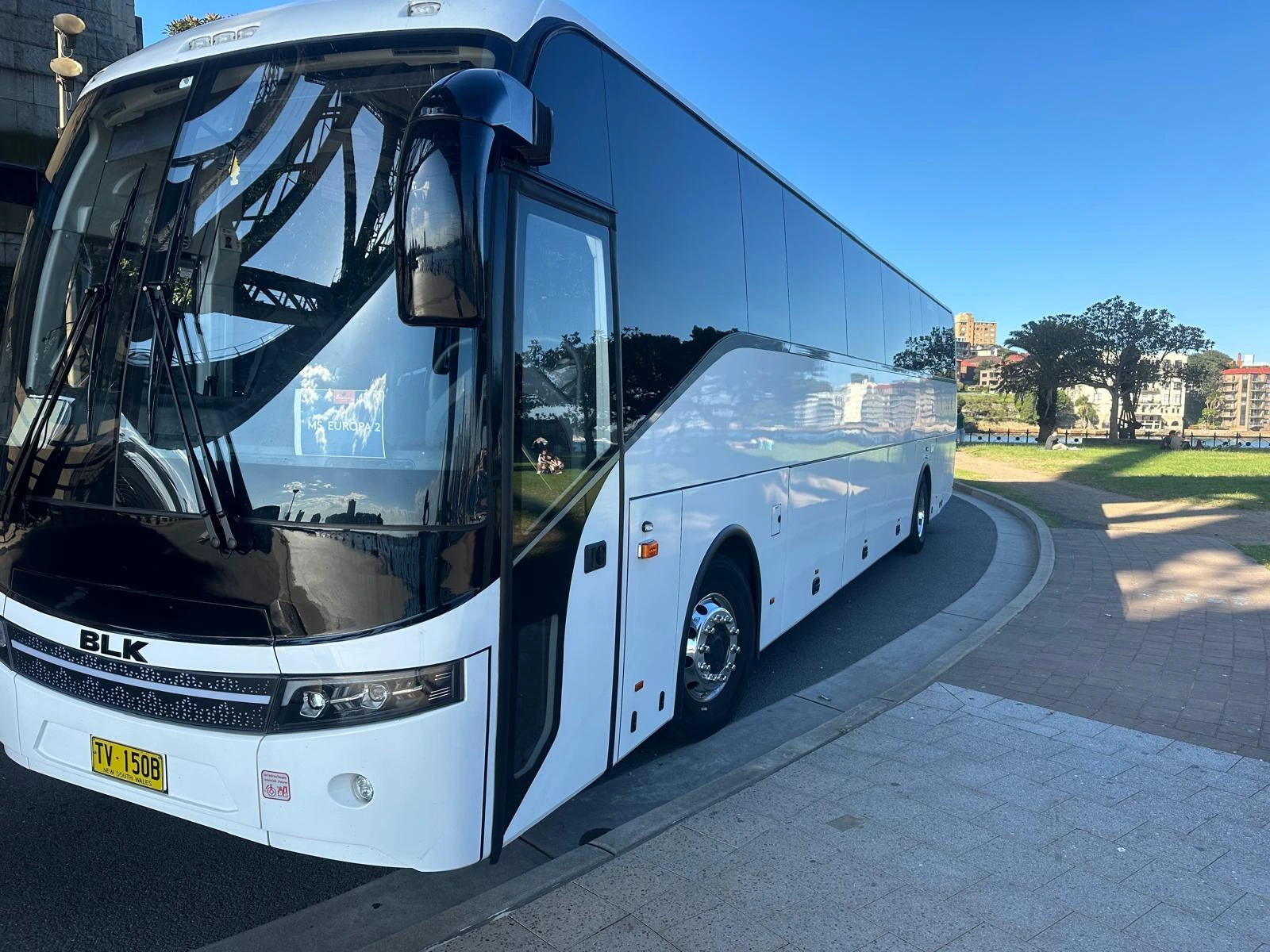
There is no seat-based answer above 12. The class is set by gross vehicle mass and axle count, so check the compliance plate and count the axles. Above Class C you will be looking at LR, MR or HR depending on those two figures.
If I have an LR licence, can I drive a hired minibus for a paying group?
A licence class permits you to drive a class of vehicle. Carrying passengers for a fare or other consideration is a public passenger service, which brings in operator accreditation and, for vehicles seating 13 or more, a Bus Driver Authority. Those are separate requirements from your licence.
Does the driver count towards the seat number on a charter quote?
Usually not. Published charter seat counts commonly exclude the driver, so a 13 seat vehicle carries 13 passengers. Confirm the convention with the operator before you plan your seating.
Next step
If your group has outgrown a car licence, the simplest test is to send the numbers rather than guess the vehicle. Send your passenger count and luggage volume and we will size the vehicle and quote it with a driver included. Call 02 9469 6600 or send the trip details and you will have a written quote back within two business hours.
Sources
- NSW Government, “Licence classes and conditions”, https://www.nsw.gov.au/driving-boating-and-transport/driver-and-rider-licences/licence-classes-and-conditions/classes. Accessed 7 September 2026.
- Service NSW, “Apply for a bus driver authority”, https://www.service.nsw.gov.au/transaction/apply-for-a-bus-driver-authority. Accessed 7 September 2026.
- NSW Government (Transport for NSW), “Applying for bus operator accreditation”, https://www.nsw.gov.au/departments-and-agencies/transport-for-nsw/bus-operators-nsw/applying-for-bus-operator-accreditation. Accessed 7 September 2026.
- NSW Legislation, “Passenger Transport Act 1990 (NSW)”, https://legislation.nsw.gov.au/view/whole/html/inforce/current/act-1990-039. Accessed 7 September 2026.
- National Heavy Vehicle Regulator, “Heavy vehicle fatigue management: bus industry”, https://www.nhvr.gov.au/safety-accreditation-compliance/fatigue-management/heavy-vehicle-fatigue-management-bus-industry. Accessed 7 September 2026.