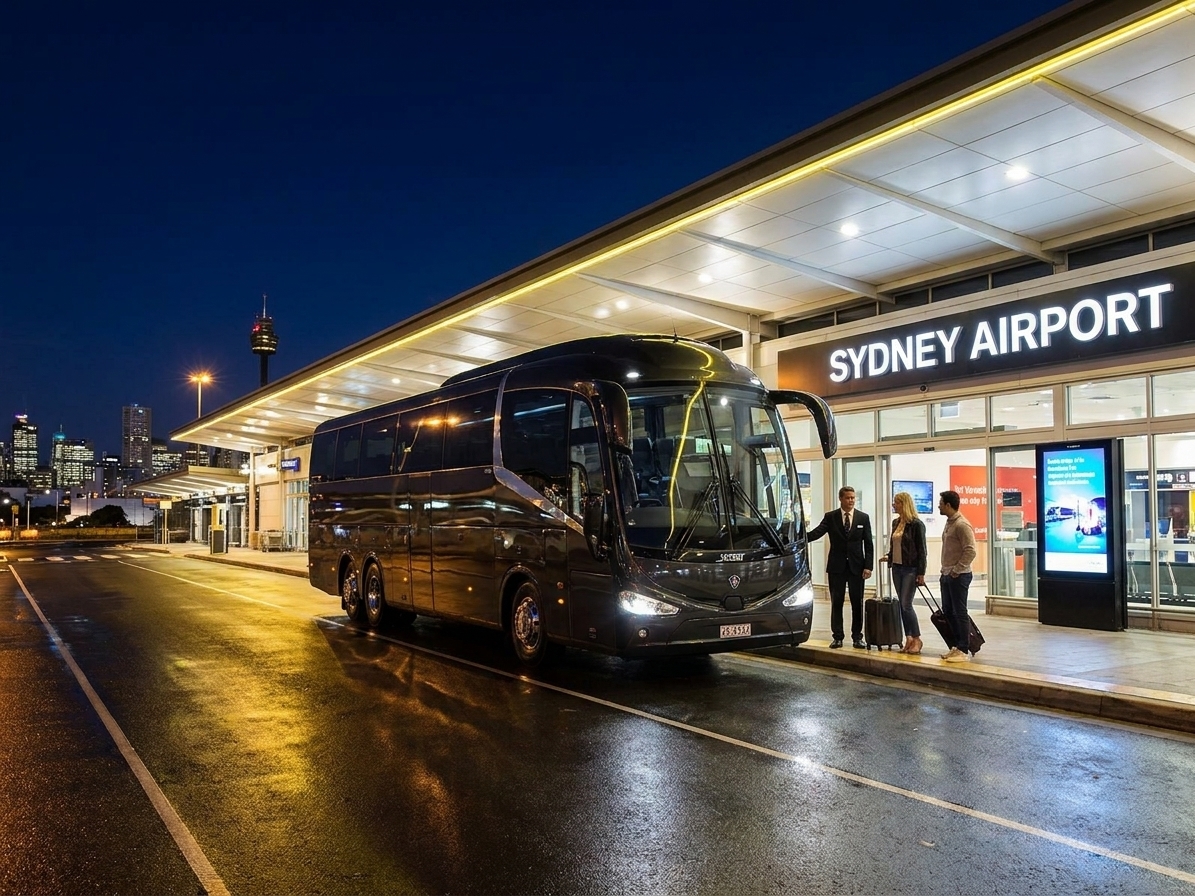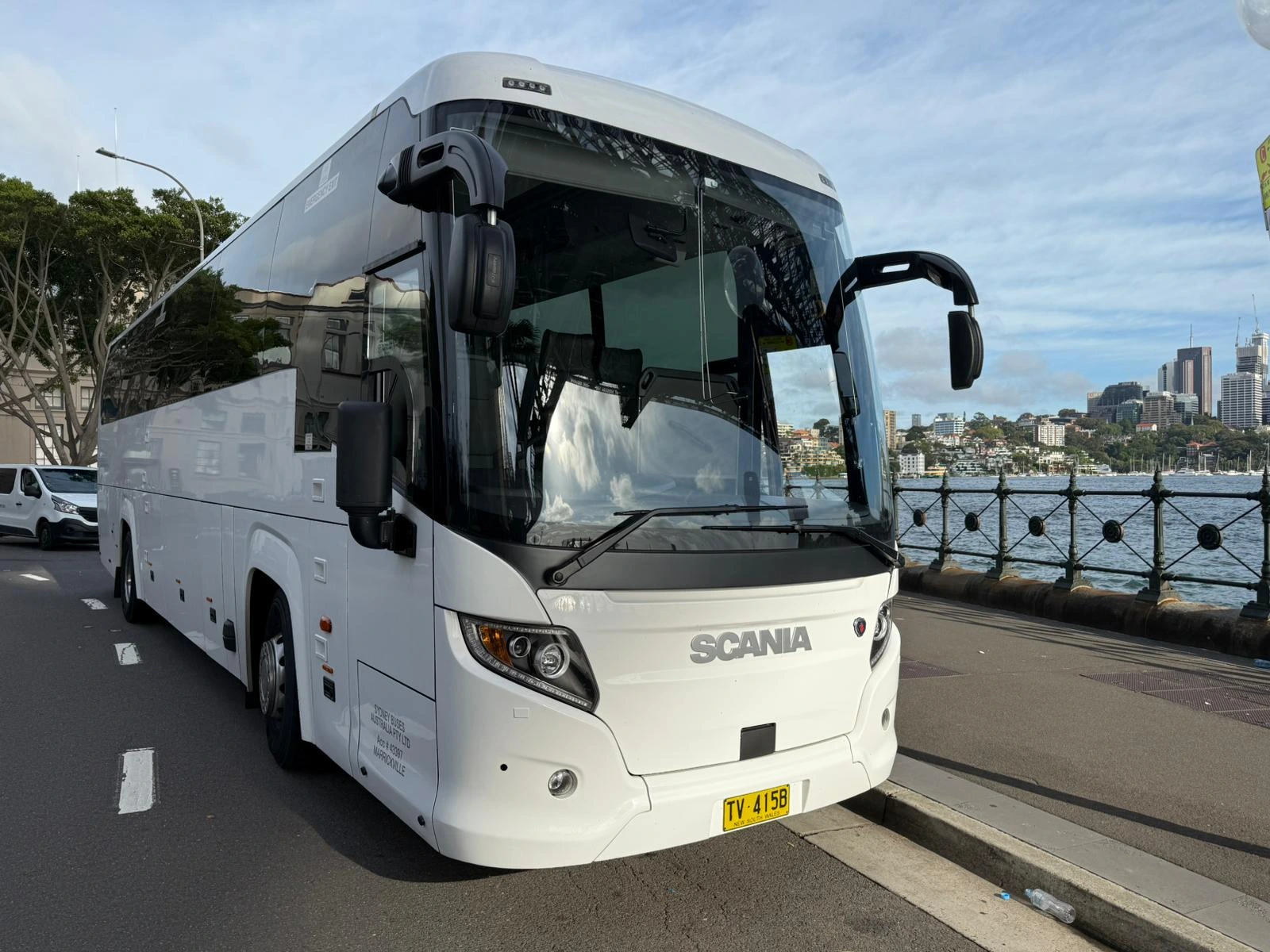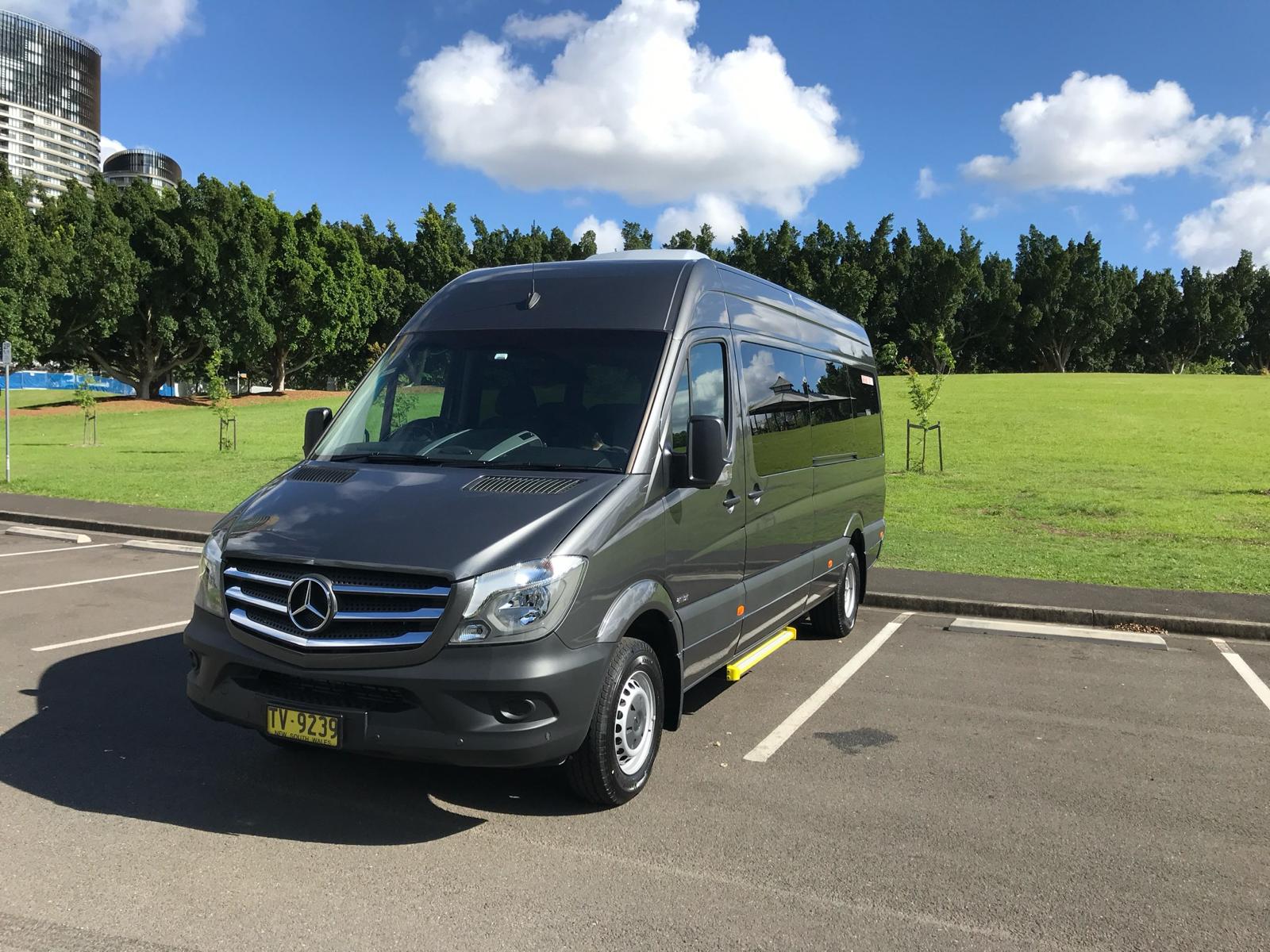
Private charter should mean three things at once: nobody outside your group travels on the vehicle, no other job is scheduled inside your booked window, and the vehicle follows your itinerary and no one else’s. Most operators mean exactly that. The word itself carries no definition, though, so the protection comes from the written quote rather than from the label. Six lines are enough to make it binding.
What “private” is doing in the sentence
Three different products are sold in Sydney using overlapping language, and only one of them is exclusive use.
Private charter. You book a named vehicle and a driver for a window of time. The vehicle is yours for that window. Nobody else is on board, and nobody else’s stops are added to your route.
Shared shuttle. A vehicle runs a fixed loop or a fixed set of pick-ups, and multiple unrelated parties travel on it. Per head it is cheaper, and it is a legitimate product. It is not exclusive use, and the route belongs to the operator.
Seat sale on a scheduled service. You buy seats on a service that would run anyway. Convenient, often the cheapest option, and the schedule is fixed.
The failure mode that matters sits between the first and the second: a booking sold as private that is quietly treated as a vehicle with spare capacity. The symptoms are always the same. An extra pick-up appears on the way out. A second party is dropped somewhere on the way back. A journey that was quoted as direct takes considerably longer than the group planned for, and the group finds out about it while sitting on the bus.
Nobody argues about this in advance. Everybody argues about it afterwards, which is precisely why it belongs in the quote.
Why the failure happens, and where
Two structural causes, and they are worth understanding because they tell you what to ask.
Brokerage. A business that takes your booking and then places it with a third-party operator has limited control over how that vehicle is scheduled on the day. The person you negotiated exclusivity with is not the person allocating the vehicle. Ask directly whether the business owns the vehicles and employs the drivers, or whether it places work with others. We own the vehicles, employ the drivers and schedule the work in-house, which is the structural reason a commitment about your window can be made and kept. Who operates the vehicle you book is worth establishing before you discuss anything else.
Window pressure. A vehicle with a four hour minimum hire and a two hour job in the middle of it looks, to a dispatcher under pressure, like spare capacity. The fix is not moral, it is contractual: state that the vehicle is committed to your group for the whole window whether you are using it or not.
Sydney adds a specific cost to this failure. Several venues here are set-down only. A charter coach may lawfully stop in a bus zone to set down or pick up passengers, but not to wait. At the Sydney Opera House, buses and coaches cannot park onsite and large buses disembark on Macquarie Street. At Royal Randwick, coaches over 3.1 metres set down on Darley Road rather than at the gate. In that environment, an unplanned extra drop-off is not a ten minute detour. It can restructure the whole return leg, because there is nowhere convenient to absorb it.
The six lines to get in writing
Ask for these in the quote itself, not in an email thread that will not be read on the day. Any operator that will not put them in writing has told you something useful.
- Exclusive use for the booked window. “The vehicle and driver are committed exclusively to [group name] for the period [start] to [finish]. No other passengers or bookings will be carried during that period.”
- The named vehicle. Not a model family and not a seat range. A quote that names the specific vehicle is a quote where somebody has actually allocated something. Ours name the vehicle and come back within two business hours.
- The itinerary, with every stop listed. Pick-up address, destination, any intermediate stops, and the return. Then a line stating that stops will not be added without your written agreement.
- What happens if the vehicle fails. Our published position is that if a vehicle fails, a replacement is arranged and the customer is kept informed. Get whatever your operator’s equivalent is in writing, because this is the scenario where exclusivity is most likely to be traded away under pressure.
- Waiting time and overrun. Waiting time beyond the booked window is confirmed in advance and priced separately, as are tolls and parking, driver accommodation on multi-day trips, and public holiday or after-hours loading. Knowing the rate in advance is what lets you decide on the day rather than negotiate.
- Cancellation terms. These sit in the written quote. Read them at quoting stage, not at cancellation stage.
Two additional lines are worth adding for a school, procurement or committee buyer. Ask for the driver details in advance: we send the driver’s name, mobile number and the vehicle registration 24 hours before travel, which is both a practical convenience and a quiet confirmation that a specific vehicle really is allocated to you. And ask what the operator’s position is on alcohol, because ours is that it is permitted on private function bookings by prior arrangement only, and never on school or youth charters.
Verify the operator, not just the quote
Exclusive use is a promise from a business, so the business is worth checking.
NSW bus operator accreditation is administered by Transport for NSW under the Passenger Transport Act 1990, and a charter operator holds a Long Distance, Tourist or Charter authorisation. There is no public register, so you cannot look an operator up. The only real verification route is to ask for the Certificate of Accreditation. Any operator that hesitates at that request has answered a different question than the one you asked.
Ours is available on request for tender and procurement paperwork, and our NSW accreditation number is 43397. Vehicle insurance is included in every quote alongside the driver, fuel and GST, and a risk-aware buyer should ask any operator to confirm its cover in writing.
Frequently asked questions
Does private charter mean nobody else is on the bus?
That is what it should mean: your group only, for the whole booked window, on the itinerary you agreed. Because the word carries no fixed legal definition, ask for it as an express line in the written quote rather than relying on the description.
Can the operator add a stop to my booking?
Not without your agreement, if the quote says so. Add a line stating that no additional pick-ups, drop-offs or passengers will be carried during your window without your written consent. That single sentence converts an expectation into a term.
What is the difference between a private charter and a shared shuttle?
A private charter commits a named vehicle and driver to one group for a defined window. A shared shuttle carries multiple unrelated parties on a route the operator controls. Both are legitimate products at different prices, but only one gives you the route.
How do I check that a Sydney operator is accredited?
Ask for the Certificate of Accreditation. There is no public register of accredited NSW bus operators, so a certificate on request is the verification route. Accreditation for services using vehicles seating 13 or more sits with Transport for NSW; 12 seats or fewer sits with the Point to Point Transport Commission.
What happens if the vehicle breaks down?
Ask before you book, and get the answer in writing. Our published position is that a replacement is arranged and the customer is kept informed. What you want to avoid is discovering an operator’s contingency plan for the first time while standing on a footpath with your group.
Next step
Ask us for our accreditation number and our Certificate of Accreditation, and we will send a written quote for private charter bus hire in Sydney that names the vehicle and sets out the exclusive use window in the document itself. Quotes come back within two business hours, or call 02 9469 6600. Our terms and conditions are published rather than supplied on request.
Sources
- Transport for NSW, “Applying for bus operator accreditation”, https://www.nsw.gov.au/departments-and-agencies/transport-for-nsw/bus-operators-nsw/applying-for-bus-operator-accreditation. Accessed 7 September 2026.
- Sydney Opera House, “Plan your excursion”, https://www.sydneyoperahouse.com/schools/plan-your-excursion. Accessed 7 September 2026.
- Australian Turf Club, “Travel and parking at Royal Randwick”, https://www.australianturfclub.com.au/travel-parking-at-royal-randwick/. Accessed 7 September 2026.