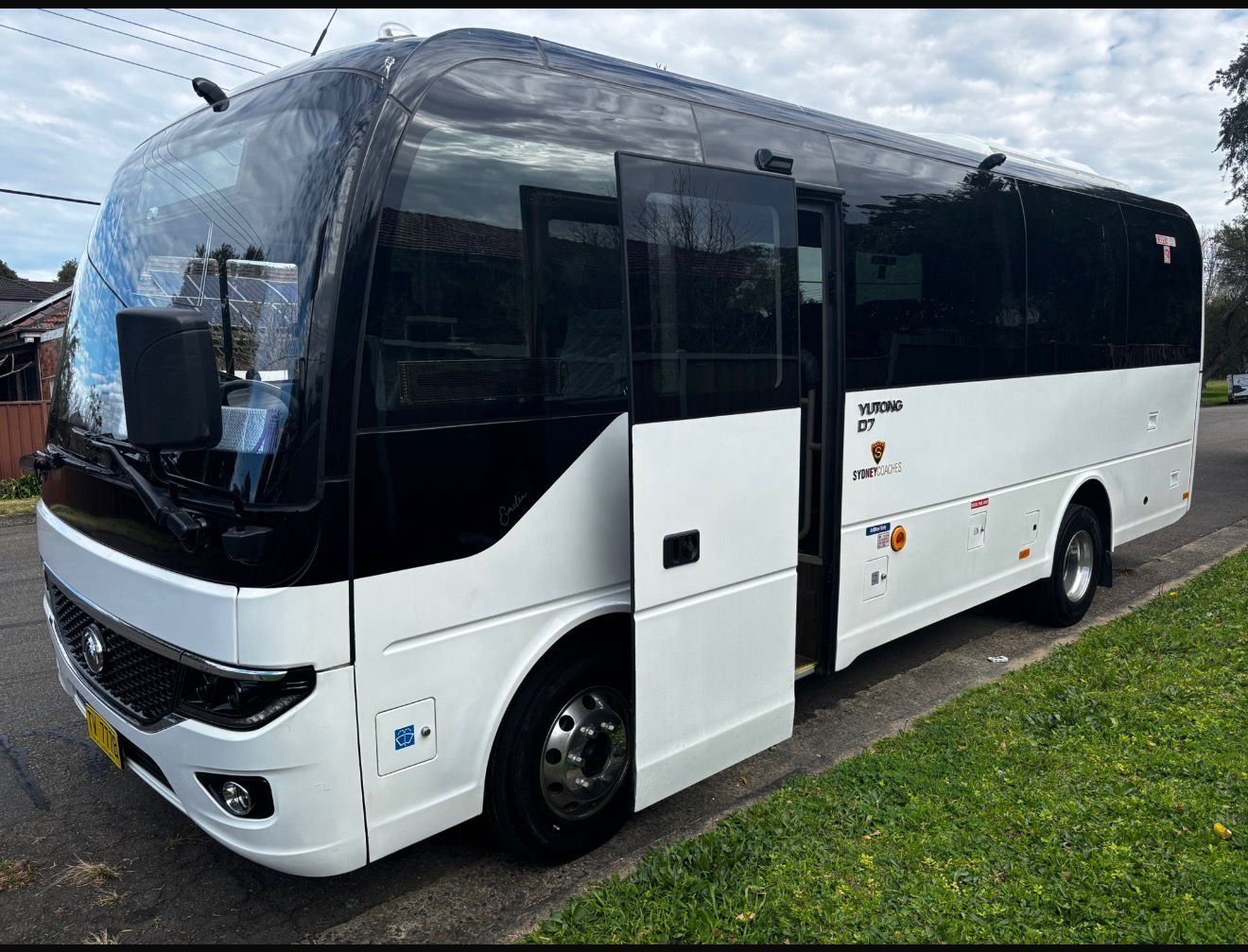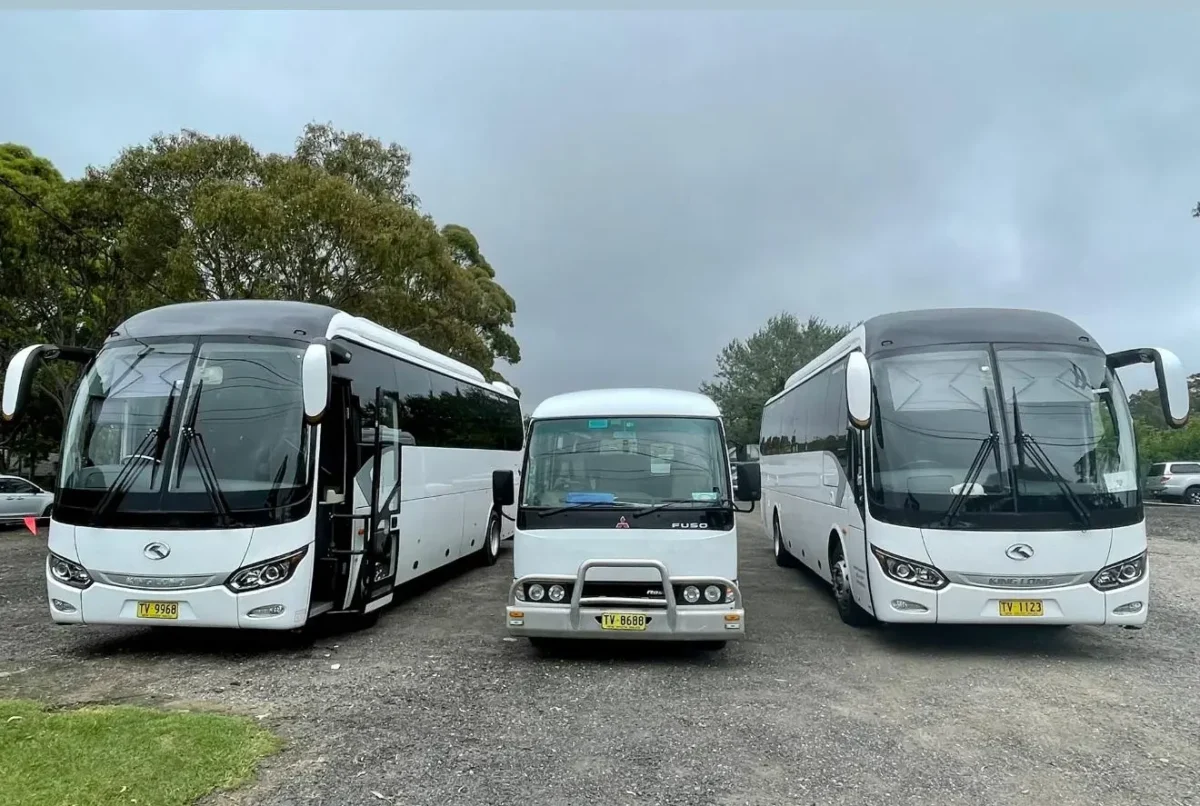
Booking the vehicle is the easy part of a hens or bucks night. The run is what fails. Plan it backwards from the last drop-off, fix a stop count you can actually hold to, and decide in advance whether the coach stays with the group or is released and returns. In Sydney a coach can legally set down at a venue but cannot wait outside it, so a run built on the assumption of a bus parked at the kerb all night does not survive contact with the CBD.
Why the run sheet, not the vehicle, decides how the night goes
Most hens and bucks runs are built the same way: pick everyone up, get to the first venue, and then improvise. The improvising is where two hours disappear.
A run sheet does three unglamorous things. It tells the driver where to be and when, so nobody is waiting on a phone call. It tells your group what time to be back at the kerb, which is the only lever you have over a group that is enjoying itself. And it tells the operator how long the vehicle is booked for, which is what you are actually paying for.
Write it before you book, not after. The stop count and the finish time change which vehicle is quoted and how the hours are counted.
How many stops a night can actually carry
Every stop costs more than the time at the venue. It costs the approach, the set-down, the walk in, the walk back out, the round-up and the departure. On a group of 20 or more, that overhead is rarely under 20 minutes at each end even when everything goes well.
The realistic shape of a Sydney night run looks like this.
| Run type | Stops | Typical planning shape |
|---|---|---|
| Single destination | 1 | Pick-up loop, one drop, coach released, return pick-up at a published time |
| Dinner then one venue | 2 | Pick-up, drop, hold or release, one transfer, return pick-up |
| Classic multi-venue run | 3 | Pick-up, three venues with the coach staying with the group, one return |
| Ambitious | 4 or more | Only works with a tight group, short dwell times and a driver who is not also finding parking |
Three venue stops is the point where most Sydney runs stop being fun and start being a logistics exercise. Four is possible, but only if you accept 45 to 60 minutes at each venue rather than the two hours people imagine.
Set the dwell time at each stop as a departure time, not a duration. “We leave the Rocks at 9.15pm” works. “We will be here about an hour and a half” does not.
What the on-board rules actually are
Sydney Buses & Coaches publishes a clear position, and it is worth reading before you plan the night rather than after.
Food and non-alcoholic drinks are fine on all vehicles. Alcohol is permitted on private function bookings by prior arrangement only, and never on school or youth charters. A hens or bucks run is a private function booking, so the arrangement is available, but it has to be agreed in advance as part of the booking rather than assumed or produced at the kerb.
Two other rules apply regardless of the booking. On a vehicle fitted with seatbelts, wearing them is mandatory in NSW for every passenger aged 16 or over, and that is enforceable against the passenger rather than the driver. And the driver has the final say on the vehicle at all times, which in practice means the run sheet is a plan, not a contract with the road network.
If the group intends to drink on board, say so when you request the quote, and say roughly what and how much. It is a routine conversation and it takes a minute. Discovering the answer at 7pm on the night is the version that goes badly.
Where a coach can and cannot wait between venues
This is the constraint that reshapes most Sydney runs, and almost nobody plans for it.
Under NSW Road Rules 2014 rule 183, a coach may stop in a bus zone to set down or pick up passengers, because the NSW Dictionary defines a public bus as including a coach. It may not wait there. Set-down and pick-up only, and the sign at the zone still governs.
The City of Sydney’s Central Sydney On-Street Parking Policy states that the City will not accommodate long-stay coach lay-over on-street in central Sydney. So for a CBD or Inner West run there are only two honest models.
The coach stays with the group. The vehicle is booked continuously, the driver moves it to wherever it can legally sit, and it is available at each published departure time. You pay for the full span including the waiting.
The coach is released and returns. The vehicle drops the group, leaves, and comes back at a fixed published time. This is cheaper on paper, but it removes all flexibility. If the group wants to leave 40 minutes early, the vehicle is not there.
Neither is wrong. Choosing without deciding is what goes wrong. Tell the operator which model you want and they will quote the hours accordingly, including whether the minimum hire applies: three hours for minibuses and people movers, four hours for midi-coaches and full-size coaches.
The 1am problem, and planning the end first
The hardest 20 minutes of a hens or bucks night happen at the end, when the venue closes, several hundred people leave at once and everyone reaches for a phone at the same moment. If you have not planned the end, the group splits, and a split group at 1am is the thing that turns a good night into a bad story.
Plan the return before you plan anything else.
- Fix the last drop-off time first, then work backwards to the pick-up time. The night has a length whether you decide it or not.
- Publish the return departure time to the whole group at the start of the night, in writing, and again at the last venue.
- Choose a return point that people can find without a map. A street address plus a landmark, not “outside the pub”.
- Set the return pick-up 15 to 20 minutes before you actually need to leave, because rounding a group up takes that long.
- Decide the drop-off order in advance. Suburb by suburb, furthest first or nearest first, published as a list.
- Nominate one person who is not the hen or the buck to count heads at every departure.
- Agree what happens to someone who is not there. In practice this means one named person who stays behind, not the coach waiting indefinitely.
The single biggest improvement you can make is to run the return as a set of published departures rather than a decision made on the night. A group that knows the coach leaves at 12.30am behaves differently from a group that thinks the coach leaves whenever they are ready.
Sydney runs that actually work
The most common Sydney shape is a suburban pick-up loop into a CBD or Inner West destination, and it works because the pick-up end is easy and the destination end is not.
Do the hard thinking at the destination. Ask the last venue where a full-size vehicle can legally stop, in writing, and ask whether that changes late at night. If the answer is vague, move the pick-up point to a nearby street that clearly works and publish that instead. A 100 metre walk to a workable pick-up point is much better than a coach circling a block.
Pick-up loops are the other place time disappears. Every extra suburban stop adds real minutes, and a loop that crosses the harbour or doubles back will cost more than the map suggests. Cluster people into two or three pick-up points and ask them to travel to those, rather than running a door-to-door loop that puts the first person on the bus 90 minutes before the last one.
If the plan includes a harbour cruise, treat the coach and the boat as two bookings with a hard join. The boat leaves on its published time whether the coach is there or not, so build in a buffer, confirm the wharf’s set-down point directly with the cruise operator, and plan the coach’s return around the boat’s scheduled return rather than the group’s mood.
Building the run sheet
Fill this in before you request a quote. It is also, almost word for word, the information an operator needs to price the job.
- The date and the day of the week.
- The pick-up points, as street addresses, with a time for each.
- The number of passengers at each pick-up point.
- Each venue in order, with an arrival time and a published departure time.
- Whether the coach stays with the group or is released between stops.
- The final drop-off arrangement and its order.
- Whether alcohol will be carried on board, agreed in advance.
- One named contact who is not the guest of honour, with a mobile that will be answered.
Send that and you will get a fixed written quote back within two business hours with the vehicle named. For the vehicle side, party and function bus hire in Sydney is the place to start, and how charter hours and minimum hire are priced explains why a four-hour night is quoted the way it is. If the same group is also organising the wedding, wedding guest transport in Sydney covers that separately.
Frequently asked questions
Can you drink alcohol on a hens or bucks bus in Sydney?
Sydney Buses & Coaches allows food and non-alcoholic drinks on all vehicles. Alcohol is permitted on private function bookings by prior arrangement only, and never on school or youth charters. A hens or bucks run is a private function booking, so it can be arranged, but it has to be agreed as part of the booking rather than assumed.
How many venues can you fit into one night?
Three venue stops is a realistic ceiling for a group of 20 or more if you want the night to run to time. Each stop costs roughly 20 minutes of overhead at each end on top of the time inside, so four stops means accepting 45 to 60 minutes at each rather than the longer stays people picture.
Does the bus wait outside while we are inside?
Only if you book it that way. A coach may stop in a bus zone to set down or pick up under NSW road rules, but it may not wait there, and the City of Sydney will not accommodate long-stay coach lay-over on-street in central Sydney. So either the vehicle is booked continuously and the driver moves it to a lawful spot, or it is released and returns at a fixed published time.
What time should the run start and finish?
Fix the finish first. Decide when the last person needs to be home, then work backwards through the return drop-off order, the departure from the last venue, the venue times and the pick-up loop. Minimum hire is three hours for a minibus and four hours for a midi-coach or full-size coach, so a very short run is still quoted at the minimum.
How do you get everyone home at the end?
With a published departure time, a findable meeting point given as a street address and a landmark, a drop-off order decided in advance, and one named person counting heads who is not the hen or the buck. A staggered return with two published departures works better than one for larger groups.
How far in advance should a hens or bucks run be booked?
Published lead times are two to four weeks for most jobs, and four to eight weeks for peak periods including December, race days, school excursion season and long weekends. Saturday nights in December are the hardest dates to fill late.
Next step
Send the date, the pick-up suburb, the group size and a rough list of stops. That is enough to start, and you will get a fixed written quote back within two business hours with the vehicle named and the hours set out against your run sheet.
Start with party and function bus hire in Sydney or call 02 9469 6600, Monday to Friday 7am to 6pm or Saturday 8am to 2pm.
Sources
- NSW Government, Road Rules 2014 (NSW), rule 183 and Dictionary, https://legislation.nsw.gov.au/view/html/inforce/current/sl-2014-0758. Accessed 7 September 2026.
- City of Sydney, Central Sydney On-Street Parking Policy, https://www.cityofsydney.nsw.gov.au/-/media/corporate/files/publications/policies/central-sydney-street-parking-policy/central-sydney-on-street-parking-policy_0525.pdf. Accessed 7 September 2026.
- Transport for NSW, Seatbelts, https://www.transport.nsw.gov.au/roadsafety/topics-tips/seatbelts. Accessed 7 September 2026.