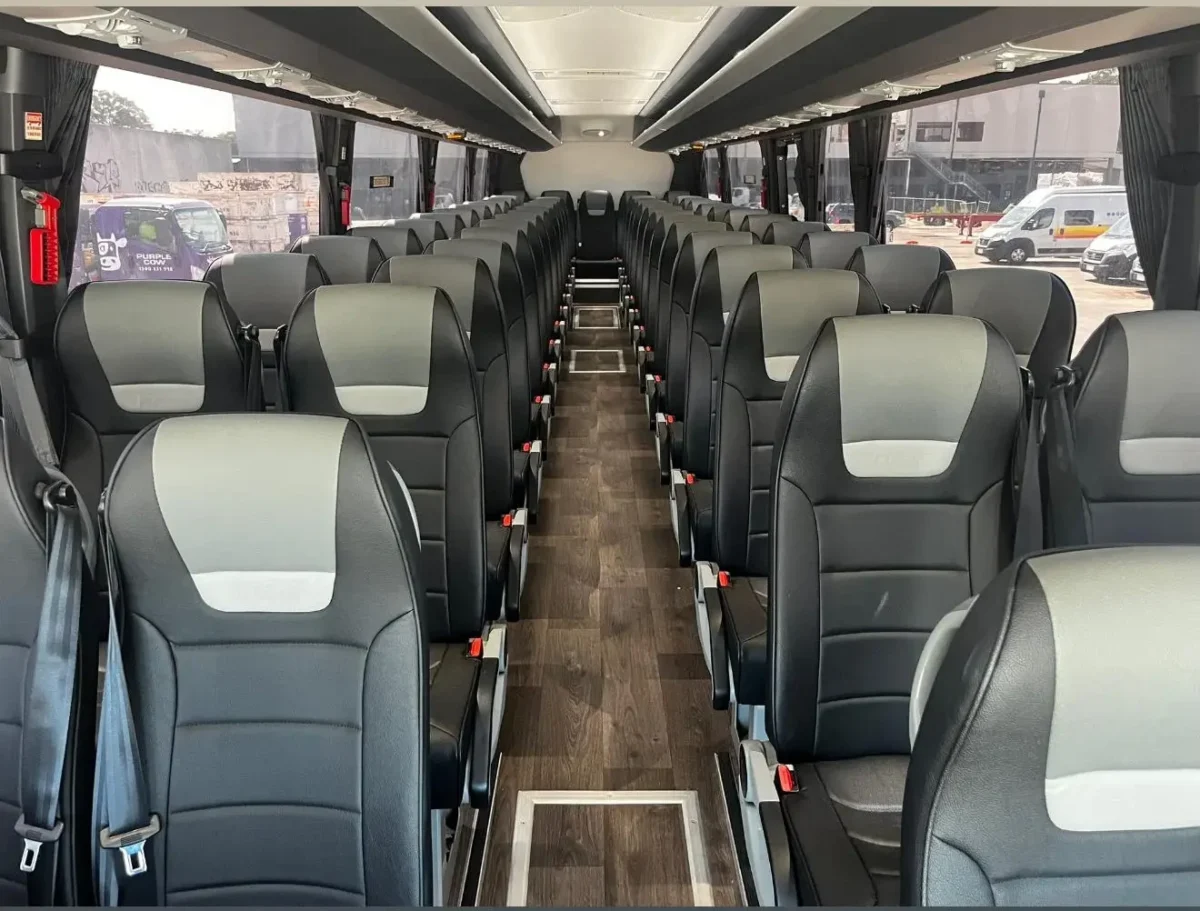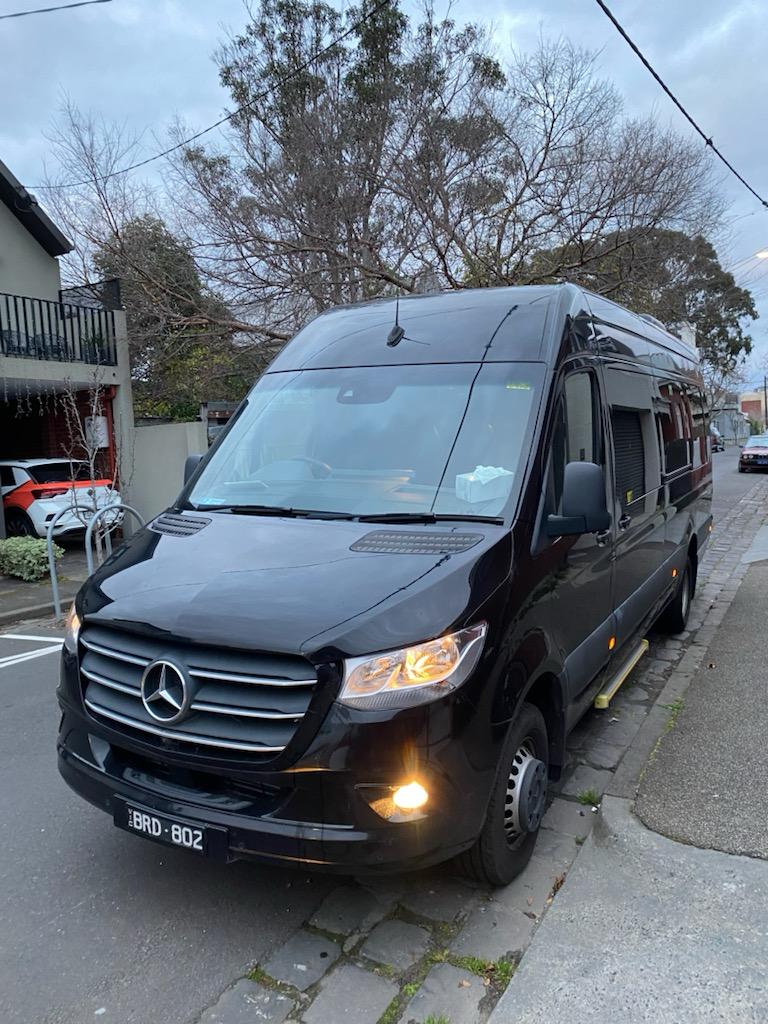
A mid-trip breakdown is a geography problem before it is a service problem. Our published position is that if a vehicle fails, a replacement is arranged and the customer is kept informed. How long that takes depends on three things: how far you are from the depot, what is uncommitted at that moment, and whether a driver with legal hours available can reach you. An operator quoting a single response time for the whole of Greater Sydney is guessing.
What actually happens when a coach fails
The sequence is more predictable than most organisers expect.
The driver’s first job is not the phone. It is getting the vehicle stopped somewhere safe and getting passengers into a safe position, which sometimes means staying on board and sometimes means moving well clear of the traffic lane. That decision belongs to the driver, who can see the road, and it should not be argued with from the third row.
Once the group is safe, the driver contacts the operator with the location, the nature of the fault and the passenger count. From there the operator is solving two problems at once: getting a serviceable vehicle to you, and deciding whether the rest of the day’s schedule still works. Those are separate questions, and a good operator will answer both rather than only the first.
What you should get back is a plan with a time attached, then updates if the time changes. Being kept informed is the part that determines whether a group stays calm, and it is the part most complained about across the industry.
Why there is no single replacement time
Three variables decide it, and only one of them is distance.
Distance from the depot. Our depot, our vehicles and our own drivers are based at 74 Edinburgh Rd, Marrickville. A group in the inner west, the city or the inner south is close to that. A group in the Blue Mountains is not.
What is actually free. A replacement is not just any vehicle. It has to seat your group, and it has to be uncommitted or able to be released. On a Tuesday in July that is a different question from a Saturday in December, when the published peak periods bite hardest.
Driver hours. This is the constraint organisers never see. A charter carrying passengers for a fare sits inside the Heavy Vehicle National Law fatigue regime, with work and rest limits for solo drivers across 24 hours, 7 days and 14 days, plus a bus and coach specific standard hours table. A relief driver has to have hours available. That is why the honest answer to “can you send anyone” is sometimes no, even when a vehicle is sitting in the yard.
The geography, honestly
Rather than publish a response time we cannot stand behind, here are the published one-way distances and driving times for the routes we run. They set the floor for how long a replacement takes to reach a group already out on that route.
| Where your group is | Published distance from Sydney | Published driving time one way |
|---|---|---|
| Inner Sydney and the inner west | Depot is at Marrickville | The shortest reach we have |
| Stadium and event precincts | 16 km | 20 to 60 minutes, depending on event traffic |
| Cruise terminals | 12 km | 25 to 45 minutes from Sydney Airport |
| Southern Highlands | 120 km | About 1.5 hours |
| Blue Mountains, Katoomba | 105 km | About 2 hours, 2.5 from the eastern suburbs or northern beaches |
| Hunter Valley, Pokolbin | 165 km | 2 to 2.5 hours |
| Port Stephens, Nelson Bay | 205 km | 2.5 to 3 hours |
| Canberra | 285 km | 3 to 3.5 hours |
Read that table as a floor, not a promise. A replacement coach dispatched to a group at Katoomba is a two-hour proposition before anyone has found the vehicle or the driver. At Pokolbin or Nelson Bay it is longer again. Inside Greater Sydney the number is much smaller, but it still depends on the hour, the day and what is free.
This is the reason a Blue Mountains or Hunter day trip is a different risk conversation from a school run in the inner west, and it is worth having that conversation at quote stage rather than at the roadside.
What the organiser should do in the first ten minutes
- Follow the driver’s instruction on where to wait. The driver is responsible for the safety of the group at the roadside and can see hazards the group cannot.
- Count the group and keep it together. For a school or youth group, do this before anything else.
- Call the operator’s office directly, rather than relying on the driver to relay everything. Two channels are better than one when a plan is forming.
- Ask for the plan and the time, and ask when you will next be updated. Then tell your group both. A group with information waits. A group without information disperses.
- Reassess the day, not just the pick-up. If there is a hard commitment at the end, a flight, a ship, a ceremony, say so immediately. It changes the priority order of the operator’s options.
- Write down what you are told and when. It takes seconds and it matters if there is a commercial conversation afterwards.
What to get in writing before you book
This is the part you control, and it costs nothing.
- The written failure policy, in the operator’s own words. Ours is that if a vehicle fails, a replacement is arranged and the customer is kept informed. Ask for the equivalent sentence from anyone you are comparing.
- Whether the operator owns the vehicle and employs the driver. A business that owns its fleet, employs its drivers and schedules the work in-house can move its own resources. A broker can only make phone calls.
- The out-of-hours contact for the day of travel. Ask for it at booking. Published office hours are Monday to Friday 7am to 6pm and Saturday 8am to 2pm, and a Sunday day trip needs a number that works on a Sunday.
- The accreditation number and the Certificate of Accreditation. NSW accreditation standards cover passenger and public safety and depot and maintenance capacity, so accreditation is directly relevant to breakdown risk. There is no public register, so ask for the certificate. Ours is available on request and the accreditation number is 43397.
- A certificate of currency for insurance, if you are a school or a procurement buyer. Ask for it at the same time as the accreditation certificate.
- What happens commercially if the trip is cut short. Cancellation terms are set out in the written quote. A part-completed charter is a different situation, so ask how it is treated.
For a booking with a hard end point, a flight, a cruise departure or a ceremony start, add one line to the booking request: state the hard commitment and its time. It changes how the job is resourced.
The risk is not evenly spread
Three kinds of booking carry more exposure than the rest, and they are worth planning differently.
Long-distance day trips. Katoomba, Pokolbin, Nelson Bay and Canberra all put the group hours from the depot. Build slack into the return rather than the outbound leg.
Trips with a hard deadline. Airport and cruise terminal runs have an unforgiving end point. The mitigation is departing earlier, not driving faster, and it should be agreed when the trip is quoted.
Peak dates. December, race days, school excursion season and long weekends are the published peak periods. They are exactly the dates when the least spare capacity exists across the whole city, and that applies to every operator, not just ours.
None of that means those trips should not be booked. It means the plan should acknowledge the geography instead of assuming a replacement appears in twenty minutes anywhere in New South Wales.
Frequently asked questions
What is your breakdown policy?
If a vehicle fails, a replacement is arranged and the customer is kept informed. What that looks like in practice depends on where the group is, what is uncommitted at the time, and whether a driver with available hours can reach you.
How quickly can a replacement coach reach us?
There is no single number, and any operator quoting one for all of Greater Sydney is estimating. Inside the inner Sydney area a replacement is a much shorter proposition than at Katoomba, which is 105 km from Sydney and about two hours of driving each way. Ask specifically about your route rather than about the city as a whole.
Do we get a refund if the coach breaks down?
Cancellation terms are set out in the written quote, and a trip that was partly completed is a different situation from one that was cancelled. Raise it in writing on the day, and ask for a written position rather than settling it verbally.
Why can’t the driver just keep going after a repair?
Sometimes they can. Sometimes the delay has consumed the hours available to that driver under the heavy vehicle work and rest limits, in which case a relief driver is needed regardless of whether the vehicle is fixed. That constraint is legal rather than discretionary.
Should we get off the bus?
Follow the driver’s instruction. Depending on where the vehicle has stopped, staying on board can be safer than standing at the roadside, and the driver is the person who can see the traffic conditions.
Does a newer fleet mean fewer breakdowns?
It helps, but maintenance regime matters more than build year, and NSW operator accreditation covers depot and maintenance capacity for that reason. Ask what the maintenance schedule is and who performs it, rather than asking the age of the vehicle.
Next step
Ask us for our accreditation number and certificate before you book. The number is 43397, the certificate is available on request for tender and procurement paperwork, and we will put the failure policy in writing alongside the quote. That answer comes from the people holding the keys rather than from a call centre, which is the whole reason to ask an operator rather than a broker.
For a long-distance day trip or a run with a flight or ship at the end, call 02 9469 6600 and say so. It changes how the job is planned. The day trip routes we run from Sydney carry the published distances behind every one of those decisions.
Sources
- Transport for NSW, “Applying for bus operator accreditation”, https://www.nsw.gov.au/departments-and-agencies/transport-for-nsw/bus-operators-nsw/applying-for-bus-operator-accreditation. Accessed 7 September 2026.
- National Heavy Vehicle Regulator, “Heavy vehicle fatigue management, bus industry”, https://www.nhvr.gov.au/safety-accreditation-compliance/fatigue-management/heavy-vehicle-fatigue-management-bus-industry. Accessed 7 September 2026.
- National Heavy Vehicle Regulator, “Bus and coach driver fatigue and health and wellbeing”, https://www.nhvr.gov.au/safety-accreditation-compliance/chain-of-responsibility/regulatory-advice/bus-and-coach-driver-fatigue-and-health-and-wellbeing. Accessed 7 September 2026.