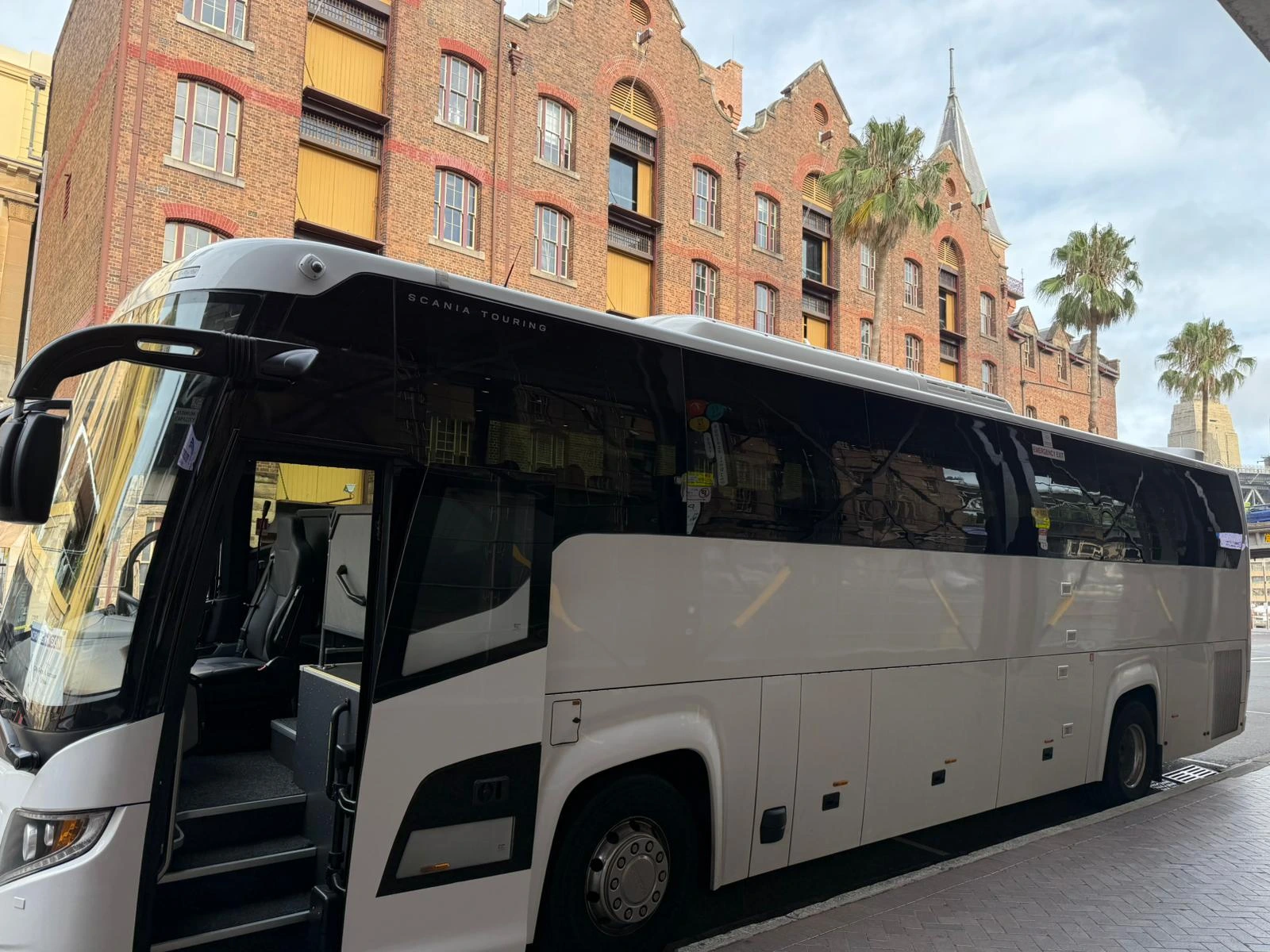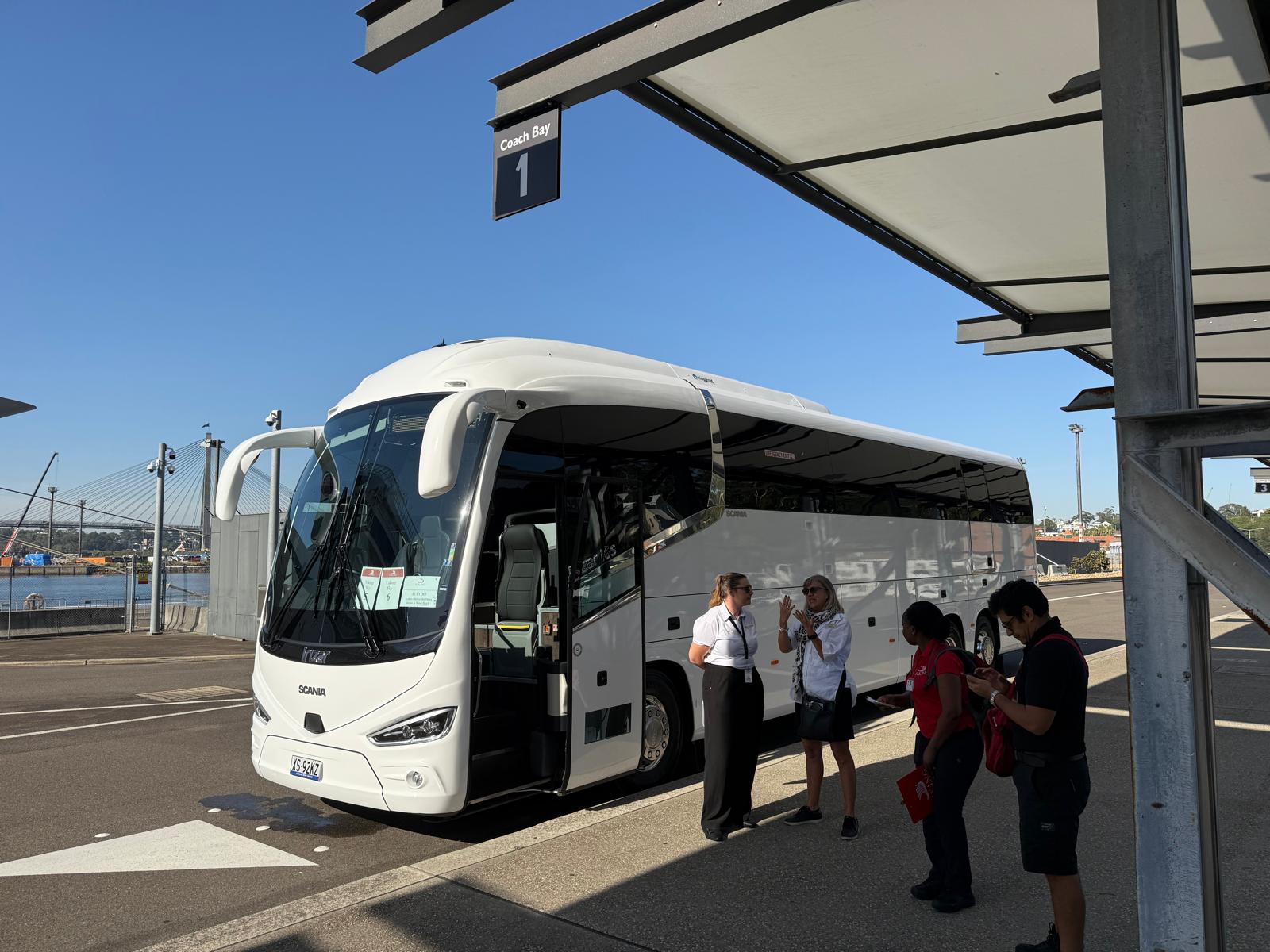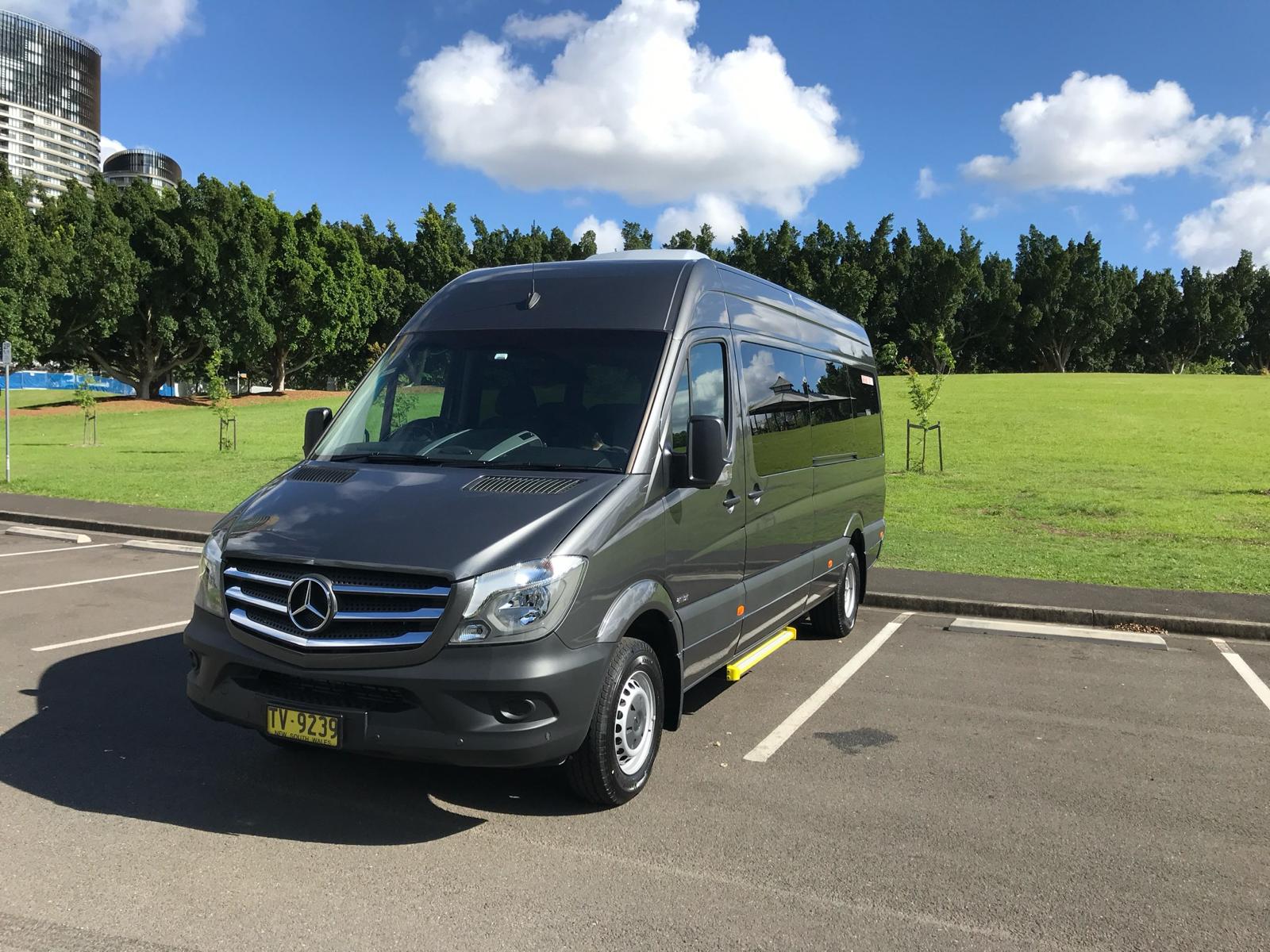
On a multi-day club tour, driver hours decide what each leg can contain. A commercial Sydney charter operator sits inside the heavy vehicle fatigue regime, because the NSW exemption for fatigue-regulated buses does not apply to a public passenger service and a charter service is one. Standard hours for a solo driver allow 12 hours of work with 7 continuous hours of stationary rest in any 24 hours. Build the itinerary around that, then price it.
Driver hours decide what a leg can contain
Most club tour itineraries are written by someone thinking in car time. That is where they go wrong.
A fatigue-regulated bus is a heavy motor vehicle built to carry more than 12 adults including the driver and weighing more than 4.5 tonnes. Under standard hours for a solo driver, the limits are 12 hours of work with 7 continuous hours of stationary rest in any 24 hour period, 72 hours of work with 24 continuous hours of stationary rest in any 7 days, and 144 hours of work in 14 days. There is also a separate standard hours table for solo bus and coach drivers, which requires 6 night rest breaks in 7 days and allows 288 hours of work over 28 days with four blocks of 24 continuous hours of stationary rest. A driver works to one table or the other, not a mixture of both.
Two things follow that clubs consistently underestimate.
The limits are on work time, not driving time. Loading gear, waiting at a venue and repositioning the vehicle all sit inside the day. A tour day is not just the hours the wheels are turning.
There is no charter exemption. NSW inserted a provision exempting drivers of fatigue-regulated buses from Chapter 6 fatigue requirements, but the exemption does not apply to driving a bus to provide a public passenger service. A charter service carried out for a fare is expressly a public passenger service, so a commercial operator is inside the regime. Anyone who tells you otherwise is quoting the first half of a rule.
One more trap. The 100 kilometre radius people mention is a record-keeping tier, not an exemption. Work and rest limits apply in full inside it, and only the work diary obligation lightens.
Currency matters here. The Heavy Vehicle National Law changed on 1 August 2026. Basic Fatigue Management and Advanced Fatigue Management are closed to new applicants and have been replaced by Alternative Compliance Hours under ACA-Fatigue within the new Heavy Vehicle Accreditation scheme. Most secondary content online is now out of date, so put a date on anything you read about driver hours, including this article.
Building the leg plan
Work backwards from the fixture, not forwards from the departure.
The business publishes its own operating figures for the routes Sydney clubs actually tour to. These are charter planning figures, and they are longer than the car times tourism bodies publish, because a coach is heavier, capped at 100 km/h in NSW for any vehicle over 4.5 tonnes GVM regardless of a higher posted limit, and subject to passenger comfort stops.
| Destination | Published distance | Driving time each way | Same-day return inside a solo driver’s 12 hour work day |
|---|---|---|---|
| Southern Highlands | 120 km | around 1.5 hours | Comfortable, roughly 3 hours of driving return |
| Blue Mountains (Katoomba) | 105 km | around 2 hours, 2.5 from the eastern suburbs or northern beaches | Comfortable, though a northern beaches pick-up adds an hour across the day |
| Hunter Valley (Pokolbin) | 165 km | 2 to 2.5 hours | Workable, roughly 4 to 5 hours of driving return |
| Port Stephens (Nelson Bay) | 205 km | 2.5 to 3 hours | Tight for a full fixture day, roughly 5 to 6 hours of driving return |
| Canberra | 285 km | 3 to 3.5 hours | Possible but demanding, roughly 6 to 7 hours of driving return before the fixture, loading and stops |
Read the last column carefully. Canberra as a same-day return leaves around 5 to 6 hours inside the driver’s work day for everything that is not driving, and a representative fixture with a warm-up, a game and a presentation will eat most of that. That is the honest reason a Canberra carnival is usually an overnight trip rather than a long day, and it is the sort of thing worth settling before you book accommodation. The Sydney to Canberra route is the most travelled representative destination from Sydney for exactly this reason.
For destinations beyond that list, do not estimate. Send the itinerary to the operator and ask for the leg plan to come back with the quote, because the answer depends on the vehicle, the pick-up point and where the rest falls.
The road itself is different for a coach
Three constraints change the route a coach takes compared with a convoy of parents’ cars.
Speed. Any vehicle over 4.5 tonnes GVM is capped at 100 km/h in NSW regardless of a higher posted limit. On a long highway leg that difference compounds.
NorthConnex. Heading north from Sydney, buses over 12.5 metres long or over 2.8 metres high travelling between the M1 and the M2 must use the NorthConnex tunnel, unless they have a genuine destination only accessible via Pennant Hills Road. Two camera gantries enforce it, there is no exemption list and no application process. The tunnel has a 5.1 metre clearance and an 80 km/h limit with average speed cameras for heavy vehicles. A full-size coach exceeds 2.8 metres in height, so this is a mandate rather than a choice for a club touring to the Hunter, Newcastle or Port Stephens.
Tolls. Sydney toll roads classify by length and height. Class A is 12.5 metres or less and 2.8 metres or less, and anything exceeding either limit is Class B. A full-size coach is Class B on every class-based Sydney toll road. The Class B multiplier is not uniform across the network, and the Sydney Harbour Bridge and Tunnel apply no heavy class at all. Tolls are confirmed in advance and priced separately from the hourly rate, so they belong in the tour budget as a line rather than a surprise.
How a multi-day tour is quoted
Multi-day tours are not the hourly rate multiplied by the number of days.
Every quote includes the professional driver, fuel, vehicle insurance and GST. Four things are confirmed in advance and priced separately, and on a tour all four are live:
- Driver accommodation on multi-day trips.
- Tolls and parking, which on a tour means the outbound and return toll runs plus any venue parking.
- Public holiday and after-hours loading, which is easy to trigger on a tour that leaves before dawn or returns late.
- Waiting time beyond the booked window, which is the one that moves when a fixture runs over.
Minimum hire is 4 hours for midi-coaches and full-size coaches and 3 hours for minibuses and people movers, and a point-to-point leg can instead be quoted as a single fixed transfer fare, which is not charged at a minimum. On a tour with several distinct legs, ask for the structure that suits each leg rather than one structure across the whole trip. That comparison is part of what multi-day charter hire should put in front of you.
What it costs per player
There is no per-player average worth publishing, because the number depends entirely on the vehicle, the number of nights, the distance and how many people actually travel. The method, though, is stable.
- Get the tour quoted as a total, with the separately priced items listed rather than bundled.
- Add the items the quote does not cover: player accommodation, meals, entry fees, insurance through your association.
- Divide the transport total by the number of confirmed travellers, not the squad list.
- Set the levy above that number, because the divisor only ever gets smaller. Late withdrawals do not reduce the coach cost.
- Decide the refund position before you collect a cent.
Step four is the one clubs skip and regret. A quote divided by 30 becomes a different number when 26 travel.
A multi-day tour checklist
Send all of this with the enquiry. It is what turns a vague tour idea into a quotable itinerary.
- Destination, dates and the fixture times you already know
- Pick-up address and the return drop-off address
- Travelling party: players, coaching staff, managers, medical, parents
- Whether any travellers are under 18, and how many
- Overnight locations and whether accommodation is already booked
- Gear beyond kit bags, described honestly
- Any fixed times that cannot move, such as a match start or a presentation
- Whether the group needs the vehicle between fixtures or only at each end
- Who the single authorised contact is for changes
Frequently asked questions
Are charter buses exempt from driver fatigue rules in NSW?
No. The NSW exemption for fatigue-regulated buses does not apply to driving a bus to provide a public passenger service, and a charter service carried out for a fare is a public passenger service. A commercial Sydney charter operator is inside the fatigue regime.
How long can a driver work in a day?
Under standard hours for a solo driver the limit is 12 hours of work with 7 continuous hours of stationary rest in any 24 hour period. A separate standard hours table applies to solo bus and coach drivers, and the driver uses one table or the other. The law changed on 1 August 2026, so check the current NHVR tables rather than an older summary.
Can we do Canberra and back in a day?
It is possible and it is demanding. At 285 km and 3 to 3.5 hours each way, a same-day return uses roughly 6 to 7 hours of the driver’s work day in driving alone, before loading, the fixture and breaks. Ask the operator to confirm it against the itinerary rather than assuming it.
Who pays for the driver’s accommodation?
Driver accommodation on multi-day trips is confirmed in advance and priced separately from the hourly rate. Ask for it as a named line on the quote so the committee can see it.
Does the coach travel at the same speed as the parents’ cars?
No. Any vehicle over 4.5 tonnes GVM is capped at 100 km/h in NSW regardless of the posted limit, and heading north between the M1 and M2 a coach is mandated into the NorthConnex tunnel at 80 km/h. Build the itinerary on the coach time, not the car time.
Next step
A tour is quoted per itinerary rather than off the hourly card, so start with the club transport overview and send the draft route with it.
Send the destination, the dates, the fixture times you know and the travelling party. Ask for the leg plan and the separately priced items to come back with the quote, so the committee sees the whole cost rather than the hourly rate. A fixed written quote comes back within two business hours with the vehicle named.
Call 02 9469 6600, Monday to Friday 7am to 6pm or Saturday 8am to 2pm. Tours need more lead time than a local fixture, so start four to eight weeks out where the trip falls in a peak period such as school holidays or a long weekend.
Sources
- NHVR, Heavy vehicle fatigue management, bus industry, https://www.nhvr.gov.au/safety-accreditation-compliance/fatigue-management/heavy-vehicle-fatigue-management-bus-industry. Accessed 7 September 2026.
- NHVR, Bus and coach driver fatigue and health and wellbeing, https://www.nhvr.gov.au/safety-accreditation-compliance/chain-of-responsibility/regulatory-advice/bus-and-coach-driver-fatigue-and-health-and-wellbeing. Accessed 7 September 2026.
- NSW Government, Heavy Vehicle National Law (NSW), sections 222A, 222B and 248A, https://legislation.nsw.gov.au/view/whole/html/inforce/current/act-2013-042. Accessed 7 September 2026.
- Transport for NSW, Pennant Hills Road heavy vehicle access, https://www.transport.nsw.gov.au/operations/roads-and-waterways/business-and-industry/heavy-vehicles/road-access/pennant-hills-road. Accessed 7 September 2026.
- Transport for NSW, Using Sydney’s tunnels, https://www.transport.nsw.gov.au/operations/nsw-roads-network/using-sydneys-tunnels. Accessed 7 September 2026.
- Linkt, Vehicle classes on Sydney toll roads, https://www.linkt.com.au/help/travelling-toll-roads/vehicle-class/sydney. Accessed 7 September 2026.