A seat count is a licensed maximum, not a comfort target. A 24-seat minibus carries 24 adults legally and safely, and it will still feel wrong for 24 adults with suitcases on a two-hour run to the Hunter Valley. Four things pull the workable number below the licensed one: how long people sit, what they are carrying, who is in the group, and how often they get on and off. Size against those, not against the badge on the door.
The fleet ladder, and what each step is for
Everything below runs on published figures. Seat counts exclude the driver, and rates are GST inclusive.
| Vehicle | Seats | Hourly rate | Minimum hire | Per head at full load, at the minimum |
|---|---|---|---|---|
| Mercedes V-Class | 7 | $125 | 3 hours | $53.57 |
| Toyota Commuter | 13 | $110 | 3 hours | $25.38 |
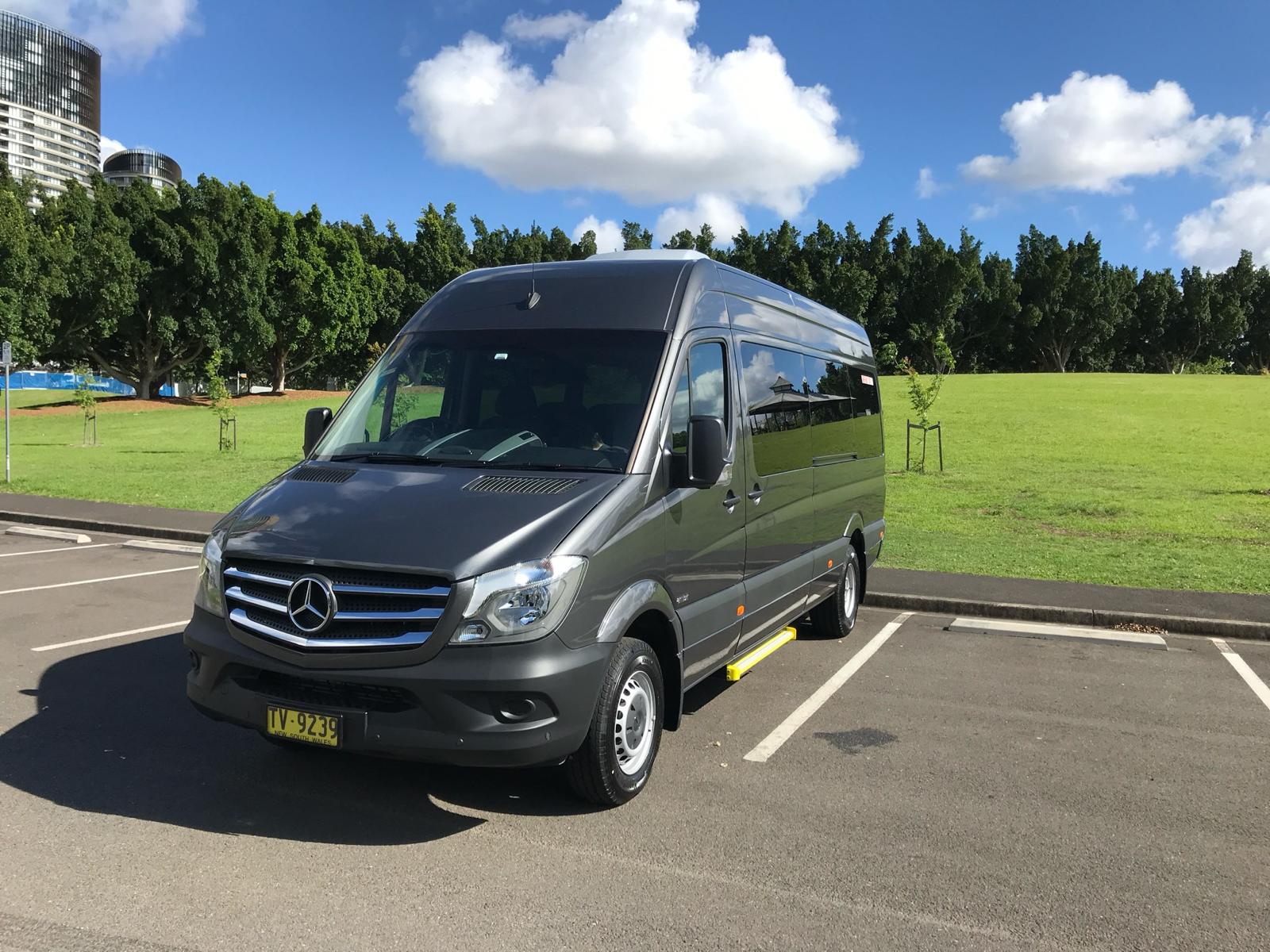
| Mercedes Sprinter | 11 to 14 | $145 | 3 hours | $31.07 at 14 |
| Executive minibus | 21 to 24 | $145 | 3 hours | $18.13 at 24 |
| Executive midi-coach | 27 | $165 | 4 hours | $24.44 |
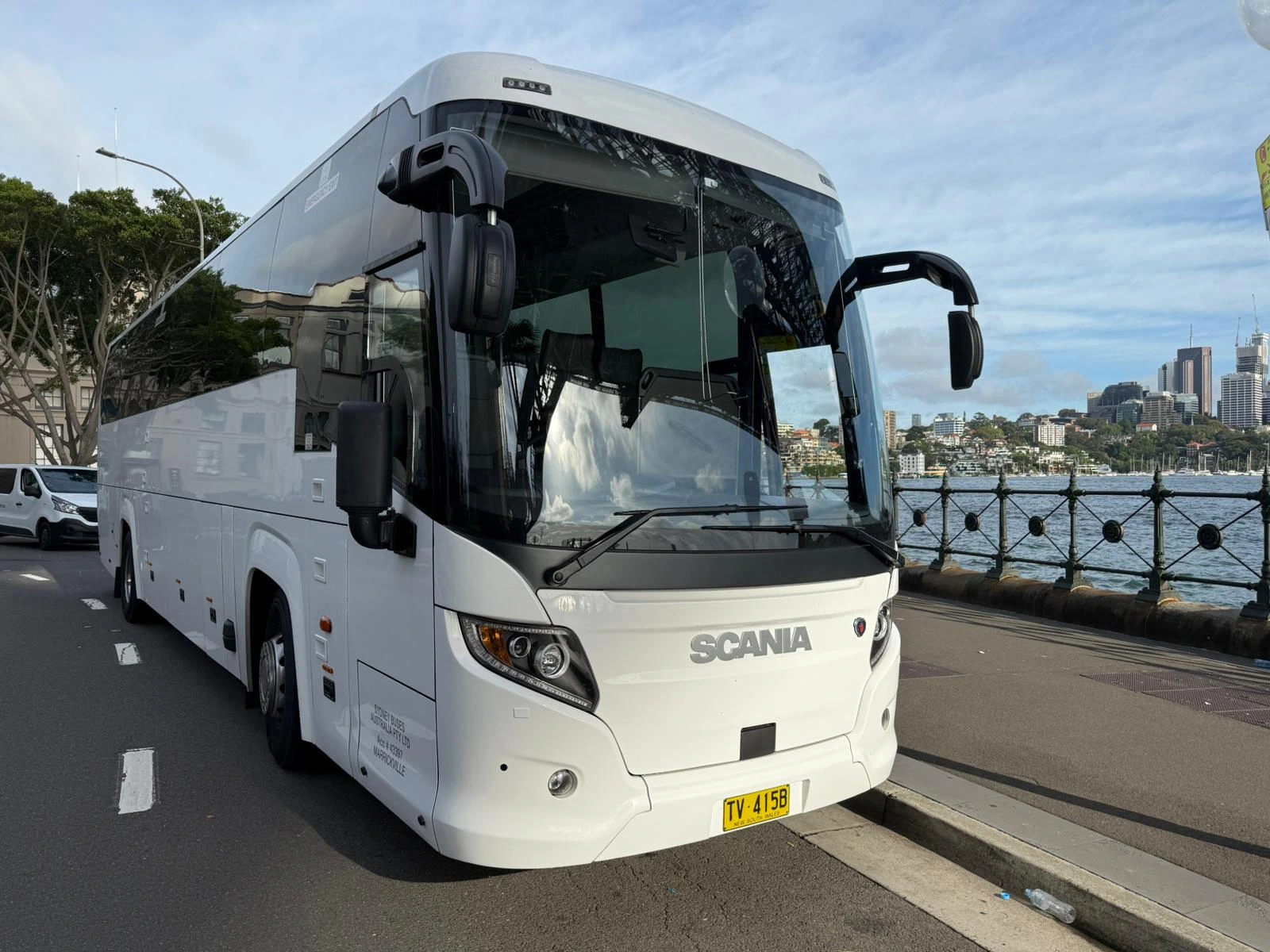
| Luxury coach | 48 | $185 | 4 hours | $15.42 |
| Executive coach | 53 | $195 | 4 hours | $14.72 |
| Luxury touring coach | 50 to 57 | $195 | 4 hours | $13.68 at 57 |
| Coordinated convoy | 58 or more | Quoted per event | n/a | Depends on the mix |
That last column is arithmetic on the published rates, not a quote. It also carries the whole argument of this article: the per-head figure assumes every seat is filled, and the comfortable count is the number that actually gets filled. You can check the underlying figures against the published fleet ladder and hourly rates.
Two things in that table surprise people. The 7-seat Mercedes V-Class costs more per hour than the 13-seat Toyota Commuter, because it is priced on standard rather than capacity. And the Mercedes Sprinter and the executive minibus sit at the same $145 an hour despite one carrying up to 14 and the other up to 24, which means the per-head cost nearly halves across that step for exactly the same hourly spend.
Why the licensed number is a ceiling
The seat count tells you what the vehicle is licensed to carry. It is a real and important number: NSW school excursion policy requires organisers to confirm the licensed passenger capacity of the vehicle, and every passenger needs a seat of their own, because in NSW a passenger aged 16 or over must wear a fitted seatbelt. NSW did not adopt the bus-passenger exemption that some other states rely on, so on a belted coach the obligation applies.
What the seat count does not tell you is whether the trip will be pleasant. Four variables decide that.
| Variable | What it does to the workable number | When it bites hardest |
|---|---|---|
| Trip duration | A vehicle that is fine for 30 minutes across the Inner West is a different proposition for two hours to the Blue Mountains. Longer trips need spare seats, aisle space and somewhere for the things people take out of their bags. | Anything over about an hour each way. |
| Luggage | Bags that do not fit under the floor end up on seats, and every seat holding a bag is a seat not holding a person. | Airport runs, cruise terminal transfers, multi-day trips, sports and music gear. |
| Group mix | Adults with winter coats occupy more space than school students. A group including a wheelchair position, a pram or passengers who need the front seats changes the usable layout. | Corporate, senior and accessible groups. |
| Boarding pattern | A single point-to-point run loads once. A shuttle loop with people standing up and sitting down at four stops needs aisle clearance and a seat that is easy to reach. | Wedding shuttles, staff shuttles, stadium loops. |
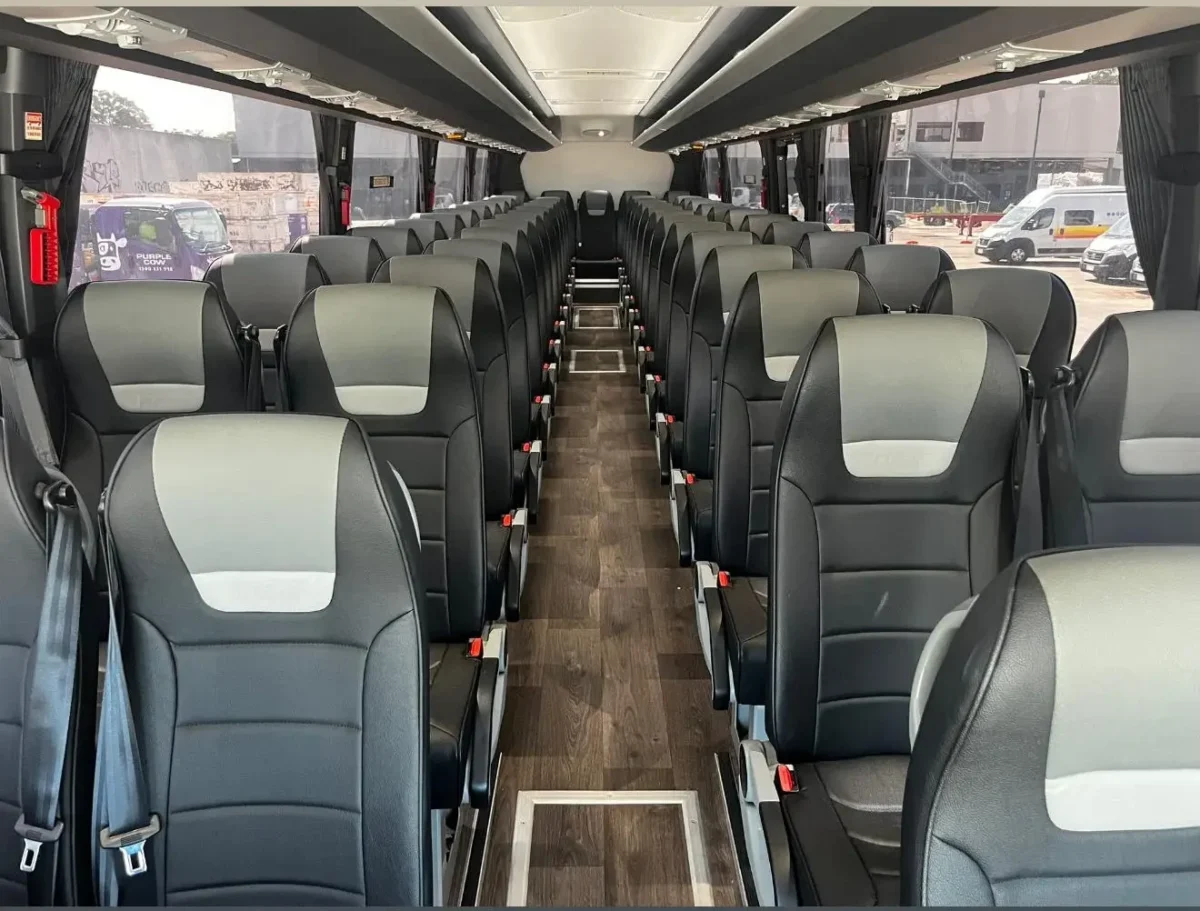
A rough working rule: for a short urban transfer, plan close to the seat count. For anything over an hour each way with real luggage, plan on the seat count minus a genuine margin, and let the operator tell you what that margin is for the specific vehicle.
The 24-seater question, in detail
The 21 to 24 seat band gets searched more than any other and misunderstood more than any other, so it is worth being direct about it.
A 24-seat executive minibus carries 24 passengers plus the driver. At $145 an hour on a 3-hour minimum, that is $435 for the minimum booking and $18.13 a head at a full load, which is the best value on the smaller half of the ladder by a wide margin.
It works well for 24 people on a short to medium urban run with day bags. It works less well for 24 adults each with a checked suitcase, because a minibus does not have the underfloor volume of a full-size coach and the overflow goes onto seats. That is the moment a group of 24 discovers it is really a group of 18 with bags.
It is also a hard ceiling. Twenty-five people do not fit on a 24-seat vehicle, and the next step up is a 27-seat midi-coach at $165 an hour with a 4-hour minimum. That step is worth understanding before your numbers move, which is covered below. If the minibus band is where your group sits, minibus hire in Sydney is the page with the vehicle detail.
Luggage is the variable nobody measures
This is the honest part of the article. We do not publish a bag count for any vehicle, and you should be sceptical of any operator that publishes one without qualifying it. Bag counts depend on bag sizes, and “a suitcase” covers everything from a 40-litre cabin bag to a two-week checked case. A published number that does not state the bag size it assumes is decoration.
What is useful is a method. Work through it before you enquire and the answer you get back will be right the first time.
- Count the bags, not the people. A group of 30 with one checked case each is a different vehicle problem from a group of 30 with one day pack each.
- Sort them into four classes. Personal items that stay on a lap. Cabin bags. Checked suitcases. Oversized items, which is anything that will not go through a normal doorway comfortably: golf bags, instruments, sports kit, camera cases, wheelchairs and mobility equipment.
- Assign each class a home. Laps and footwells take personal items. Overhead shelves, where the vehicle has them, take soft cabin bags. The underfloor bay takes checked cases. Oversized items need an explicit conversation, because they are the ones that turn into a trailer or a second vehicle.
- Ask the operator for the measured bay capacity of the specific vehicle, in bay dimensions or in a bag count with the bag size stated. Ask, do not assume, and get it in writing on the quote.
- Decide what happens to the overflow before the day, not on it. Either the overflow rides on spare seats, which reduces your passenger count, or it goes in a second vehicle or a trailer, which changes the price.
- Re-run the seat count with any bag-occupied seats removed. That number, not the badge on the vehicle, is your real capacity.
Step 6 is where most sizing goes wrong. A group of 26 booking a 27-seat midi-coach has one spare seat. If the group is flying out and eight cases will not fit under the floor, that vehicle is now short by seven seats and the trip does not work.
Band edges: where one extra person costs real money
The ladder is not a smooth slope. It is a set of steps, and some steps are far more expensive to climb than others.
| Your number goes from | Vehicle change | Rate change | Minimum change |
|---|---|---|---|
| 13 to 14 | Toyota Commuter to Mercedes Sprinter | $110 to $145 an hour | No change, both 3 hours |
| 14 to 15 | Sprinter to executive minibus | No change, both $145 | No change, both 3 hours |
| 21 to 24 | No change at all | No change | No change |
| 24 to 25 | Executive minibus to executive midi-coach | $145 to $165 an hour | 3 hours to 4 hours |
| 27 to 28 | Midi-coach to luxury coach | $165 to $185 an hour | No change, both 4 hours |
| 48 to 49 | Luxury coach to executive or luxury touring coach | $185 to $195 an hour | No change, both 4 hours |
| 57 to 58 | Single vehicle to coordinated convoy | Quoted per event | Changes structure entirely |
Two of those rows matter more than the rest.
Anywhere between 21 and 24, extra people are free. Same vehicle, same rate, same minimum. If your group is 21 and might grow, it can grow to 24 without touching the price.
The step from 24 to 25 costs twice. The rate rises from $145 to $165 an hour and the minimum hire rises from 3 hours to 4. A 3-hour minibus booking at $435 becomes a 4-hour midi-coach booking at $660. That is the most expensive single passenger on the whole ladder, and it is the one worth planning around.
By contrast, going from 27 to 28 buys 21 extra seats for $20 an hour, because both vehicles sit on a 4-hour minimum. A group of 28 pays $740 for the minimum booking on a 48-seat luxury coach and has 20 spare seats for luggage, coats and anyone who joins late. That is often the best value decision on the entire ladder.
Per-head cost falls with size, but only if the seats fill
The per-head column in the first table drops from $53.57 on a 7-seat V-Class to $13.68 on a 57-seat touring coach. That is the correct commercial instinct: bigger vehicles are cheaper per person.
The trap is that the figure assumes a full load. A 53-seat executive coach at $195 an hour on a 4-hour minimum is $780, which is $14.72 a head across 53 people and $19.50 a head across 40. Book a coach for a group that only half fills it and the per-head advantage evaporates.
So the sizing question is not “what is the cheapest per seat”, it is “what is the smallest vehicle that comfortably holds this group, its luggage and a sensible margin”. That vehicle is almost always the cheapest real answer, and it is a different question from the one most quote requests ask.
Note also that the per-head figures are calculated at the minimum hire. A longer booking spreads the same vehicle cost over more hours but does not change the per-head-per-hour relationship. What the hourly rate covers, and which items are quoted separately, is set out in what the hourly rate includes and what is quoted separately.
Above 57: the convoy threshold
The largest single vehicle on the ladder is a 57-seat luxury touring coach. At 58 or more, the answer is a coordinated convoy, quoted per event rather than at an hourly rate.
A convoy is not simply two bookings. It is multiple vehicles run to one plan, which raises questions a single booking never has to answer: whether the group travels together or in waves, whether the destination can load more than one coach at a time, who the single point of contact is, and how the vehicles stay in sequence. Those are worth settling at quote stage.
A seven-question sizing checklist
Send these with your enquiry and the quote that comes back will name the right vehicle.
- Confirmed head count, and whether it may still move in either direction.
- Bag count by class: personal items, cabin bags, checked cases, oversized items.
- Trip length in hours, one way and total.
- Number of pick-up and set-down points.
- Whether anyone needs a wheelchair position, a hoist, or a seat near the front.
- Whether the group is travelling with equipment that will not fit in a normal luggage bay.
- The pick-up address, not the suburb, so the vehicle that fits the group can also reach the kerb.
Frequently asked questions
How many people does a charter bus hold?
It depends entirely on the vehicle. The ladder runs from a 7-seat Mercedes V-Class and a 13-seat Toyota Commuter, through a Mercedes Sprinter at 11 to 14 and an executive minibus at 21 to 24, to a 27-seat midi-coach and full-size coaches at 48, 53 and 50 to 57 seats. Groups of 58 or more travel as a coordinated convoy. All seat counts exclude the driver.
Does 24 seats mean 24 adults will be comfortable?
For a short urban trip with day bags, yes. For a longer trip where everyone has a suitcase, usually not, because the bags that do not fit under the floor end up on seats. Twenty-four seats is a licensed maximum. The comfortable number is that maximum less whatever the luggage takes.
Does the seat count include the driver?
No. Every seat count published on the rate card is passenger seats, with the driver’s seat additional. A 13-seat Toyota Commuter carries 13 passengers plus a driver.
How much luggage fits under a coach?
We do not publish a bag count, because it depends on bag size and any number given without stating the bag size is misleading. Send a bag count broken down into cabin bags, checked cases and oversized items and the measured bay capacity of the specific vehicle will be confirmed on your quote.
What buffer should I allow over my head count?
Enough to stay inside your current seat band wherever possible. Between 21 and 24 the buffer is free. Between 24 and 25 it is expensive, because the vehicle, the rate and the minimum hire all change. Know which band edge you are near before you decide how much margin to carry.
We are 30 people. Does a 27-seat midi-coach work?
No. Thirty people need 30 seats, so the vehicle is a 48-seat luxury coach at $185 an hour on a 4-hour minimum. A 27-seat vehicle supplied for 30 confirmed passengers is a sizing error, not a tight fit, and it is the most common one in this category.
Next step
Send the head count and the bag count together, along with the pick-up address, the date and the trip length, and we will name the vehicle and the price rather than a size range. A fixed written quote comes back within two business hours, and driver name, mobile and vehicle registration are sent 24 hours before travel. Call 02 9469 6600, Monday to Friday 7am to 6pm or Saturday 8am to 2pm.
Sources
- NSW Department of Education, Excursions and variations of routine (PD-2005-0290-04), https://education.nsw.gov.au/policy-library/policies/pd-2005-0290-04. Accessed 7 September 2026.
- Transport for NSW, Seatbelts, https://www.transport.nsw.gov.au/roadsafety/topics-tips/seatbelts. Accessed 7 September 2026.
- NSW Legislation, Road Rules 2014 (Part 16), https://legislation.nsw.gov.au/view/whole/html/inforce/current/sl-2014-0758. Accessed 7 September 2026.