A wedding shuttle run sheet is built backwards from one fixed number: the time guests must be seated for the ceremony. Everything before that is subtraction, and everything after it is a decision about how long the vehicle stays. Most Sydney weddings need four scheduled movements: guests to the ceremony, guests to the reception, an early bus home, and a last bus. Each movement needs a time, a vehicle, a passenger count and one named person who confirms it happened.
The four movements a Sydney wedding shuttle really has
Couples usually describe wedding transport as “a bus for the guests”. An operator schedules it as four separate jobs, and the run sheet has to name all four.
Movement one, guests to the ceremony. The highest-risk movement of the day, because it is the only one with a hard deadline you cannot renegotiate. It is also the movement with the most people who have never been to the pick-up point before.
Movement two, ceremony to reception. Lower risk, but it is the movement most often left out of the booking, because couples assume guests will drive themselves the second leg. If the ceremony has no parking, they cannot.
Movement three, the early bus. A single scheduled departure for guests with children, older relatives, or an early flight. Without it, the same people leave in taxis at unpredictable times and the last bus runs half empty.
Movement four, the last bus. The one movement that decides your total window, your total hours, and often your total price. Set it before you set anything else at the reception end.
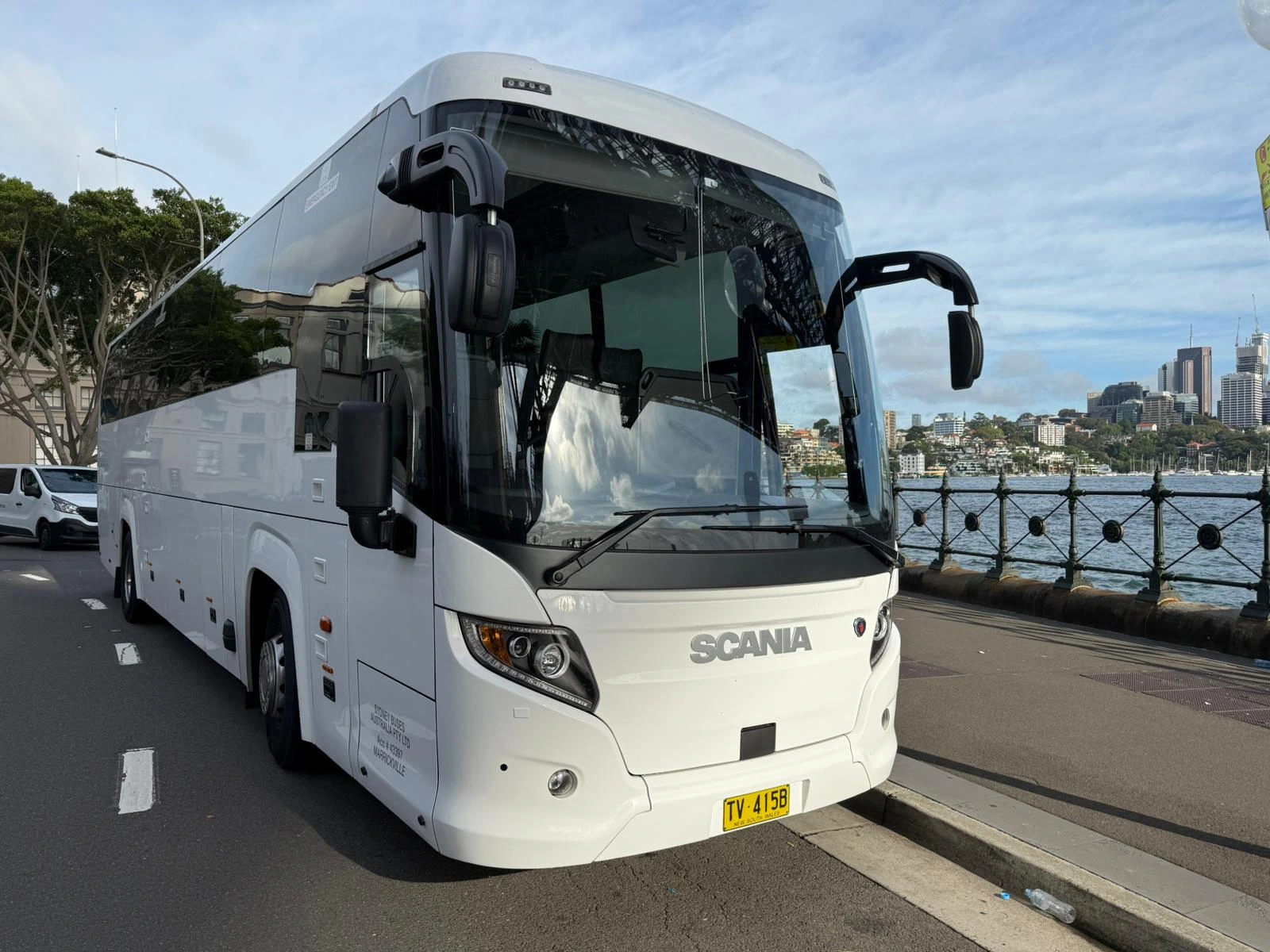
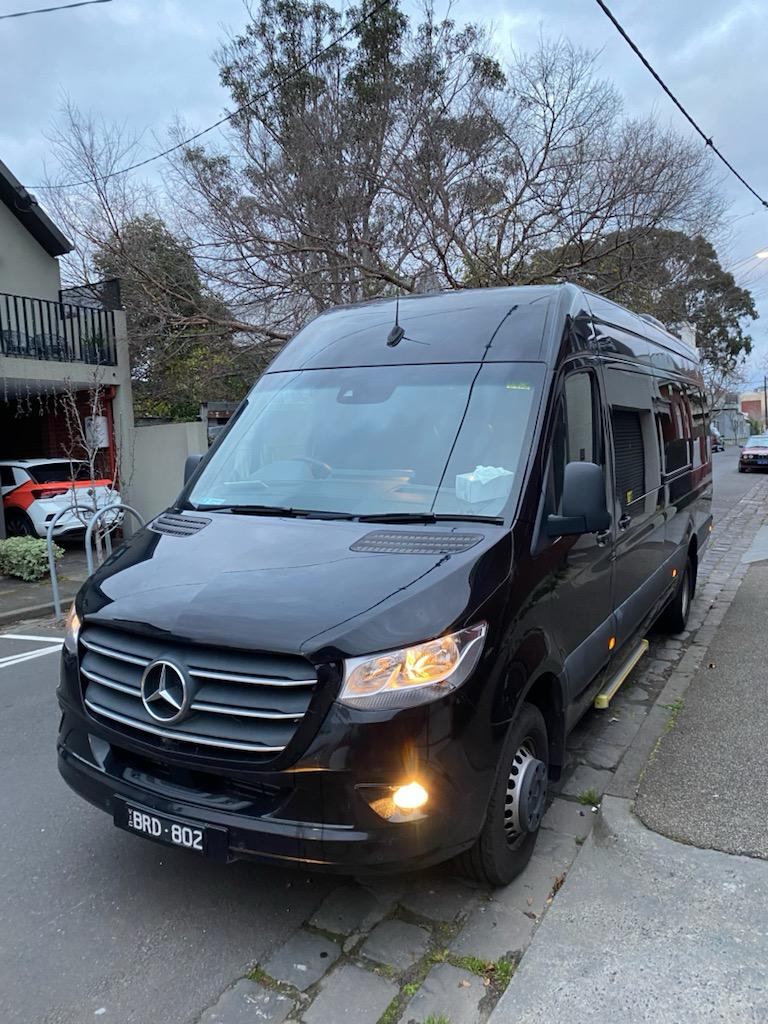
The bridal party is a fifth job with a different shape entirely, and it usually needs its own vehicle. If you are still deciding whether one vehicle can cover both, price it as two jobs first and then ask whether they can be combined. The vehicle types and seat counts behind each of those jobs are set out under wedding bus hire in Sydney.
Build the run sheet backwards, in this order
- Write the seating time. Not the ceremony start time. The moment you want guests in seats, which is usually earlier.
- Subtract an arrival buffer. This is time you are deliberately spending so that a slow run does not become a late ceremony. Twenty minutes is a common choice for a short city transfer and it should grow with the distance.
- Subtract the drive time for your exact pair of addresses. Ask the operator for this figure rather than using a mapping app, because a coach is slower than a car, is capped at 100 km/h on any road, and cannot always take the direct route.
- Subtract the boarding allowance. How long it takes your specific group to get onto that specific vehicle at that specific kerb. Ask the operator to set it. Guests in formal clothing with gifts board more slowly than a school group.
- That is your departure time from the guest pick-up point. Publish it to guests as the departure time, and put the vehicle on site earlier than that.
- Now work forwards from the reception end. Fix the last bus first, then the early bus, then check whether the ceremony-to-reception transfer sits comfortably between them.
- Add up the total window and check it twice. Once against minimum hire, and once against the driver’s legal working day. Both are covered below.
Step three is the one people skip. A coach that is over 4.5 tonnes is limited to 100 km/h in NSW regardless of a higher posted limit, so on any run that uses a motorway, the coach timing and the car timing diverge before you have left the suburb.
The run sheet template
Copy this into your planning document and fill the time column. The last column is the one that actually prevents problems, because it forces a name against every movement rather than a shared assumption.
| # | Slot | Time | Vehicle | Passengers | Confirmed by |
|---|---|---|---|---|---|
| 1 | Vehicle on site, doors open, guest pick-up point | ||||
| 2 | Bridal party vehicle on site | ||||
| 3 | Guest shuttle departs pick-up point 1 | ||||
| 4 | Guest shuttle departs pick-up point 2, if any | ||||
| 5 | Guests arrive at ceremony | ||||
| 6 | Guests seated | ||||
| 7 | Ceremony begins | ||||
| 8 | Ceremony ends | ||||
| 9 | Bridal party departs for photographs | ||||
| 10 | Guest shuttle departs ceremony for reception | ||||
| 11 | Guests arrive at reception | ||||
| 12 | Bridal party arrives at reception | ||||
| 13 | Early bus departs reception | ||||
| 14 | Last bus departs reception | ||||
| 15 | Vehicle released, run complete |
Two rules make the template work. Every row gets a real time, including the rows you think are obvious. And no row is confirmed by the couple, because on the day the couple will be unreachable, photographed, or both.
A worked example: Sydney to a Southern Highlands venue
The Southern Highlands is one of the routes where the run sheet stops being a formality. The published figure for this run is 120 km and about 1.5 hours each way, and that single number reshapes the entire day.
Eighty guests, two 48-seat coaches, a 3pm ceremony at a Highlands venue with the reception on the same site.
| Time | Movement | Note |
|---|---|---|
| 12:15pm | Coaches on site at the Sydney pick-up point, doors open | Fifteen minutes before the published departure |
| 12:30pm | Depart Sydney | Published to guests as the departure time |
| 2:00pm | Arrive at the venue | Based on about 1.5 hours for the 120 km run |
| 2:45pm | Guests seated | The hour of slack at arrival is deliberate |
| 3:00pm | Ceremony begins | |
| 9:30pm | Early bus departs for Sydney | One coach, guests with children and early flights |
| 11:00pm | Early bus arrives in Sydney | |
| 11:30pm | Last bus departs for Sydney | |
| 1:00am | Last bus arrives in Sydney |
That hour of slack at 2:00pm looks generous until you consider the alternative. If the run is slow, you cannot ask eighty people to get back on a coach and try again. On a 120 km transfer, the buffer is the plan.
Now the reality check. From the coaches arriving at the Sydney pick-up point at 12:15pm to the last bus completing at around 1:00am is more than twelve hours. General standard hours for a solo driver of a fatigue-regulated heavy vehicle allow a maximum of 12 hours work with 7 continuous hours of stationary rest in any 24 hour period, and a separate standard hours table applies specifically to solo bus and coach drivers. A driver uses one table or the other, not both. A run sheet that spans thirteen hours is not a scheduling preference. It is a legal question, and the honest answer is usually two drivers, two shifts, or a different shape for the day.
This is why the last bus time belongs at the top of your planning, not the bottom.
A worked example: a city ceremony and a city reception
Same method, shorter clock. A 4pm ceremony, guests seated by 3:45pm, one 53-seat coach, one pick-up point.
| Time | Movement | Note |
|---|---|---|
| 2:20pm | Coach on site, doors open | |
| 2:35pm | Depart pick-up point | Boarding allowance set by the operator |
| 3:15pm | Arrive at ceremony | Uses an illustrative 40 minute drive, replace with the operator’s figure for your addresses |
| 3:45pm | Guests seated | Thirty minute arrival buffer |
| 4:00pm | Ceremony begins | |
| 5:15pm | Coach departs ceremony for reception | |
| 10:00pm | Early bus departs reception | |
| 11:45pm | Last bus departs reception | |
| 12:15am | Coach released |
Total window: about ten hours. Before you price that, decide whether the coach is holding through the afternoon gap or leaving and returning, because that single choice moves the number more than the vehicle size does.
Check the window before you check the price
Two published rules turn your run sheet into a quote.
Minimum hire is three hours on minibuses and people movers, and four hours on midi-coaches and full-size coaches. That is a floor on an hourly booking, not an estimate. A short guest transfer that takes ninety minutes is still charged at the minimum if it is booked hourly.
The alternative is a single fixed transfer fare for a point-to-point run, and a fare quoted that way is not charged at a minimum. Which of the two suits your day depends entirely on the shape of your run sheet, which is why the run sheet should arrive with the enquiry rather than after it, and why a sheet with fifteen filled rows gets a sharper quote than a sentence describing a wedding.
One further line matters for a run sheet that might slip. Waiting time beyond the booked window is confirmed in advance and priced separately, along with tolls and parking, public holiday and after-hours loading, and driver accommodation on multi-day trips. Driver, fuel, vehicle insurance and GST are already inside the quoted price. You can hold your own numbers against the published hourly rates and minimum hire periods before you speak to anyone.
When photos run late
Photographs overrun. Plan for it in the run sheet rather than improvising on the day.
The fix is structural. Keep the guest movements and the bridal party movement on different vehicles wherever the budget allows, so that a photo session running thirty minutes long delays two people’s arrival at the reception rather than sixty people’s departure from the ceremony.
If one vehicle genuinely has to do both jobs, build the run sheet around a hold point: a named time and a named place where the vehicle waits, with one named person authorised to release it. Write that person’s mobile number on the sheet. The driver needs someone to call, and it must not be the couple.
Three practical decisions worth making in advance:
- The latest time the guest movement can leave without missing the reception start. Write it on the sheet as a hard time, not a preference.
- Who tells the driver. One person, with the number in the driver’s phone before the day.
- What happens to guests who miss the movement. Usually a taxi at the couple’s expense, decided beforehand rather than argued about on a kerb.
Driver name, mobile number and vehicle registration are sent 24 hours before travel, so the day-of contact can be introduced to the driver before anyone is standing on a footpath in formal clothes.
The last bus, and the driver’s legal day
Set the last bus early, for three reasons. It defines the total booked window, which is what the hours are priced on. It is the number guests plan their night around, so it belongs in the invitation wording rather than in an announcement at 10pm. And it interacts with the driver’s legal working day in a way that cannot be fixed on the night.
A useful test: add the time from the vehicle arriving at the first pick-up point to the vehicle being released after the last bus. If that total approaches twelve hours, raise it with the operator at quoting stage. The answer may be a second driver, a shift changeover, or a slightly earlier last bus. All three are manageable in advance and none of them are manageable at midnight.
Sydney set-down realities that change the clock
Where a coach can legally stop is a timing question, not just a logistics one.
Bus zones. Under the NSW Road Rules, a driver must not stop in a bus zone unless driving a public bus that is dropping off or picking up passengers, and the NSW Dictionary defines a public bus to include a coach. A charter coach may therefore set down and pick up in a bus zone. It may not wait there, and the sign on the zone can exclude it. Build the run sheet so the coach is moving, not parked.
Long gaps in the city. The City of Sydney’s Central Sydney On-Street Parking Policy states that the City will not accommodate long-stay coach lay-over on-street in central Sydney. If your run sheet contains a four hour hole in the middle of the CBD, the vehicle has to be somewhere, and that somewhere needs to be part of the plan and part of the quote.
Sydney Opera House. Buses and coaches cannot park onsite, and large buses must disembark passengers on Macquarie Street. If your ceremony or reception is at the Opera House, the walk from Macquarie Street is inside your run sheet, not outside it.
ICC Sydney. Coach drop-off is at Iron Wharf Place off Darling Drive. Coach parking at ICC is arranged through the venue’s event manager rather than booked independently.
For any other Sydney venue, ask the venue two questions in writing: where a full-size coach sets down, and whether it can stand there afterwards. The answers change the run sheet more often than the guest count does.
One last line belongs in your boarding allowance rather than in the venue notes. On a coach fitted with seatbelts, wearing them is mandatory in NSW for every passenger aged 16 or over, and that obligation sits on the passenger. Put it in your transport wording to guests, and allow for it in the loading time.
Frequently asked questions
What time should the bus arrive versus depart?
The vehicle should be on site before the departure time you publish to guests, and the departure time you publish should already contain the boarding allowance. Guests treat a published time as the moment they need to arrive, not the moment the doors close.
How early should guests arrive at the ceremony?
Work backwards from the seating time rather than the ceremony start time, and keep a deliberate arrival buffer. Twenty minutes is a common choice for a short city transfer, and a longer run like the 120 km Southern Highlands transfer deserves considerably more.
What is a sensible last bus time?
Whatever time you can set now and not move. The value of the last bus is that guests plan around it, which only works if it is published in advance and the driver’s working day supports it. Raise the full window with the operator at quoting stage.
Should the bridal party and the guests share a vehicle?
Only if the photo schedule is genuinely short and the guest movements do not depend on it. The moment photographs overrun, a shared vehicle turns a bridal party delay into a guest delay.
Who should be the day-of contact?
Someone who is not in the wedding party and not hosting. They need to be reachable, standing near the kerb at each movement, and holding the authority to release the vehicle. Driver name, mobile and registration arrive 24 hours before travel, so the introduction happens the day before.
Can the run sheet change after we book?
Times can generally move. Vehicle size and total hours are the two things that get harder to change close to the date, because both depend on what is available. Send your best version early and update it rather than waiting for a final version.
Next step
Fill in the template above with your real addresses and your real seating time, then send it through with your date and guest count. You will get a written quote back with the vehicle named and the hours priced against your actual movements, normally within two business hours during office hours. You can send the run sheet through or call the office on 02 9469 6600, and if your reception is out of town, the Sydney to Southern Highlands run is the one to read next.
Sources
- NSW Government, Road Rules 2014 (NSW), rule 183 and Dictionary, https://legislation.nsw.gov.au/view/html/inforce/current/sl-2014-0758. Accessed 7 September 2026.
- Sydney Opera House, Plan your excursion, https://www.sydneyoperahouse.com/schools/plan-your-excursion. Accessed 7 September 2026.
- ICC Sydney, Getting here, https://iccsydney.com.au/visitors/getting-here/. Accessed 7 September 2026.
- National Heavy Vehicle Regulator, Heavy vehicle fatigue management, bus industry, https://www.nhvr.gov.au/safety-accreditation-compliance/fatigue-management/heavy-vehicle-fatigue-management-bus-industry. Accessed 7 September 2026.
- Transport for NSW, Seatbelts, https://www.transport.nsw.gov.au/roadsafety/topics-tips/seatbelts. Accessed 7 September 2026.
- City of Sydney, Central Sydney On-Street Parking Policy, https://www.cityofsydney.nsw.gov.au/-/media/corporate/files/publications/policies/central-sydney-street-parking-policy/central-sydney-on-street-parking-policy_0525.pdf. Accessed 7 September 2026.