Wedding transport goes wrong when the decisions are made out of order. You cannot size a vehicle before you know who is riding, and you cannot set times before you know where a coach is allowed to stop. This worksheet runs nine decisions in the order they actually have to be made, with the field to fill in at each one. Work through it top to bottom and the last section is your operator brief, already written.
How to use the worksheet
Each decision has a short prompt, the thing it depends on, and a line to fill in. Do not skip forward. Decisions 1 to 4 change the answer to decisions 5 to 8, and every time a couple starts at “what size bus do we need” they end up re-doing it.
Two of these decisions have a deadline attached rather than just an answer. Decision 4 depends on what a venue will tell you, which can take a week. Decision 6 depends on your final guest numbers, which arrive late. Start decision 4 early and leave decision 6 until you genuinely have RSVPs.
Decision 1: who is being transported
Not everyone at a wedding needs a seat on a bus. Write down the groups separately, because they travel at different times and sometimes in different vehicles.
| Group | Number | Transported? | Notes |
|---|---|---|---|
| Wedding party, getting ready location to ceremony | Often cars, not a coach | ||
| Guests, accommodation to ceremony | |||
| Guests, ceremony to reception | The movement most weddings actually need | ||
| Guests, reception to accommodation | See decision 3 | ||
| Family and elderly guests | May need a shorter walk to the vehicle | ||
| Suppliers and crew | Rarely on the guest coach |
The row that decides your budget is usually “guests, ceremony to reception”. If the ceremony and reception are at the same venue, you may only need decision 4 and decision 3.
Decision 2: which movements you are actually buying
List every movement as a line, in clock order, even the ones you think you will drop. A movement is one vehicle going from one place to another with people on it.
| # | From | To | Roughly when | Approx passengers |
|---|---|---|---|---|
| 1 | ||||
| 2 | ||||
| 3 |
Two questions to answer here rather than later. Does the coach stay with you between movements, or does it leave and come back? And is there a gap of more than about three hours between two movements? Both change the price materially, and both are decisions you make, not the operator.
Decision 3: the last bus
This is the decision couples defer and then regret. Reception ends at a time, but guests leave across a spread of two or three hours, and a single departure at the end of the night leaves people either stranded early or hanging around.
Pick one of these three and write it down:
- One departure at the end. Simplest and cheapest. Works when the reception has a hard finish and everyone leaves together.
- Two departures. An early one for family, older guests and anyone with children, and a final one at close. The most common answer for a Sydney wedding of any size.
- A shuttle loop. The coach runs a circuit between the venue and accommodation for a defined window. Costs more hours, and only makes sense when the two points are close and the guest list is large.
Then answer the question that goes with it. If a guest misses the last bus, what is their alternative, and have you checked that it exists at that hour at that specific venue? For a venue well outside the city this is worth confirming with the venue directly rather than assuming. Decide, do not hope.
Our last bus decision: ______________________ Alternative if someone misses it: ______________________
Decision 4: where a coach can actually stop at each venue
The address on the invitation is often not the address a coach can use. Ask each venue three questions in writing and record the answers here.
- Where does a coach set down and pick up? Give me the street.
- Can a coach wait onsite between movements, and if not, where does it go?
- Is there a height limit, a length limit, or a booking we need to make?
| Venue | Coach set-down street | Can the coach wait? | Height or length limit | Booking required |
|---|---|---|---|---|
| Ceremony | ||||
| Reception | ||||
| Accommodation |
Two Sydney rules sit behind those answers. The Sydney Opera House publishes that buses and coaches cannot park onsite and that large buses must disembark passengers on Macquarie Street, so a coach movement there is a set-down, not an arrival at the door. And anywhere in NSW, a charter coach counts as a public bus under the Road Rules and may stop in a bus zone to set down or pick up, but may not wait or lay over in one. If your plan has the coach sitting somewhere for two hours, that location needs to be a real place, agreed in advance.
If your venue is outside Greater Sydney, note it here. The published Sydney to Southern Highlands run is 120 kilometres and around 1.5 hours, which is a real leg on both ends of the day and changes both the timing and the quote.
Decision 5: the vehicle, and how many of them
Only now does the vehicle question make sense, because you know the largest single movement from decision 2 and the access limits from decision 4.
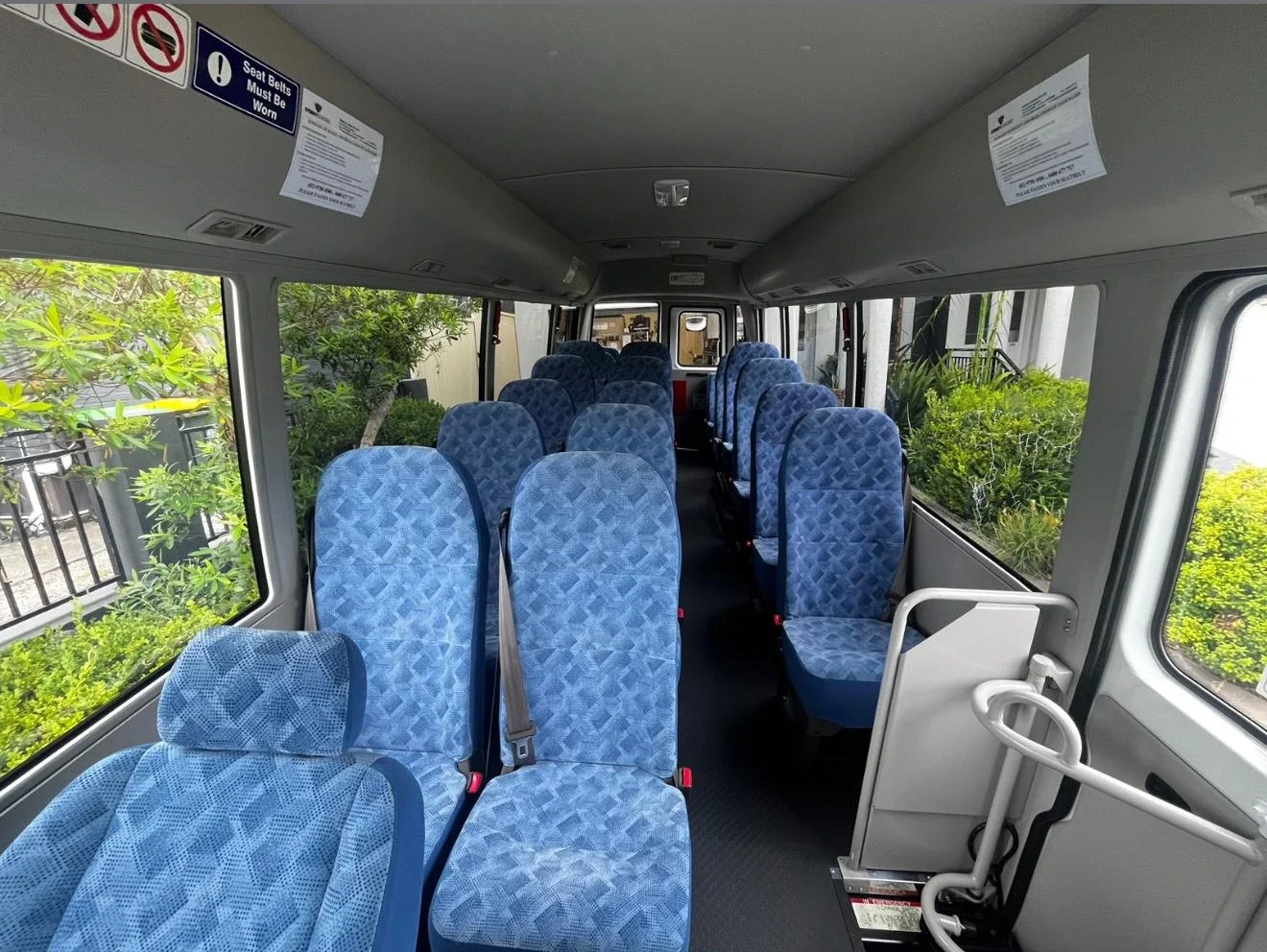
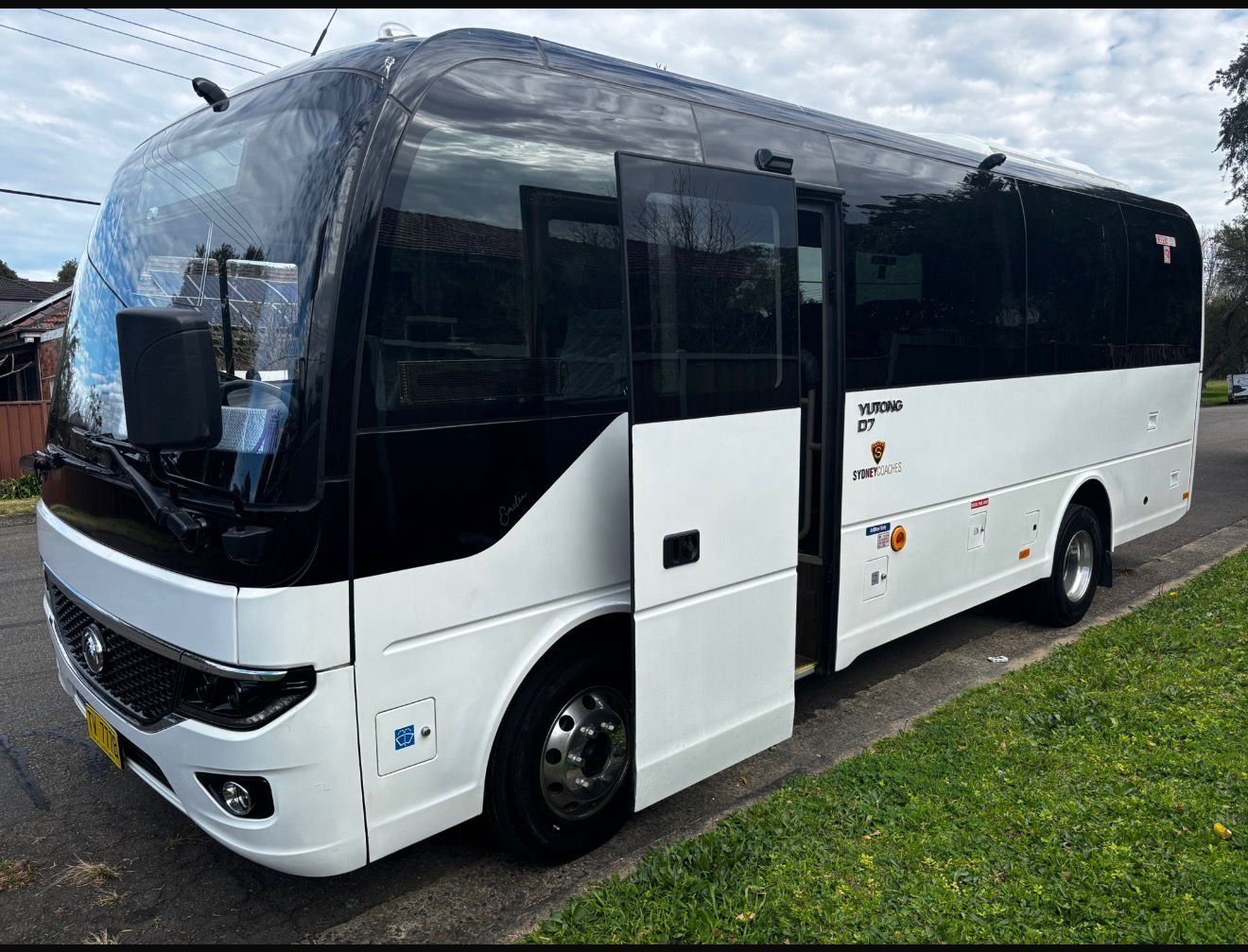
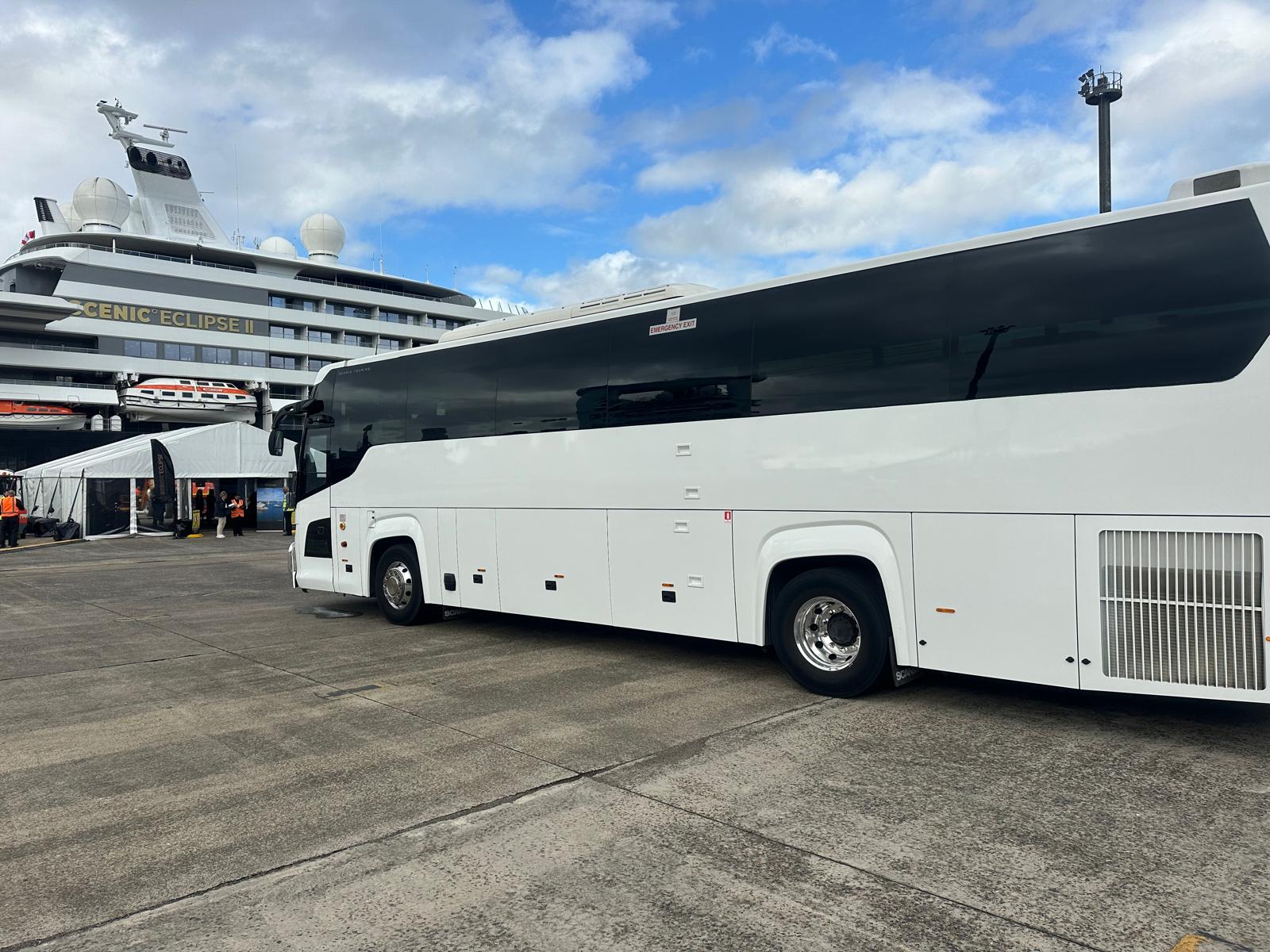
Size against the biggest single movement, not the guest list. Seat counts exclude the driver, and the honest capacity of any vehicle drops once guests are carrying bags, gifts or instruments. You can size against the vehicle types and seat counts we operate.
Largest single movement: ______ passengers Vehicle or vehicles: ______________________
The cost arithmetic worth doing before you commit, using the published GST inclusive rate card:
| Option for 90 guests in one movement | Basis | Total |
|---|---|---|
| Two 48-seat luxury coaches, one trip each | 2 vehicles at $185 per hour, four hour minimum | $1,480 |
| One 48-seat luxury coach, two trips | 1 vehicle, hours priced across the full window | Depends on the window, at $185 per hour |
Two vehicles cost more per hour and finish in one movement. One vehicle costs less per hour and doubles the time your guests are standing somewhere. Neither is wrong. Decide which one your timeline can absorb.
Decision 6: one vehicle doing two runs, or two vehicles
Related to decision 5 but a separate call, and it is a timeline decision rather than a budget one.
A single coach doing two runs needs the round trip time plus loading plus unloading, doubled, inside your schedule. If the second run has to leave before the first has returned, the answer is two vehicles regardless of what the budget says.
Round trip time for the critical movement: ______ minutes Time available in the schedule: ______ minutes Decision: ______________________
Decision 7: on-board rules
Short, but worth deciding early because it affects the booking rather than the day.
- Food and non-alcoholic drinks are fine on our vehicles.
- Alcohol is permitted on private function bookings by prior arrangement only. If you want drinks on the coach, raise it when you book, not on the day.
- On a coach fitted with seatbelts, wearing them is mandatory in NSW for every passenger aged 16 or over. Worth a line in your guest communications, because a busload of adults in formal wear is exactly the group that assumes otherwise.
Decision 8: the day contact
One person, named, with a phone that is on and answered. Not the couple. Not someone who will be inside the ceremony when the coach arrives.
Day contact: ______________________ Backup: ______________________
Decision 9: what goes to the operator
Everything above collapses into a brief. Send this and you will get a quote that matches the wedding rather than a generic one.
- Date, day of week, and whether it falls on a public holiday
- Every movement in clock order, with the from, the to, and the passenger count
- The hard arrival time, which at a wedding is the ceremony
- Each venue’s coach set-down street and any height, length or booking constraint
- Whether the coach stays through the day or leaves and returns
- Your last bus decision
- Luggage, gifts, instruments, mobility aids, prams
- Whether alcohol will be on board
- Day contact name and mobile
That is the whole brief. Send it to wedding bus hire in Sydney or straight to the office and you will have a fixed written quote with the vehicle named back within two business hours.
What to collect from guests
Keep this to the minimum that changes a transport decision. You are not building a database.
| Ask | Why it changes something |
|---|---|
| Are you using the bus? Yes or no | Sets the movement counts |
| Which pick-up point | Sets the stops |
| Which return, early or late | Only if you chose two departures |
| Do you need step-free access or a wheelchair space | Changes the vehicle, and has to reach the operator early |
| Travelling with children needing a pram | Affects loading time and luggage space |
Collect it once, in the RSVP, and give the guest a deadline. Chasing twelve people for bus answers in the final week is the most reliably miserable part of wedding transport.
Frequently asked questions
How far ahead should wedding transport be booked?
Two to four weeks covers most jobs. Peak periods including December and long weekends want four to eight. Wedding transport is worth booking earlier than that anyway, because the decision most likely to change your quote is decision 4, and venues are slow to answer.
Do we need a bus if the ceremony and reception are at the same venue?
Often only for the end of the night, which makes decision 3 the whole job. A single departure at close, or an early and a late run, is a common and inexpensive booking.
Can the coach wait at the venue between the ceremony and the reception?
That is a question for the venue, and the answer is frequently no. Ask it as part of decision 4. If the coach cannot wait onsite, it either leaves and returns or lays over somewhere agreed, and both of those are priced differently.
What is the minimum we will be charged for a short shuttle?
Minimum hire is three hours on minibuses and people movers and four hours on midi-coaches and full-size coaches. A twenty minute transfer on a 48-seat coach is still a four hour booking, which is why couples with two short movements often find one continuous booking works out better.
Next step
Work through decisions 1 to 9, then send us the completed worksheet with your date and pick-up suburb. We will quote from what you have written rather than asking you to start again. Call 02 9469 6600 if you would rather talk it through, Monday to Friday 7am to 6pm or Saturday 8am to 2pm.
Sources
- Sydney Opera House, Plan your excursion, https://www.sydneyoperahouse.com/schools/plan-your-excursion. Accessed 7 September 2026.
- NSW Government, Road Rules 2014 (rule 183, Part 16 and Dictionary), https://legislation.nsw.gov.au/view/html/inforce/current/sl-2014-0758. Accessed 7 September 2026.
- Transport for NSW, Seatbelts, https://www.transport.nsw.gov.au/roadsafety/topics-tips/seatbelts. Accessed 7 September 2026.