Two quotes for the same Sydney trip usually differ because they are not actually quoting the same job. Six things move the number: how many hours have been made chargeable, whether GST is inside the total, which vehicle has been allocated, whether the coach falls into Class B on the toll roads your route uses, how far the vehicle travels empty before it reaches you, and how much notice the operator has. Price the job, then compare.
Compare like for like before you compare price
Put both quotes flat on the desk and check five fields first: vehicle and seat count, hours charged, GST treatment, toll treatment, and finish time. Until those five match, the totals are not comparable and the cheaper number tells you nothing useful.
Almost every large gap traces back to one of the six causes below. You can work out which one is operating in about two minutes, and it is worth doing, because the difference between a genuinely lean quote and an incomplete one is not visible in the total.
Our side of it is public: the hourly rates and minimum hire periods we publish are the same numbers on any quote we send, so you can reverse-engineer our arithmetic and apply the same test to anyone else.
One: chargeable hours
This is the biggest single lever, and it is rarely explained.
A charter vehicle is not free while it waits. If your group is dropped at Sydney Olympic Park at 6pm and collected at 10pm, the coach and the driver are committed for that whole window. One operator prices it garage to garage across the full window. Another prices only the two driving legs and then bills waiting time as a separate line afterwards. A third prices the driving legs, says nothing about the wait, and sorts it out later.
The same coach, at the same published rate, produces this:
| How the hours are treated | Basis | Total |
|---|---|---|
| Four hours, the published minimum for a full-size coach | 53-seat executive coach at $195 per hour | $780 |
| Six hours, priced across the full window including the wait | 53-seat executive coach at $195 per hour | $1,170 |
That is a $390 gap on an identical vehicle, an identical route and an identical published rate. Nobody has discounted anything. One quote has simply written down the wait and the other has not.
The question that settles it: does this price cover the vehicle from the time it collects us to the time it releases us, or only the driving legs?
Two: GST
Our published rates are GST inclusive. Not everyone works that way. A total of $780 including GST and a total of $780 plus GST are $78 apart, and the second one looks cheaper on a comparison spreadsheet until somebody totals the invoice.
For a business or a school claiming input tax credits the net cost lands in the same place, so this one matters most to unregistered organisers: community groups, sports clubs, families and social committees. Check the wording, not the number.
Three: which vehicle got allocated
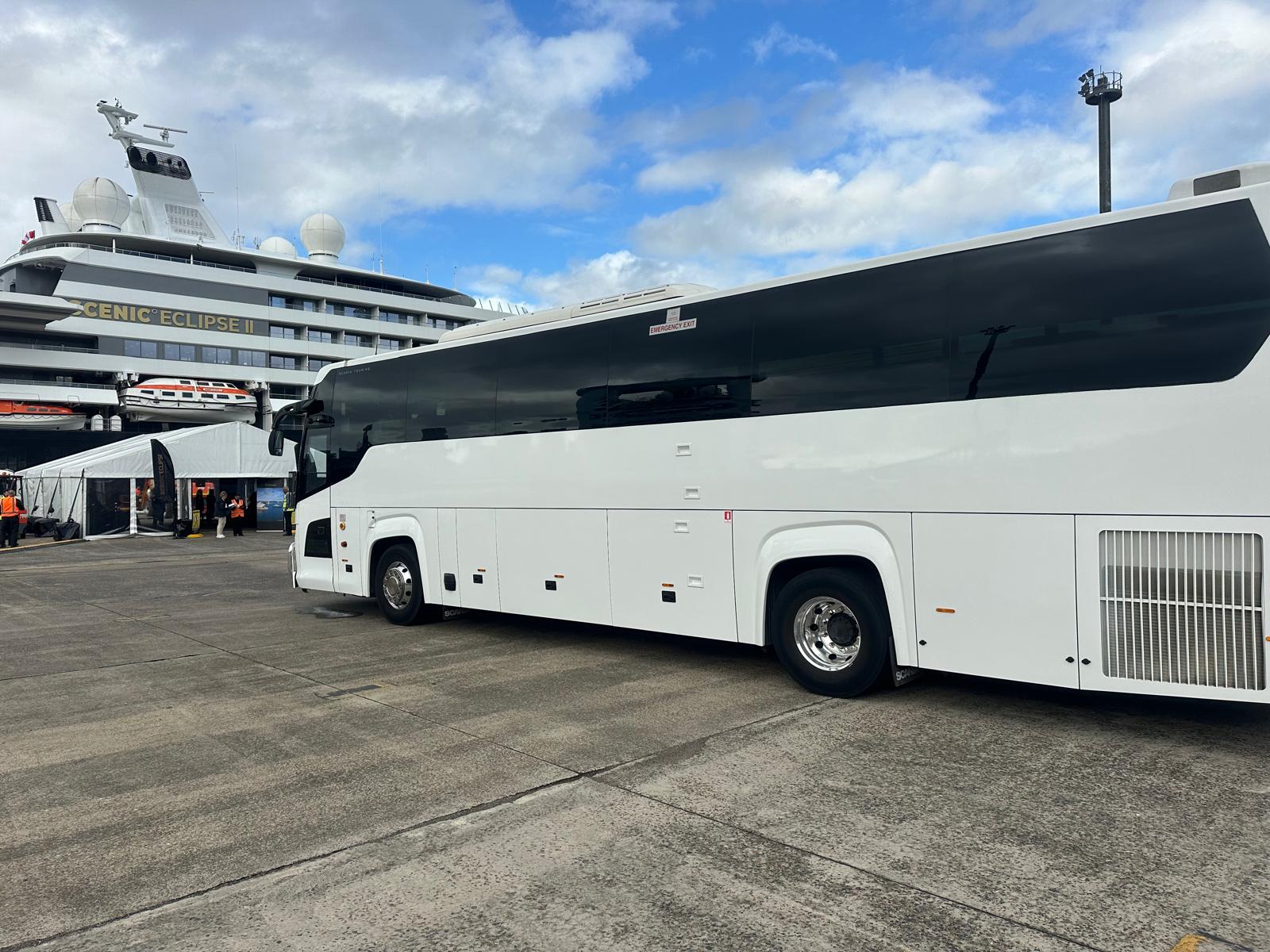
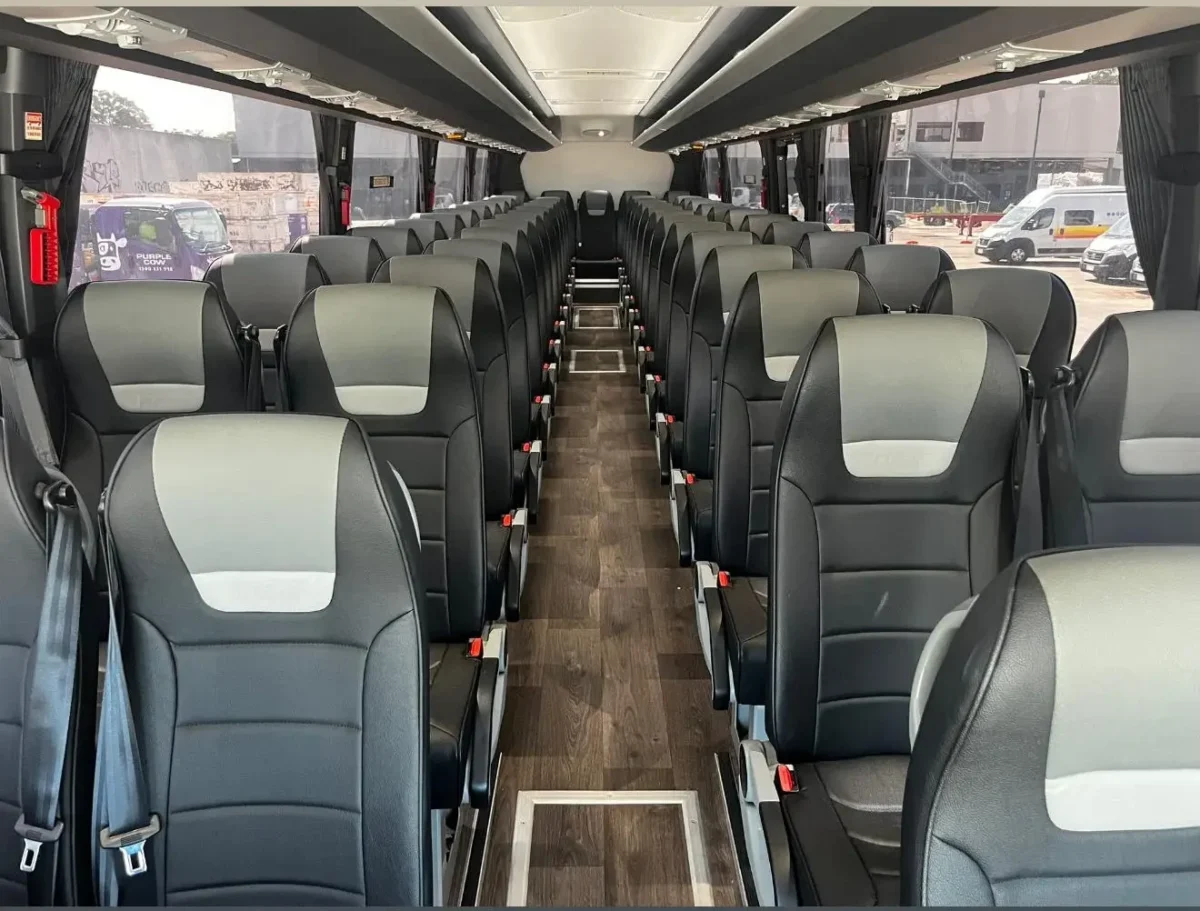
The fleet ladder runs from a 7-seat people mover to a 57-seat touring coach, and the hourly rate moves with it. Two operators looking at “about 25 people” can land on different vehicles in good faith.
A 27-seat midi-coach at $165 an hour and a 21 to 24-seat executive minibus at $145 an hour are both defensible answers for a group of 22. They are not the same answer once everyone brings a suitcase, because the underfloor bay becomes the constraint rather than the seat count. A quote that has assumed day bags and a quote that has assumed check-in luggage will differ, and only one of them will work on the morning.
Worth checking seat counts across the fleet against your actual head count plus what each person is carrying, then asking both operators which vehicle they have assumed and why.
Four: toll class
Sydney toll roads classify by dimension: length and height, not weight and not axle count. Class A is 12.5 metres or less in length and 2.8 metres or less in height. Class B is anything exceeding either limit.
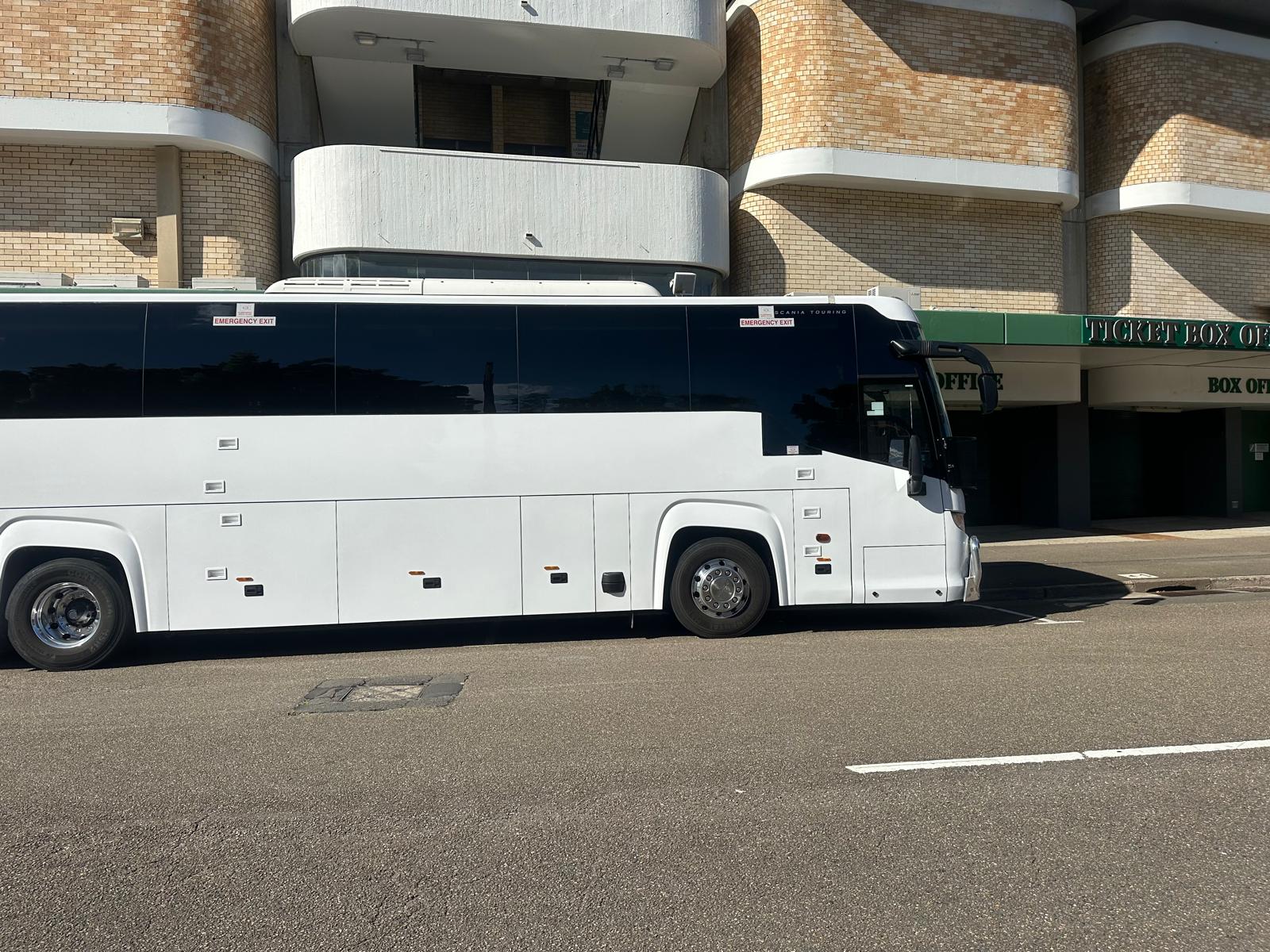
A full-size coach is over 2.8 metres high, so it is Class B on every class-based Sydney toll road regardless of length. A minibus is often Class A. On a CBD to Homebush run using the WestConnex roads, Class B sits at three times the Class A rate. On the Eastern Distributor or the Cross City Tunnel the multiple is two times. On the Lane Cove Tunnel it is roughly three and a half times. Across the Sydney Harbour Bridge and Tunnel there is no heavy class at all and every vehicle pays the same fixed toll, priced by time of day.
So two quotes can differ because one has routed a coach through tolls and priced them, one has assumed a minibus, and one has said nothing at all. Toll prices are indexed and change, so what you want in writing is the treatment, not a cent figure: included, estimated, or billed at cost and itemised.
Five: dead running from the depot
Charter vehicles do not live at your pick-up point. Every job carries empty kilometres from the depot to you and back again at the end, and someone pays for them.
Our depot is at 74 Edinburgh Rd, Marrickville, and we cover six Greater Sydney regions with no travel surcharge applied inside Greater Sydney. An operator based well outside the metropolitan area, or a broker sourcing a vehicle from wherever one happens to be free, carries a longer empty leg on the same job. Sometimes that surfaces as a travel or repositioning charge. Sometimes it is buried in the hourly figure. Occasionally it surfaces after the trip.
Ask the direct version: which depot is the vehicle coming from, and is there any travel or repositioning charge to reach our pick-up address? You can check the Greater Sydney regions we cover against your own pick-up suburb before you ask.
Six: how late you left it
Two to four weeks is normal notice for most Sydney charter work. Four to eight weeks is what peak dates need: December, race days, school excursion season and long weekends.
Inside those windows, availability rather than greed does the pricing. When the vehicle that suits your group is already committed, what remains is a larger vehicle, a smaller one plus a second run, or a different operator’s spare capacity. All three cost more than the right vehicle booked in good time. A quote that arrives late is often quoting a compromise, and the compromise is the reason it is higher.
Is the cheapest quote actually the cheapest?
Sometimes, genuinely. An operator whose depot is close to your pick-up, whose diary has a gap that day, and who has the right-sized vehicle sitting idle can be both cheaper and better. Cheap is not automatically suspect.
What makes a low number risky is silence. Run this test on the cheaper quote:
| Test | A lean quote answers | An incomplete quote |
|---|---|---|
| Which vehicle, and how many seats? | Names the type and seat count | “A bus” or “a coach”, or nothing |
| How many hours are charged? | States hours and the minimum applied | Gives a total with no hours behind it |
| GST in or out? | Says so in words | Silent |
| Tolls and parking? | Included, estimated, or at cost | “Extra” with no detail |
| What if we run over? | Publishes the waiting-time trigger and rate | Silent, or “we’ll sort it out” |
| Who is the legal entity, and what is the accreditation number? | Answers both immediately | Deflects, or supplies only a trading name |
A quote that passes all six and is still the lowest number is the one to take. A quote that is lowest because four of the six are missing has not been priced yet. It has been estimated, and the estimate will be revisited.
Frequently asked questions
Why would one operator quote four hours and another six for the same trip?
Because one has priced only the driving legs and the other has priced the vehicle across the whole window, including the wait between drop-off and pick-up. Both can be legitimate. Only one is comparable to the other once you know which is which.
Does a bigger coach always cost more per hour?
Broadly yes, the published hourly rate rises with vehicle size, but the useful comparison is cost per seat rather than cost per hour. One 53-seat coach frequently costs less than two 27-seat midi-coaches doing the same job twice.
Are tolls really that different for a coach?
They are charged on a different class. A full-size coach exceeds 2.8 metres in height, which puts it in Class B on every class-based Sydney toll road. The multiple varies by road, from two times up to roughly three and a half times, and the Harbour crossings apply no heavy class at all.
Should I tell an operator what my other quote was?
You do not need to. A better use of the conversation is asking the six questions in the table above, because they expose whether the quotes describe the same job. Price follows from that.
Does the pick-up suburb change the price?
It can, through empty kilometres between the depot and you. We do not apply a travel surcharge inside Greater Sydney, but an operator based outside the metropolitan area has a longer empty leg on the same job, and that has to be paid for somewhere.
Next step
If you have a quote in front of you and cannot tell whether it is lean or incomplete, get a second one written properly and compare the two line by line. Send the pick-up suburb, the date and the group size, and a fixed written quote with the vehicle named comes back within two business hours. Call 02 9469 6600 during office hours, Monday to Friday 7am to 6pm and Saturday 8am to 2pm.
Sources
- Linkt, Vehicle classes on Sydney toll roads, https://www.linkt.com.au/help/travelling-toll-roads/vehicle-class/sydney. Accessed 7 September 2026.
- Transport for NSW, Vehicle classes, https://www.myetoll.transport.nsw.gov.au/help-and-faqs/vehicle-classes. Accessed 7 September 2026.