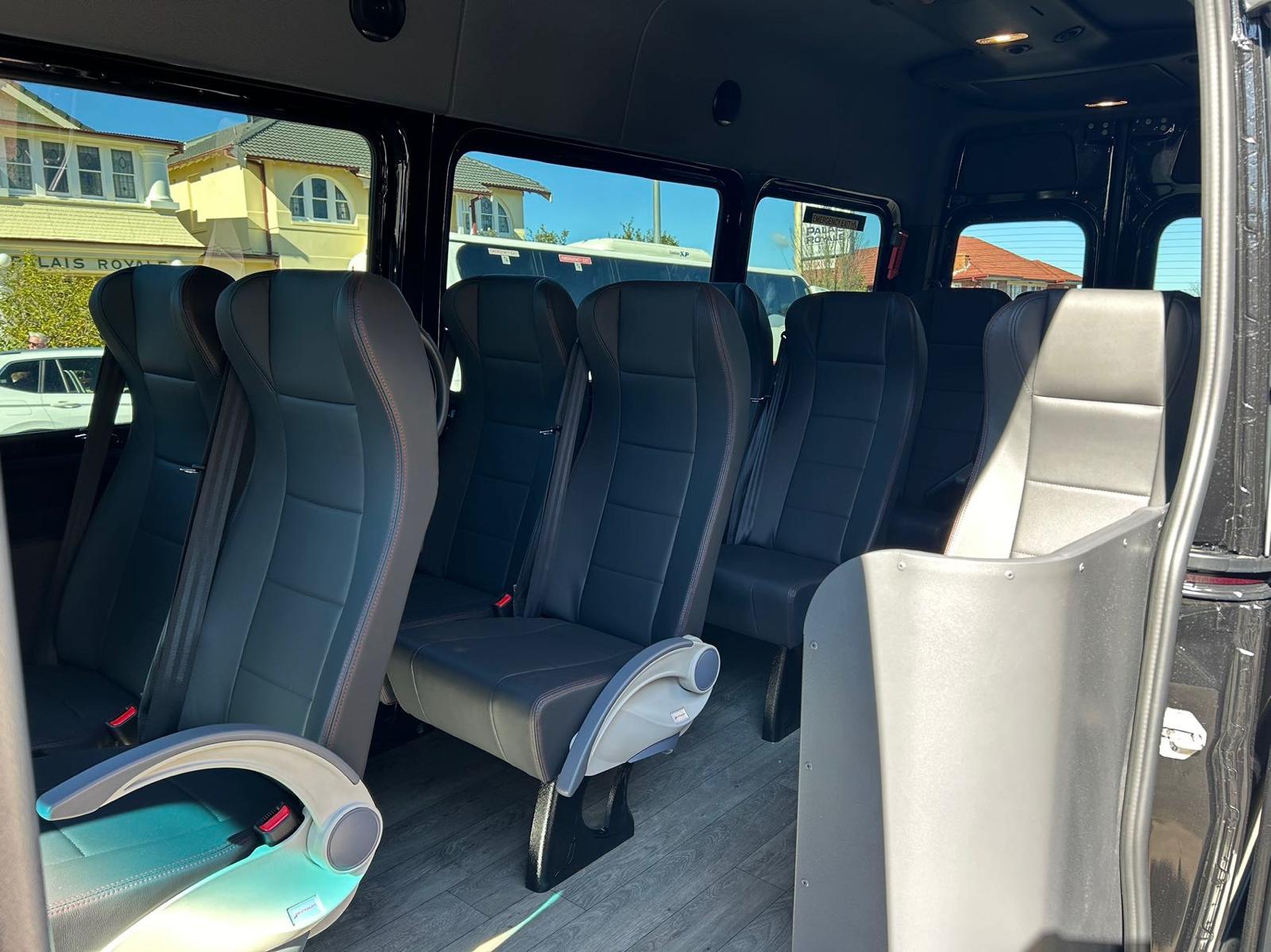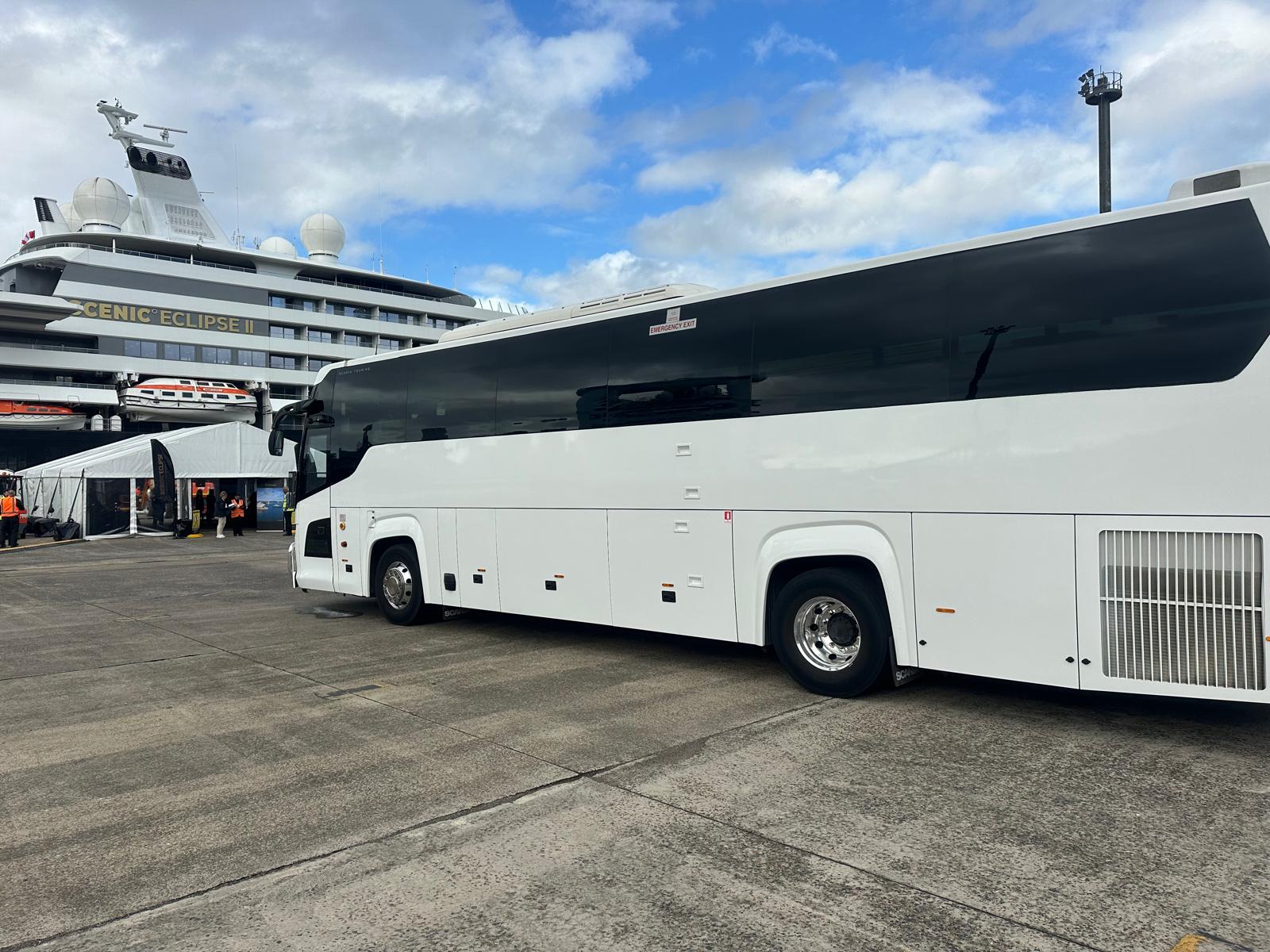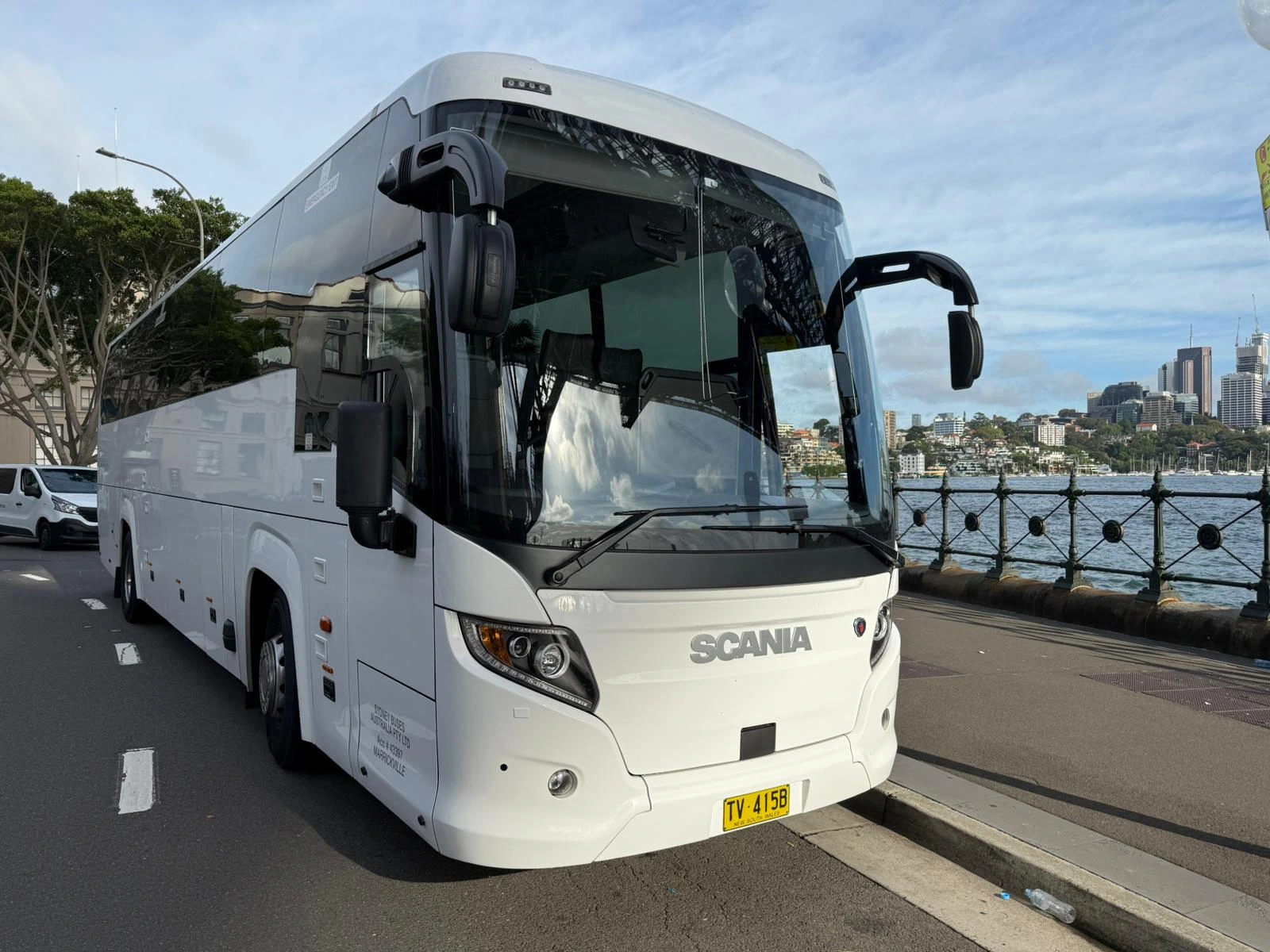
Bus operator accreditation in NSW is issued by Transport for NSW under the Passenger Transport Act 1990. There is no public register you can search, so the only reliable verification is to ask the company for its accreditation number and a copy of its Certificate of Accreditation, then check the legal entity named on it matches the entity on your quote. Services using vehicles seating 13 or more sit with Transport for NSW. Twelve seats or fewer sits with the Point to Point Transport Commission.
Who issues accreditation, and under what law
Transport for NSW administers bus operator accreditation. The standards sit in the Passenger Transport (General) Regulation 2017, made under the Passenger Transport Act 1990.
The Act matters because a lot of secondary content online cites a 2014 Act. Transport for NSW’s own accreditation page cites the 1990 Act, and that is the one to quote in a tender document or a procurement file.
To be accredited, an operator is assessed on four things: good repute, financial viability, passenger and public safety, and depot and maintenance capacity. That last one is worth pausing on, because it means accreditation is partly a statement about a physical place where vehicles are kept and maintained, not only about paperwork.
Operating a public passenger service without the accreditation you need carries a maximum penalty of $110,000.
RPS and LDTC: two kinds of accreditation
Accreditation in NSW is service-specific rather than generic. An operator is accredited for the kind of service it runs.
Regular Passenger Service (RPS) covers scheduled route services running to a timetable that members of the public use individually.
Long Distance, Tourist or Charter (LDTC) covers the work most people mean when they hire a bus: a vehicle and a driver engaged by one group for one job, plus tour and long distance work.
A charter operator holds LDTC accreditation. If you are hiring a coach for a school excursion, a wedding shuttle or a corporate offsite, LDTC is the category that applies to your job. Asking which category a company holds is a reasonable procurement question, and a company that is accredited will know the answer immediately.
Sydney Buses publishes the accreditation and depot details it holds about itself, including a NSW accreditation number of 43397 and a depot and office at 74 Edinburgh Rd, Marrickville NSW 2204.
The thirteen-seat boundary decides which regulator you are dealing with
Two different thresholds get confused here, so it is worth separating them.
Under the Passenger Transport Act 1990, a “bus” is a vehicle seating more than 8 adults. That is the definitional line in the Act.
The operative commercial boundary, though, is 13 seats. A service using vehicles seating 13 or more falls to Transport for NSW bus operator accreditation. A service using vehicles seating 12 or fewer falls to the Point to Point Transport Commission instead, which is the regulator for taxis and hire vehicles in NSW.
This matters practically. If a company quoting you for a small group holds a point to point authorisation rather than bus operator accreditation, that is not necessarily wrong, but it is a different regulatory regime with different obligations. Establish which one applies to the vehicle actually being sent, not to the company’s largest vehicle.
There is no public register, so here is what to do instead
This is the single most common piece of bad advice in this space. Guidance that tells you to “look the operator up on the register” is describing something NSW does not publish. There is no searchable public list of accredited bus operators.
The verification route is a document request. It takes one email.
- Ask for the accreditation number and the Certificate of Accreditation. Put it in writing so the answer is in writing. A company that holds accreditation for tender work will usually have the certificate ready to attach.
- Check the legal entity name. The name on the certificate should match the name on your quote, your purchase order and your invoice. A mismatch here is the single most useful thing this process finds, because it usually means the company quoting you is not the company driving you.
- Check the accreditation category against your job. Charter work should sit under Long Distance, Tourist or Charter accreditation.
- Check the vehicle seat count against the boundary. Thirteen or more seats means Transport for NSW accreditation is the right instrument. Twelve or fewer means the Point to Point Transport Commission.
- Ask separately about the driver. Operator accreditation says nothing about who is behind the wheel. A driver of a public passenger bus or coach seating 13 or more needs a Bus Driver Authority, issued by Transport for NSW through Service NSW. That is a different document with a different issuer.
- Ask separately about insurance. A certificate of currency comes from an insurer or its broker, not from Transport for NSW. Accreditation is not proof of insurance and insurance is not proof of accreditation.
If you want to start that process now, you can request the certificate directly.
What accreditation does not tell you
Accreditation is a licence to operate. It is not a quality rating, a safety score or a service guarantee, and it says nothing about the specific vehicle allocated to your booking or the specific driver rostered to it.
Nor does it tell you whether the job will be subcontracted. An accredited operator can still place your work with a third party. The certificate proves the entity is accredited; it does not prove that entity will be the one on the road. That is a separate question, and the answer belongs in writing before you pay.
A quick reference for a procurement file
| What you are checking | Who issues it | How to verify it | Common error |
|---|---|---|---|
| Operator accreditation | Transport for NSW | Request the accreditation number and Certificate of Accreditation | Being told to “check the register”. There is not one |
| Correct accreditation category | Transport for NSW | Ask whether the company holds Long Distance, Tourist or Charter accreditation | Assuming all bus accreditation is the same |
| Which regulator applies | Transport for NSW or the Point to Point Transport Commission | Confirm the seat count of the vehicle being sent, using 13 as the boundary | Checking the company’s biggest vehicle rather than yours |
| Driver credentials | Transport for NSW via Service NSW | Ask for confirmation the driver holds a Bus Driver Authority | Assuming operator accreditation covers the driver |
| Insurance | The insurer or its broker | Request a certificate of currency naming the entity on your quote | Accepting “fully insured” as an answer |
Frequently asked questions
Can I check a NSW bus operator’s accreditation online?
No. NSW does not publish a public register of accredited bus operators. Request the accreditation number and Certificate of Accreditation from the company and check the entity name against your quote.
Which Act governs bus operator accreditation in NSW?
The Passenger Transport Act 1990, with standards in the Passenger Transport (General) Regulation 2017. Content citing a 2014 Act for bus operator accreditation is not matching Transport for NSW’s own published position.
What is LDTC accreditation?
Long Distance, Tourist or Charter accreditation. It is the service category that covers charter, tour and long distance bus work, as distinct from Regular Passenger Service accreditation for scheduled route services.
My group needs a 12-seat minibus. Does the company still need bus operator accreditation?
Not necessarily. At 12 seats or fewer the service falls to the Point to Point Transport Commission rather than Transport for NSW bus operator accreditation. Ask which authorisation the company holds for the specific vehicle being sent.
Is accreditation the same as the driver’s licence and authority?
No. Operator accreditation is issued to the business. A Bus Driver Authority is issued to the individual driver by Transport for NSW through Service NSW and is required to drive a public passenger bus or coach seating 13 or more. Ask for both.
Next step
Before you pay a deposit on any charter, ask for two documents in one email: the Certificate of Accreditation and a certificate of currency in the name of the entity on your quote. We will send both. Call 02 9469 6600 or send your pick-up suburb, date and group size and you will have a written quote back within two business hours.
Sources
- NSW Government (Transport for NSW), “Applying for bus operator accreditation”, https://www.nsw.gov.au/departments-and-agencies/transport-for-nsw/bus-operators-nsw/applying-for-bus-operator-accreditation. Accessed 7 September 2026.
- NSW Legislation, “Passenger Transport Act 1990 (NSW)”, https://legislation.nsw.gov.au/view/whole/html/inforce/current/act-1990-039. Accessed 7 September 2026.
- Service NSW, “Apply for a bus driver authority”, https://www.service.nsw.gov.au/transaction/apply-for-a-bus-driver-authority. Accessed 7 September 2026.