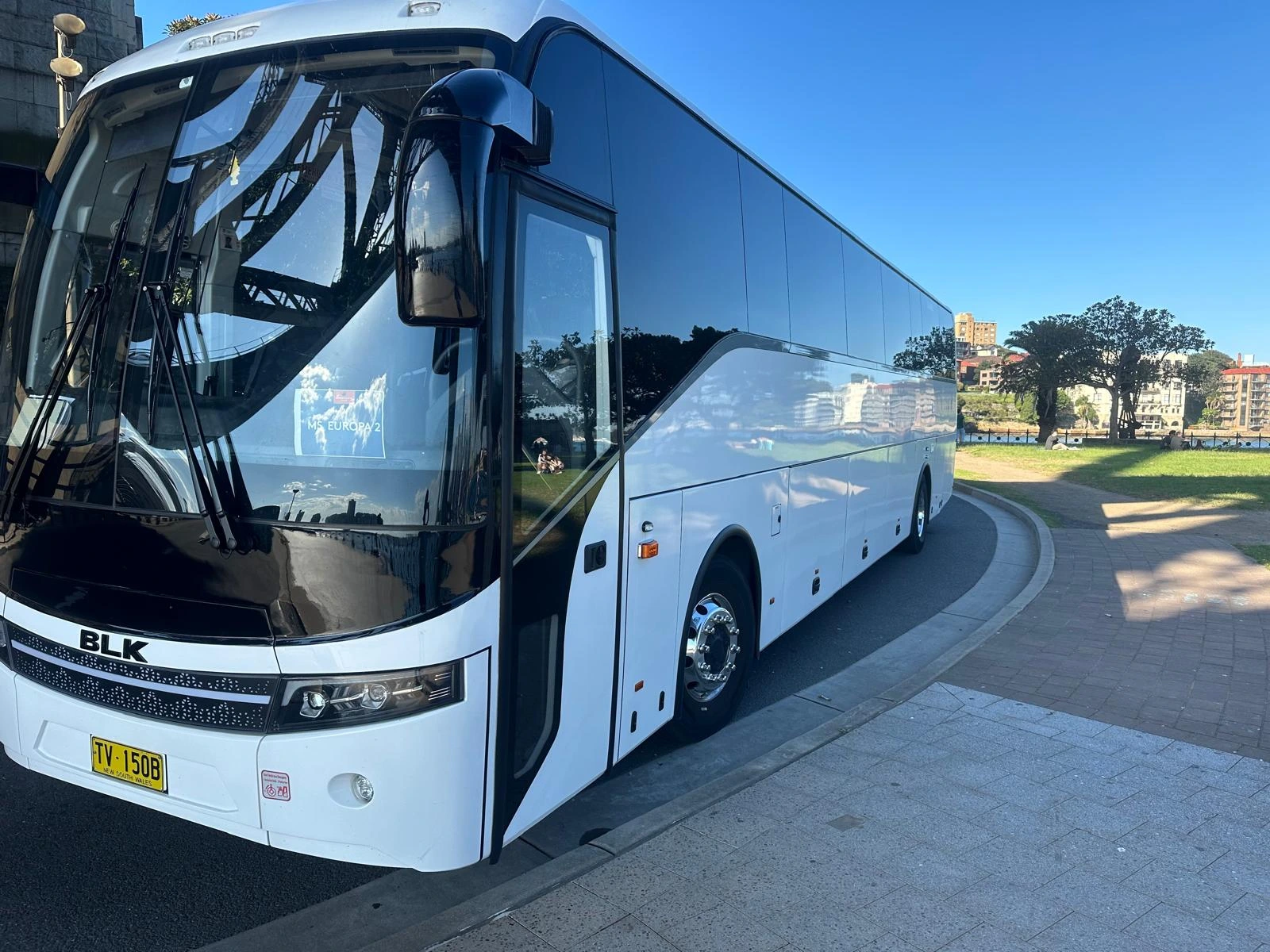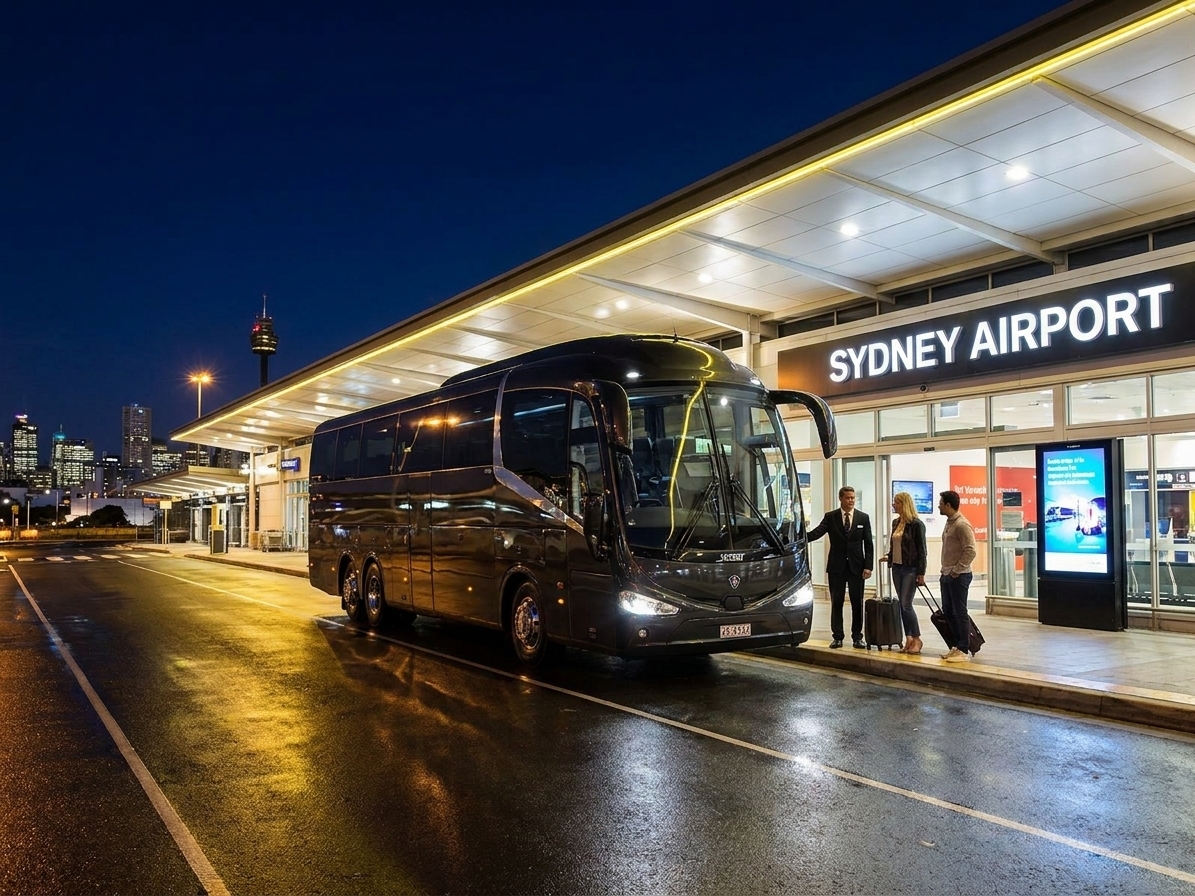
A Sydney club does not buy one bus trip. It buys a pattern: the same age groups, most Saturdays, to grounds spread across Greater Sydney, with a draw that changes and weekends that wash out. Planning at season level means settling the vehicle and the standing timings once, then confirming each fixture against the draw. Sydney Buses and Coaches returns a fixed written quote within two business hours and covers six Greater Sydney regions with no travel surcharge inside Greater Sydney.
Why a season booking is a different purchase from a single charter
A one-off charter is a decision. A season is a system.
The difference shows up in what goes wrong. On a single trip the risk is that the vehicle is the wrong size or the pick-up point does not work. Across a season those problems are solved once in February and never thought about again. What breaks a season instead is the admin: a draw that moves, a team manager who leaves in round six, a washout on the Friday night, and a treasurer who finds out in August that transport was never in the budget.
So the useful planning unit is the season, not the fixture. That means agreeing the recurring parts up front and building a light, repeatable confirmation step for the parts that change. It is the same reasoning behind booking sports team bus hire in Sydney as a schedule rather than a series of unrelated enquiries.
The five decisions to settle before the draw lands
These five decisions are stable across a whole season. Settle them in the pre-season and they stop being weekly questions.
1. The travelling party, not the team list. A squad of 18 is not 18 seats. Count players, coaching staff, a manager, a first aid officer and any parents who travel with the group rather than driving themselves. That number decides the vehicle row, and the vehicle row decides the rate.
2. The vehicle, and whether it can reach the ground. Seat count is only half of it. A full-size coach is a large vehicle looking for a legal place to stop at a suburban ground, and plenty of Sydney grounds cannot take one. Deciding between a 24-seat executive minibus and a 53-seat coach is as much an access decision as a capacity decision.
3. The loading point and the assemble time. Pick one point, publish it once, and make the assemble time earlier than the departure time. A season where the meeting point changes every week is a season of missed pick-ups.
4. Gear. Balls, bibs, medical kit and a water urn fit anywhere. Rowing gear, cricket bags, goalkeeper kit and kayaks do not. Underfloor bay capacity, not seat count, becomes the binding constraint the moment the equipment is bulky.
5. Who is authorised to change the booking. One named person, with a mobile number, for the whole season. Not the coach one week and a parent the next.
A season booking framework
This is the sequence that turns a draw into a set of confirmed bookings. It runs on the four published booking steps: send the trip, receive a fixed written quote with the vehicle named within two business hours, confirm with the deposit set out in the quote, then receive the driver name, mobile and vehicle registration 24 hours before travel.
- Pre-season, before the draw is published. Send the travelling party size, the pick-up suburb, the likely day and rough window, and the number of away fixtures you expect. Ask for the vehicle to be named and for the hourly rate and minimum hire that will apply. You now have a per-fixture cost to take to the committee.
- Draw release. Map every away fixture to a ground and a suburb. Sort them into three buckets: local, cross-Sydney, and regional or interstate. The third bucket needs its own planning and a longer lead time.
- Fixture confirmation, rolling. Confirm each fixture at least two to four weeks out, and four to eight weeks out if it falls in a peak period. Peak periods include December, race days, school excursion season and long weekends, and they are the weekends where a late request is most likely to come back with no vehicle.
- The week of. Reconfirm the assemble time, the loading point and the head count. Send the driver details to the team group when they arrive 24 hours before travel.
- Match day. One nominated person on the phone, one loading point, one head count on the way out and one on the way back.
- Post-round. Log what actually happened: real assemble time, real departure, real return. Six rounds of that data is worth more than any estimate when you plan next season.
A fixture confirmation template
Send the same block every time. It takes a minute and removes almost all of the back and forth.
- Club and team, for example Under 14s
- Fixture date and round number
- Pick-up address and assemble time
- Departure time
- Ground name and suburb
- Expected finish time and return departure
- Travelling party count
- Gear beyond normal kit bags, yes or no
- Authorised contact name and mobile
When the draw changes, and when the weekend washes out
Two things will happen to every Sydney club season, and both are worth agreeing in writing before round one.
The draw moves. Fixtures get rescheduled, venues change late, and finals draws are published with very little notice. The practical protection is a single authorised contact and a habit of confirming changes in writing rather than by phone. Verbal changes made on a Thursday night are how two teams end up at the wrong ground.
The weekend washes out. Sydney loses club rounds to rain most winters. Cancellation terms are set out in the written quote, so the season planning job is to read them once in the pre-season and know the answer before you need it. Ask specifically what the cut-off is, who can cancel, and whether a cancelled fixture can be moved to the replay date rather than simply cancelled. Get that in writing at the start of the season and no one has to work it out at 7am on a Saturday.
Finals are a separate booking. Finals venues are often not on the regular draw, dates land late, and the same weekend is busy for every club in the association. Treat finals as their own planning exercise rather than an extension of the home and away season.
Sydney geography: what actually eats the morning
Distance is not the problem in Sydney. The problem is what happens between the pick-up and the ground.
Saturday mornings escape school zones. Midweek fixtures do not. School zones are 40 km/h and most operate from 8:00 to 9:30am and 2:30 to 4:00pm, but only on notified school days, which excludes weekends, public holidays and public school holidays. They do operate on school development days. So a Saturday 8am departure is unaffected, while a Wednesday afternoon fixture with a 3pm pick-up outside a school sits inside the afternoon zone. The sign always governs, because non-standard zone times exist.
A full-size coach is Class B on the toll network. Sydney toll roads classify by dimensions, not weight or axles. Class A is 12.5 m or less in length and 2.8 m or less in height, and any vehicle exceeding either limit is Class B. A full-size coach exceeds 2.8 m in height, so it is Class B regardless of length. The Class B multiplier is not uniform across the network either, and the Sydney Harbour Bridge and Tunnel have no heavy class at all. A club crossing the Westlink M7 every second Saturday is in a different toll position from a club crossing the Harbour Bridge. Tolls and parking are confirmed in advance and priced separately from the hourly rate, so they belong in the season budget rather than as a surprise.
Coverage across Greater Sydney. Six Greater Sydney regions are covered with no travel surcharge inside Greater Sydney, which means a cross-city away fixture is not automatically a more expensive booking than a local one. The hours the trip consumes are what move the price.
Regional fixtures are a different animal. A trip to the Southern Highlands is around 120 km and about 1.5 hours each way. Canberra is 285 km and 3 to 3.5 hours. Port Stephens is 205 km and 2.5 to 3 hours. Once a fixture crosses into that territory, driver hours start shaping the day rather than the fixture time.
How a season is costed
Charter is quoted by vehicle and hours, so a season budget is a multiplication rather than a single number. The published rates below are GST inclusive, and seat counts exclude the driver.
| Vehicle | Seats | Hourly rate | Minimum hire |
|---|---|---|---|
| Toyota Commuter | 13 | $110 | 3 hours |
| Mercedes Sprinter | 11 to 14 | $145 | 3 hours |
| Executive minibus | 21 to 24 | $145 | 3 hours |
| Executive midi-coach | 27 | $165 | 4 hours |
| Luxury coach | 48 | $185 | 4 hours |
| Executive coach | 53 | $195 | 4 hours |
Every quote includes the professional driver, fuel, vehicle insurance and GST. Tolls and parking, driver accommodation on multi-day trips, public holiday and after-hours loading, and waiting time beyond the booked window are confirmed in advance and priced separately.
Two structural points matter for a season. First, minimum hire is 3 hours for minibuses and people movers and 4 hours for midi-coaches and full-size coaches, so a short local fixture is still charged at the minimum. Second, a point-to-point run can instead be quoted as a single fixed transfer fare, and a fare quoted that way is not charged at a minimum. For a club with a lot of short local away games, asking for both structures priced is the single most useful question you can ask, and it sits at the heart of how charter pricing is built.
Frequently asked questions
Can a club book its whole season at once?
The published process is trip based: send the trip, receive a fixed written quote with the vehicle named within two business hours, confirm with the deposit set out in the quote. Ask directly whether your full draw can be quoted as one schedule rather than fixture by fixture, and get the answer before you build the budget.
What happens if a fixture is washed out?
Cancellation terms are set out in the written quote. Read them in the pre-season rather than on the morning, and confirm the cut-off time, who is authorised to cancel, and whether a washed-out fixture can be transferred to the replay date.
How far ahead should a club confirm each fixture?
Two to four weeks for most jobs, and four to eight weeks for peak periods, which include December, race days, school excursion season and long weekends. Finals weekends and long weekends are where late requests fail.
Does a club pay more to travel across Sydney?
There is no travel surcharge inside Greater Sydney across the six regions covered. What changes the price is the number of hours the fixture consumes and any tolls or parking, which are confirmed in advance and priced separately.
Who gets the driver’s details on match day?
The driver name, mobile and vehicle registration are sent 24 hours before travel. Forward them into the team group chat as a matter of routine so 20 people are not calling the club secretary at 7.30am.
Does the same vehicle come every week?
Ask. A recurring club booking is a reasonable place to request consistency, but it is an operations question rather than a published policy, so get the answer in writing rather than assuming it.
Next step
Send the travelling party size, the pick-up suburb and the away fixtures on your draw. You will get a fixed written quote back within two business hours with the vehicle named, and you can ask for both the hourly structure and a fixed transfer fare on your typical local fixture so the committee sees the real comparison.
Call 02 9469 6600, Monday to Friday 7am to 6pm or Saturday 8am to 2pm. Book most fixtures two to four weeks out, and four to eight weeks out for December, long weekends and finals.
Sources
- Transport for NSW, School zones, https://www.transport.nsw.gov.au/roadsafety/community/schools/school-zones. Accessed 7 September 2026.
- NSW Department of Education, School calendar 2026, https://education.nsw.gov.au/schooling/calendars/2026. Accessed 7 September 2026.
- NSW Department of Education, School calendar 2027, https://education.nsw.gov.au/schooling/calendars/2027. Accessed 7 September 2026.
- Linkt, Vehicle classes on Sydney toll roads, https://www.linkt.com.au/help/travelling-toll-roads/vehicle-class/sydney. Accessed 7 September 2026.