A broker sells you a trip and then buys it from somebody else. An operator owns the vehicle, employs the driver and schedules the work in-house. The difference rarely shows up in the quote. It shows up when something needs fixing: a late bus, a substituted vehicle, an incident a school has to document. Nine questions separate the two before you pay a deposit, and the sharpest of them are about accreditation numbers, depot addresses and who picks up the phone at 6am.
The two business models, described plainly
An operator holds the assets and the obligations. It is accredited by Transport for NSW to run the service, it maintains the vehicles, it employs or engages the drivers, and it builds the roster. If your coach is late, the person who can move another vehicle is inside the same company.
A broker holds the relationship. It takes your enquiry, prices the job, and places it with an operator who does the driving. Some brokers are extremely good at this. The model is legitimate and it is not, on its own, a reason to walk away.
The problem is not brokerage. The problem is not knowing. If you believed you were buying from an operator, your escalation path, your insurance certificate and your incident record all point at a company that was never on the road that day. For a school office or a council procurement file, that gap is the whole issue.
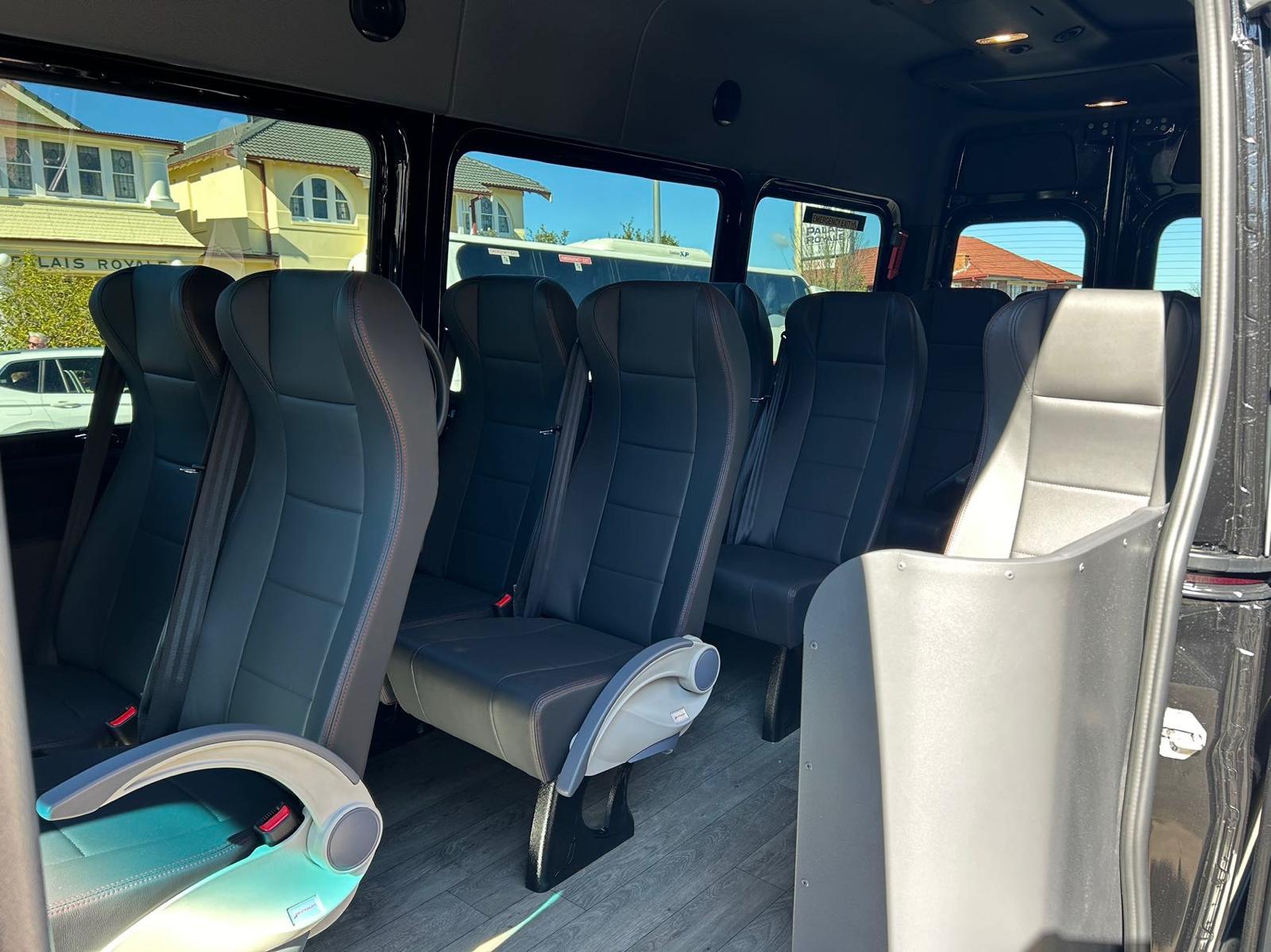
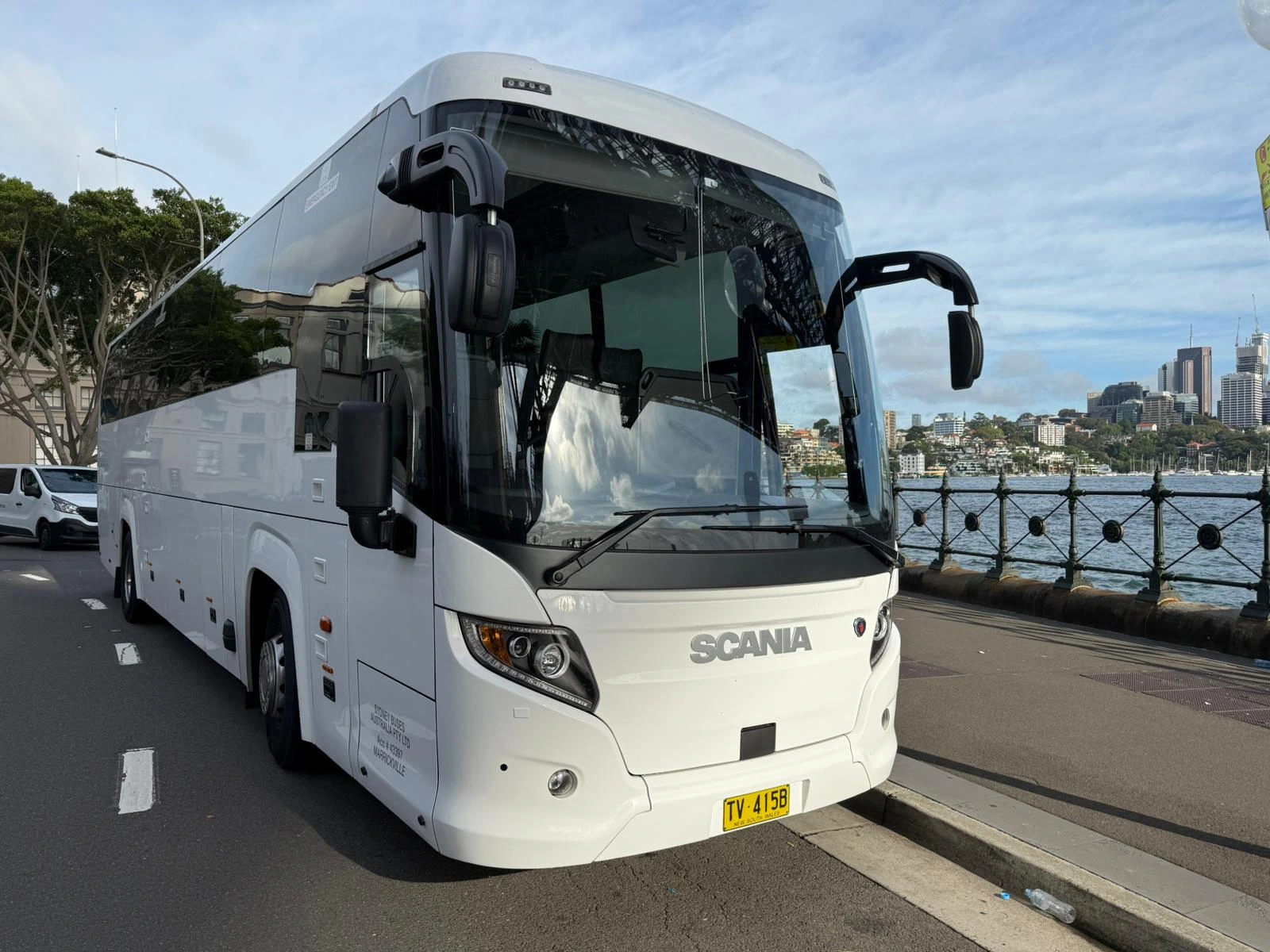
Sydney Buses and Coaches publishes its own position on this: it describes itself as a Sydney charter operator that owns its vehicles and employs its drivers, scheduling the work in-house rather than placing it elsewhere. That claim is only worth anything if you can test it, so here is how to test any company that quotes you, including this one.
Why the distinction changes who fixes your problem
Three things behave differently depending on the answer.
Substitution. When an operator substitutes a vehicle, it is choosing from vehicles it owns and can describe. When a job is placed with a third party, the vehicle that arrives is whatever that third party had spare, and the company you contracted with may find out at the same time you do.
Documentation. Schools, councils and corporates collect accreditation and insurance paperwork before travel. If the certificate belongs to the seller and the driving is done by somebody else, the file is not doing the job it was created to do.
Escalation. At 6am on the morning of an excursion, the useful question is not who is sorry. It is who can dispatch. Those are different capabilities and they sit in different companies under the two models.
The nine questions
Ask these by email so the answers are in writing. A company that owns its fleet answers all nine in a couple of minutes, because the answers are facts it already holds.
1. Do you own the vehicle that will turn up, or will this job be placed with another operator? A direct answer names the model. A deflection talks about a “network”, “partners” or “our fleet of over 200 vehicles across Australia” without saying who holds the keys.
2. What is your Transport for NSW bus operator accreditation number, and can I have a copy of the Certificate of Accreditation? A direct answer gives you the number in the reply and attaches or offers the certificate. Sydney Buses publishes its NSW accreditation number as 43397 and makes the certificate available on request for tender and procurement paperwork. A deflection says the company is “fully accredited and insured” and provides no number.
3. What is the street address of the depot this vehicle starts from? A direct answer is an address. Sydney Buses lists a depot and office at 74 Edinburgh Rd, Marrickville NSW 2204. A deflection is a suburb, a PO box, or a registered office in a different state.
4. Who employs the driver? A direct answer names the employing entity and states that it is the same entity on your quote. A deflection describes drivers as “vetted professionals” without saying who engages them.
5. Will the written quote name the specific vehicle type, and does the fleet page show it? A direct answer names a vehicle you can then find on the operator’s own vehicles in the fleet and their published hourly rates. A deflection quotes “a 50-seater” with no make, model or seat configuration.
6. Who do I call at 6am on the day, and who answers? A direct answer gives a number and says who is on the end of it. Sydney Buses publishes 02 9469 6600 alongside its office hours and the direct line. A deflection gives an after-hours voicemail or a general enquiries address.
7. What happens if the vehicle fails on the morning of travel? A direct answer describes the mechanism. Sydney Buses states that if a vehicle fails, a replacement is arranged and the customer is kept informed. A deflection promises that it never happens.
8. What driver credentials apply to this job, and when will I get the details? Any driver of a public passenger bus or coach seating 13 or more needs a Bus Driver Authority, issued by Transport for NSW through Service NSW. If your job is a dedicated school or youth run, ask about Working With Children Checks as well, because that is where the child-related work test genuinely bites. Sydney Buses states that its drivers hold a current Working With Children Check plus a Driver Authority, and that check numbers can be supplied to a school office before the day. Its published process also sends the driver name, mobile and vehicle registration 24 hours before travel. A deflection is “all our drivers are fully licensed”.
9. Can I have a certificate of currency for your insurance, in the name of the entity on my quote? A direct answer supplies it, and the insured entity matches the entity on the quote, the purchase order and the invoice. A deflection supplies a certificate in a different company name and hopes you do not read it.
Four documents worth collecting before you pay a deposit
| Document | Who issues it | What it actually tells you | When to ask |
|---|---|---|---|
| Certificate of Accreditation | Transport for NSW | That this entity is accredited to run a public passenger service in NSW | With the quote, before deposit |
| Certificate of currency | The insurer or its broker | Which entity is insured, and for what period | Before deposit, and again if the travel date moves outside the policy period |
| Written quote naming the vehicle | The operator | What you are actually buying, and what is priced separately | At quote stage |
| Driver name, mobile and vehicle registration | The operator | That a specific vehicle and a specific person have been allocated | 24 hours before travel |
If any of the four arrives in a different company’s name, you have your answer to question one.
Checking an accreditation number and a depot address
Two NSW-specific points matter here, and both are commonly got wrong.
There is no public register of accredited NSW bus operators to search. Advice telling you to “check the register” is describing something that does not exist. The verification route is to ask the company for its Certificate of Accreditation and its accreditation number, and to check that the legal entity named on it is the same entity named on your quote and invoice.
The seat count decides which regulator you are dealing with. A service using vehicles seating 13 or more sits with Transport for NSW under the Passenger Transport Act 1990, assessed against good repute, financial viability, passenger and public safety, and depot and maintenance capacity. Twelve seats or fewer sits with the Point to Point Transport Commission instead. Operating a public passenger service without the accreditation you need carries a maximum penalty of $110,000, which is a reasonable measure of how seriously the state treats it.
A named depot address does something a suburb cannot. If you know a coach starts at Marrickville and your pick-up is an early one in the Eastern Suburbs, you can look at that empty running leg yourself and form your own view about how early the vehicle has to leave. If the yard is never named, you cannot assess it at all, and neither can the person who sold you the trip.
When brokerage is not the problem
Using a broker is not automatically the wrong choice. Some jobs genuinely need more vehicles than a single operator holds, and somebody has to coordinate that. What matters is that you know before you sign, so you can put the right entity on the paperwork and point your escalation at the party that can actually move a bus.
The question is never “are you a broker”. The question is “who owns the vehicle, who employs the driver, and whose name is on the certificate”. Ask it that way and the answer is hard to dress up.
Frequently asked questions
Is there a public register I can search to check a NSW bus operator?
No. NSW does not publish a searchable register of accredited bus operators. Ask the company directly for its accreditation number and its Certificate of Accreditation, and check the entity name matches your quote.
Does an ABN check tell me whether a company owns buses?
It tells you the entity exists and is registered for GST. It says nothing about whether the entity holds vehicles, employs drivers or holds Transport for NSW accreditation. Those are separate questions with separate documents.
What if the company says it uses “partner operators” for busy dates?
That is a useful and honest answer. Follow it with two more questions: will my job be placed with a partner, and if so, whose accreditation and insurance apply on the day. Get both in writing before you pay.
Is a subcontracted bus less safe?
Not inherently. The subcontracted operator carries its own accreditation obligations. The risk is administrative rather than mechanical: your paperwork, your escalation path and your incident record may all name a company that was not present.
How far ahead should I be asking these questions?
Before the deposit, and ideally at quote stage. Sydney Buses publishes lead times of two to four weeks for most jobs and four to eight weeks for peak periods such as December, race days, school excursion season and long weekends, so there is usually room to ask properly.
Next step
If you are comparing quotes right now, send the same nine questions to every company on your list and compare the replies rather than the prices. Ask us for our accreditation number and a certificate of currency and we will send both, along with a written quote that names the vehicle. Call 02 9469 6600 or send the trip details through and you will have a written quote back within two business hours.
Sources
- NSW Government (Transport for NSW), “Applying for bus operator accreditation”, https://www.nsw.gov.au/departments-and-agencies/transport-for-nsw/bus-operators-nsw/applying-for-bus-operator-accreditation. Accessed 7 September 2026.
- NSW Legislation, “Passenger Transport Act 1990 (NSW)”, https://legislation.nsw.gov.au/view/whole/html/inforce/current/act-1990-039. Accessed 7 September 2026.
- Service NSW, “Apply for a bus driver authority”, https://www.service.nsw.gov.au/transaction/apply-for-a-bus-driver-authority. Accessed 7 September 2026.