In the Inner West the thing that stops a coach is rarely the width of the road. It is the kerb. Terrace suburbs were built before off-street parking, so residents park on the street, and the kerb outside a given house is occupied for most of the day and nearly all of the evening. A vehicle that fits the road still needs several unbroken metres of kerb to open a door safely. That is why the workable answer is usually a loading pattern rather than a bigger promise.
The kerb is the constraint, not the road
A coach needs three things at a pick-up, and they fail in a predictable order on a terrace street.
It needs to get in and out without reversing. It needs vertical clearance, which in older suburbs means street trees and awnings rather than signposted barriers. And it needs a continuous stretch of legal, unobstructed kerb long enough to bring a door alongside and let people step down onto a footpath rather than into traffic.
Road width usually passes. Clearance sometimes fails. Kerb availability fails most often, and it fails at exactly the times people want to travel: early on a weekday morning and on a Saturday evening, when every resident car is home.
None of that is guesswork. It is a question about a specific address with a definite answer, and it is settled before the quote is issued rather than at 6am on the day. Send the street address and the head count and our Inner West service area covers the rest without a travel surcharge, because there is no travel surcharge anywhere inside Greater Sydney.
Three loading patterns that work on a terrace street
Almost every constrained Inner West pick-up resolves into one of three patterns. Choosing deliberately is cheaper than discovering the constraint on the morning.
| Pattern | When it applies | What it costs you |
|---|---|---|
| Doorstep loading | The address has usable kerb, no overhead obstruction, and the vehicle can leave without reversing. Most often a people mover, a 13-seat Toyota Commuter or a Mercedes Sprinter. | Nothing extra. This is the default when the vehicle is small enough. |
| Corner meeting point | The street is workable but the kerb is not reliable. The group walks a short distance to a nominated main-road or corner point, agreed in advance and written into the booking. | A few minutes of walking, and the discipline of everyone being at one spot at one time. |
| Feeder to a coach | The group is large enough to need a full-size coach but the address cannot take one. A smaller vehicle collects from the door and transfers to the coach waiting somewhere it can legally stand. | Two vehicles instead of one, so it is the most expensive option and the last one to reach for. |
The middle pattern solves the large majority of Inner West jobs and costs nothing. The mistake organisers make is treating a doorstep pick-up as non-negotiable and then discovering on the day that the vehicle that fits the door does not fit the group.
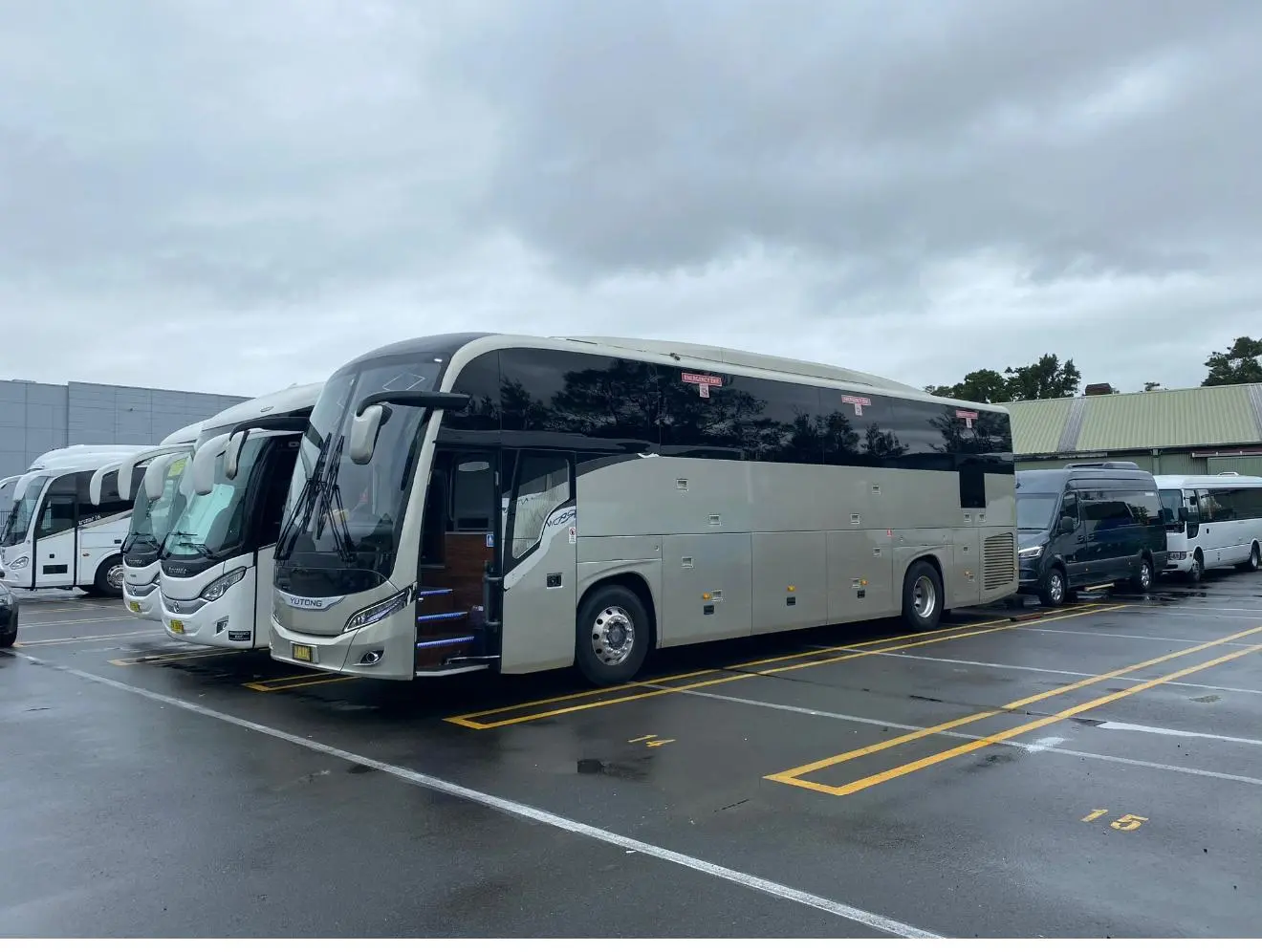
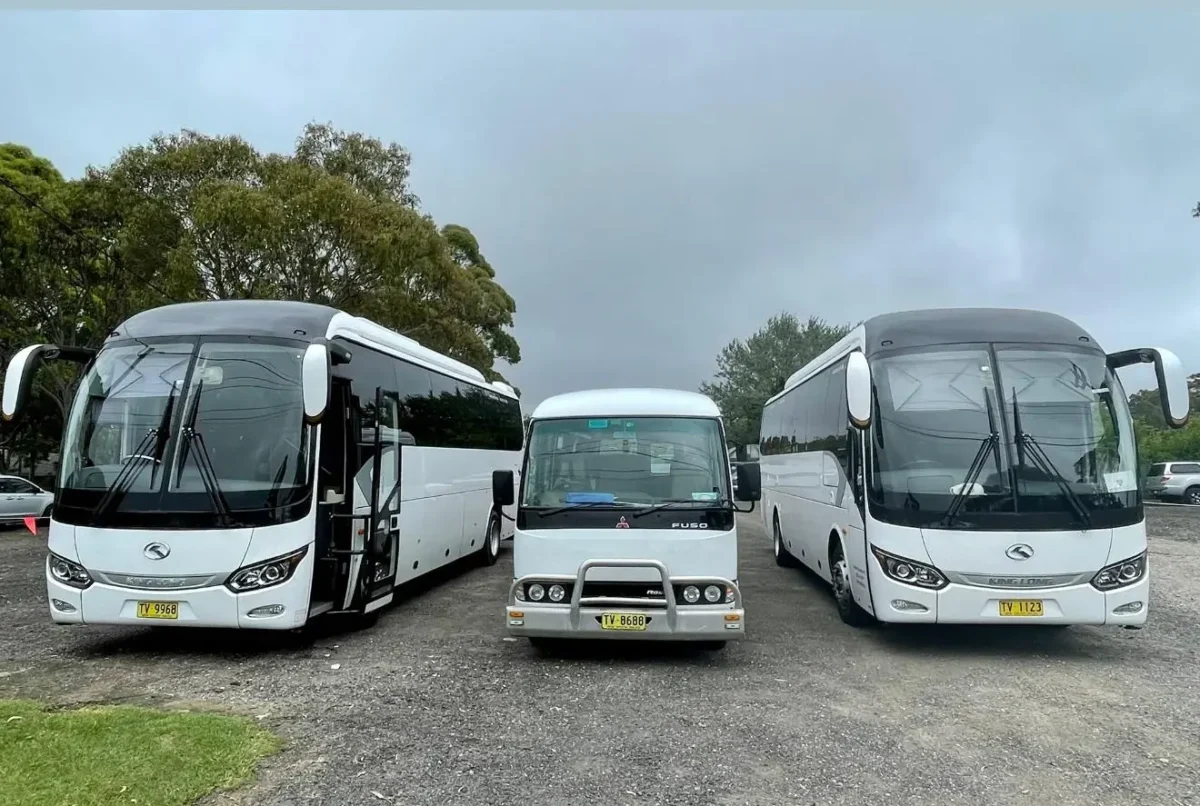
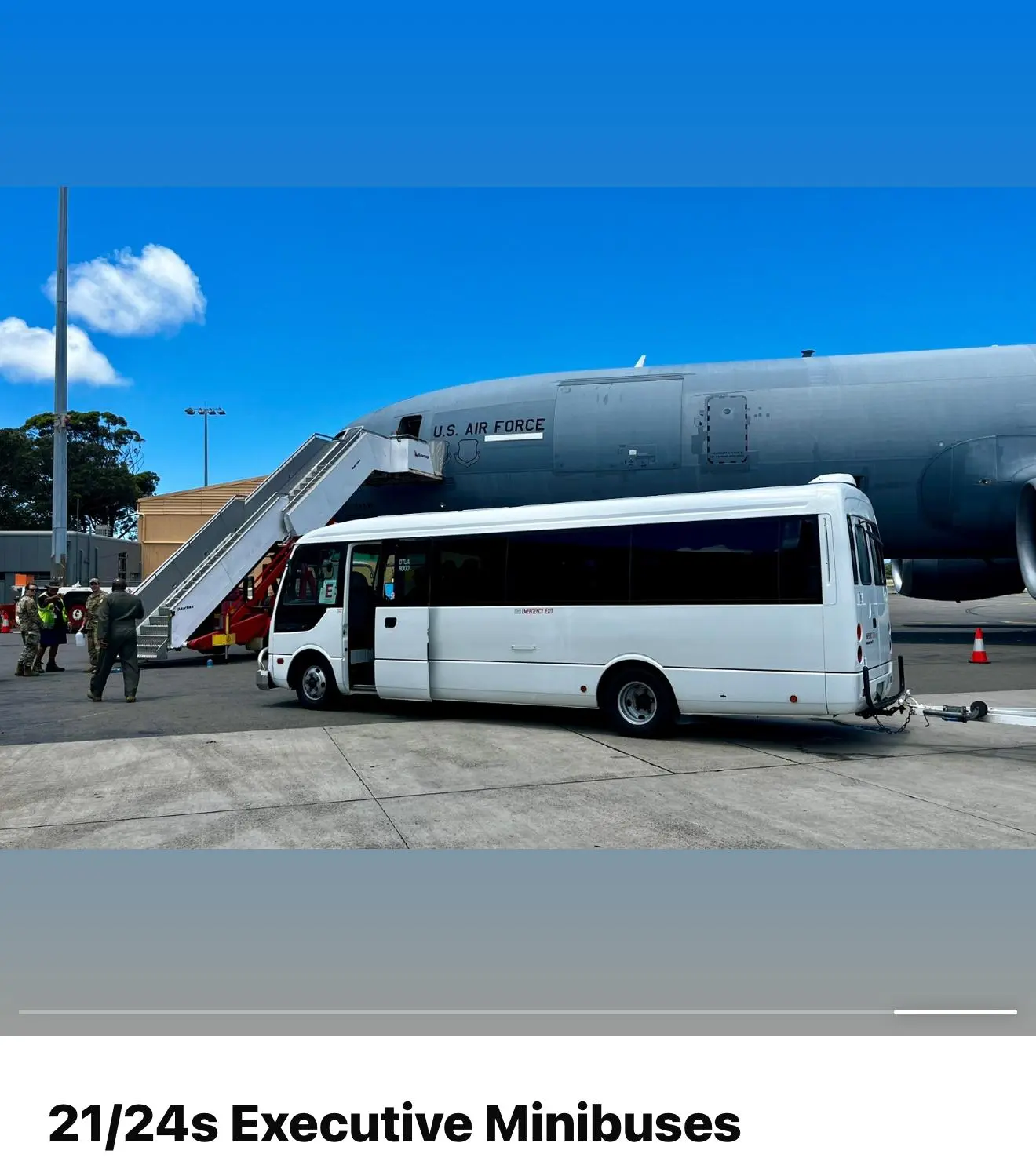
Which of the three you need depends on the vehicle, and the vehicle depends on the head count. The published fleet ladder and hourly rates runs from a 7-seat Mercedes V-Class and a 13-seat Toyota Commuter through a 21 to 24 executive minibus and a 27-seat midi-coach up to full-size coaches at 48 to 57 seats. The smaller half of that ladder is where most Inner West doorstep pick-ups live.
What a Marrickville depot actually changes
Our depot and office is at 74 Edinburgh Rd, Marrickville, inside the Inner West. That matters in three concrete ways and it is worth being precise about which.
It shortens the positioning leg. Every charter starts with the vehicle travelling empty from the depot to the pick-up. For an Inner West job that leg is short, which is most useful on an early start, when the alternative is a vehicle crossing the city before dawn.
It makes a vehicle change practical. If an address turns out to be tighter than expected, being close to base is the difference between a workable substitution and a cancellation.
It does not change the price. There is no travel surcharge inside Greater Sydney, so a local job is not cheaper because it is local. What proximity buys is timing and flexibility, not a discount, and it is worth saying that plainly rather than implying a saving that does not exist.
Running from the Inner West into the city
A large share of Inner West group work is a short hop into the CBD or the inner south, and three published rules shape it.
George Street through the CBD is a pedestrian boulevard, not a coach route. The car-free path runs from Haymarket to Circular Quay, with extension works staged through the surrounding blocks. Plan the drop somewhere else.
A charter coach may stop in a bus zone, but only to set down or pick up. Under the NSW Road Rules a coach counts as a public bus, so it can lawfully stop in a bus zone to load and unload unless the sign on that zone says otherwise. It may not wait there and it may not lay over there.
There is no City of Sydney coach permit to buy. The City’s current on-street parking policy states it will not accommodate long-stay coach lay-over on-street in central Sydney. Transport for NSW operates the King Street Wharf Bus and Coach Layover, entered via Lime Street, open 24 hours a day with a maximum stay of 24 hours, restricted to accredited bus and coach operators and requiring prior registration. That is the formal answer to where a coach waits, and it is worth confirming with your operator whether they are registered for it.
Motorway access from the Inner West is generous for a coach by Sydney standards. The M8 and the M4 to M8 Link are published at 5.1 metres of clearance, comfortably above anything a coach presents. The Cross City Tunnel and the M5 East Cooks River tunnel are both 4.4 metres, which is a real number rather than a formality. On tolls, WestConnex charges Class B at about three times the Class A rate, while the Cross City Tunnel charges about double, and a full-size coach is Class B on both because it is over 2.8 metres high.
Short trips and minimum hire
An Inner West to CBD run is often 20 minutes each way with three hours of function in the middle, and that shape is where pricing structure matters more than distance.
Minimum hire is 3 hours for minibuses and people movers and 4 hours for midi-coaches and full-size coaches. A short point-to-point run can instead be quoted as a single fixed transfer fare, and a fare quoted that way is not charged at a minimum. For a one-way wedding or function transfer within the Inner West, that is usually the cheaper structure, and it is worth asking for both so you can compare. You can read how minimum hire hours and fixed transfer fares are priced before you enquire.
Frequently asked questions
Can a 53-seat coach get down an Inner West terrace street?
Sometimes, and it depends on the address rather than the suburb. The three tests are whether the vehicle can leave without reversing, whether trees and awnings leave enough vertical clearance, and whether there is enough continuous free kerb to open a door safely. Where any of those fails, the answer is a corner meeting point or a smaller vehicle.
Is Inner West bus hire cheaper because your depot is in Marrickville?
No. There is no travel surcharge anywhere inside Greater Sydney, so the rate is the same across the region. What a Marrickville depot changes is the positioning leg on an early start and how quickly a vehicle can be swapped if an address turns out to be tighter than expected.
Where does the coach wait during a three-hour function?
Not in a bus zone, which is set-down and pick-up only. There is no City of Sydney coach permit, and the City’s parking policy rules out long-stay on-street coach layover in central Sydney. Layover happens off-street, or at the Transport for NSW King Street Wharf facility, which is restricted to accredited operators with prior registration.
We are 30 people in a narrow street. What actually happens?
Thirty people needs a full-size coach, and a full-size coach is the least likely vehicle to fit a terrace kerb. In practice that becomes a nominated meeting point on a nearby main road, agreed at booking and confirmed with the driver the day before, when driver name, mobile and vehicle registration are sent through.
Next step
Send the street address rather than the suburb, with the date, the start time and the head count, and we will confirm the largest vehicle that fits and where it can legally load. A fixed written quote naming the vehicle comes back within two business hours, or call 02 9469 6600, Monday to Friday 7am to 6pm and Saturday 8am to 2pm.
Sources
- NSW Legislation, Road Rules 2014 (rule 183 and Dictionary), https://legislation.nsw.gov.au/view/html/inforce/current/sl-2014-0758. Accessed 7 September 2026.
- City of Sydney, Central Sydney On-Street Parking Policy, https://www.cityofsydney.nsw.gov.au/-/media/corporate/files/publications/policies/central-sydney-street-parking-policy/central-sydney-on-street-parking-policy_0525.pdf. Accessed 7 September 2026.
- Transport for NSW, King Street Wharf Bus and Coach Layover, https://www.transport.nsw.gov.au/operations/roads-and-waterways/business-and-industry/buses/operators/king-street-wharf-bus-and. Accessed 7 September 2026.
- Transport for NSW, Using Sydney’s tunnels, https://www.transport.nsw.gov.au/operations/nsw-roads-network/using-sydneys-tunnels. Accessed 7 September 2026.