A transport brief is a document you issue, not one you receive. It states the movements, the constraints and the compliance requirements once, sends the same version to every operator, and fixes the format the answers come back in. That last part is what makes responses comparable. The ten section brief below is reproduced in full on this page and can be copied into a document, filled in, and issued as it stands.
Why a brief beats three phone calls
Ring three operators and you get three different documents built on three different assumptions about your event. One prices four coaches, one prices two doing double runs, one quotes an hourly rate with no total. Nothing in front of you can be compared, and you have no record of what you asked for.
A brief fixes the input so the only variable left is the operator. It also does something quieter: it forces you to answer questions you were going to leave until the week of the conference. The awkward sections are section 3 and section 6, and they are awkward because they are the ones that decide the price.
Issue the same version to everyone, on the same day, with the same deadline.
Section 1: issuer and contact
| Field | Enter |
|---|---|
| Organisation issuing the brief | |
| Event name | |
| Single point of contact for questions | Name, email, phone |
| Questions close | Date and time |
| Responses due | Date and time |
| Decision communicated by | Date |
| Format for responses | Email to the contact above, using section 10 |
One contact, not three. Multiple contacts produce multiple answers to the same clarification and destroy the comparability you built the brief for.
Section 2: the event
| Field | Enter |
|---|---|
| Dates, first movement to last | |
| Primary venue and address | |
| Delegate numbers, confirmed or forecast | |
| Number of accommodation properties in use | |
| Is any movement on a public holiday | |
| Is any movement outside 7am to 6pm | |
| Known clashes with other Sydney events |
That last row is worth ten minutes. A Sydney conference in the week of a confirmed major event faces different road conditions and different vehicle availability. In 2027 the fixed dates include Sydney Festival from 7 to 25 January, the Mardi Gras Parade on Saturday 6 March, the Sydney Royal Easter Show from 19 to 30 March, and Vivid Sydney from 28 May to 19 June. Check your dates against them before you issue.
Section 3: scope of movements
The core of the brief. One row per movement. Give the operator your requirement and let them tell you the vehicle and the timings.
| # | Day | From | To | Delegates | Must arrive by | Notes |
|---|---|---|---|---|---|---|
| 1 | ||||||
| 2 | ||||||
| 3 |
Then state the three things operators otherwise have to guess:
- Whether vehicles are retained between movements or released
- The maximum acceptable wait for a delegate at any pick-up point
- Whether you require all delegates moved in a single wave, or accept staggered runs
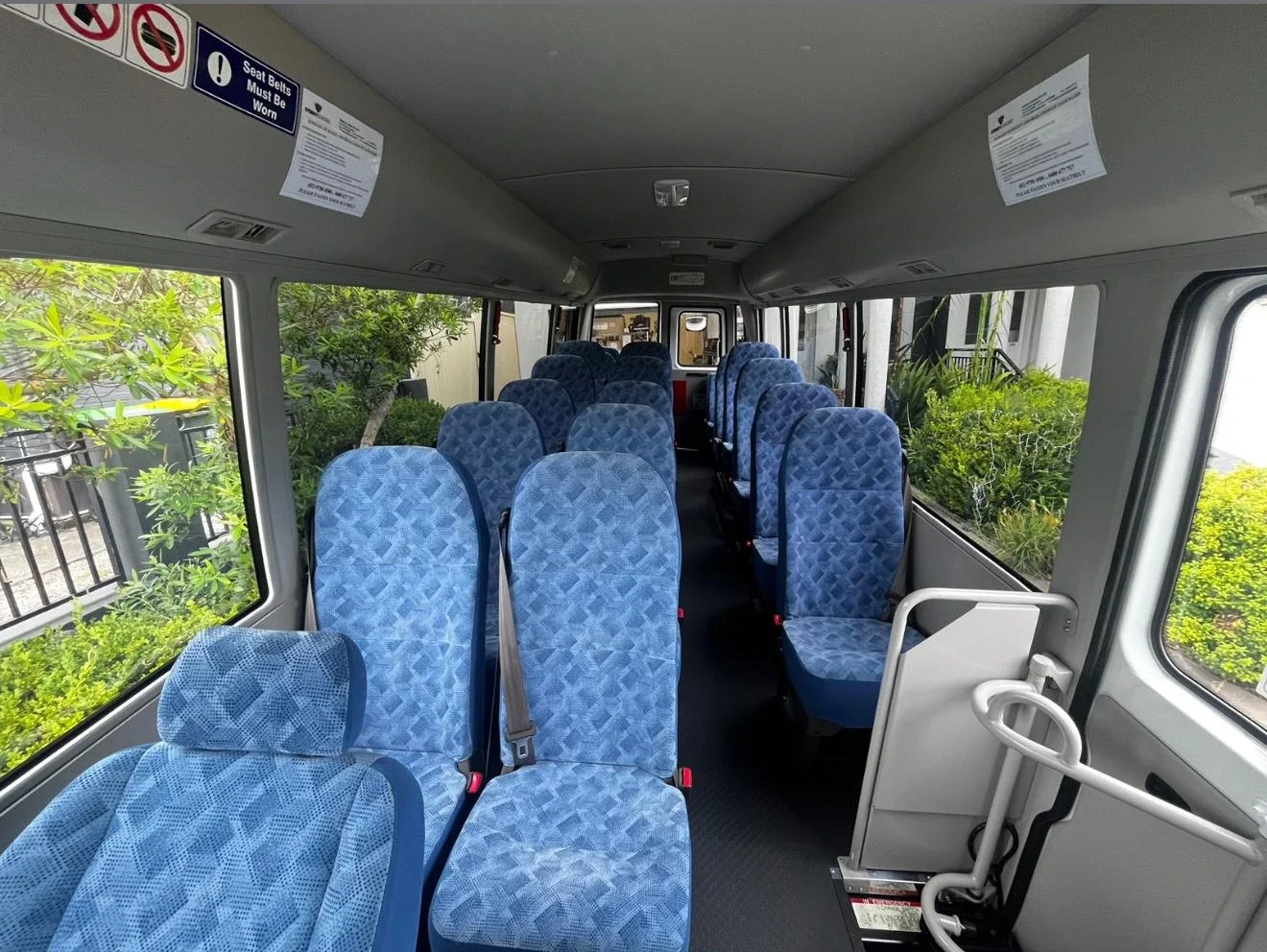
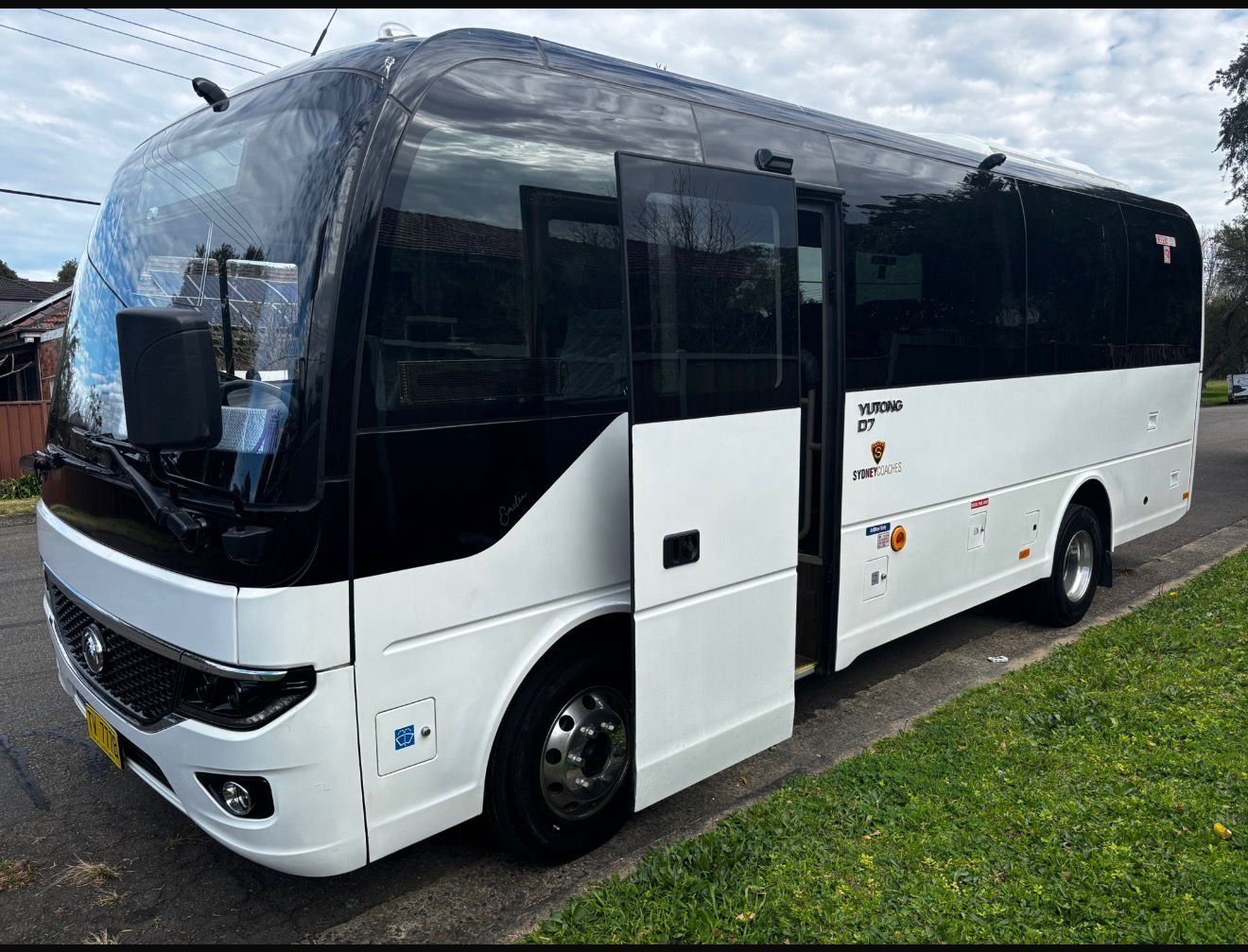
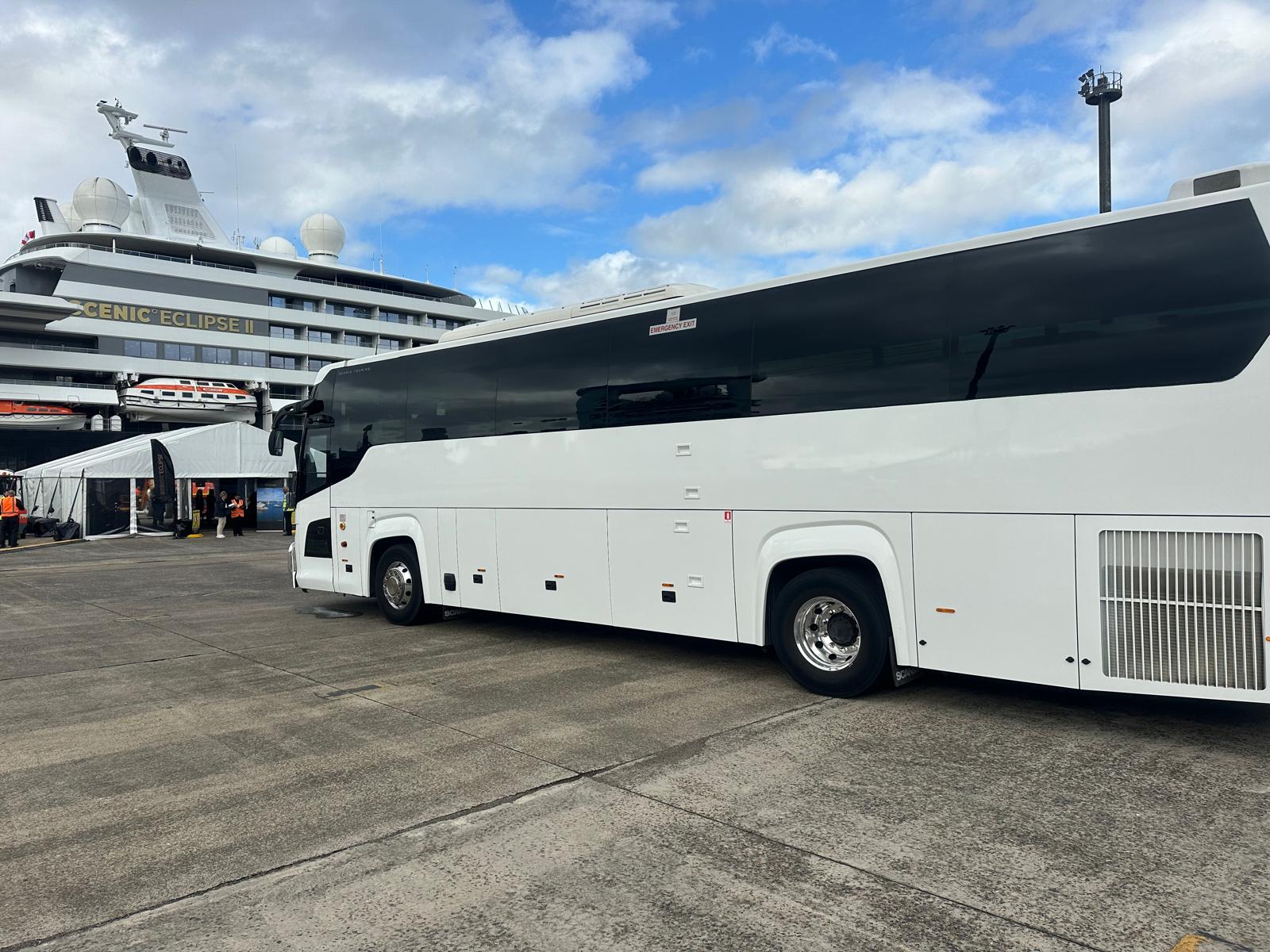
Ask operators to name the vehicle type and seat count against each movement rather than quoting a generic bus. Seat counts should exclude the driver, and the brief should say so. You can see what a real fleet ladder looks like in the vehicle types and seat counts we operate.
Section 4: airport arrivals and departures
Sydney Airport is the section most briefs under-specify, and it is the one with the most rules attached.
| Field | Enter |
|---|---|
| Arrival profile: date, terminal, rough delegate count per window | |
| Departure profile: date, terminal, rough delegate count per window | |
| International, domestic, or both | |
| Meet and greet required inside the terminal? | |
| Who holds the flight numbers on the day |
Four constraints belong in the brief itself so nobody prices around them.
Access for commercial buses and coaches requires registration through Sydney Airport’s Bus and Limousine Registration System, so ask operators to confirm they are registered. Drop-off is kerbside at the Departures level and collection happens within dedicated Ground Transport Zones only, so a coach cannot simply meet a delegate at the kerb on arrival. A Bus Holding Area operates on Ross Smith Avenue and is free for the first 60 minutes, which is where a coach waits out a delayed flight. And the Priority Pick-up zone serving T2 and T3 has a 2.9 metre height restriction, which excludes a full-size coach entirely.
If your brief includes a meet and greet, note that Sydney Airport publishes signposted meeting points at T1 International Arrivals between exits A and B, and at T2 Domestic Arrivals opposite baggage carousel 6. There is no published meeting point for T3, so a T3 arrival needs a point you nominate and communicate to delegates yourself.
Section 5: venue and hotel access
| Location | Coach set-down street | Can a coach wait? | Height or length limit | Booking required |
|---|---|---|---|---|
| Conference venue | ||||
| Hotel 1 | ||||
| Hotel 2 | ||||
| Dinner or offsite venue |
Fill in what you know and ask operators to flag anything you have wrong. Three Sydney facts shape most conference briefs.
ICC Sydney publishes coach drop-off at Iron Wharf Place off Darling Drive, with Zollner Circuit as the other point, and coach parking arranged through your dedicated ICC Sydney Event Manager. That is a conversation to have before you issue, because the answer changes the layover row in section 3.
George Street through the CBD is a pedestrian boulevard, so a hotel whose front door is on George Street is not a coach set-down. You will be working from a side street, and the brief should name it.
Where genuine layover is needed in the city, Transport for NSW operates a bus and coach layover at King Street Wharf, entered via Lime Street, for accredited operators who have registered in advance. Ask operators whether they hold that registration rather than assuming.
Section 6: delegate data and accessibility
| Field | Enter |
|---|---|
| Will you provide a passenger manifest, and when | |
| Fields the manifest will carry | |
| Accessibility requirements known at brief stage | |
| Who the operator contacts about a late accessibility request |
State accessibility requirements as requirements, not preferences, and put them in the brief rather than raising them afterwards. Most Sydney charter coaches have a fixed seat for every passenger, and under section 9.8 of the Disability Standards for Accessible Public Transport an operator need not provide an allocated wheelchair space where that is the case. Other obligations under the Standards continue, so this is not a blanket exemption, but it does mean the useful question is specific: does the vehicle you are offering have a wheelchair lift or ramp and an allocated space. Ask it that way and you will get a usable answer.
Section 7: compliance requirements
Ask for these as evidence, with a deadline, not as a tick box.
| Requirement | Evidence sought |
|---|---|
| NSW bus operator accreditation | Accreditation number, and a Certificate of Accreditation on request |
| Sydney Airport registration | Confirmation of current BLRS registration, if section 4 applies |
| Insurance | Certificate of currency |
| Driver credentials | Confirmation that drivers hold a current Transport for NSW Driver Authority |
| Operator or broker | A direct statement of whether the respondent owns the vehicles and employs the drivers |
There is no public register of accredited NSW bus operators, so the only verification route is asking for the certificate. Any operator who treats that request as unusual has answered a different question for you.
Section 8: contingency and escalation
| Field | Operator to answer |
|---|---|
| What happens if a vehicle fails on the day | |
| Replacement vehicle response time | |
| Escalation contact and number during the event | |
| Contact availability outside business hours | |
| How a change to numbers or timings is handled on the day |
Section 9: commercial requirements
| Field | Operator to state |
|---|---|
| Rate basis: hourly, fixed transfer fare, or both | |
| Minimum hire applying to each vehicle offered | |
| Whether GST is included in every figure quoted | |
| What is inside the price | |
| What is confirmed in advance and priced separately | |
| Tolls: included, estimated, or billed at cost | |
| Venue parking: included or separate | |
| Waiting time: trigger and rate | |
| Public holiday and after-hours loading: trigger and rate | |
| Deposit, balance and cancellation terms | |
| Invoicing: purchase order handling and payment terms |
Require the inside and separate lists explicitly. For reference, our quotes carry driver, fuel, vehicle insurance and GST inside the price, with tolls and parking, driver accommodation on multi-day trips, public holiday and after-hours loading, and waiting time beyond the booked window confirmed in advance and priced separately. A response that will not split those two lists cannot be compared with one that does.
Section 10: response format and evaluation
This is the section that earns the brief its keep. Require every operator to return this exact table.
| Movement # | Vehicle type and seat count | Number of vehicles | Chargeable hours | Rate basis | Line total, GST inside |
|---|---|---|---|---|---|
| 1 | |||||
| 2 | |||||
| Total |
Plus a one page covering response answering sections 7, 8 and 9. Nothing else. A twelve page capability statement is not a response.
Then publish your evaluation criteria in the brief, so operators know what they are being scored on:
| Criterion | Weight |
|---|---|
| Total price, GST inside, on the same movement schedule | 30 |
| Completeness and compliance of the response | 20 |
| Vehicle fit against each movement | 15 |
| Compliance evidence supplied | 15 |
| Contingency answer | 10 |
| Contactability during the event | 10 |
Set your own weights. Publishing them is the point, not the numbers.
Frequently asked questions
How many operators should a brief go to?
Three is usually enough to price the market and few enough that you can evaluate properly. Beyond four the evaluation cost outgrows the saving, particularly for a single conference rather than an annual contract.
How long should operators get to respond?
Long enough to check vehicle availability across your dates, which for a multi-day conference means more than 48 hours. Bear in mind that most charter jobs want two to four weeks of lead time, rising to four to eight weeks in December, around race days and over long weekends, so a brief issued three weeks out is already tight.
Should the brief include our budget?
State a budget only if it is a genuine ceiling. If you include one, also state that you want the movement schedule priced in full rather than trimmed to fit, so you can see what the full requirement costs before you cut it.
What if an operator proposes a different movement structure?
Welcome it, but require them to price your structure first. An alternative that arrives instead of a compliant response cannot be compared with anything. An alternative that arrives alongside one is often the most useful thing in the pile.
Next step
Fill in sections 1 to 9, set your weights in section 10, and issue the brief to us alongside whoever else you are approaching. A written quote with the vehicle named against each movement comes back within two business hours during office hours, or call 02 9469 6600 to talk through the movement schedule first. For the wider service, see corporate bus hire in Sydney.
Sources
- Sydney Airport, Resources for registered limousines, buses and coaches, https://www.sydneyairport.com.au/corporate/partner-with-us/commercial-vehicles/resources-for-registered-limousines-buses-and-coaches. Accessed 7 September 2026.
- Sydney Airport, Pick-up, https://www.sydneyairport.com.au/pickup. Accessed 7 September 2026.
- ICC Sydney, Getting here, https://iccsydney.com.au/visitors/getting-here/. Accessed 7 September 2026.
- Transport for NSW, King Street Wharf Bus and Coach Layover, https://www.transport.nsw.gov.au/operations/roads-and-waterways/business-and-industry/buses/operators/king-street-wharf-bus-and. Accessed 7 September 2026.
- Transport for NSW, Applying for bus operator accreditation, https://www.nsw.gov.au/departments-and-agencies/transport-for-nsw/bus-operators-nsw/applying-for-bus-operator-accreditation. Accessed 7 September 2026.
- Australian Government, Disability Standards for Accessible Public Transport, https://www.legislation.gov.au/F2005B01059/latest/text. Accessed 7 September 2026.