A transport run sheet is a single page, in clock order, that tells a driver where to be, when to be there, who to look for and who to ring when something changes. It carries four blocks: job identity, the vehicle and driver, the movement table, and the escalation path. Everything else belongs in your own event document. The template below is reproduced in full on this page so you can copy it straight into a document and fill it in.
What a driver actually needs on paper
A driver is working from a windscreen, not a laptop. The sheet has to be readable at arm’s length, in order, with no scrolling and no cross-referencing.
Three things decide whether a run sheet works. First, every address has to be an address a coach can physically use, which is often not the address on the invitation. Second, every hard time has to be marked as hard, because a driver cannot tell from a list of times which one the whole day is built around. Third, there has to be one name and one number for the day, and that person has to be reachable.
Detail that does not change the driving is noise. Seating plans, catering runs, speeches, run-of-show for the event itself: none of that goes on the transport run sheet. If the driver needs it, it goes in the notes column as one line.
The run sheet template
Copy this into a document, keep it to one page, and print it in portrait. Anything that does not fit on one page has been over-specified.
Block 1: job identity
| Field | What to write |
|---|---|
| Job name | The name you will use on the phone. “Ferguson wedding, Saturday” |
| Date and day | Calendar date plus day of week, and a note if it is a public holiday |
| Booking reference | The operator’s reference from the written quote |
| Passenger numbers | Booked total, plus the number for each movement if they differ |
| Booked window | Start time the vehicle is on hire, and the time it is released |
| Luggage or equipment | Suitcases, sports gear, instruments, esky, wheelchair, pram. Say what and how many |
Block 2: vehicle and driver
| Field | What to write |
|---|---|
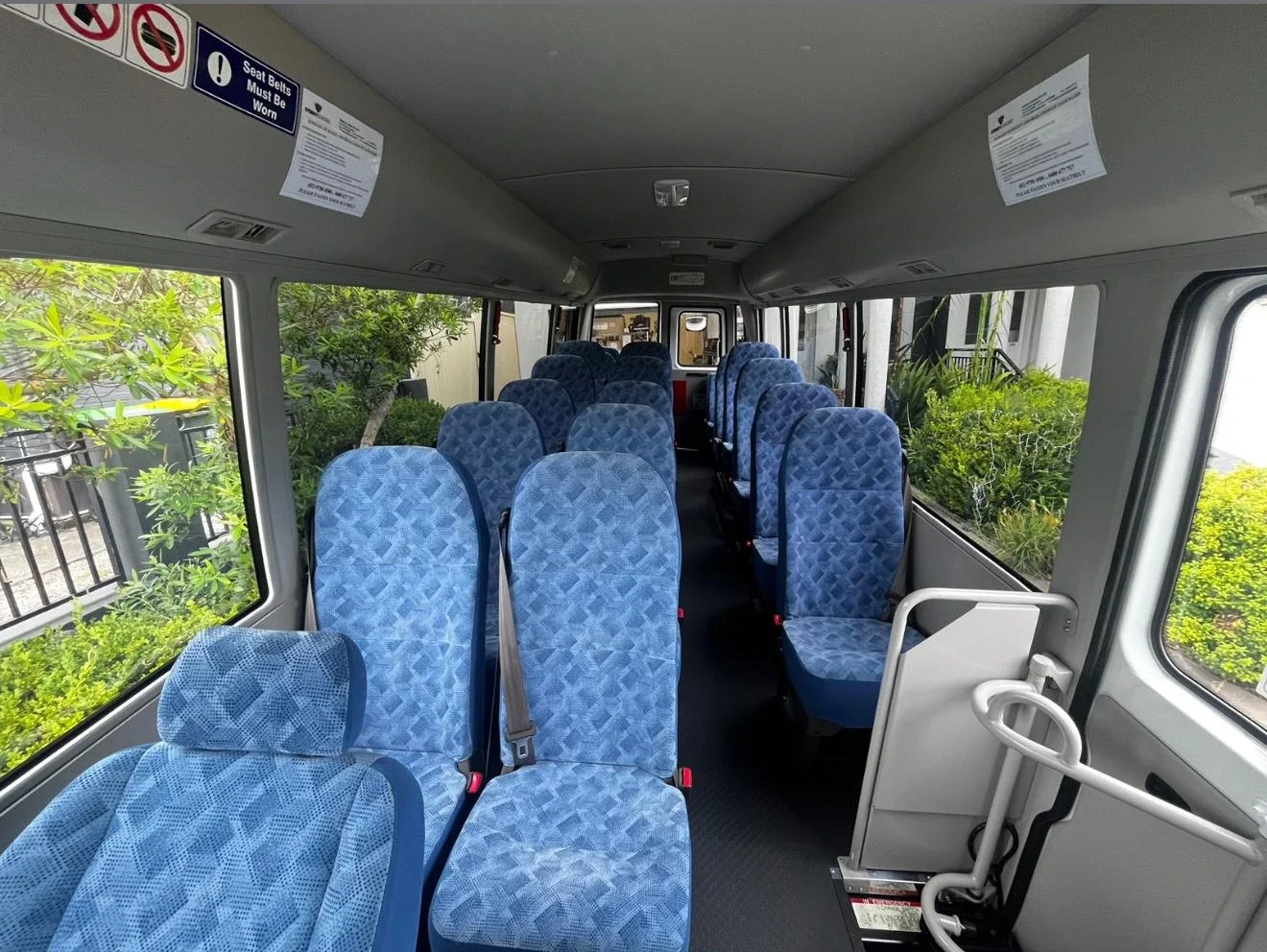
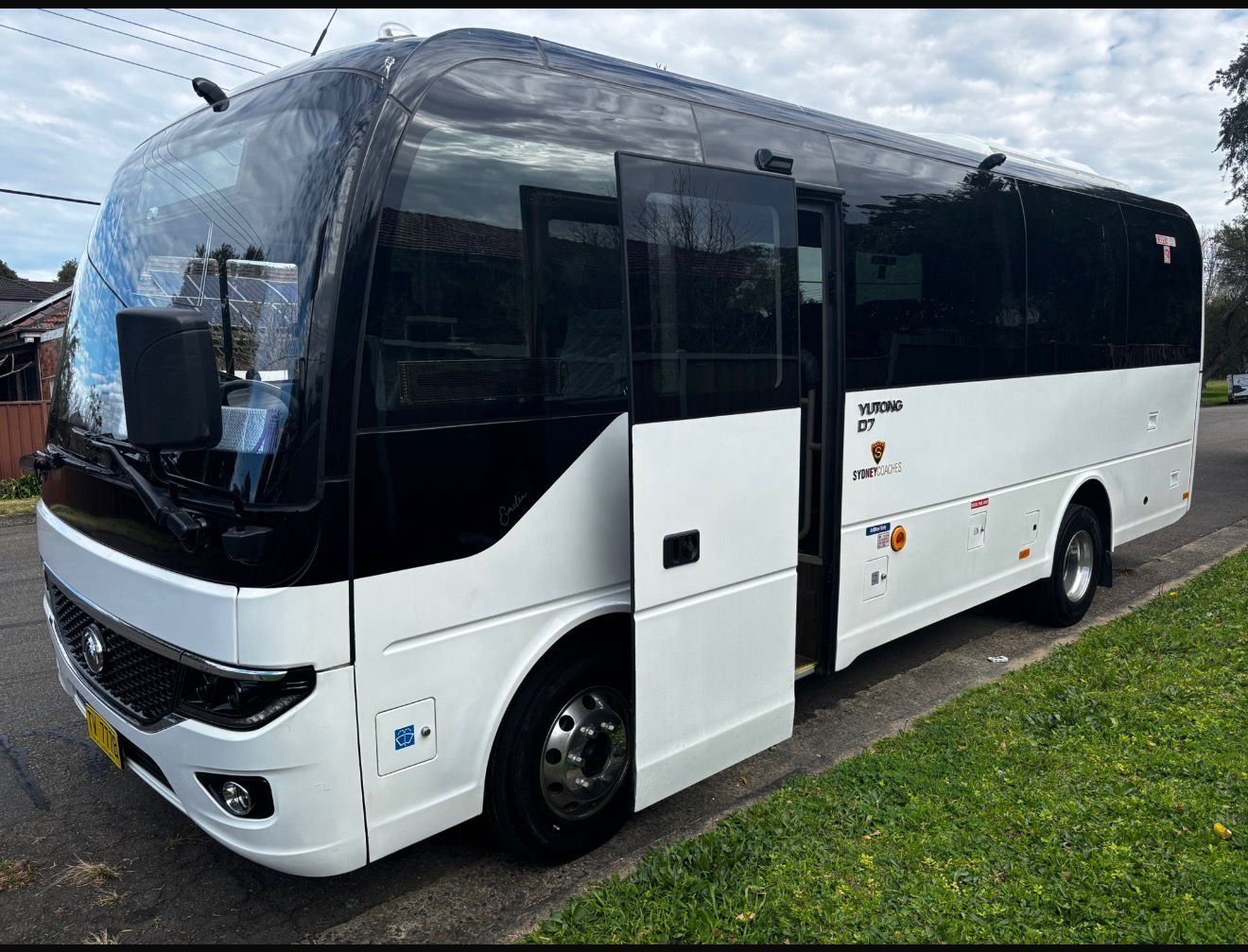
| Vehicle type and seat count | As named on the quote, for example a 27-seat executive midi-coach |
| Registration | Supplied before travel. Write it here so passengers can be told what to look for |
| Driver name and mobile | Supplied before travel |
| Second vehicle | If the job uses more than one, give each vehicle a letter and repeat the movement table per vehicle |
At Sydney Buses & Coaches the driver name, mobile and vehicle registration are sent 24 hours before travel, which is the point at which blocks 2 and 4 get completed rather than left blank.
Block 3: the movement table
This is the sheet. One row per movement, in clock order, never grouped by location.
| Time | H | Movement | Coach address and access note | On-site contact | Notes |
|---|---|---|---|---|---|
| 06:45 | Vehicle departs depot | 74 Edinburgh Rd, Marrickville | |||
| 07:30 | H | Pick up, group A | Full street address. Kerb side. Where the coach can legally stop | Name and mobile | 22 pax, day bags |
| 08:10 | Pick up, group B | Full street address | Name and mobile | 9 pax | |
| 09:15 | H | Must arrive by | Venue coach set-down point, not the main entrance | Name and mobile | Doors 09:30 |
| 09:20 | Layover | Where the coach waits, or where it is released to | Driver break | ||
| 16:30 | H | Collect | Same set-down point unless the venue says otherwise | Name and mobile | Head count taken by organiser |
| 17:45 | Final drop | Full street address | |||
| 18:00 | Vehicle released |
The H column is the whole reason the table works. Mark H against every time that is genuinely hard, meaning a time the day fails if you miss: ceremony start, flight, cruise check-in close, kick-off, the last train someone is connecting to. Leave it blank on everything else. A driver who can see three hard times on a fifteen row sheet knows exactly where the slack has to come from.
Block 4: escalation
| Situation | Who to ring | Number |
|---|---|---|
| Anything about the schedule on the day | The one named day contact | |
| Group is late, or numbers have changed | Same person | |
| Vehicle problem | The operator’s office | 02 9469 6600 |
| Cannot reach the day contact | The named backup |
Two rules make this block work. There is one day contact, not a committee, and that person is not the bride, not the chief executive and not the person giving the speech. And there is a backup whose phone is not in a pocket during the ceremony.
Writing addresses a coach can actually use
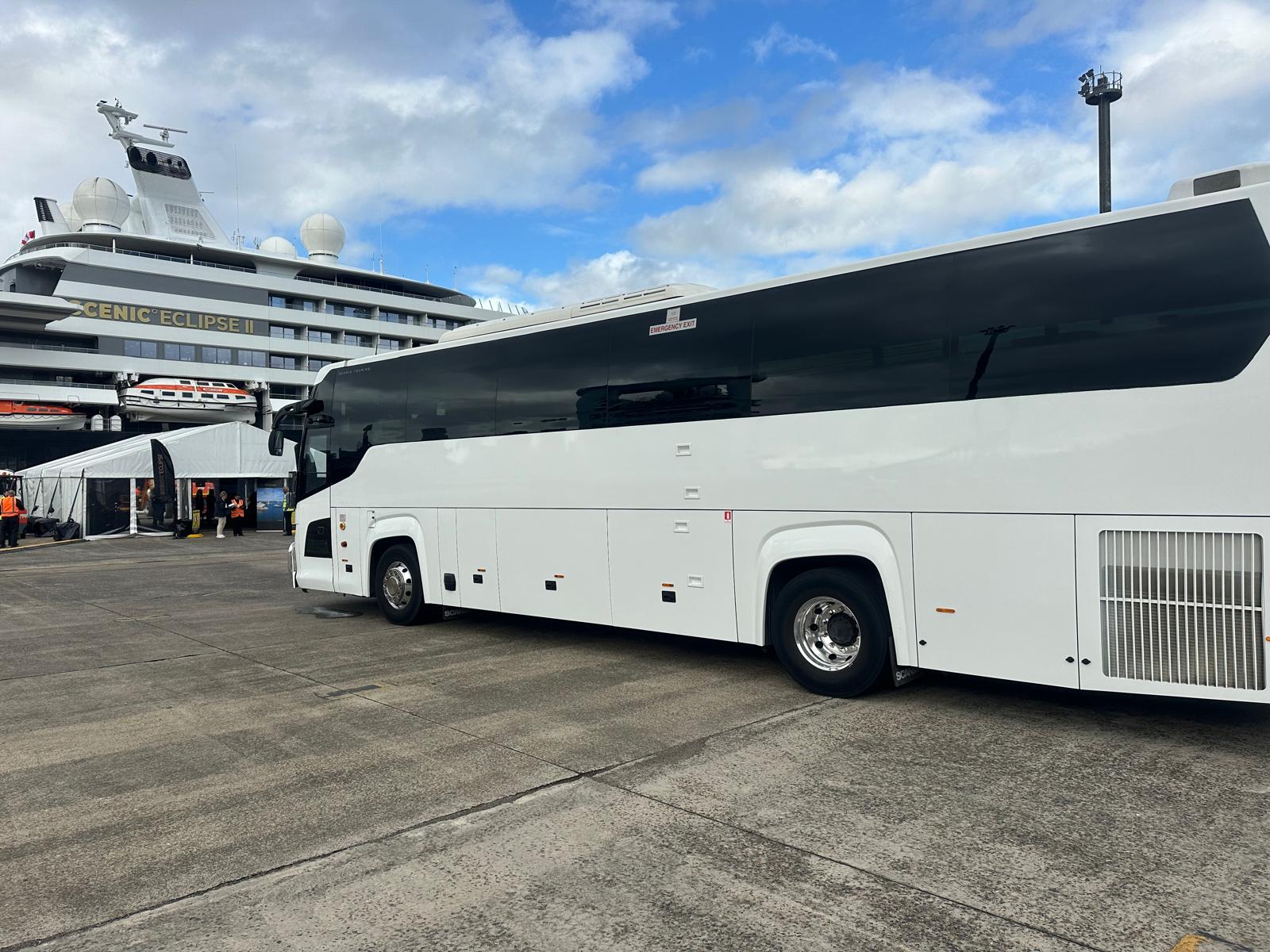
The address column is where most run sheets fall over in Sydney. A pin dropped on a venue’s front door is frequently a place a 12.5 metre coach cannot reach, cannot turn in, and is not permitted to stop.
- Sydney Opera House. Buses and coaches cannot park onsite, and large buses disembark passengers on Macquarie Street. Write Macquarie Street on the sheet, not Bennelong Point.
- ICC Sydney and Darling Harbour. Coach drop-off is at Iron Wharf Place off Darling Drive, with Zollner Circuit as the other published point. Coach parking is arranged through your ICC Sydney Event Manager, so the sheet needs the outcome of that conversation, not a guess.
- Accor Stadium and Afterpay Arena. Coaches use Coach Pod C off Edwin Flack Avenue, accessed from Uhrig Road via Carter Street. Sydney Olympic Park Authority sells a dated coach booking and the window closes at 11:59pm the day before the event, so the booking has to be made before the run sheet is finalised.
- Allianz Stadium, Moore Park. During events, private coaches access Driver Avenue via Lang Road, not Moore Park Road. Put that routing instruction in the notes column.
- Royal Randwick and Rosehill Gardens. The two Australian Turf Club racecourses use different height thresholds. At Royal Randwick, coaches over 3.1 metres set down on the eastern side of Darley Road outside TAFE NSW Randwick. At Rosehill Gardens, coaches over 3.4 metres use the western side of Arthur Street. Write the height threshold in the notes so nobody applies the wrong one.
- White Bay Cruise Terminal. On cruise days access is only via The Crescent then James Craig Road. Port Authority NSW explicitly warns that GPS routes drivers to Robert Street in Balmain and that the guidance must be ignored. That warning belongs on the sheet in words, because the satnav will disagree with you.
- A bus zone anywhere in Sydney. A charter coach is a public bus under the Road Rules and may stop in a bus zone to set down or pick up. It may not wait there. If your plan involves a coach sitting somewhere between two movements, the sheet needs a layover location, not a bus zone.
For a CBD job with a genuine gap between movements, Transport for NSW operates a bus and coach layover at King Street Wharf, entered via Lime Street, open 24 hours for accredited operators who have registered in advance. That is a layover row on the sheet, not an assumption.
What belongs on the sheet, and what does not
| Put it on the run sheet | Keep it off |
|---|---|
| Hard arrival times, marked H | The full event run-of-show |
| Coach-usable addresses and access routing | The venue’s postal address |
| One day contact plus a backup | A list of six committee members |
| Passenger numbers per movement | Individual passenger names and details |
| Luggage, equipment, mobility aids | Seating plans |
| Where the vehicle waits between movements | Parking rates and toll estimates |
| The time the vehicle is released | The catering schedule |
Passenger names belong on a separate passenger manifest, not on a sheet that sits face up on a dashboard.
Who updates it on the day
One person owns the sheet, and it is the day contact named in block 4. Version it with a time, not a number: “Run sheet, Ferguson wedding, v as at 14:20 Friday”. If numbers change on the morning, the day contact tells the driver by phone and follows up with a text, because nobody is reprinting an A4 page at 7am.
Two changes are worth telling the operator’s office about rather than the driver alone: a change to the finish time, and a change to the vehicle size needed. The finish time is the number your booked window is priced against, so how the booked window is priced turns on it. A change of vehicle is a change of asset, and the driver on the road cannot authorise it.
One constraint sits behind the finish time and it is not negotiable. Standard hours for a solo heavy vehicle driver allow a maximum of 12 hours work with 7 continuous hours of stationary rest in any 24 hour period, and a commercial charter service in NSW sits inside that regime. A run sheet that quietly grows by three hours on the day is not a scheduling problem, it is a compliance one, which is why the operator would rather hear about it at 9am than at 9pm.
Frequently asked questions
How much detail is too much on a run sheet?
If a line does not change where the vehicle goes, when it goes, or who the driver speaks to, it does not belong. One page in portrait is the working limit. A three page run sheet gets read once, in the depot, and never again.
Should the run sheet go to the operator or straight to the driver?
Send it to the operator when you book, because it becomes the basis of the quote and the schedule. The driver receives the version the operator has confirmed. Handing a driver a fresh document on the morning that nobody in the office has seen is how movements get missed.
What if the group is running late at a pick-up?
Ring the day contact, and have the day contact ring the driver. Waiting time beyond the booked window is priced separately and confirmed in advance, so an operator can tell you what a delay costs before you decide whether to wait or leave a straggler to make their own way.
Do we need a separate run sheet for each vehicle?
Yes, once you are running more than one. Give each vehicle a letter, repeat the movement table per vehicle, and keep the escalation block identical on both. A single sheet covering two coaches produces two drivers each assuming the other one has the airport run.
Next step
Fill in the four blocks, leave the driver and registration fields blank for now, and send us a completed run sheet and we will quote from it. A written quote with the vehicle named comes back within two business hours during office hours, Monday to Friday 7am to 6pm and Saturday 8am to 2pm. If it is easier to talk it through first, call 02 9469 6600.
Most jobs want two to four weeks of notice. December, race days, school excursion season and long weekends want four to eight.
Sources
- NSW Government, Road Rules 2014 (rule 183 and Dictionary), https://legislation.nsw.gov.au/view/html/inforce/current/sl-2014-0758. Accessed 7 September 2026.
- Sydney Opera House, Plan your excursion, https://www.sydneyoperahouse.com/schools/plan-your-excursion. Accessed 7 September 2026.
- ICC Sydney, Getting here, https://iccsydney.com.au/visitors/getting-here/. Accessed 7 September 2026.
- Sydney Olympic Park Authority, Bus and coach parking, https://www.sydneyolympicpark.com.au/parking/bus-and-coach-parking. Accessed 7 September 2026.
- Allianz Stadium, Plan your visit: transport, https://www.allianzstadium.com.au/plan-your-visit/transport. Accessed 7 September 2026.
- Australian Turf Club, Travel and parking at Royal Randwick, https://www.australianturfclub.com.au/travel-parking-at-royal-randwick/. Accessed 7 September 2026.
- Australian Turf Club, Travel and parking at Rosehill Gardens, https://www.australianturfclub.com.au/travel-parking-at-rosehill-gardens/. Accessed 7 September 2026.
- Port Authority NSW, White Bay Cruise Terminal frequently asked questions, https://www.portauthoritynsw.com.au/cruise/sydney-harbour/white-bay-cruise-terminal-frequently-asked-questions. Accessed 7 September 2026.
- Transport for NSW, King Street Wharf Bus and Coach Layover, https://www.transport.nsw.gov.au/operations/roads-and-waterways/business-and-industry/buses/operators/king-street-wharf-bus-and. Accessed 7 September 2026.
- NHVR, Heavy vehicle fatigue management: bus industry, https://www.nhvr.gov.au/safety-accreditation-compliance/fatigue-management/heavy-vehicle-fatigue-management-bus-industry. Accessed 7 September 2026.