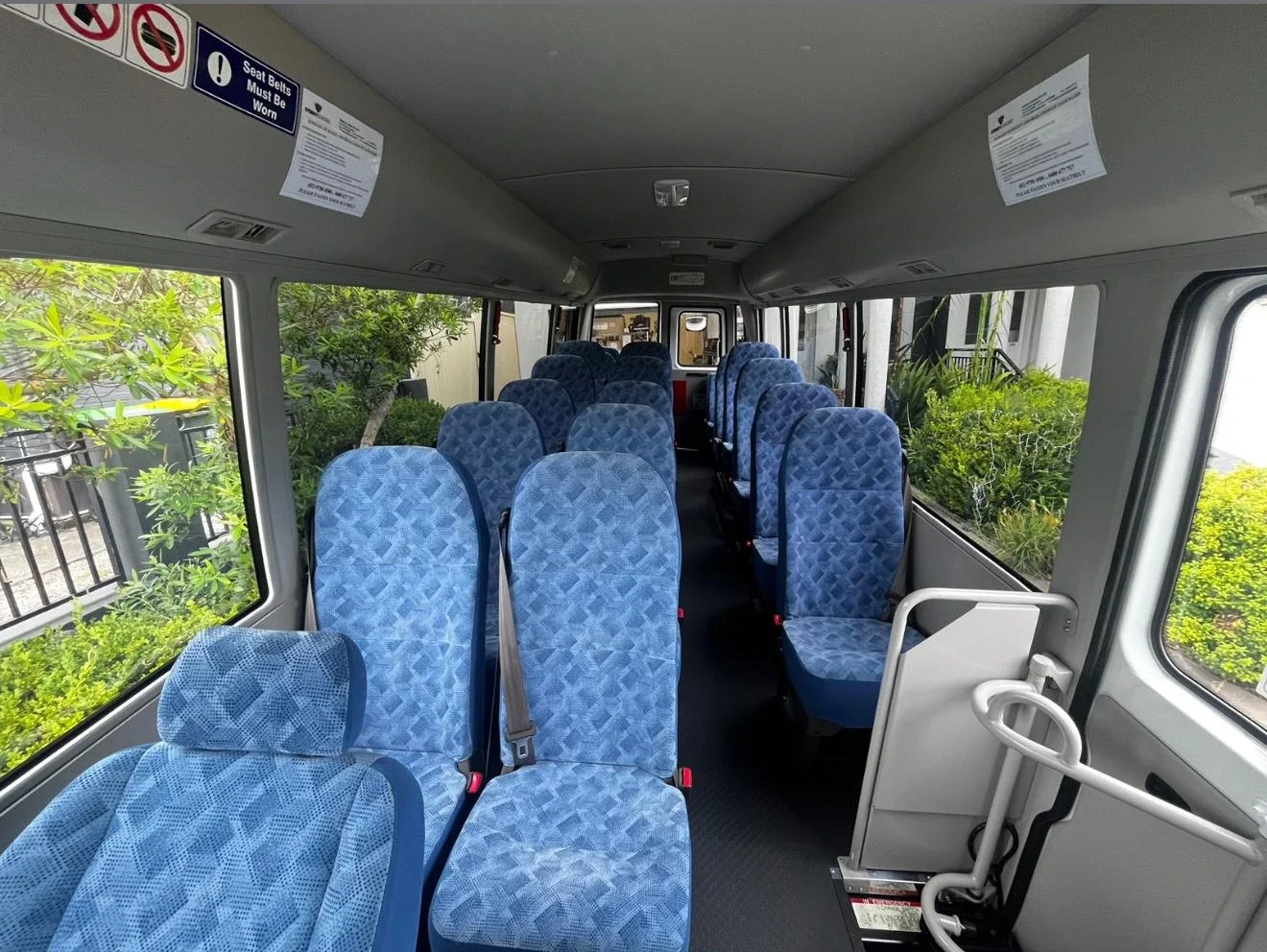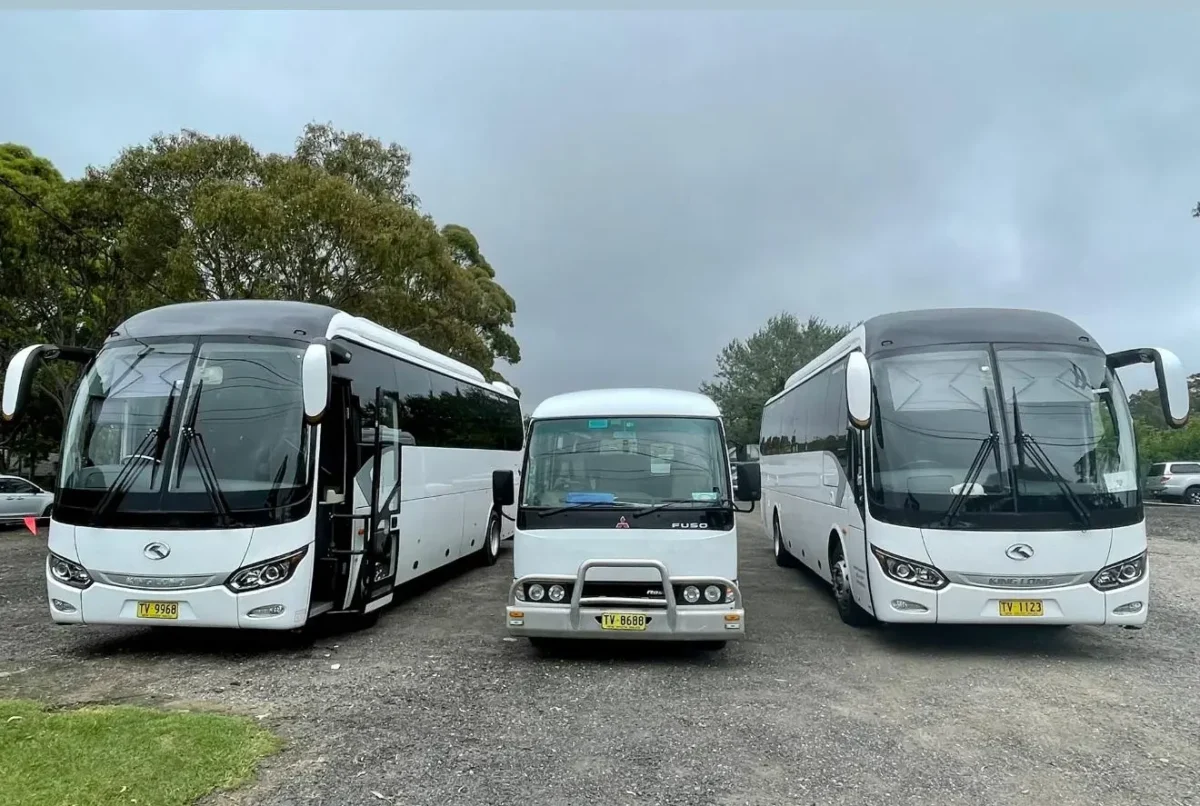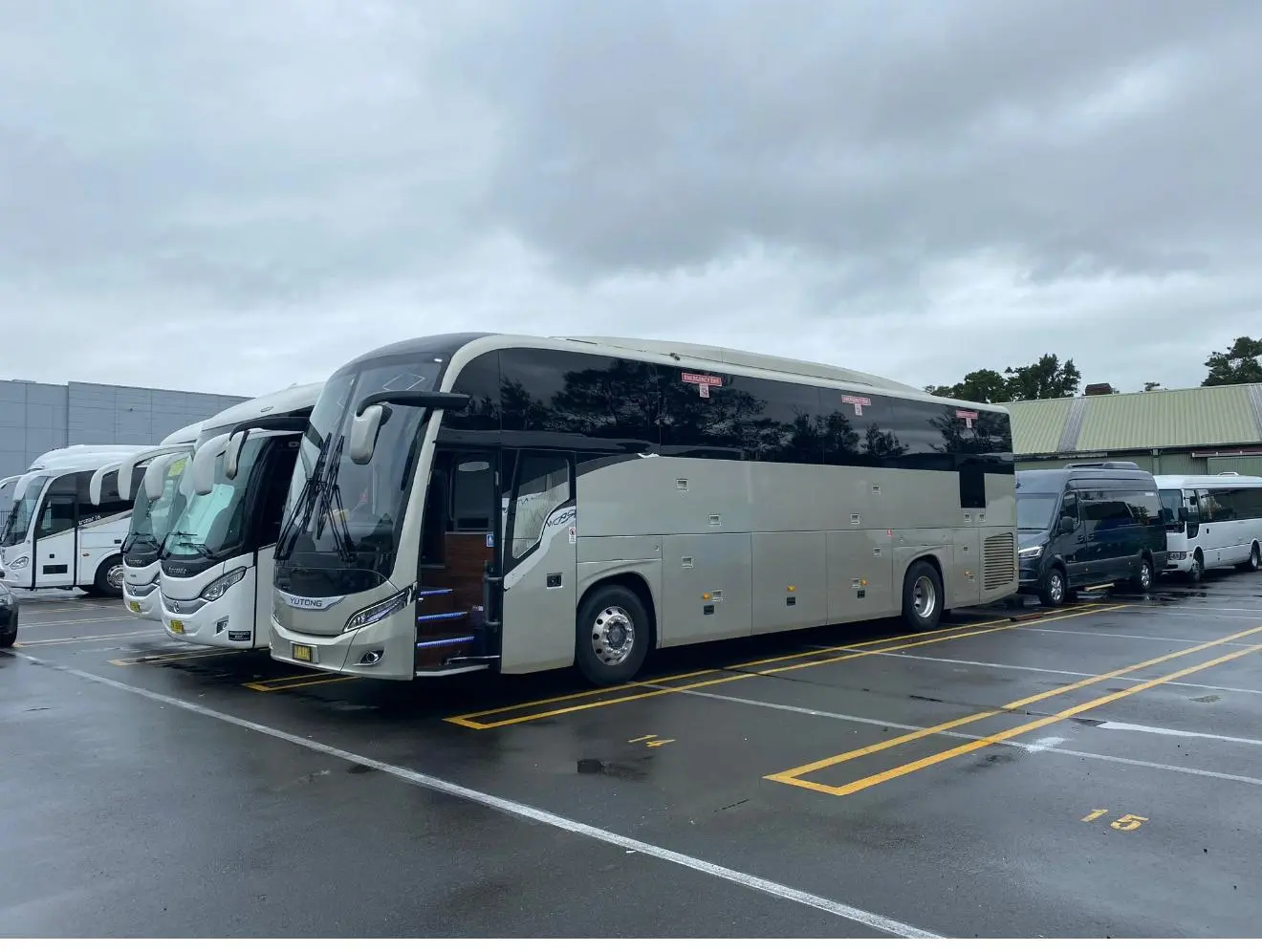
Two pick-up points is comfortable, three is workable, and beyond that the plan usually needs a different shape rather than another stop. Each additional stop adds boarding time, a new set of confused guests and another chance for the schedule to slip. The better answers are an anchor hotel that guests walk to, a small feeder vehicle collecting outliers, or a second vehicle for a genuinely separate cluster.
What each extra stop actually costs
A stop is not the minute the coach is stationary. It is the arrival buffer, the boarding, the head count, and the departure, and it is bounded by the slowest guest.
Budget roughly ten to fifteen minutes per stop for a group of any size, plus running time between stops in Sydney traffic. Three stops across the city is therefore comfortably an hour of shuttle time before the vehicle points at the venue, and every minute of that sits in front of a ceremony that starts when it starts.
There is a second cost that does not appear on the schedule. Guests at stop three have to be ready before guests at stop one have even boarded, because a coach running a loop cannot wait for a straggler without pushing the whole chain back. The more stops, the more people are being asked to be early for someone else’s convenience.
The rule that shapes every Sydney hotel pick-up
A charter coach may stop in a bus zone to set down or pick up passengers under NSW Road Rules 2014, but the permission covers setting down and picking up only. It does not cover waiting. That single limit decides the shape of most hotel movements.
The practical version: the coach arrives, guests who are already outside board, and the vehicle moves. It cannot sit at the kerb while guests are called down from their rooms. Many Sydney hotel driveways will not take a full-size coach at all, so the real stop is often the street outside rather than the entrance the hotel uses for cars.
Give the operator a street address with a landmark for each stop and ask them to confirm a full-size vehicle can use it. That question is much cheaper asked at quote stage than discovered by a driver at 2pm with forty guests watching.
Four patterns that work, and when to use each
| Pattern | How it works | Best when | Watch out for |
|---|---|---|---|
| Anchor hotel | One published stop. Guests at nearby hotels walk to it | Guests are clustered within a few hundred metres, which is common in the Sydney CBD and around Darling Harbour | Publish the walking route and time, and think about older guests, luggage and rain |
| Short loop | Two or three stops on one vehicle, each with its own published time | Clusters are close together and the schedule has room | Stop three is boarding on the schedule set by stop one. Traffic risk compounds |
| Hub and spoke | A minibus collects outlying guests and delivers them to the anchor stop, where the coach loads once | Guests are genuinely scattered, or one cluster sits across the harbour | Two vehicles means two timetables, so the feeder must arrive with margin |
| Split vehicles | One vehicle per cluster, each running direct to the venue | Two real clusters of decent size, for example a CBD group and a North Sydney group | More cost, but no chain reaction if one cluster runs late |
Most Sydney weddings land on the anchor hotel or the hub and spoke pattern. The instinct to add stops is usually the more expensive answer disguised as the cheaper one, because a long loop pushes you into a bigger time window and minimum hire hours are charged in blocks.
Choosing the anchor
Pick the stop that produces the shortest total run, not the one that suits the largest hotel.
Work it out crudely on a map. Mark every hotel your guests are booked into. The anchor should sit inside the tightest cluster and on a street that a coach can use. Where two clusters are separated by a harbour crossing or a pedestrianised strip, treat them as separate problems rather than trying to join them with a loop.
Sydney has one geographic quirk worth planning around. George Street through the city centre is a pedestrian boulevard, a car-free path from Haymarket to Circular Quay, with extension works staged and ongoing. A CBD loop cannot cross it, so hotels either side of George Street are further apart in coach terms than they look on a map. Guests can walk across in two minutes. A coach cannot.
North Sydney is the other one. It looks close to the CBD and it is, but a coach crossing the harbour and coming back for a second cluster has committed to a substantial leg. A North Sydney cluster of any size is usually its own vehicle or its own feeder rather than a stop on a city loop.
Where guests sit outside the obvious clusters altogether, a minibus running as a feeder into the anchor stop is normally cheaper than adding twenty minutes to a full coach’s loop, and it keeps the main movement on time.
Publishing the stops so guests turn up at the right one
Each stop needs four things published together: a street address with a number, a landmark, its own departure time, and the instruction to be there ten minutes early.
> Coach stops on the day > > Stop 1: [street address], outside [landmark]. Departs [time]. > Stop 2: [street address], outside [landmark]. Departs [time]. > > Please be at your stop ten minutes before the departure time. The coach cannot wait at the kerb.
Then tell each guest which stop is theirs, individually, rather than publishing a list and hoping they self-select. A guest booked at a hotel two streets from stop 2 will often walk to stop 1 because they saw it first, which puts your head count out at both stops.
Assign the stops in the week-of email, keep the same wording everywhere it appears, and give your day-of contact the full list. That contact should be someone who is not getting married, reachable by phone, and holding the driver’s name, mobile number and vehicle registration, which are supplied 24 hours before travel.
The return leg is a different problem
Do not assume the return mirrors the outbound. Guests who were spread across four hotels at 2pm are all standing in one place at 11.30pm, so the return is usually a single loading point and multiple set-downs rather than the reverse.
That changes the arithmetic. Multiple set-downs at the end of the night are much faster than multiple pick-ups, because nobody has to be found. It is worth ordering the drops so the largest group comes off first and the vehicle empties progressively rather than criss-crossing the city.
If your guests are spread widely enough that the return would need six drop-offs, look again at whether an anchor hotel with short walks is the better plan, or check the Sydney areas a pick-up can start from and split the job into two shorter runs rather than one long one.
Frequently asked questions
How many pick-up points can a wedding bus make?
Technically several, practically two or three before the schedule becomes fragile. Each stop costs roughly ten to fifteen minutes plus running time, and every stop after the first is boarding on a timetable set by the one before it. Beyond three stops, a feeder vehicle or a second vehicle is usually the better answer.
Is a loop cheaper than two vehicles?
Not always. A long loop extends the booked window, and minimum hire is charged in blocks of three hours for minibuses and people movers and four hours for midi-coaches and full-size coaches. Two shorter runs sometimes cost less than one long one, and they carry far less schedule risk.
Can the coach pick up inside the hotel driveway?
Often not. Many Sydney hotel driveways will not accommodate a full-size coach, and a coach may set down or pick up in a bus zone but cannot wait there. Give the operator the street address and let them confirm the stop before you publish it to guests.
What if guests are staying on both sides of the harbour?
Treat them as separate clusters. A coach crossing the harbour for a second pick-up adds a substantial leg in both directions. A feeder minibus into the main stop, or a second vehicle running direct to the venue, will usually beat a single vehicle trying to serve both.
Next step
Send the hotel list, the venue address, the date and the number of guests you expect on the return leg. You will get a fixed written quote back within two business hours with the vehicle named and the stops confirmed as usable rather than assumed, which is the point at which you can publish the timetable to guests.
Start with wedding bus hire in Sydney or call 02 9469 6600, Monday to Friday 7am to 6pm or Saturday 8am to 2pm.
Sources
- NSW Government, Road Rules 2014 (NSW), rule 183, https://legislation.nsw.gov.au/view/html/inforce/current/sl-2014-0758. Accessed 7 September 2026.