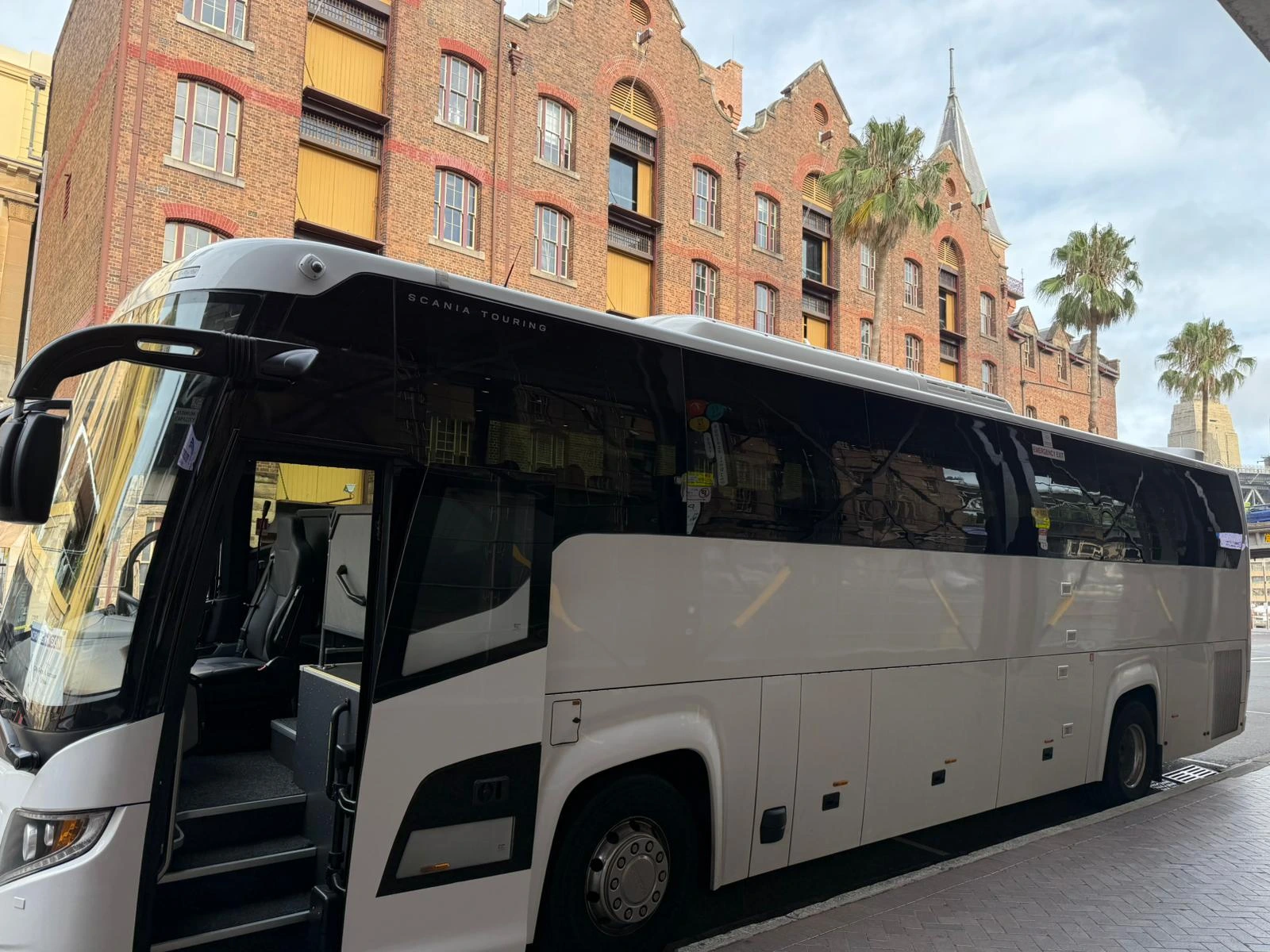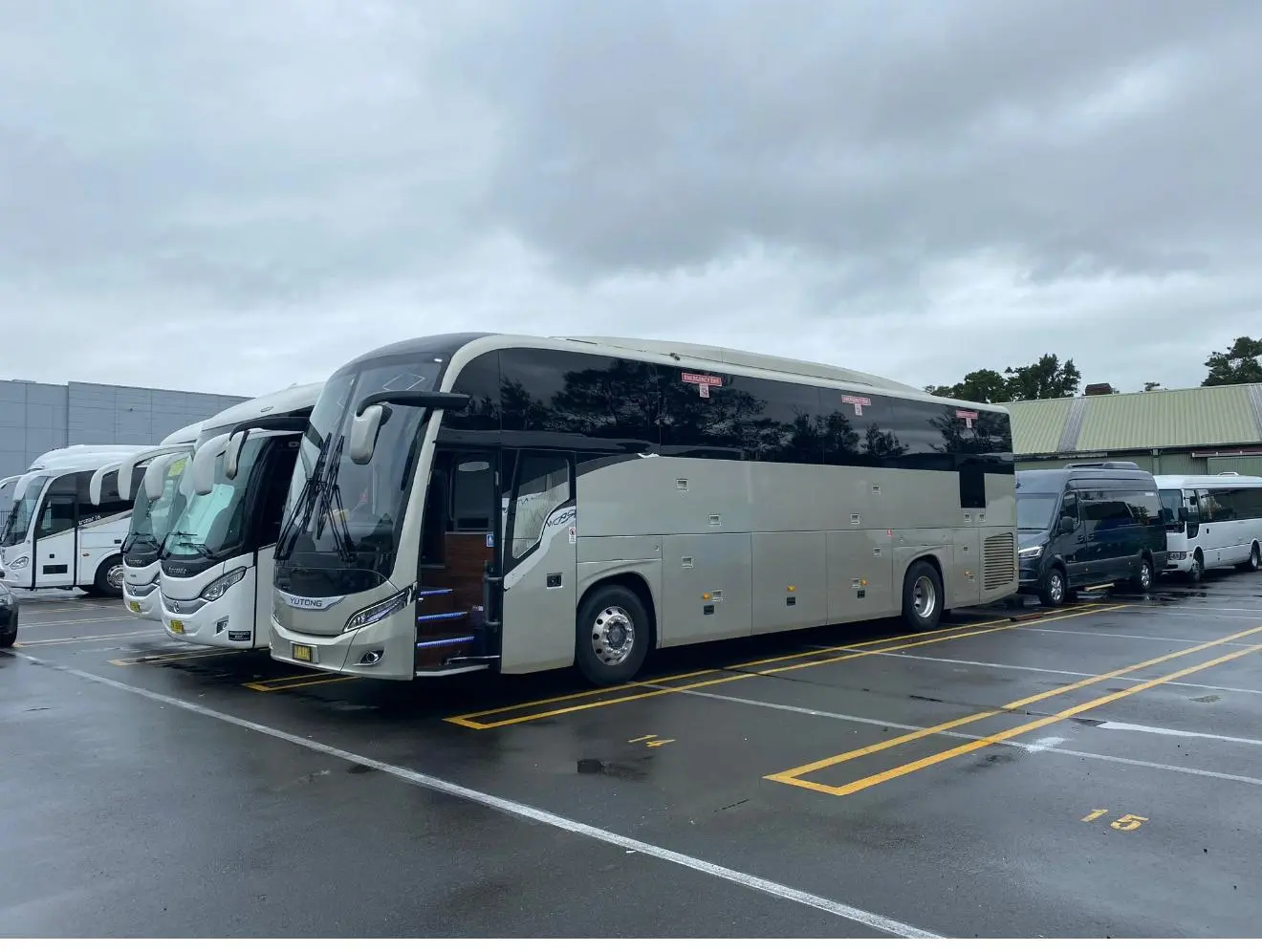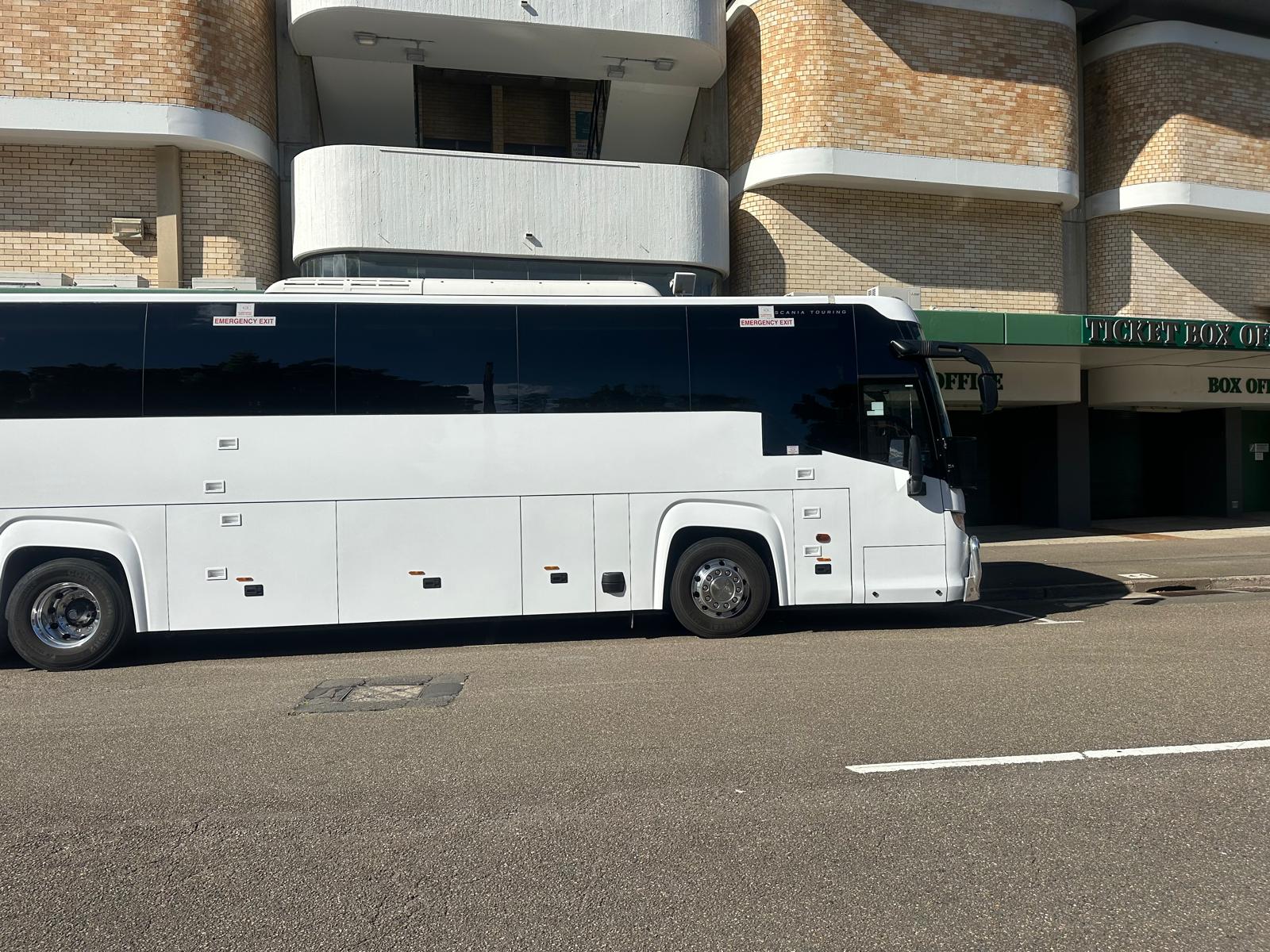
Most excursion transport problems are not booking errors. They are planning assumptions that were never checked: a supervision ratio that is not departmental policy, a headcount that left the staff out, a venue whose coach access nobody confirmed, and a return time that was never achievable. Each of them is cheap to fix at the enquiry stage and expensive to fix in the last fortnight. Here are the nine that recur, and the point in the process where each one should be caught.
Mistake one: quoting a supervision ratio as departmental policy
Search for a NSW school excursion supervision ratio and you will be given “one to ten” or “one to fifteen”, often on a bus company’s blog.
There are no numeric supervision ratios for K-12 in NSW departmental policy. Under Excursions and variations of routine (PD-2005-0290-04), the principal determines staffing, using average class sizes as a guide. Numeric ratios exist only for public preschools.
If a ratio goes into your excursion file attributed to the department, your approver cannot source it. If a transport supplier gives you one, it is their commercial preference and it does not belong in the departmental section of the file.
Catch it at: the drafting of the excursion plan, before it reaches the principal.
Mistake two: sizing on students
The booking number is students plus supervising teachers plus support staff plus parent helpers. Published seat counts exclude the driver, so the driver’s seat is not your problem, but every adult travelling is.
The policy asks organisers to confirm the licensed passenger capacity of the bus. That is a check against the real travelling headcount, per vehicle, not a tick against the quote.
Two related versions of the same mistake. Sizing against the top of a seat band, when a band like 50 to 57 seats is a class rather than a promise of 57. And sizing a two-vehicle job once, when the split is almost never even after staff are allocated across both vehicles.
Catch it at: the quote, by asking for the vehicle to be named and the capacity confirmed in writing.
Mistake three: assuming there is a register to check
There is no public register of NSW bus operator accreditation. Procurement templates that say “verify the operator’s accreditation on the register” are asking for something that does not exist.
The only verification route is to ask the operator for its Certificate of Accreditation and file the copy. An operator that says “look us up” has not answered the question. For reference, Sydney Buses and Coaches publishes NSW accreditation number 43397 and supplies the certificate on request for tender and procurement paperwork.
One boundary worth knowing. Vehicles seating 13 or more require Transport for NSW accreditation. Twelve seats or fewer falls to the Point to Point Transport Commission instead, which is a different regime. A small excursion in a 12-seat vehicle is not automatically covered by the same arrangements as a coach.
Catch it at: enquiry. The certificate is not job-specific, so it can be supplied immediately.
Mistake four: not checking the venue’s coach access
This one produces the worst mornings, because it cannot be fixed on the day.
Sydney venues differ enormously and most publish nothing. Where they do publish, the detail is decisive: the Sydney Opera House states that large buses must disembark on Macquarie Street; ICC Sydney publishes coach drop-off at Iron Wharf Place off Darling Drive; Sydney Olympic Park requires a coach pre-booking that closes at 11:59pm the day before the event.
The deadline is the part schools miss. A venue coach booking that closes the night before has to be decided on a forecast, by someone who knows the cut-off exists.
Catch it at: venue booking, in the same email that confirms the programme. Ask where a full-size coach sets down, whether it can stay, and what the access deadline is.
Mistake five: a return time that was never achievable
The return bell is fixed and the day is built forwards, so the return leg absorbs everything the day loses.
Two NSW specifics make the afternoon harder than the morning. School zones are 40 km/h, and most operate 8:00 to 9:30am and 2:30 to 4:00pm, so a return timed for 3:15pm is driving its last leg inside the zone by design. Always check the sign, because non-standard times exist. And a coach is slower than a car: any vehicle over 4.5 tonnes GVM is capped at 100 km/h in NSW regardless of a higher posted limit.
Build the day backwards from the return bell and see what departure time it demands. If that departure is before your morning bell, the day does not fit.
Catch it at: schedule drafting, before the note goes to families.
Mistake six: booking a date the school cannot use
School development days are staff-only, so an excursion cannot fall on one. That makes the dead zone at each term boundary wider than the published term dates suggest, and it is why a date that looked available in week one turns out not to be.
Check the current NSW government school calendar rather than a copy in a shared drive. Western division schools, the late-start schools in far west NSW, differ from the Eastern division in Term 1: students start 9 February in 2026 and 10 February in 2027. Catholic systemic and independent schools set their own dates entirely.
Count the development days out of your window first, then commit the date.
Catch it at: date selection, before anything is booked.
Mistake seven: assuming charter sits outside the driver fatigue rules
It does not, and this is the most consequential misunderstanding on the list for long excursions and camps.
NSW inserted an exemption for drivers of fatigue-regulated buses and hire vehicles, but that exemption does not apply to driving a bus to provide a public passenger service, and a charter service is expressly a type of public passenger service. A commercial Sydney charter operator is inside the heavy vehicle fatigue regime.
The practical consequence is that a driver’s work and rest hours are a real constraint on your itinerary. Standard hours for a solo driver run to 12 hours work and 7 continuous hours stationary rest in any 24 hours, and a bus and coach specific table also exists. A related trap: the 100 kilometre radius is a record-keeping tier, not an exemption from work and rest hours.
If an operator tells you the hours do not matter for a day trip, that is a reason to ask more questions rather than fewer.
Catch it at: itinerary design for any long day, camp or interstate trip.
Mistake eight: expecting the coach to wait somewhere it cannot
Under the NSW Road Rules a charter coach counts as a public bus, so it may stop in a bus zone to set down or pick up passengers, subject to the sign. It may not wait or lay over there.
In central Sydney there is no council coach permit system, and the City of Sydney’s parking policy states it will not accommodate long-stay coach layover on-street in central Sydney. So the realistic CBD plan is: set down, the coach leaves, the coach returns for a nominated pick-up time. Give the driver a real time rather than “about two”, and tell supervising staff the vehicle will not be sitting outside.
Catch it at: schedule drafting, at the same moment you confirm venue access.
Mistake nine: leaving the numbers and the paperwork to the last fortnight
The last fortnight is where every deferred decision arrives at once: the final headcount, the compliance documents, the seating plan, the venue’s coach deadline and the wet-weather call. Almost none of it needs to be there.
| When | Lock in |
|---|---|
| At date selection | Term calendar checked, development days excluded |
| At enquiry | Certificate of Accreditation and certificate of currency requested. Neither is job-specific |
| At venue booking | Coach set-down, whether the vehicle can stay, and any access deadline, in writing |
| At quote | Vehicle named, licensed passenger capacity and belted seats confirmed for that vehicle |
| At acceptance | Driver Authority and Working With Children Check confirmation, and how check numbers will be supplied |
| Two weeks out | Final headcount including staff. Reconfirm capacity if it moved |
| The day before | Venue coach booking deadlines met. Wet-weather call owner identified |
| Twenty-four hours out | Driver name, mobile and vehicle registration into the day plan the supervising teacher carries |
Published lead times are two to four weeks for most jobs and four to eight weeks in peak periods, which include school excursion season. A written quote comes back within two business hours, so the early items genuinely can be closed out early.
One cost point belongs here too. Fuel, driver, vehicle insurance and GST are included in a charter quote. Tolls and parking, driver accommodation on multi-day trips, after-hours loading and waiting time beyond the booked window are confirmed in advance and priced separately, so read what is included in a charter quote and what is confirmed separately before the invoice rather than after.
Frequently asked questions
What is the most common excursion transport mistake?
Sizing the vehicle on student numbers rather than on the full travelling headcount including staff and parent helpers. It is also the easiest to catch, because the excursion policy already asks organisers to confirm licensed passenger capacity against the real number.
How do we verify that a bus operator is accredited in NSW?
Ask for the Certificate of Accreditation and keep the copy. There is no public register to search, so any advice telling you to check one is out of date.
What should be locked in earliest?
The date against the term calendar, and the venue’s coach access arrangement. Both are hard to change later and both can invalidate everything booked after them.
Are charter buses exempt from driver fatigue rules in NSW?
No. The NSW exemption does not apply to driving a bus to provide a public passenger service, and a charter service is a public passenger service. A commercial charter operator is inside the fatigue regime, and driver hours shape long itineraries.
Can the coach wait outside the venue during the excursion?
Usually not. A coach may stop in a bus zone to set down or pick up only, and there is no on-street long-stay coach layover in central Sydney. Plan for the vehicle to leave and return at a nominated time. Some of the more common versions of this question are answered in the questions we are asked most often.
Next step
If you are planning an excursion now, do two things this week: check your date against the term calendar including development days, and ask the venue where a full-size coach sets down. Everything else can follow.
Sydney Buses and Coaches handles school and excursion transport across Greater Sydney and can supply the Certificate of Accreditation, Working With Children Check numbers and Driver Authority confirmation for your excursion file before the day. Call 02 9469 6600.
Sources
- NSW Department of Education, Excursions and variations of routine (PD-2005-0290-04), https://education.nsw.gov.au/policy-library/policies/pd-2005-0290-04. Accessed 7 September 2026.
- Transport for NSW, Applying for bus operator accreditation, https://www.nsw.gov.au/departments-and-agencies/transport-for-nsw/bus-operators-nsw/applying-for-bus-operator-accreditation. Accessed 7 September 2026.
- NSW Legislation, Heavy Vehicle National Law (NSW), https://legislation.nsw.gov.au/view/whole/html/inforce/current/act-2013-042. Accessed 7 September 2026.
- National Heavy Vehicle Regulator, Heavy vehicle fatigue management: bus industry, https://www.nhvr.gov.au/safety-accreditation-compliance/fatigue-management/heavy-vehicle-fatigue-management-bus-industry. Accessed 7 September 2026.
- NSW Legislation, Road Rules 2014, https://legislation.nsw.gov.au/view/html/inforce/current/sl-2014-0758. Accessed 7 September 2026.
- City of Sydney, Central Sydney On-Street Parking Policy, https://www.cityofsydney.nsw.gov.au/-/media/corporate/files/publications/policies/central-sydney-street-parking-policy/central-sydney-on-street-parking-policy_0525.pdf. Accessed 7 September 2026.
- Sydney Opera House, Plan your excursion, https://www.sydneyoperahouse.com/schools/plan-your-excursion. Accessed 7 September 2026.
- ICC Sydney, Getting here, https://iccsydney.com.au/visitors/getting-here/. Accessed 7 September 2026.
- Transport for NSW, School zones, https://www.transport.nsw.gov.au/roadsafety/community/schools/school-zones. Accessed 7 September 2026.
- Sydney Olympic Park Authority, Bus and coach parking, https://www.sydneyolympicpark.com.au/parking/bus-and-coach-parking. Accessed 7 September 2026.
- NSW Department of Education, School calendar 2026, https://education.nsw.gov.au/schooling/calendars/2026. Accessed 7 September 2026.
- NSW Department of Education, School calendar 2027, https://education.nsw.gov.au/schooling/calendars/2027. Accessed 7 September 2026.