Build a Sydney excursion backwards from the return bell, never forwards from the departure. Fix the time students must be back at the gate, then subtract the return run, the venue departure, the loading time and the venue programme in that order. Only then do you find out what departure time the day actually needs. Most excursion schedules fail because they were built forwards and the return leg absorbed every minute the morning lost.
Why the return bell is the fixed point
Every other time in the day can move a little. The return bell cannot. Behind it sit bus routes home, after-school care rolls, siblings waiting at a primary gate, and parents in cars at a kerb that was never designed to hold them.
The afternoon is also the hardest part of the day to drive. In NSW the school zone speed limit is 40 km/h, and Transport for NSW says most zones operate 8:00 to 9:30am and 2:30 to 4:00pm. Always check the sign, because non-standard times exist and the sign governs. School zones operate on notified school days, and they do operate on school development days, which is a detail that catches people out when they schedule an excursion near a term boundary.
So the return leg runs into two things at once: the 40 km/h zone at the school gate, and a general afternoon traffic build. Transport for NSW’s Opal fare peak runs 3:00 to 7:00pm on weekdays, which is a fare definition rather than a road one, but it tells you where the volume sits. There is no official Transport for NSW statement of “Sydney peak hour” for advising road users when to travel, so treat any single figure you are given as an estimate.
Build the day backwards
Work through these in order. Do not skip step two: it is the one that changes the answer most.
- Write the return bell time. Not the finish of the last lesson, the actual time students must be on the school site.
- Subtract the last kilometre. The coach has to get from the main road through the school zone to the gate, park where it is allowed to park, and unload. On a full-size coach that is not a two-minute movement.
- Subtract the return run. Ask the operator for the loaded run time on your specific corridor, not a mapping-app estimate for a car.
- Subtract loading at the venue. Roll call, toilets, bags, headcount, second headcount.
- Subtract the venue departure window. Some venues set the coach down in one place and collect from another.
- Subtract the programme. What the venue actually delivers, plus lunch.
- Now read off the departure time. If it is earlier than the morning bell, the day does not fit and something has to give.
A reverse timing worksheet
Fill this in with real numbers from your operator and your venue before you publish the note to families. The point of the worksheet is that every line is a commitment somebody has made to you, not an assumption you made yourself.
| Line | Time | Who supplies it |
|---|---|---|
| Return bell (fixed) | School | |
| Gate to bell, unload and walk in | School | |
| Venue to school, loaded run | Operator | |
| Load and roll call at venue | Supervising staff | |
| Venue programme ends | Venue | |
| Programme starts | Venue | |
| Arrive and unload at venue | Operator and venue | |
| School to venue, loaded run | Operator | |
| Load and roll call at school | Supervising staff | |
| Coach presents at school gate | Operator | |
| Departure time the day requires | Read off |
Two lines in that table cause almost every overrun. Loading is consistently underestimated, because the roll call that takes four minutes in a classroom takes considerably longer at a venue exit with three hundred people moving past. And the loaded run time is not the car time: a vehicle over 4.5 tonnes GVM is capped at 100 km/h in NSW regardless of a higher posted limit, and a coach carries the extra minutes of a heavier vehicle getting in and out of places.
The Sydney variables that move the numbers
Set-down is not parking. Under the NSW Road Rules a charter coach counts as a public bus, so it may stop in a bus zone to set down or pick up passengers, subject to anything the sign says. It may not wait there. Any time your plan assumes the coach sits somewhere near the venue, check that a legal place to sit actually exists.
Venue access decides the walk. The Sydney Opera House states that buses and coaches cannot park onsite and that large buses must disembark passengers on Macquarie Street. At Darling Harbour, ICC Sydney publishes coach drop-off at Iron Wharf Place off Darling Drive. Each of those adds a walking leg at both ends of the visit, and the walk is on your clock, not the venue’s.
Some venues want the booking the day before. At Sydney Olympic Park, coaches use Coach Pod C off Edwin Flack Avenue, accessed from Uhrig Road via Carter Street, and the pre-booking window closes at 11:59pm the day before the event. That is a hard cut-off with no same-morning fix.
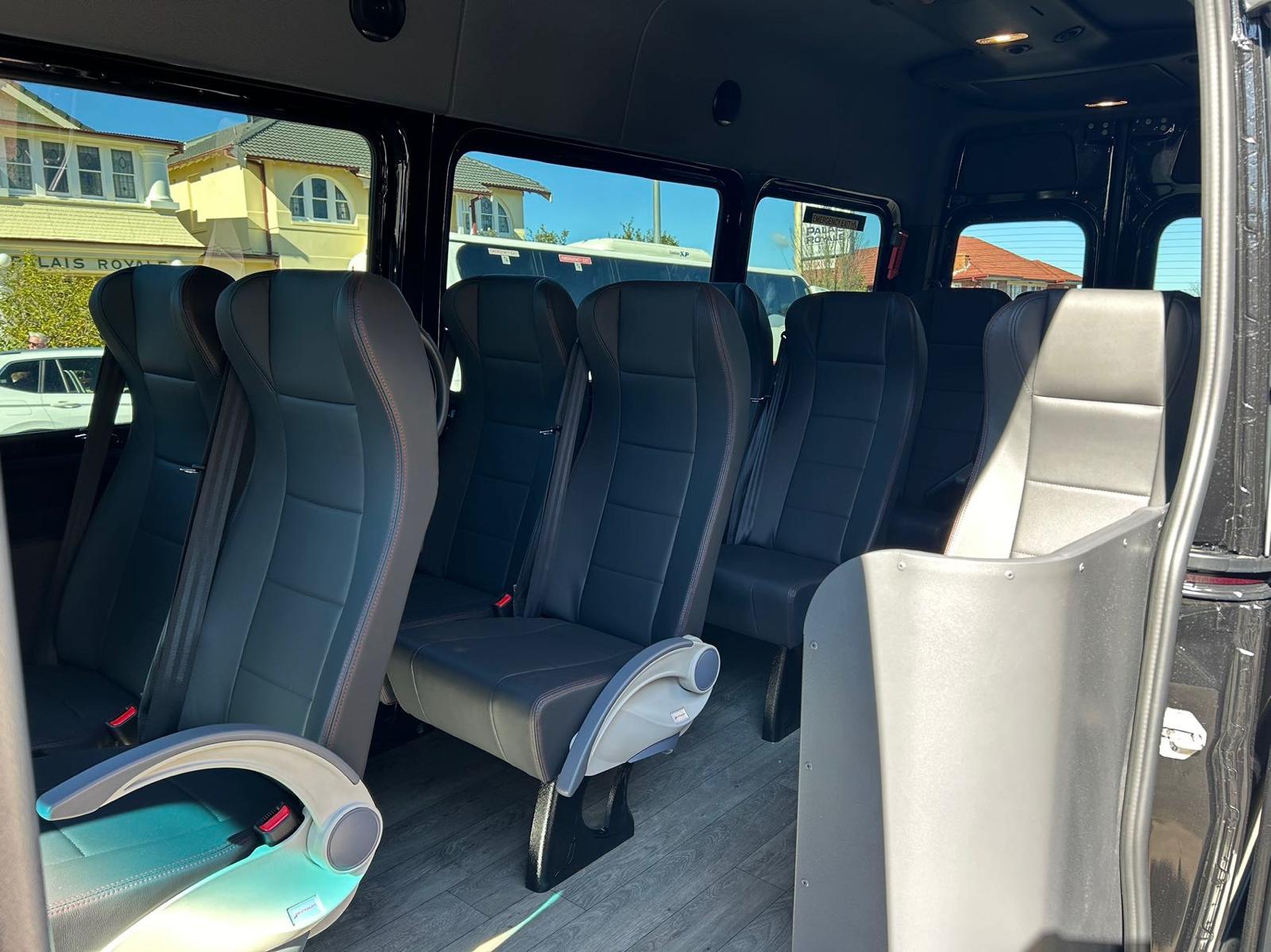
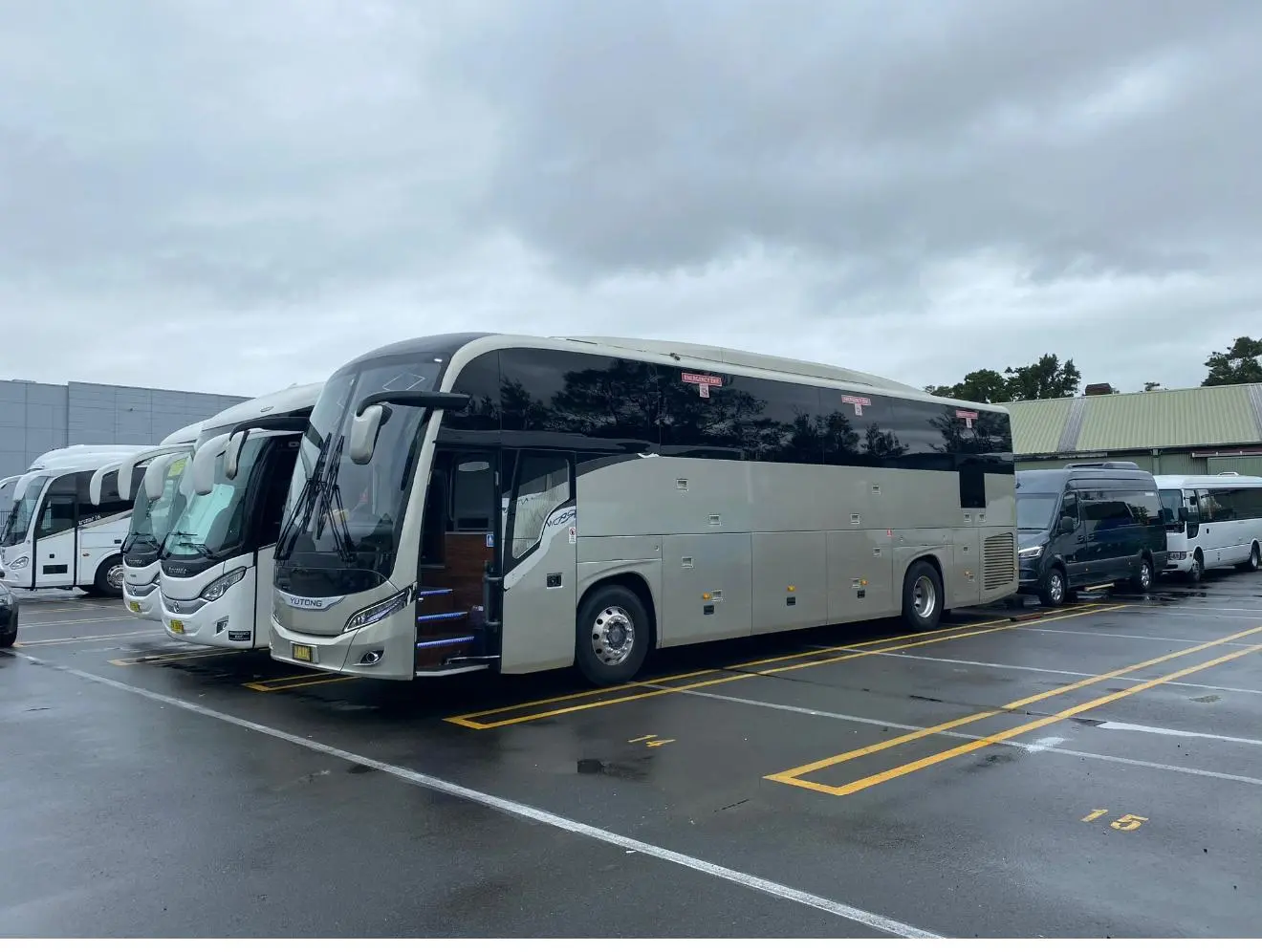
Vehicle size feeds back into timing. A larger group means more loading time, and possibly a second vehicle that has to be staged rather than parked. It is worth looking at the vehicle sizes available while the schedule is still a draft, because the answer changes the shape of the day.
Where the coach comes from matters too. The vehicle has to reach your gate before the booked time. Sydney Buses and Coaches covers six Greater Sydney regions with no travel surcharge inside Greater Sydney, and you can see the Greater Sydney regions covered, but the dead-running leg to your school still occupies real minutes on the morning of the trip.
Where Sydney excursion schedules actually break
The morning almost never breaks. The morning has a bell driving it and a car park full of parents. What breaks is the middle of the day, and the damage only shows up at 2:45pm.
Watch for these four.
A programme that ends at the same time the coach is booked to leave. Those are two different events. Put a loading block between them.
A venue exit shared with the general public. A three hundred student carnival group and a school holiday crowd leaving the same doors is not a scheduling problem you can solve on the day.
A return leg planned through the afternoon school zone at 3:30pm. The zone is 40 km/h until 4:00pm at most sites, and it applies at every school you pass, not just yours.
Waiting time nobody agreed to. Sydney Buses and Coaches confirms waiting time beyond the booked window in advance and prices it separately. If the day is running long, tell the driver early rather than at the booked departure time.
What the operator needs from you to make the timing real
A schedule is only as good as the inputs. Give the operator the venue, the set-down point you intend to use, the return bell, and the headcount including staff. You will get back a quote naming the vehicle, which is what lets you finalise loading times rather than guess them.
Sydney Buses and Coaches returns a written quote within two business hours, and sends the driver name, mobile and vehicle registration twenty-four hours before travel. Put the driver’s mobile in the day plan the supervising teacher carries, not just in the coordinator’s inbox. On the day, the single most useful thing a supervising teacher can do is tell the driver at the venue that the group is running fifteen minutes late, while there is still time to do something about it.
Book inside the published lead times too. Most jobs want two to four weeks. Peak periods, which include excursion season, want four to eight.
Frequently asked questions
How much buffer should I build into an excursion schedule?
Build the buffer into named blocks rather than as one lump at the end. A loading block at each end, and a separate block between the programme finishing and the coach leaving, survives contact with the day. A single “contingency” line at the bottom of the plan gets spent by 10am.
When should the coach arrive at the school?
Before the booked departure time, so loading starts on time rather than beginning when the vehicle appears. Ask your operator what its standard presenting time is and write that into the plan as its own line.
Do school zones really affect an excursion?
Yes, at both ends. The limit is 40 km/h and most zones run 8:00 to 9:30am and 2:30 to 4:00pm. A return timed for 3:15pm is driving the last leg inside the zone by design. Check the sign at your own gate, because non-standard times exist.
Can we schedule an excursion on a school development day?
No. School development days are staff-only days, so an excursion cannot fall on one. They also sit inside the notified school days on which school zones operate, so they do not even give you a clearer road.
What happens if the day runs over?
Tell the driver as early as you know. Waiting time beyond the booked window is confirmed in advance and priced separately, and a driver who knows at midday can often absorb part of it. A driver told at the booked departure time cannot.
Next step
If you are drafting a schedule now, send the venue, the return bell and your headcount including staff, and ask for the loaded run time on your corridor before you commit the day to families.
Sydney Buses and Coaches handles school and excursion transport across Greater Sydney and can supply the accreditation and Working With Children Check details your excursion file needs alongside the quote. Call 02 9469 6600 with the date and the pick-up suburb.
Sources
- Transport for NSW, School zones, https://www.transport.nsw.gov.au/roadsafety/community/schools/school-zones. Accessed 7 September 2026.
- Transport for NSW, Opal peak and off-peak fares, https://transportnsw.info/tickets-fares/fares/opal-peak-off-peak-fares. Accessed 7 September 2026.
- Sydney Opera House, Plan your excursion, https://www.sydneyoperahouse.com/schools/plan-your-excursion. Accessed 7 September 2026.
- ICC Sydney, Getting here, https://iccsydney.com.au/visitors/getting-here/. Accessed 7 September 2026.
- Sydney Olympic Park Authority, Bus and coach parking, https://www.sydneyolympicpark.com.au/parking/bus-and-coach-parking. Accessed 7 September 2026.
- NSW Legislation, Road Rules 2014, https://legislation.nsw.gov.au/view/html/inforce/current/sl-2014-0758. Accessed 7 September 2026.
- NSW Department of Education, School calendar 2026, https://education.nsw.gov.au/schooling/calendars/2026. Accessed 7 September 2026.