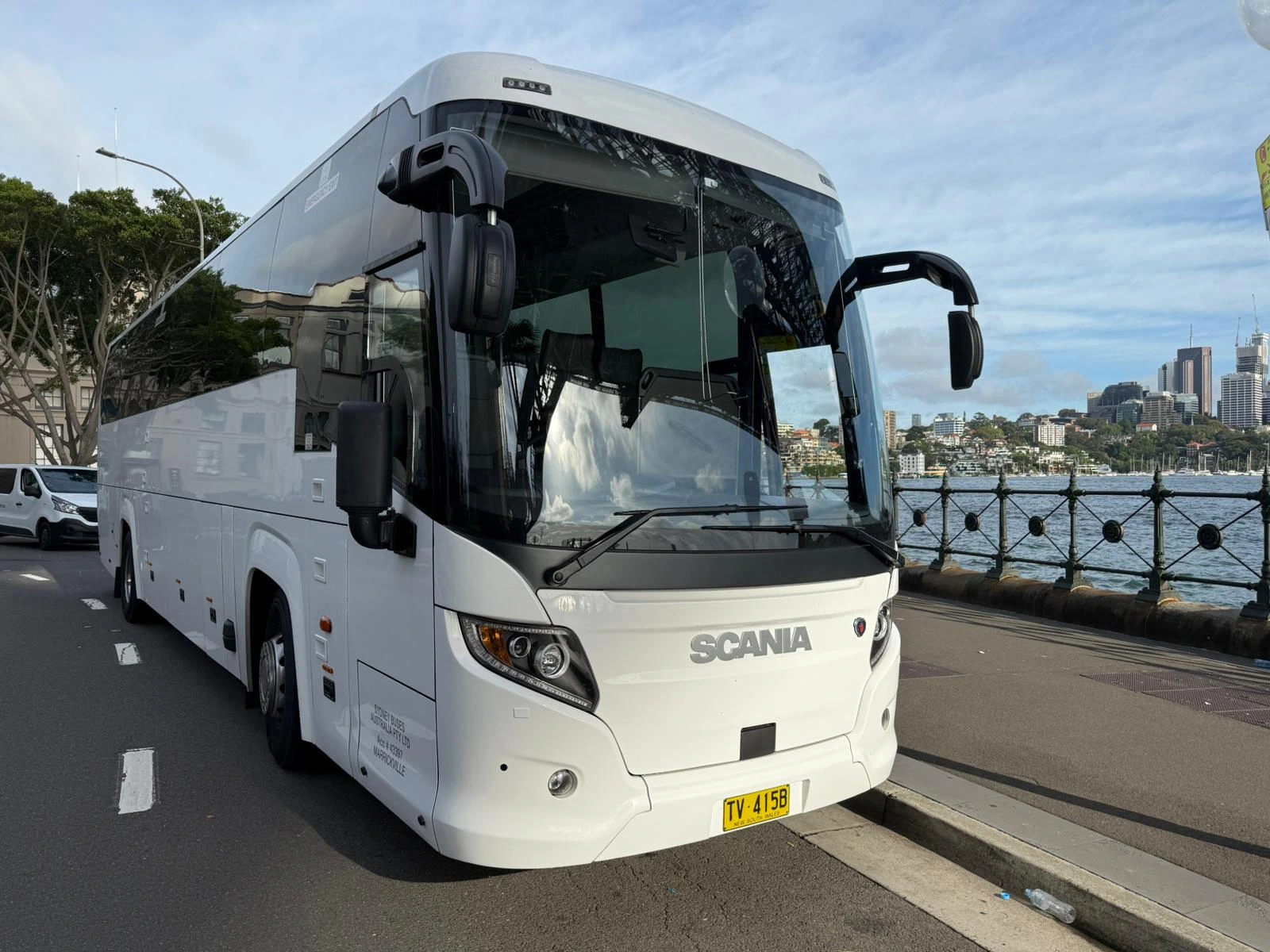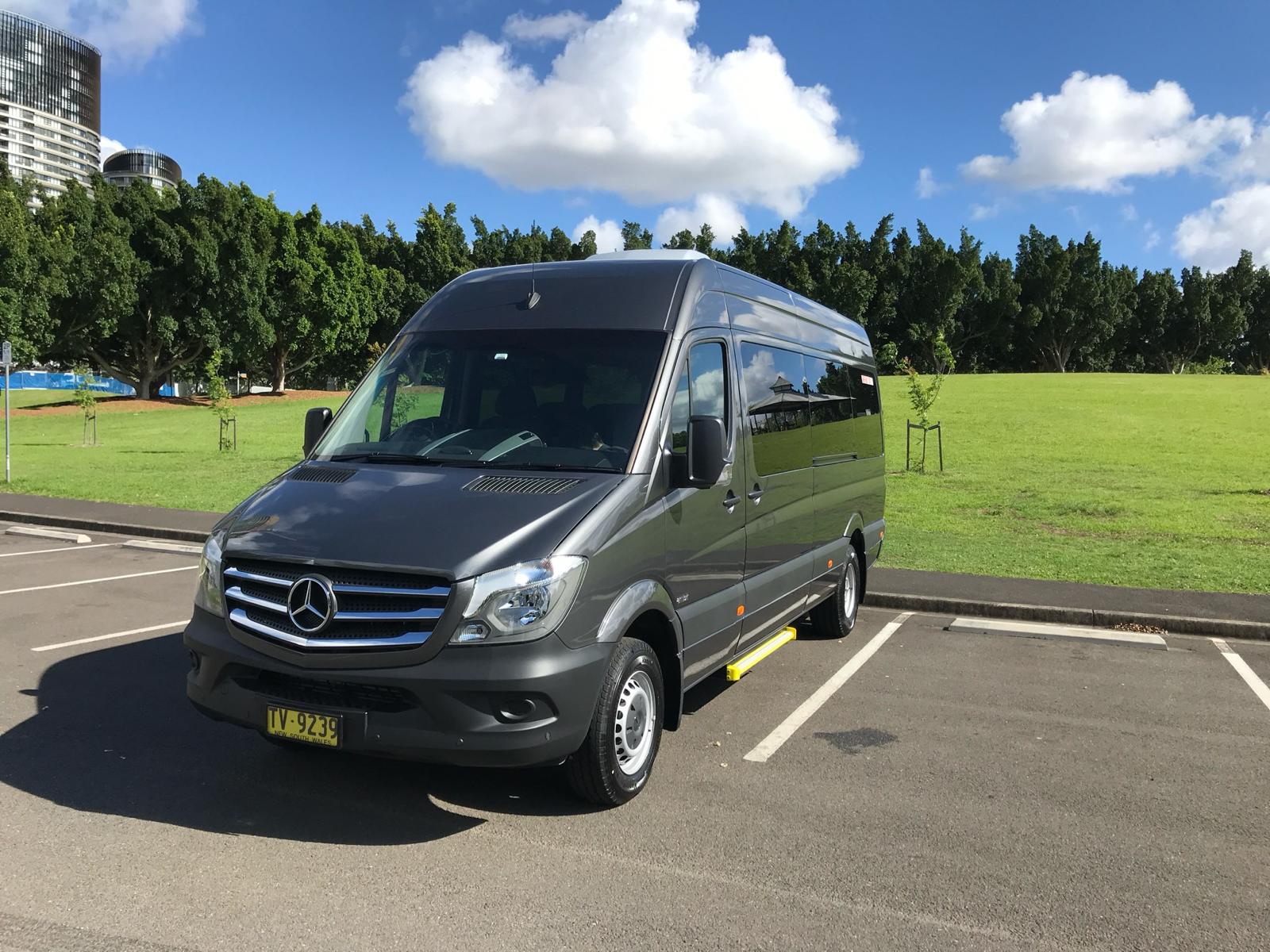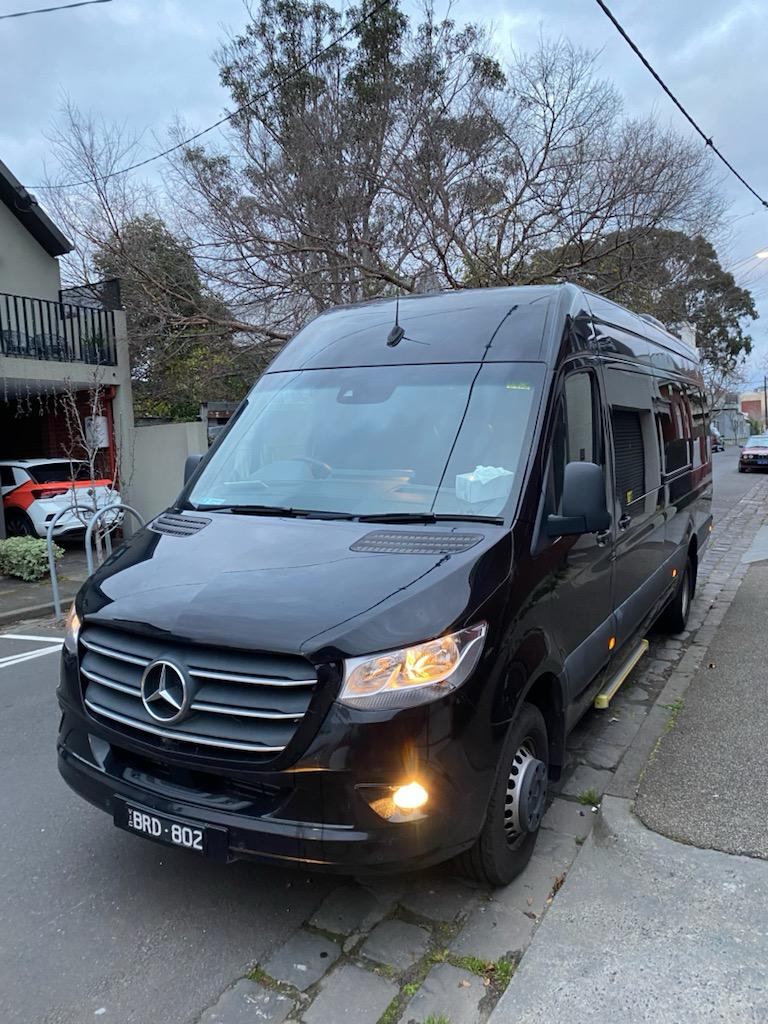
Charter quotes are rarely comparable as written, so comparing them takes two steps rather than one. First normalise: force every quote onto the same trip, the same vehicle class, the same number of chargeable hours and the same GST treatment. Then score: weight the things that are not price, because a cheaper quote on a vehicle that cannot fit your group is not cheaper. Both grids are reproduced in full below and can be copied straight into a spreadsheet.
Step one: make the quotes describe the same trip
Before a single figure goes into a comparison, check that the three documents in front of you are quoting the same job. Most price gaps are not discounts. They are differences in what each operator wrote down.
Send this five line clarification to every operator you are comparing, and put their written answers in the grid rather than your interpretation of a phone call.
- Which vehicle type and seat count is held for us, and does the seat count exclude the driver?
- How many chargeable hours is this priced on, and what minimum hire applies?
- Is this an hourly booking or a single fixed transfer fare?
- Is GST inside the total shown?
- Which of tolls, parking, public holiday or after-hours loading, and waiting time beyond the booked window are inside this figure, and which are billed separately?
You can hold every answer against our published hourly rates and minimum hire periods, which is the same table you should be applying to every other quote on the desk.
Grid one: the normalisation table
One row per line item, one column per operator. Fill in what the quote says, not what you assume it means. A blank cell is a finding, not a gap.
| Line | Operator A | Operator B | Operator C |
|---|---|---|---|
| Legal entity on the invoice | |||
| NSW operator accreditation number | |||
| Vehicle type and seat count offered | |||
| Seat count excludes driver? | |||
| Chargeable hours priced | |||
| Minimum hire applied | |||
| Hourly rate, or fixed transfer fare | |||
| Headline total as quoted | |||
| GST: inside or added | |||
| Total with GST inside | |||
| Driver included | |||
| Fuel included | |||
| Vehicle insurance included | |||
| Tolls: included, estimated, or billed at cost | |||
| Parking at each venue: included or separate | |||
| Public holiday loading: trigger and rate | |||
| After-hours loading: trigger and rate | |||
| Waiting time beyond booked window: trigger and rate | |||
| Driver accommodation, multi-day trips only | |||
| Deposit amount and due date | |||
| Balance due date | |||
| Cancellation terms: written, and where | |||
| Named day contact and phone number | |||
| Normalised total, GST inside |
The four rows for driver, fuel, vehicle insurance and GST exist to be ticked, not calculated. At Sydney Buses & Coaches those four sit inside every quoted price. Tolls and parking, driver accommodation on multi-day trips, public holiday and after-hours loading, and waiting time beyond the booked window are confirmed with you in advance and priced as their own lines. An operator who cannot tell you which of those two lists an item sits in has not finished quoting, and their column is not yet comparable.
The minimum hire trap
Minimum hire is the single most common reason two honest quotes look nothing alike. It is three hours on minibuses and people movers, and four hours on midi-coaches and full-size coaches. That is a floor on an hourly booking, not an estimate of how long your trip takes.
Two consequences catch buyers out. Here is the arithmetic, worked from the published GST inclusive rate card rather than from any actual booking.
A short job does not get a short price.
| Job | Vehicle | Rate basis | Billed |
|---|---|---|---|
| Two and a half hours of driving | 27-seat executive midi-coach | $165 per hour, four hour minimum | $660 |
| Two and a half hours of driving | 24-seat executive minibus | $145 per hour, three hour minimum | $435 |
Three extra passengers move you from a three hour minimum to a four hour one and from $145 to $165 an hour. On the same job that is a $225 difference created entirely by group size. If your headcount is sitting at 25 or 26, the number worth checking is whether it is genuinely fixed.
Splitting a job in two can double the minimum.
| Way the same day is booked | Vehicle | Billed |
|---|---|---|
| One continuous six hour booking, coach retained through the gap | 27-seat executive midi-coach | 6 hours at $165, $990 |
| Two separate bookings, morning and evening | 27-seat executive midi-coach | 4 hours plus 4 hours at $165, $1,320 |
An operator quoting the second structure is not overcharging. They are quoting what you asked for. If your gap is three hours or less, ask both operators to price the continuous version as well and put both in the grid.
There is one clean exception to all of this. An airport run or another point-to-point transfer can be quoted instead as a single fixed transfer fare, and a fare quoted that way is not charged at a minimum. Your grid needs to know which of the two it is, because you cannot compare a fare against an hourly rate without converting one.
The rows that actually differ
Four rows do most of the work in a Sydney comparison, and all four are on the separately priced list.
Tolls. Sydney’s toll roads classify by dimension, not weight and not axle count. Class A is 12.5 metres or less in length and 2.8 metres or less in height. A full-size coach is over 2.8 metres high, so it is Class B on every class-based Sydney toll road regardless of length. A minibus may well sit in Class A. Same operator, same trip, different vehicle, different toll exposure. The Class B multiple is not uniform either: it is triple on roads including NorthConnex, the Hills M2, the M5 South-West, the Westlink M7 and WestConnex, double on the Eastern Distributor and the Cross City Tunnel, and there is no heavy class at all on the Sydney Harbour Bridge and Tunnel, where every vehicle pays the same toll priced by time of day. Toll amounts are indexed, so what you want in the grid is the treatment, not a cent figure.
Parking. Some Sydney venues charge coaches to park, some direct coaches to a set-down point with nowhere to wait, and some require a booking arranged through the venue. That is a per-venue answer, so give it a row per venue on a multi-stop job.
Waiting time. This is measured against the booked window, which means it depends entirely on the finish time each operator wrote down. Two quotes with different finish times are not comparable on waiting time until you fix the window.
Loadings. Public holiday and after-hours loading are legitimate charges, but only if the trigger was visible before you committed. A row with a trigger and a rate is fine. A row that says “may apply” is a blank cell.
Grid two: the scoring grid
Price is one criterion. Run the rest through this and set your own weights, because a school and a conference organiser weight these differently. Score each operator out of 5, multiply by the weight, total the columns.
| Criterion | Weight | What a 5 looks like | A | B | C |
|---|---|---|---|---|---|
| Normalised price | 30 | Lowest total once every quote is on the same trip and GST basis | |||
| Quote completeness | 15 | Every row in grid one is filled, in writing | |||
| Vehicle fit | 15 | Named vehicle seats the group with luggage, not just the headcount | |||
| Accreditation evidence | 10 | Accreditation number given and a certificate offered on request | |||
| Operator or broker | 10 | Owns the vehicles and employs the drivers, so you know who turns up | |||
| Contingency | 10 | A written answer on what happens if a vehicle fails | |||
| Contactability on the day | 5 | A named contact and a number that is answered outside office hours | |||
| Response speed | 5 | Written quote back quickly, without chasing | |||
| Total | 100 |
Two notes on scoring. There is no public register of accredited NSW bus operators, so “accreditation evidence” means the operator gives you a number and offers the certificate, not that you looked it up. Ours is 43397. And the operator versus broker row matters more than it looks: a broker’s quote is a price for finding you someone, and the vehicle that arrives may not be the one on the document.
Presenting it to an approver
An approver does not want two grids. Give them four lines and attach the grids.
- The recommendation, named, with the normalised total including GST.
- The gap to the next quote, and the one sentence reason it exists. “$180 higher because their quote includes tolls and parking, which the cheaper quote bills afterwards.”
- The risk you are buying down. Vehicle fit, accreditation evidence, or contingency.
- What is still variable, and its ceiling. Waiting time beyond the booked window is the usual one.
That fourth line is what protects you later. An approver who has seen the variable in advance is not surprised by the invoice.
Frequently asked questions
How do I compare a fixed transfer fare against an hourly quote?
Convert the hourly quote to a total using its own minimum hire, then compare totals. Do not divide the fare by hours to make an implied hourly rate, because a fare is not charged at a minimum and the two are priced on different bases.
One quote is much cheaper. What is usually missing?
Check five rows first: GST treatment, chargeable hours against the minimum, tolls, venue parking, and the finish time the booked window is measured from. In most comparisons the gap is sitting in one of those five rather than in the hourly rate.
Should I ask every operator for the same vehicle?
Ask for the same seat count band and let each operator name the vehicle. If one offers a 27-seat midi-coach and another a 24-seat minibus for the same 24 people, that is a real difference worth scoring, not an error to correct.
Is a cheaper quote from a broker a problem?
Not automatically, but score it honestly. A broker is quoting to arrange the job with a third party, so the accreditation number, the vehicle and the driver you end up with may not be the ones on the quote. Ask who holds the accreditation for the vehicle that will actually arrive.
Next step
Fill in grid one with the quotes already on your desk, then send us the same trip and we will quote against it. Pick-up suburb, date and group size is enough to start. A written quote with the vehicle named comes back within two business hours during office hours, or call 02 9469 6600.
Sources
- Linkt, Vehicle classes on Sydney toll roads, https://www.linkt.com.au/help/travelling-toll-roads/vehicle-class/sydney. Accessed 7 September 2026.
- Transport for NSW, Vehicle classes, https://www.myetoll.transport.nsw.gov.au/help-and-faqs/vehicle-classes. Accessed 7 September 2026.
- Transport for NSW, Applying for bus operator accreditation, https://www.nsw.gov.au/departments-and-agencies/transport-for-nsw/bus-operators-nsw/applying-for-bus-operator-accreditation. Accessed 7 September 2026.