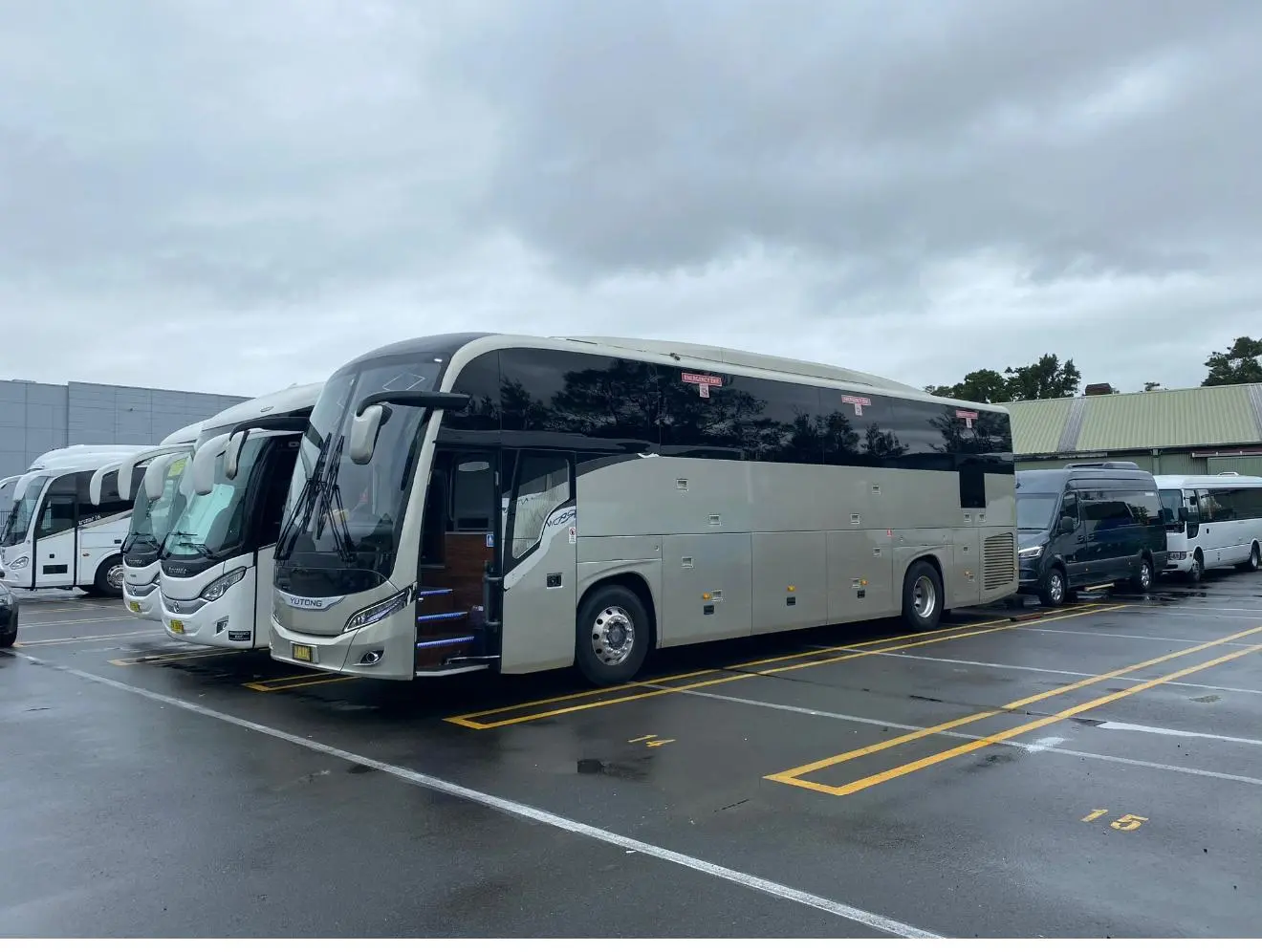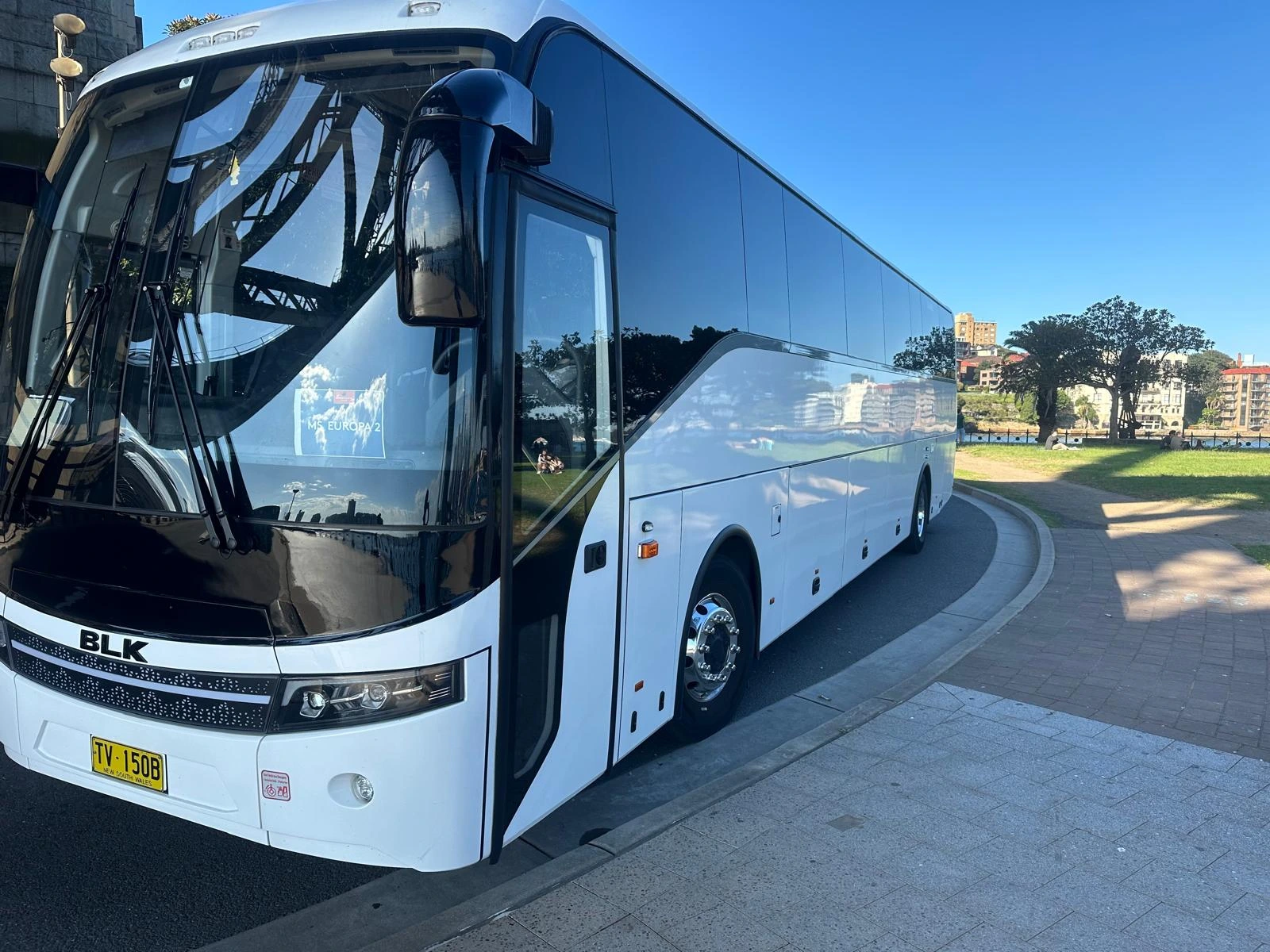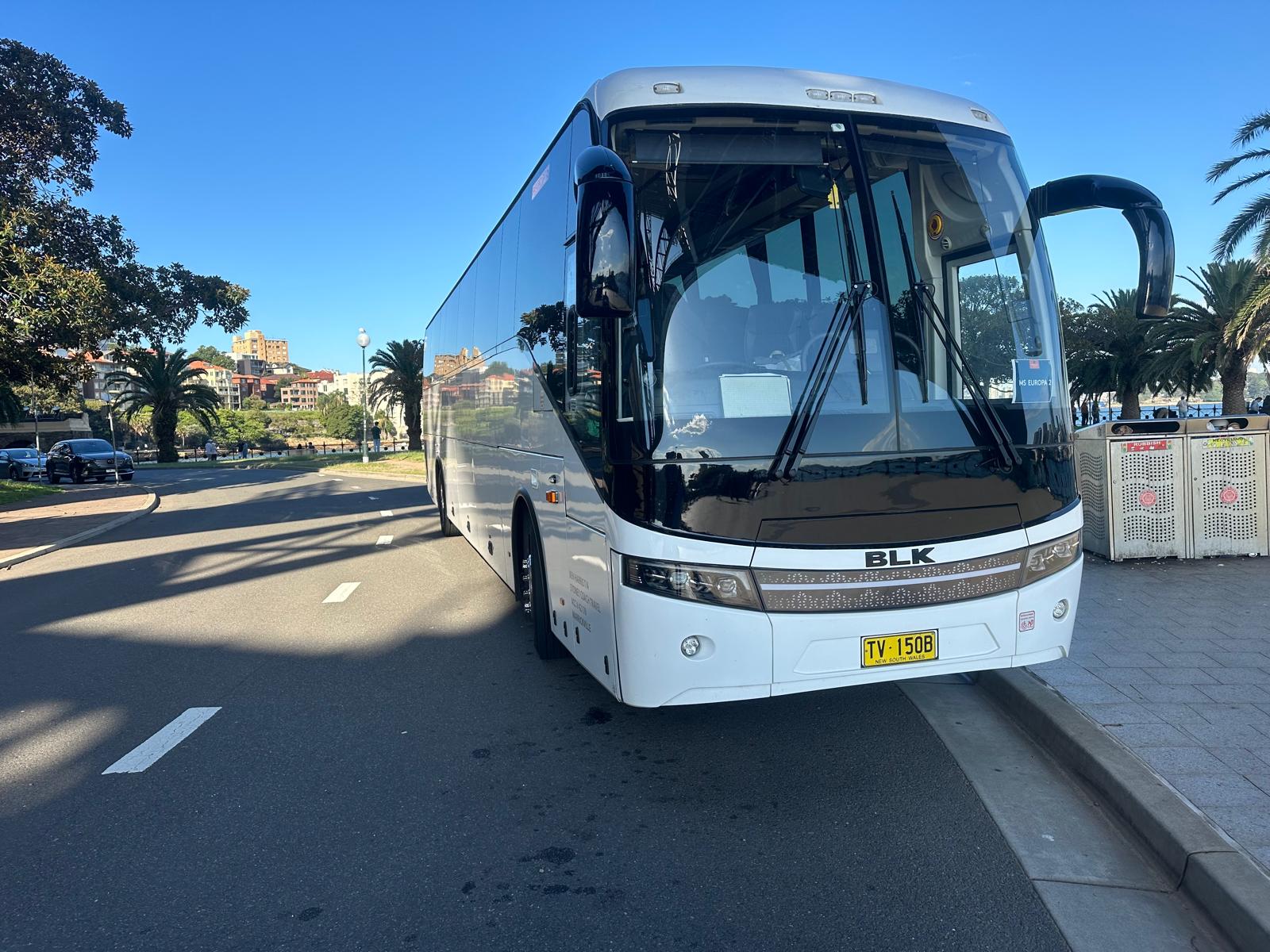
A NSW Class C car licence covers a vehicle seating up to 12 adults including the driver, and up to 4.5 tonnes gross vehicle mass. Both limits apply at the same time, which is the part most self-drive plans miss: plenty of 12-seat minibuses sit above 4.5 tonnes, so the seat count alone never settles it. Above Class C, licence classes are set by GVM and axle count, not by seats, and a driver of a public passenger bus at 13 seats or more also needs a Bus Driver Authority.
The two limits that apply at the same time
Almost every “can I just drive it myself” plan collapses on this point, so it is worth stating precisely.
A Class C licence permits up to 12 adults including the driver, which is the driver plus eleven passengers. It is not twelve passengers plus a driver. And the vehicle must be 4.5 tonnes GVM or under. Failing either limit takes the vehicle out of Class C.
The weight limit is the one that catches people. A vehicle can be advertised as a 12-seater and still exceed 4.5 tonnes GVM, at which point a car licence does not cover it no matter how the seats are counted. The check is on the compliance plate, not on the listing. Before you sign a self-drive agreement, read the plate, note the GVM, and count the axles.
Above Class C, the ladder is set by weight and axles:
| Class | What it covers |
|---|---|
| C | Up to 4.5 tonnes GVM, and up to 12 adults including the driver |
| LR | Up to 8 tonnes GVM, and more than 12 adults including the driver |
| MR | Rigid vehicle, 2 axles, over 8 tonnes GVM |
| HR | Rigid vehicle, 3 or more axles, over 8 tonnes GVM, expressly including articulated buses |
Notice what is missing from that table: seat numbers, above the Class C boundary. There is no seat-based licence rule beyond 12. So the question “what licence do I need for a 20-seater” has no seat-based answer, and any source that gives you one has skipped a step. The answer comes from the compliance plate and the axle count for the specific vehicle.
What changes at 13 seats
Thirteen seats is the operative commercial boundary in NSW, and three separate things move at once.
Operator accreditation moves to Transport for NSW. A commercial passenger service using vehicles seating 13 or more is accredited by Transport for NSW under the Passenger Transport Act 1990. At 12 seats or fewer, it sits with the Point to Point Transport Commission instead. There is no public register of accredited bus operators, so the only real verification route is asking the operator for its Certificate of Accreditation. The maximum penalty for operating unaccredited is $110,000.
The driver needs a Bus Driver Authority. A Bus Driver Authority is required to drive a public passenger bus or coach seating 13 or more. It is issued by Transport for NSW through Service NSW, is valid three years, and requires a commercial medical no more than six months old, a National Police Check no more than three months old covering all current and former names, an approved training course and a fit-and-proper assessment. Eligibility is age-banded, and drivers over 60 need annual medicals. A Bus Driver Authority is a separate thing from a Working With Children Check.
The regulated environment attaches to the fare, not to the vehicle. These obligations attach to providing a public passenger service, which under the Passenger Transport Act 1990 means carrying passengers for a fare or other consideration. A charter service is expressly a type of public passenger service. So the moment carriage is being provided commercially, the accreditation and driver authority framework is live.
The practical consequence for an organiser is simple. If the plan needs 13 or more seats, self-drive stops being a licence question and becomes a structural one.
The volunteer driver problem nobody prices
This is the honest part of the comparison, and it rarely appears on a self-drive rental page.
A commercial Sydney charter operator sits inside the heavy vehicle fatigue regime. NSW inserted an exemption for drivers of fatigue-regulated buses and hire vehicles, but that exemption does not apply to driving a bus to provide a public passenger service, and a charter service is exactly that. So a charter driver has enforceable work and rest limits: under standard hours for solo drivers, 12 hours work and 7 continuous hours stationary rest in any 24 hours, 72 hours work and 24 continuous hours stationary rest in 7 days, and 144 hours work in 14 days. A separate bus and coach standard hours table applies as an alternative, requiring 6 night rest breaks in 7 days, and a driver uses one table or the other, not both. Worth noting that the 100 km radius people cite is a record-keeping tier, not an exemption: work and rest limits apply in full inside it.
A volunteer driving a hired 12-seater is outside all of that, because a vehicle that is not built to carry more than 12 adults including the driver, or that sits at or under 4.5 tonnes, is not a fatigue-regulated bus. That sounds like freedom. It is better described as the absence of a backstop.
Think about what the volunteer is actually taking on. They have usually worked a full day before the trip. They will drive the group out, wait through the event, and drive an unfamiliar vehicle home late, in the dark, with twelve people behind them and no legal limit telling them to stop. If they are the club treasurer or the parent who volunteered, they are also the person handling everything else. There is no rest requirement protecting them, no relief driver, and no operator monitoring the roster.
A second point sits alongside it, and it works the opposite way to what people expect. On a vehicle meeting the Road Rules definition of a bus, more than 12 adult seats including the driver, the driver-responsibility rule for seatbelts and child restraints expressly excludes bus passengers. There is no equivalent relief on a 12-seat-or-fewer minibus, which is not a bus for these rules. So the volunteer in the self-drive 12-seater carries driver-responsibility duties for under-16 passengers that a coach driver does not. The smaller vehicle is the higher personal exposure, not the lower one.
Separately, from 1 August 2026 the heavy vehicle impairment duty extends to any heavy vehicle over 4.5 tonnes GVM, which is worth knowing if the self-drive vehicle is larger than a standard minibus.
Where self-drive genuinely loses in Sydney
Beyond the licence question, Sydney’s group infrastructure is built around accredited operators, and a self-drive vehicle simply cannot use parts of it.
Sydney Airport. Access to the dedicated Ground Transport Zones requires registration through the Bus and Limousine Registration System, and operators must hold Transport for NSW bus and coach operator accreditation and carry substantial property-damage liability insurance per bus. A self-drive vehicle is not using the bus and coach pickup areas.
King Street Wharf. Transport for NSW operates a Bus and Coach Layover at King Street Wharf, accessed via Lime Street, open 24 hours with a maximum stay of 24 hours. It is for Transport for NSW accredited bus and coach operators only, with vehicles seating more than 12 adults, entry by number-plate recognition and prior registration by email. A self-drive group is not eligible.
Bus zones. Road Rules 2014 rule 183 permits a public bus to stop in a bus zone to set down or pick up passengers. The NSW Dictionary states that a public bus means a coach, and a coach is defined as a vehicle seating more than 8 adults used to convey passengers for hire or reward or in the course of trade or business. Whether a particular self-drive hire vehicle meets that definition depends on how it is being used, so do not build a pick-up plan around a bus zone. Even for a genuine coach, the permission is set down and pick up only, never waiting or layover.
Parking generally. The City of Sydney’s Central Sydney On-Street Parking Policy states that the City will not accommodate long-stay coach layover on-street in central Sydney, and there is no City of Sydney coach permit or booking system. A driven vehicle leaves and returns. A self-driven vehicle has to be parked somewhere for the whole event, by the person who was supposed to be enjoying it.
The comparison, written honestly
| Factor | Self-drive | Bus with a driver |
|---|---|---|
| Licence | Class C only if both limits are met: 12 adults including the driver, and 4.5 tonnes GVM or under. Above that, a higher class based on GVM and axles | Handled by the operator. Driver holds the correct class plus a Bus Driver Authority at 13 seats or more |
| Practical ceiling | Twelve people in the vehicle including whoever is driving, so eleven guests | 7 to 57 passengers on our published ladder, then a coordinated convoy above 58 |
| Fatigue protection | None. A vehicle under the fatigue-regulated bus threshold has no work or rest limits attached to it | Work and rest limits apply in full, because charter is a public passenger service |
| Restraint duties | The driver of a 12-seat-or-fewer minibus does not get the bus exclusion for under-16 passengers | The bus driver-responsibility rule excludes bus passengers, and adults aged 16 and over are responsible for their own belt |
| Sydney Airport zones | Not available | Available to registered, accredited operators |
| Parking and layover | Your problem, for the whole event | The vehicle leaves and returns |
| Who misses the event | Whoever is driving | Nobody |
| Cost shape | A daily rate, plus fuel, tolls, parking and the volunteer’s day | An hourly rate with the driver, fuel, vehicle insurance and GST included, on a three or four hour minimum, or a fixed transfer fare point to point |
Our published hourly rates start at $110 per hour for a 13-seat Toyota Commuter on a three hour minimum, which is the fair comparison point against a self-drive minibus day rate once you have added fuel, tolls, parking and a lost evening.
A five-question test before you commit to self-drive
- How many people are actually travelling, including the driver? Thirteen in the vehicle means Class C is out.
- What does the compliance plate say? If GVM exceeds 4.5 tonnes, Class C is out regardless of seats.
- Who is driving home at 11pm, and what did they do that day? Write the name down. If you cannot, the plan is not finished.
- Where does the vehicle park during the event? Central Sydney does not accommodate long-stay coach layover on-street, and there is no council coach permit system.
- Is anyone being charged for a seat? If money changes hands for the carriage, you are in different territory again, and it is worth advice before you proceed.
Frequently asked questions
Can I drive a 12-seater on a NSW car licence?
Only if both limits are met: no more than 12 adults including you, and a vehicle at or under 4.5 tonnes GVM. Many 12-seat minibuses exceed the weight limit, so check the compliance plate rather than the seat count. Failing either limit means a higher licence class is required.
What licence do I need for a 20-seat bus?
There is no seat-based answer above 12. Licence classes are set by gross vehicle mass and axle count: LR up to 8 tonnes, MR for a 2-axle rigid over 8 tonnes, HR for a 3-axle rigid over 8 tonnes. Check the specific vehicle’s compliance plate and count the axles. A driver of a public passenger bus seating 13 or more also needs a Bus Driver Authority.
Do I need a Bus Driver Authority to drive a hired minibus?
A Bus Driver Authority is required to drive a public passenger bus or coach seating 13 or more. It is a Transport for NSW authority, issued through Service NSW, separate from your licence class and separate from a Working With Children Check. If your plan needs 13 seats or more, this is a question to resolve before hiring anything.
Is self-drive cheaper than hiring a bus with a driver?
The daily rate usually looks cheaper. The comparison only becomes honest once you add fuel, tolls, event parking, the risk carried by the volunteer, and the fact that one member of the group misses the occasion. Our rates include the driver, fuel, vehicle insurance and GST, on a three hour minimum for minibuses.
Are there fatigue rules for a volunteer driving a hired minibus?
Generally no, and that is the problem rather than the benefit. A vehicle that is not built to carry more than 12 adults including the driver, or that is at or under 4.5 tonnes, is not a fatigue-regulated bus, so no work or rest limits attach to it. A commercial charter driver is inside those limits because a charter service is a public passenger service.
Next step
Tell us the group size, the date and both addresses, and we will price minibus hire in Sydney with a driver so you can compare it properly against a self-drive plan, per head and all in. Written quotes come back within two business hours, or call 02 9469 6600. The vehicles we run and their seat counts show where the 13-seat boundary sits in practice.
Sources
- NSW Government, “Licence classes and conditions”, https://www.nsw.gov.au/driving-boating-and-transport/driver-and-rider-licences/licence-classes-and-conditions/classes. Accessed 7 September 2026.
- Service NSW, “Apply for a Bus Driver Authority”, https://www.service.nsw.gov.au/transaction/apply-for-a-bus-driver-authority. Accessed 7 September 2026.
- Transport for NSW, “Applying for bus operator accreditation”, https://www.nsw.gov.au/departments-and-agencies/transport-for-nsw/bus-operators-nsw/applying-for-bus-operator-accreditation. Accessed 7 September 2026.
- National Heavy Vehicle Regulator, “Heavy vehicle fatigue management, bus industry”, https://www.nhvr.gov.au/safety-accreditation-compliance/fatigue-management/heavy-vehicle-fatigue-management-bus-industry. Accessed 7 September 2026.
- NSW Legislation, “Road Rules 2014”, https://legislation.nsw.gov.au/view/html/inforce/current/sl-2014-0758. Accessed 7 September 2026.
- Sydney Airport, “Resources for registered limousines, buses and coaches”, https://www.sydneyairport.com.au/corporate/partner-with-us/commercial-vehicles/resources-for-registered-limousines-buses-and-coaches. Accessed 7 September 2026.
- Transport for NSW, “King Street Wharf bus and coach layover”, https://www.transport.nsw.gov.au/operations/roads-and-waterways/business-and-industry/buses/operators/king-street-wharf-bus-and. Accessed 7 September 2026.
- City of Sydney, “Central Sydney On-Street Parking Policy”, https://www.cityofsydney.nsw.gov.au/-/media/corporate/files/publications/policies/central-sydney-street-parking-policy/central-sydney-on-street-parking-policy_0525.pdf. Accessed 7 September 2026.