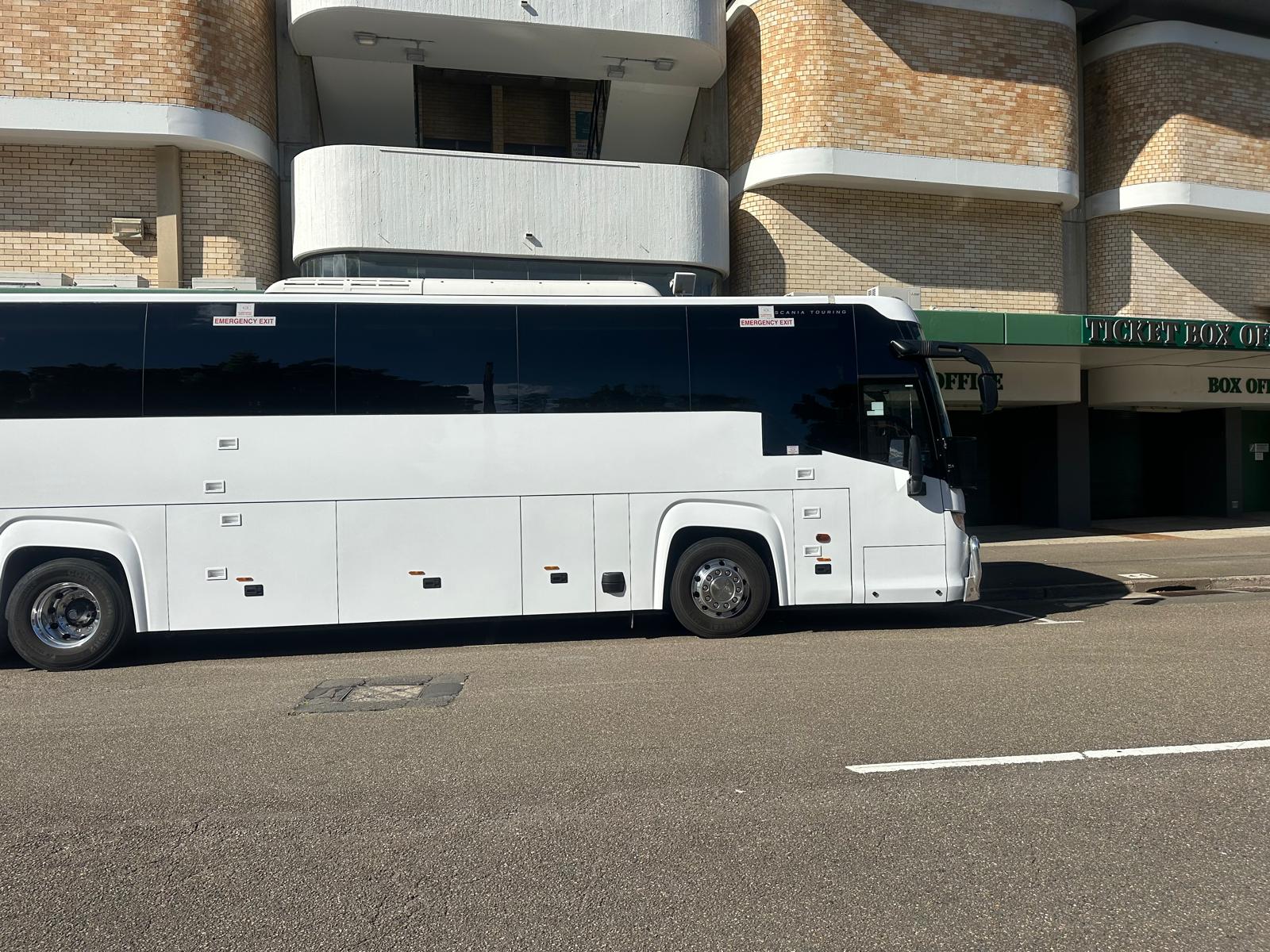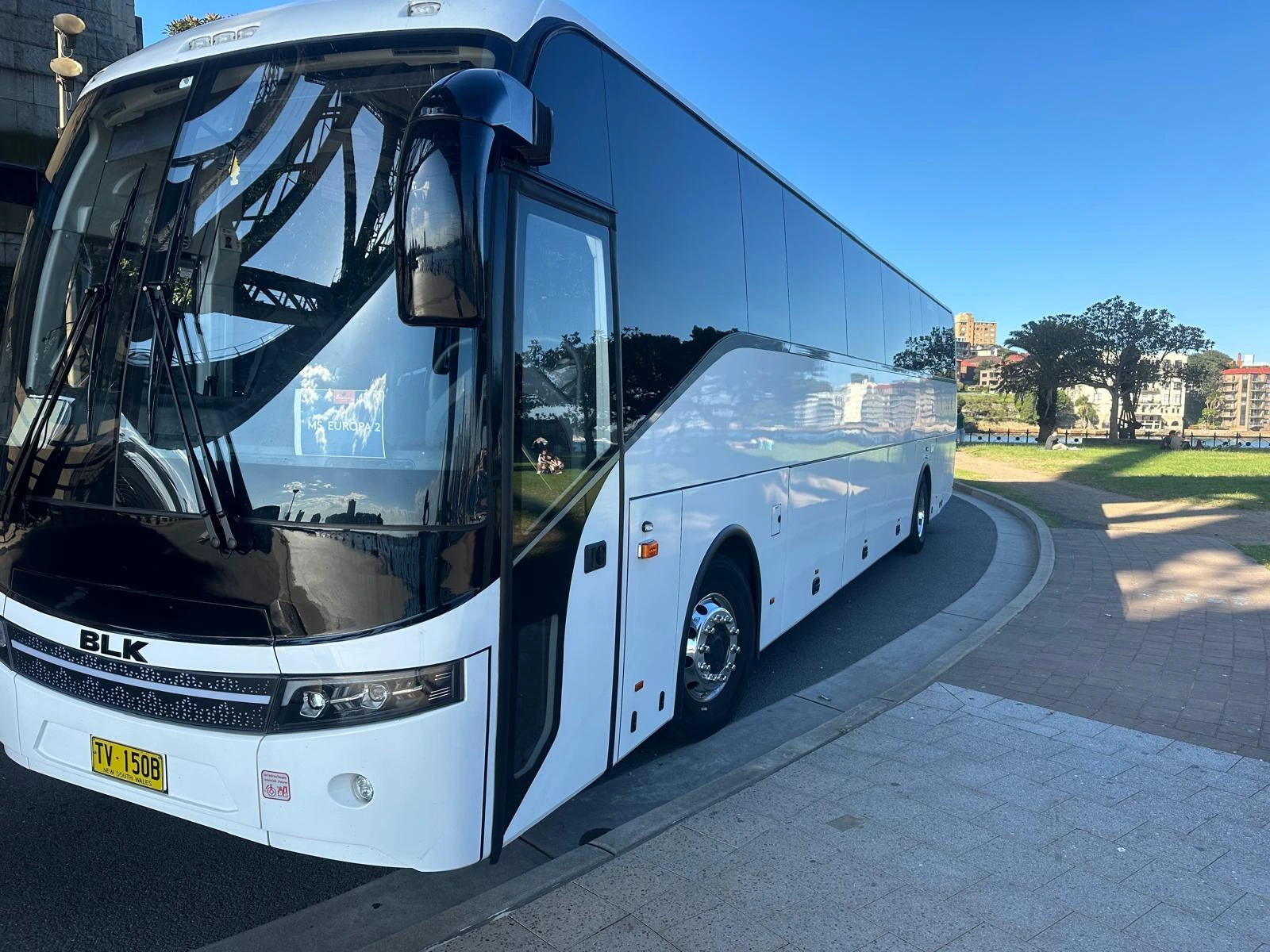
If you are booking transport you will not be on, your job is not to plan a trip. It is to build something that works without you in it. That means three things: a booking containing details you cannot personally verify, a group that has been told the right things in the right form, and a named person on the vehicle who can make a decision at 7.15am while you are in another meeting or another time zone.
The one thing that changes when you are not travelling
Everything else in group transport planning still applies. What changes is that you lose the ability to fix things by being there.
A passenger-organiser can walk twenty metres and find the coach. You cannot. So every assumption you would normally resolve by looking has to be resolved in advance, in writing, by someone else. That is the whole discipline, and it is why coordinators who do this often are the easiest customers an operator has: they over-specify on purpose.
What you need to find out that a passenger would simply know
A passenger-organiser knows these things without thinking. If you are not travelling, you have to ask.
| What to establish | Why it bites when you are absent |
|---|---|
| The exact pick-up address, not the suburb | You cannot walk out and wave. A street a coach cannot turn in is a problem you will hear about by phone |
| Whether the pick-up point suits the vehicle | A full-size coach exceeds 2.8 metres in height, which rules out most multi-storey and shopping-centre car parks |
| Where the group will physically stand | “Reception” means different things at a hotel, a campus and a conference centre |
| Who among the travellers is senior, and who is reliable | These are frequently not the same person, and you need the second one |
| Real numbers, including any partners, children or late additions | Group size sets the vehicle class, and a late addition can cross a band |
| Luggage profile | A group of 25 with day bags and a group of 25 with suitcases are two different vehicles |
| Accessibility needs | Wheelchair-equipped vehicles with hoists are available, but they have to be allocated in advance |
| Whether alcohol is expected on board | Permitted on private function bookings by prior arrangement only, and never on a school or youth charter |
| The hard arrival time, not the preferred departure | The schedule gets built backwards from the arrival |
| Billing route and any purchase order number | Cheaper to establish now than to chase through accounts payable in three weeks |
If you can only get four of these, get the address, the numbers, the arrival time and the reliable person.
The driver should not be calling you
This is the most important sentence in this article. Name a day-of contact who is travelling with the group, or who will be physically at the pick-up point.
Twenty-four hours before travel, the driver’s name, mobile and the vehicle registration are sent out. That information needs to reach someone who will be standing at the kerb, not sitting at a desk across town.
The failure mode is specific and common: the coordinator’s mobile is the only number on the booking, the coordinator is in a meeting at 7.05am, and fifty people are standing on a footpath while a driver listens to a voicemail greeting. You are not the fix for that. A named person on site is.
Put both on the booking and label them clearly:
- Day-of contact: on the vehicle or at the kerb, phone on loud, empowered to say “wait three minutes”
- Booking contact: you, for changes, billing and anything before the day
Then brief the day-of contact properly. They did not choose this role and they need to know what it involves, which is roughly four minutes of work spread across the day.
The brief you send your group
Group briefings fail when they are long. Send this, and send it twice: once when the plan is set and once the day before.
> Transport: [what it is, for example a coach to the venue] > Assemble: [time] at [precise location, described so a stranger could find it] > Departs: [time] sharp > Return: [time and place] > Last service: [time]. Anything after that is your own arrangement > On the day, call: [day-of contact name and mobile] > Please do not call: [your name], I will not be on site
That last line looks blunt and it is the most useful one in the block. It redirects the calls before they happen.
Two conventions worth keeping. Give an assemble time, not a departure time, because a group told “the bus leaves at 7” produces a 7.20 departure. And say the last service time explicitly, because an unresolved last bus is how a well-run event ends in an argument in a car park.
If the group is arriving somewhere you have never been
Airport collections are the classic booking made by someone who will not be there, and the rules are not what most people assume.
At Sydney Airport, kerbside at Departures is set-down only and the driver must remain with the vehicle. Collection is a different thing entirely: commercial vehicles are registered, collection happens within dedicated ground transport zones rather than at the kerb, and there is a bus holding area on Ross Smith Avenue for vehicles waiting between movements. Coach drivers may leave the vehicle to meet passengers inside the terminal.
Meeting points matter here because your travellers will ask you where to go. Sydney Airport currently publishes meeting points at two terminals only: T1 International, Arrivals level, between exits A and B, and T2 Domestic, Arrivals level, opposite baggage carousel 6. There is no published T3 meeting point, so for a T3 arrival the meeting arrangement has to be agreed with the operator rather than assumed. Check the airport’s own pages before you send anything to travellers, because meeting points are described by furniture and signage that moves.
One height note that catches out people booking for large groups: the T2 and T3 Priority Pick-up zone carries a 2.9 metre restriction, which excludes full-size coaches. If your plan depends on a coach collecting from there, the plan needs to change rather than the vehicle.
You can see how Sydney Airport group transfers work for the structure of these bookings.
The handover pack
Three documents, three audiences. Build them once and reuse the shape for every job.
What the group gets: the seven-line brief above. Nothing else. Long emails do not get read on the morning of a trip.
What the day-of contact gets: the brief, plus the driver’s name and mobile and the vehicle registration once they arrive 24 hours out, plus the stop sequence, plus the operator’s office number and hours (02 9469 6600, Monday to Friday 7am to 6pm and Saturday 8am to 2pm), plus one line saying what they are authorised to decide without calling you.
What you keep: the written quote, the booking confirmation, the cancellation terms, the billing reference, and a note of who confirmed the venue’s coach access and when.
That last item is worth the thirty seconds. When a question comes up afterwards, “the venue confirmed the set-down point by email on the 14th” ends the conversation.
Closing the loop afterwards
You were not there, so you need a way to know how it went that is not the loudest passenger’s opinion.
Ask your day-of contact three questions the next morning, while it is fresh:
- Did the vehicle arrive before the assemble time?
- Did anything change on the day, and who decided it?
- Would you change the assemble point or the timings if we did it again?
Then write the answers into the same document you will reuse next time. The second booking for the same client, campus or venue should take ten minutes, and it will, if the first one left a record behind.
Repeat bookings: what to save
Coordinators who do this often keep a short file per venue or per client. Worth capturing:
- The pick-up address that worked, and the one that did not
- The venue’s confirmed coach set-down point and where the vehicle waits
- The realistic assemble time for that group at that site
- The vehicle class the numbers landed on, and whether luggage changed it
- Billing route and purchase order requirements
- The name of the person who is good at being the day-of contact
None of that is transport knowledge. It is institutional memory, and it is the actual product of doing this job well.
Frequently asked questions
Can I book a coach for a group I am not travelling with?
Yes, and it is a large share of charter bookings. The booking needs a day-of contact who will be present, and it needs the same detail any other booking needs: pick-up address, stop sequence, hard arrival time, numbers and luggage.
Who does the driver call if I am not there?
The day-of contact named on the booking. If that person does not answer, the driver calls the office, and the office works through the numbers on the booking. Naming a present, reachable contact avoids that chain entirely.
What if the numbers change after I have booked?
Tell the operator as soon as you know. A small change is usually just a note on the booking. A change that crosses a vehicle band changes the vehicle, the hourly rate and possibly the minimum hire period, so it is better raised early than absorbed quietly.
Can the invoice go to a different person than the booking contact?
Yes. Set the billing route up front, including any purchase order number, because retrofitting one after invoicing is slow in exactly the organisations that require them.
How do I brief travellers who are arriving at Sydney Airport?
Send them the terminal, the currently signposted meeting point and the driver’s name, and link them to the airport’s own pick-up page rather than paraphrasing it. Sydney Airport publishes meeting points at T1 and T2 only, so a T3 arrival needs an arrangement agreed with the operator in advance.
How far ahead should I book?
Two to four weeks covers most jobs. Allow four to eight weeks for December, race days, school excursion season and long weekends. If you are coordinating from outside Sydney, book earlier rather than later, because you have less room to improvise.
Next step
Send what you have, even if the group has not told you everything yet. Pick-up suburb, date and approximate numbers is enough to start, and a written quote with the vehicle named comes back within two business hours so you have a real figure rather than an estimate to defend. Start with corporate bus and coach hire in Sydney or call 02 9469 6600.
Sources
- Sydney Airport, Pick-up, https://www.sydneyairport.com.au/pickup. Accessed 7 September 2026.
- Sydney Airport, Drop-off, https://www.sydneyairport.com.au/dropoff. Accessed 7 September 2026.
- Sydney Airport, Resources for registered limousines, buses and coaches, https://www.sydneyairport.com.au/corporate/partner-with-us/commercial-vehicles/resources-for-registered-limousines-buses-and-coaches. Accessed 7 September 2026.