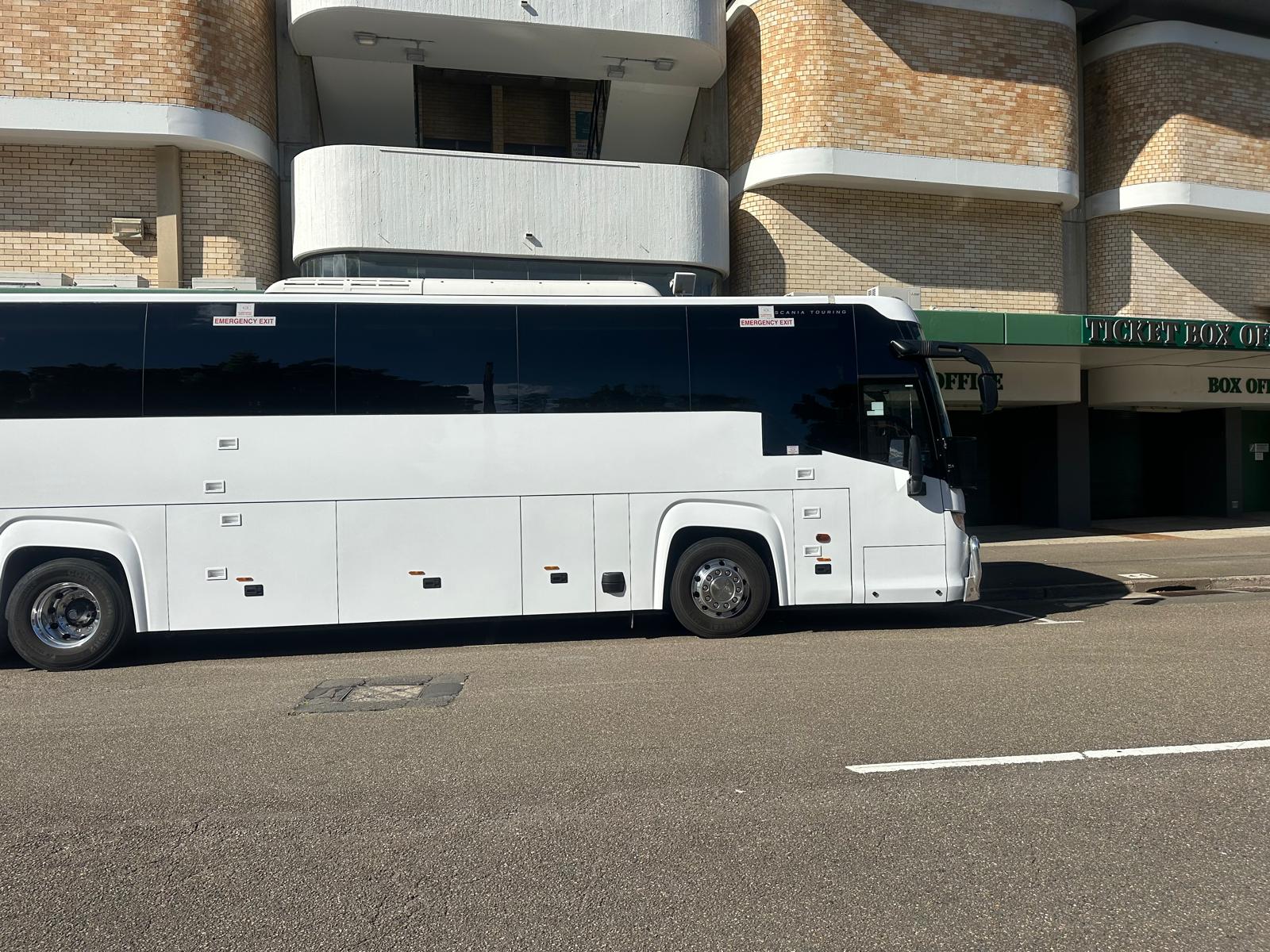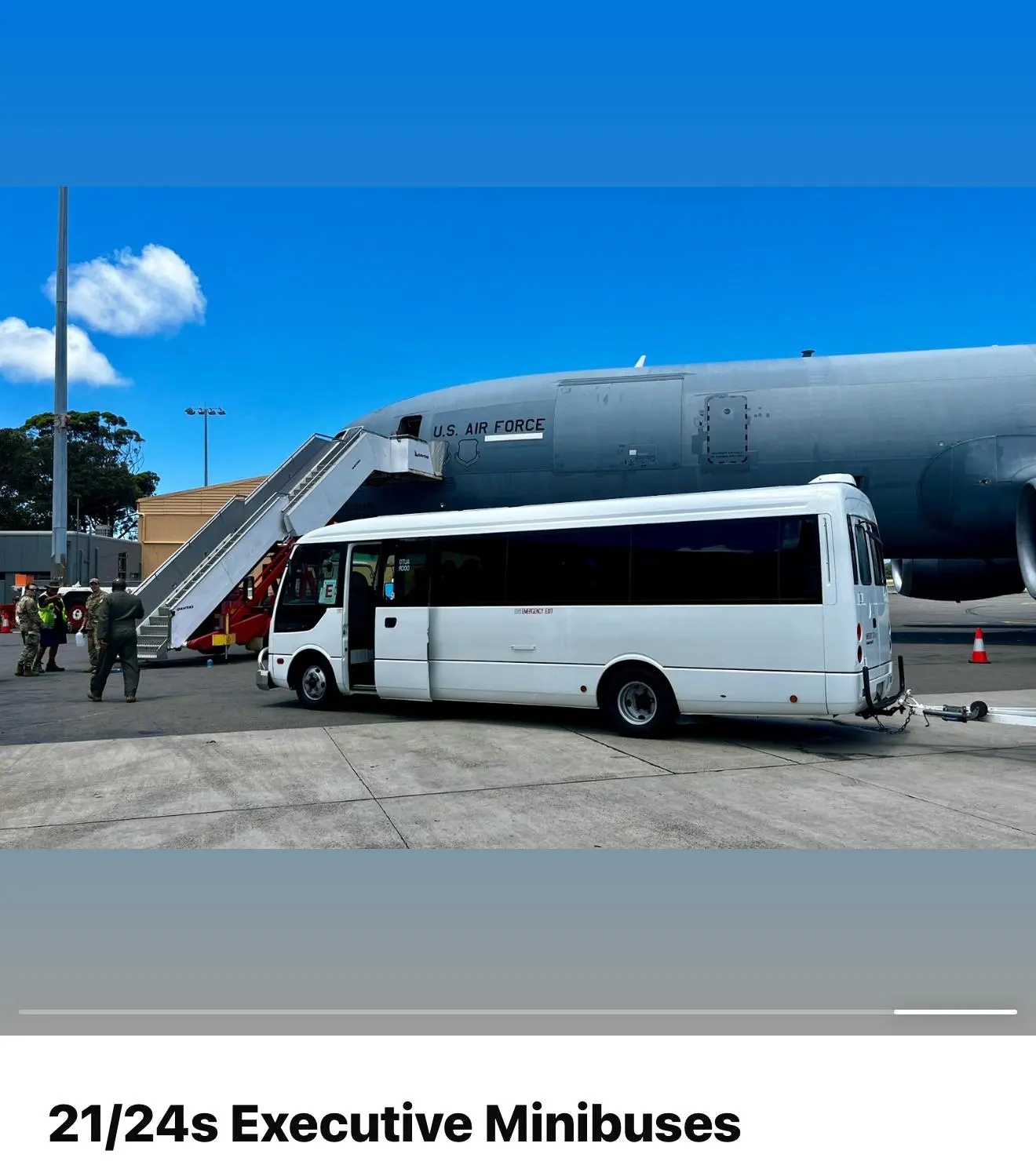
The driver is responsible for the vehicle. You are responsible for the people. That boundary holds on every charter, from a Year 5 excursion to a club trip to a race meeting, and most day-of problems come from someone assuming it sits somewhere else. The driver does not count your group, does not manage behaviour, and does not decide whether to leave without two people. You do. What follows is how to do that well, without a clipboard.
Where the boundary sits
| The driver is responsible for | The organiser is responsible for |
|---|---|
| Safe operation of the vehicle | Who is in the group, and whether they are all present |
| Route, road law and fatigue compliance | The head count at every boarding |
| Loading and stowing luggage safely | Behaviour on board |
| Deciding whether a load or a stop is safe | Deciding whether to wait for latecomers |
| Telling the organiser about a delay or a change | Deciding what happens to anyone who misses the last bus |
| Where the vehicle may legally stop and wait | Where the group assembles and how it is told |
The pattern is straightforward once you see it. Anything about the vehicle sits with the driver. Anything about the people sits with you. The boundary is not a way of shifting work onto organisers, it is what makes the day work: the driver cannot know that Priya went to find a coffee, and you cannot know that the next left turn is not a legal option for a 53-seat coach.
What the driver does not do, and why that is correct
Drivers are frequently expected to act as a second supervisor. They should not, and it is worth understanding why.
A driver managing behaviour in the aisle is a driver not watching the road. A driver counting your group is a driver relying on a number they have no way of verifying, because they do not have your list, do not know your people, and cannot tell a passenger from a passer-by at a busy Sydney kerb.
What a driver will do is tell you what they see. If two people are still on the footpath, you will hear about it. If someone is unwell, you will hear about it. The information comes to you and the decision stays with you.
There is one boundary that runs the other way and is not negotiable in your favour. If a driver judges that a load, a stop or a departure is unsafe, that call is theirs. Ask what the concern is, not whether it can be waived.
A headcount method that works on a 53-seat coach
Roll calls do not scale, and shouting names at a kerb on a Sydney arterial does not work. Use a structure instead.
- Assign a number to every seat block before you leave. Rows 1 to 5 are group A, rows 6 to 10 are group B, and so on. Four or five blocks is plenty.
- Give each block one named person. Not a supervisor, just someone who agrees to know their own eight.
- Count blocks, not people. “A, all in. B, all in. C, missing one.” Four answers instead of fifty.
- Count again before every departure, including departures from stops. This is the step everyone skips and it is the only one that catches a person left behind at a lookout.
- Say the number out loud to the driver. “Forty-six on, all present.” A spoken number creates the handover moment, and it gives the driver something to reconcile against if a question arises later.
For groups under about twenty, a single physical count at the door works fine. Count as people board, not once they are seated, because seated people move.
Counting without a roll call
Three techniques that work in noisy places:
- Count the empties. On a 53-seat coach with 46 travelling, seven seats should be empty. Counting seven is faster than counting forty-six.
- Pair people. Everyone has one buddy and answers for them. Used in schools for a reason, and it works just as well with adults on a wine tour.
- Count at the choke point. A door is a natural counter. A car park is not. Count where the group is already funnelled.
Multi-stop trips are where people go missing
A single pick-up, a single destination and a single return is easy. A Sydney day with a lookout, a lunch stop and a venue is where it comes apart, because at every stop the group scatters and reforms with different people in different places.
Four things that hold it together:
- Announce the departure time at the moment of arrival, not as you are leaving. “It is 11.40. We move at 12.25. The coach will be exactly where it dropped us.”
- Give a visible reassembly point, described by something a stranger could find. The coach is often not visible from where people are, because it will have moved to somewhere it can legally wait.
- Repeat the time in writing. A group message with the time and the point costs nothing and removes the most common excuse.
- Count before the doors close. Every time. Not once.
State the waiting policy at the first stop and then apply it consistently: how long the group waits, and what happens to anyone who is not there. Groups accept a rule announced early. They argue with a rule invented at 4.10pm.
Seatbelts: who is responsible for what in NSW
This one is widely misunderstood, and NSW does not follow the position that applies in some other states.
Passengers aged 16 and over. On a coach fitted with seatbelts, wearing them is mandatory in NSW. NSW did not reproduce the bus-passenger carve-out other states rely on, and the requirement is enforceable against the passenger. The NSW driver-responsibility rule expressly excludes bus passengers, so the coach driver does not commit the passenger’s offence.
Read that pair together and the practical consequence is clear: nobody on the vehicle is legally required to make adults buckle up, but the adults are legally required to do it. That gap is yours to close, and the cheapest way is one sentence at the start of the trip.
Passengers under 16. The enforceable duty for under-16 passengers sits on the driver under a rule that expressly excludes bus passengers. On a vehicle that meets the Road Rules definition of a bus, which is more than 12 adult seats including the driver, the coach driver is not required to ensure a child under seven is in an approved restraint.
Two things follow. The relief is permissive, not protective, so where belts are fitted the sensible instruction is that everyone wears one regardless of age. And there is no equivalent relief on a minibus of 12 seats or fewer, which is not a bus for these rules, so a small-vehicle booking is a different legal picture and needs to be raised at quote stage.
This is an area where the wrong summary travels a long way. If you are writing a school or club policy from it, take it to someone qualified rather than to a blog.
Schools: what NSW policy actually says about supervision numbers
Sector blogs commonly quote figures like one adult per ten primary students as though they were NSW Department of Education policy. They are not.
The operative document, “Excursions and variations of routine” (PD-2005-0290-04), sets no numeric supervision ratios for K-12. The principal determines staffing, using average class sizes as a guide. Numeric ratios exist only for public preschools. What the policy does require is a risk assessment plan for every planned excursion, with transport an express input, and checks on the operator’s licensing and insurance, including confirming licensed passenger capacity.
So the honest answer to “what ratio do we need” is: the one your principal sets, documented in the risk assessment, for this excursion, with this group. If you need a number for a form, that is where it comes from.
Food, drink and behaviour
Food and non-alcoholic drinks are fine on all vehicles and need no arrangement. Alcohol is permitted on private function bookings by prior arrangement only, and never on a school or youth charter. Raise it at booking, not on the kerb, because a driver declining alcohol on board is applying the booking terms rather than making a judgement call about your group.
Behaviour management is yours. Say the two or three things that matter before departure rather than after the first incident: stay seated while moving, belts on, rubbish off with you, and where the group meets at each stop.
Frequently asked questions
Does the driver count the passengers?
No. The driver will tell you what they observe, including if someone is clearly still outside, but the head count and the decision to depart are the organiser’s.
Who supervises children on a school excursion?
School staff, in the numbers the principal sets. NSW Department of Education policy sets no numeric supervision ratios for K-12, so the number comes from the school’s own risk assessment rather than from a published figure.
Do passengers have to wear seatbelts on a coach in NSW?
Where seatbelts are fitted, yes, for every passenger aged 16 or over, and the requirement is enforceable against the passenger rather than the driver. The practical approach on a group trip is to instruct everyone to wear one regardless of age.
What happens if someone misses the coach at a stop?
That is the organiser’s decision, and it should be made in advance. Announce a waiting policy at the first stop and apply it consistently. The driver’s constraint is real: a coach cannot wait indefinitely at most Sydney kerbs, and the day has a legal finish time under the fatigue rules.
Can we bring food on board?
Yes. Food and non-alcoholic drinks are fine on all vehicles. Alcohol is a different question and needs prior arrangement on a private function booking, and it is never permitted on a school or youth charter.
Someone in our group uses a wheelchair. Who assists?
Raise it at quote stage so an appropriate vehicle is allocated. Wheelchair-equipped vehicles with hoists are available and you can start with accessible vehicles with hoists. Personal care and support remain the group’s responsibility, and boarding order is worth agreeing with the driver before the group arrives.
Next step
Tell us the group before you tell us the route. Numbers, ages, whether anyone needs step-free boarding, and how many supervising adults are travelling, and the vehicle and boarding plan get built around that. Start with school and youth group bus hire or call 02 9469 6600.
Sources
- NSW Department of Education, Excursions and variations of routine (PD-2005-0290-04), https://education.nsw.gov.au/policy-library/policies/pd-2005-0290-04. Accessed 7 September 2026.
- NSW Legislation, Road Rules 2014 (Part 16), https://legislation.nsw.gov.au/view/whole/html/inforce/current/sl-2014-0758. Accessed 7 September 2026.
- Transport for NSW, Seatbelts, https://www.transport.nsw.gov.au/roadsafety/topics-tips/seatbelts. Accessed 7 September 2026.