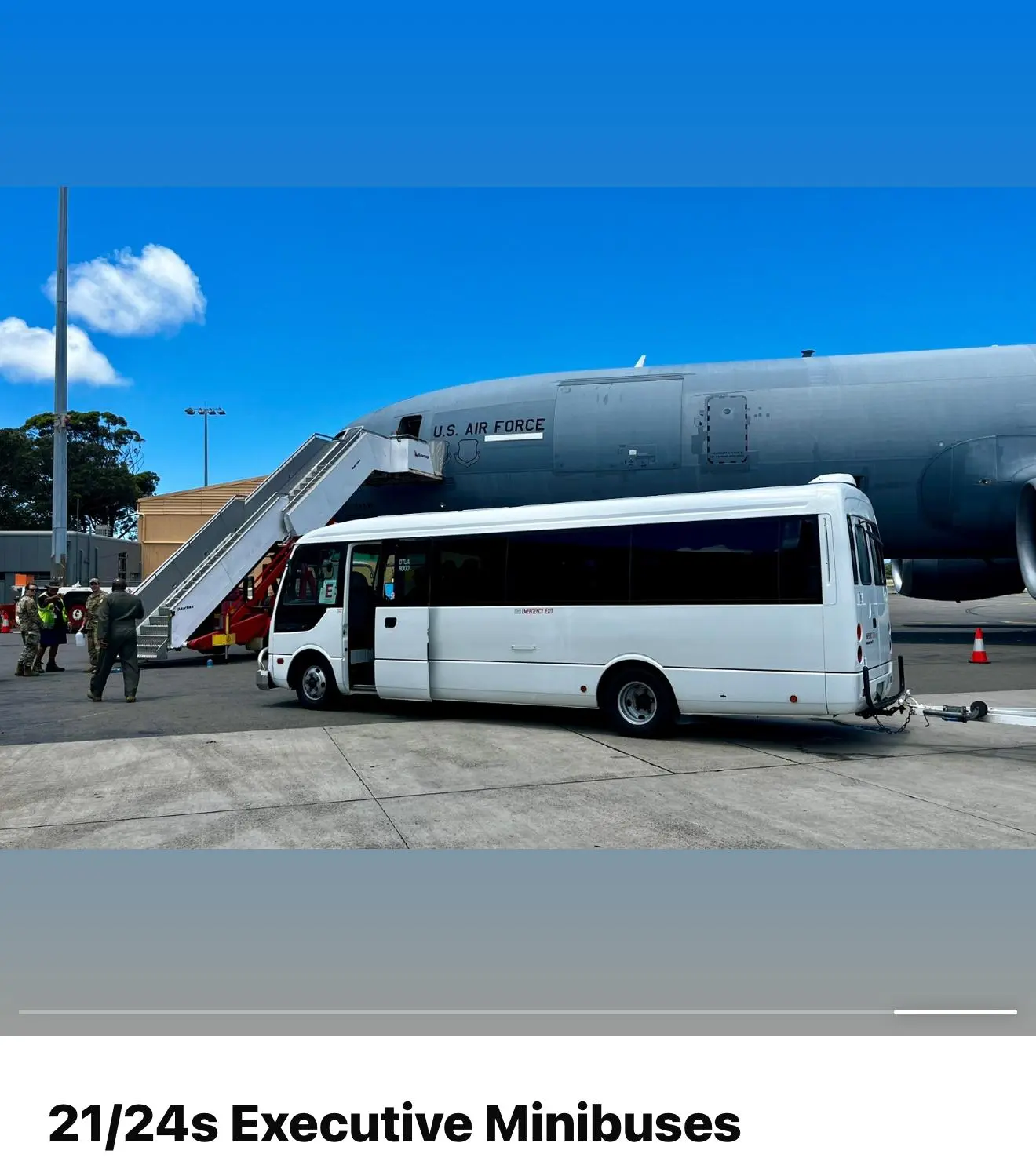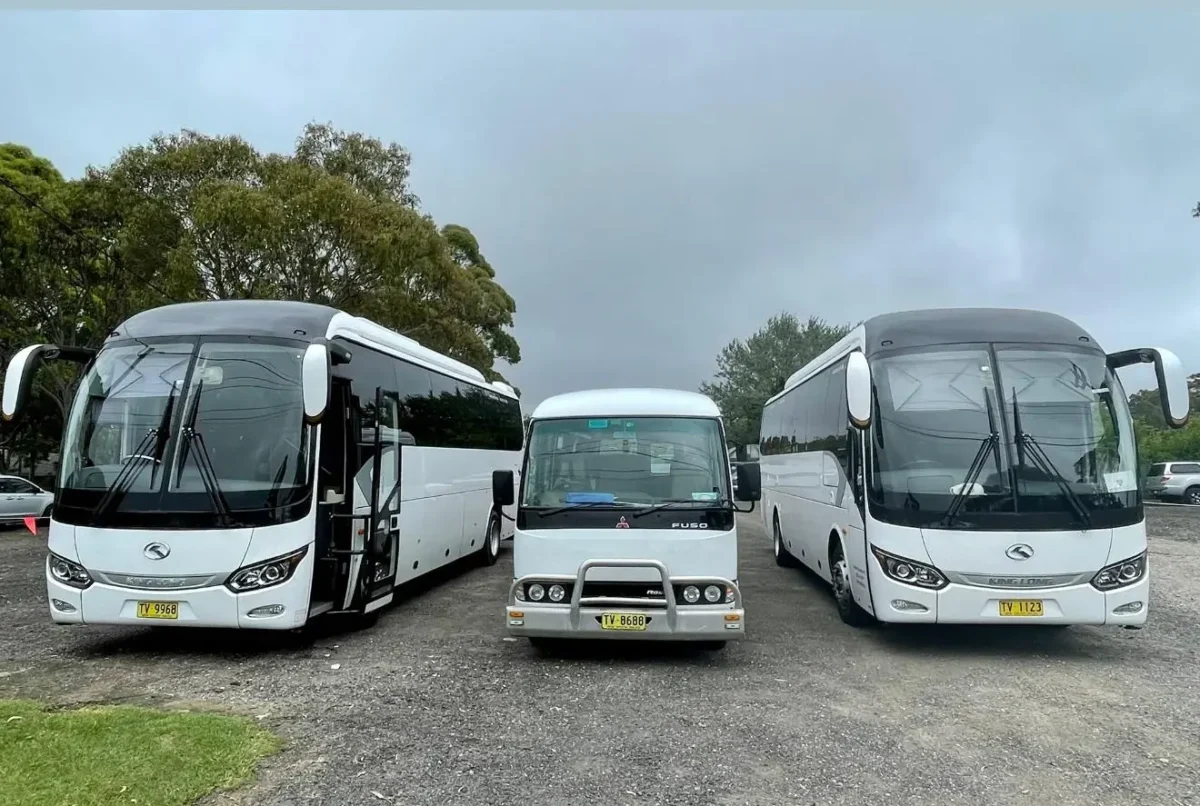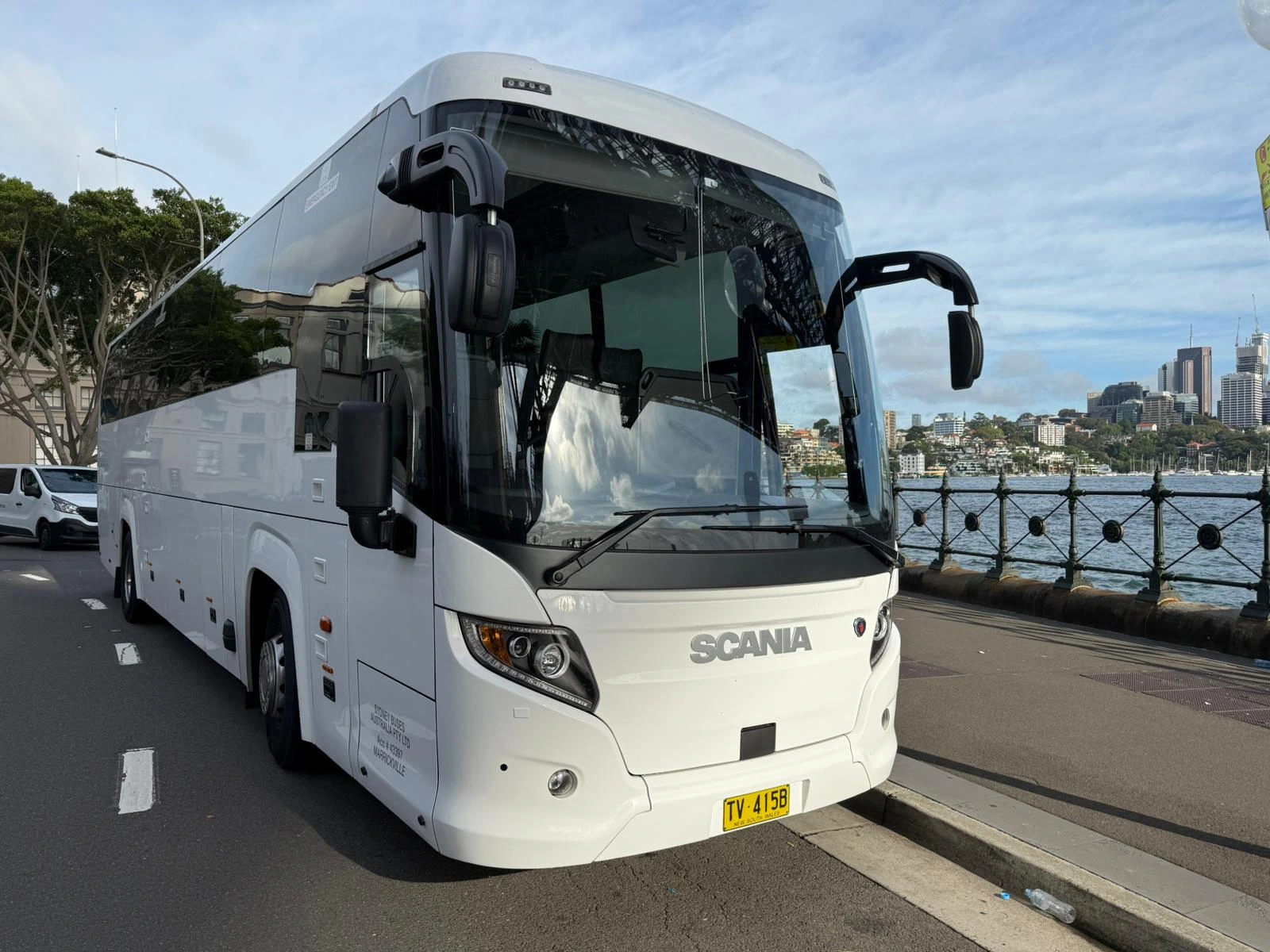
An approver needs four numbers and one paragraph: the total cost, the cost per head, what the realistic alternative costs, and what the organisation carries if nobody arranges transport at all. Get a fixed written quote before you write anything, because a real figure with a named vehicle survives a committee in a way an estimate does not. This article gives you the arithmetic, the risk argument and a template you can paste into your own paper.
Why the quote comes first
Committees do not reject transport because it is expensive. They reject it because the number in front of them is soft, and a soft number invites a second meeting.
A written quote comes back within two business hours with the vehicle named and the price fixed. That takes about two minutes of your time to request: pick-up suburb, travel date, approximate group size. Do it before the paper, not after the approval, and the entire conversation changes from “roughly how much” to “here is the quote, here is the per-head, here is the risk”.
The four numbers
1. Total cost. The quoted figure. Say what it includes, because most approvers assume a headline price hides extras. Driver, fuel, vehicle insurance and GST are inside the quoted rate. Tolls and parking, driver accommodation on multi-day trips, public holiday and after-hours loading, and waiting time beyond the booked window are confirmed in advance and priced separately. Both halves belong in the paper.
2. Cost per head. Total divided by the number of people actually travelling. This is the number that gets things approved, because it converts a lump sum into something an approver can compare with their own instincts.
3. The realistic alternative. Not a hypothetical. Price the thing your group would genuinely do instead, using quotes you obtain locally, and put it in the same per-head form.
4. What changes if numbers move. One line. Approvers ask this and it is better answered before it is asked.
The arithmetic, worked
All rates below are the published GST-inclusive hourly rates, and all four-hour and three-hour figures are the published minimum hire periods for those vehicle classes. Check them against the published Sydney bus hire rates before you reuse them, because rates are reviewed periodically.
Worked example one: a corporate off-site
44 people, one 48-seat luxury coach at $185 an hour, four-hour minimum hire.
- 4 hours x $185 = $740
- $740 / 44 people = $16.82 per head
If the day genuinely needs six hours rather than four:
- 6 hours x $185 = $1,110
- $1,110 / 44 = $25.23 per head
Two things an approver will notice. The per-head figure is modest, and the hours are the lever, not the rate. Which is why booking the finish time you actually need matters more to the total than negotiating the hourly rate.
Worked example two: a school or club group of 53
53 travelling, one 53-seat executive coach at $195 an hour, four-hour minimum.
- 4 hours x $195 = $780
- $780 / 53 = $14.72 per head
- At six hours: 6 x $195 = $1,170, or $22.08 per head
Worked example three: why one bigger vehicle usually wins
30 people. Two ways to carry them.
| Option | Working | Total | Per head |
|---|---|---|---|
| One 48-seat luxury coach | 4 hours x $185 | $740 | $24.67 |
| One 27-seat midi-coach plus one 13-seat minibus | (4 x $165) + (3 x $110) = $660 + $330 | $990 | $33.00 |
Same 30 people, same day, $250 apart. The reason is that every vehicle carries its own driver and its own minimum hire, so splitting a group across two vehicles adds a whole second minimum. Worth putting in the paper if anyone on the committee suggests “a couple of smaller ones”.
The empty seat effect
The price follows the vehicle, not the head count, so the per-head figure moves entirely on attendance.
Same 48-seat coach, same four hours, same $740:
- 44 travelling: $16.82 per head
- 30 travelling: $24.67 per head
Say this out loud in the paper. It reframes the approval from a cost question into an attendance question, which is usually the argument you actually want to be having.
Building your own figure
- Fix the vehicle class from your numbers. Look at the vehicle and seat count your numbers land on rather than guessing.
- Multiply the hourly rate by the hours you genuinely need, never fewer than the minimum hire for that class: three hours for minibuses and people movers, four for midi-coaches and full-size coaches.
- Divide by the number travelling, not the number invited.
- Note separately that tolls and parking are confirmed in advance and priced separately, so the paper is honest about the shape of the final invoice.
One exception worth knowing: an airport or point-to-point run can instead be quoted as a single fixed transfer fare, and a fare quoted that way is not charged at a minimum. If your trip is one movement rather than a day, ask for it priced both ways.
The risk paragraph that does the work
Cost gets you a discussion. Risk gets you the approval, particularly with a P&C, a club committee or anyone carrying a duty of care.
Four arguments, in the order that lands:
Accreditation is verifiable, and it is not verifiable the way people assume. NSW bus operator accreditation is administered by Transport for NSW under the Passenger Transport Act 1990 and covers good repute, financial viability, passenger and public safety, and depot and maintenance capacity. Here is the part procurement people do not know: there is no public register you can check. The only real verification route is asking the operator for its Certificate of Accreditation. Sydney Buses & Coaches holds NSW accreditation number 43397 and makes the certificate available on request for tender and procurement paperwork, which is exactly the document your committee minutes should reference.
The driver is licensed and checked for this work specifically. A Bus Driver Authority is required to drive a public passenger bus or coach seating 13 or more, and it is not a normal driver’s licence. It requires a commercial medical, a national police check, an approved training course and a fit-and-proper assessment, and it is issued by Transport for NSW. Drivers here also hold a current Working With Children Check, and check numbers can be supplied to a school office before the day. That is a materially different position from a volunteer parent in a people mover.
One vehicle means one accountable party. The alternative to a charter is usually private cars, and private cars distribute the risk across a dozen individuals with a dozen insurance positions, a dozen levels of fatigue after an event, and no one to call when something goes wrong. A charter concentrates it in an operator that owns the vehicles and employs the drivers rather than brokering the job out. You can point the committee at who operates the vehicles if the question comes up.
There is a stated position when something fails. If a vehicle fails, a replacement is arranged and the customer is kept informed. A committee does not need a promise that nothing will go wrong. It needs to know what happens when it does.
Where alcohol is part of the event, that argument writes itself and does not need embellishing. Where accessibility matters, note that wheelchair-equipped vehicles with hoists are available and need to be allocated in advance.
What the quote attachment should contain
Attach the quote itself. Do not summarise it. A committee that has seen the document does not need a second meeting to see the document.
Check it carries all of this before you attach it:
- [ ] Vehicle type and seat count, named
- [ ] Hourly rate and the hours the price is built on
- [ ] Which minimum hire applies, three hours or four
- [ ] GST position, stated as inclusive
- [ ] What is included: driver, fuel, vehicle insurance
- [ ] What is priced separately: tolls and parking, driver accommodation on multi-day trips, public holiday and after-hours loading, waiting time beyond the booked window
- [ ] Deposit terms as set out in the quote
- [ ] Cancellation terms
- [ ] The operator’s NSW accreditation number, with the certificate requested if your procurement process needs it on file
The one-page template
Paste this into your paper and fill the brackets.
> Proposal: Charter transport for [event], [date]. > > What is proposed: One [vehicle type, seat count] collecting [number] people from [pick-up point] at [time], arriving [destination] by [hard arrival time], returning [time]. > > Cost: $[total] GST inclusive, based on [hours] hours at $[rate] per hour, which is the [three or four] hour minimum for this vehicle class. Included: driver, fuel, vehicle insurance and GST. Confirmed in advance and priced separately: tolls and parking[, and any after-hours or public holiday loading]. > > Cost per head: $[total] / [number travelling] = $[per head] per person. > > Alternative considered: [what the group would otherwise do], at approximately $[figure] per head, plus [parking, time, or coordination cost]. > > Risk and compliance: The operator holds NSW bus operator accreditation (number supplied by the operator); there is no public register, so a Certificate of Accreditation has been requested and is [attached / on file]. The driver holds a Bus Driver Authority issued by Transport for NSW[, and a current Working With Children Check, with the check number available to the school office before travel]. A single accredited operator carries the transport risk rather than [number] individual drivers. > > If numbers change: Below [x] people the per-head cost rises to $[figure]. Above [y] people a second vehicle is required, which adds a second minimum hire. > > Recommendation: Approve $[total], with the deposit set out in the attached quote payable on confirmation. > > Attached: Written quote dated [date], vehicle named, price fixed.
Frequently asked questions
What is the cheapest way to present the cost to a committee?
Per head, at the realistic attendance figure, with the total shown beneath it. A per-head number is the only form most approvers can immediately judge.
How do I answer “can we just use people’s cars”?
With the risk paragraph rather than the price. Private cars distribute the duty of care across individual drivers and individual insurance positions, and there is nobody accountable if something goes wrong. Add the practical costs your organisation will actually incur, priced from your own local quotes.
Can I get the operator’s accreditation certificate for our procurement file?
Yes. Ask for it. It matters more than most people realise, because there is no public register of NSW bus operator accreditation, so the certificate is the verification route rather than a formality.
Does the quote change if our numbers drop?
The quoted price follows the vehicle and the booked hours, so a smaller group on the same vehicle costs the same in total and more per head. If the drop is large enough to change the vehicle class, tell the operator and the quote is rebuilt.
How long is a written quote valid?
Ask when you receive it and note the answer in the paper, because a committee cycle can be longer than a quote’s life. Rates are reviewed periodically, so a quote obtained months before the trip should be reconfirmed before you commit.
What should I put in the paper about cancellation?
Point to the terms in the attached quote rather than paraphrasing them. Cancellation terms are set out in the written quote, and an approver who can see them does not have to imagine them.
Next step
Get the number before you write the paper. Send the pick-up suburb, the date and roughly how many people, and a fixed written quote with the vehicle named comes back within two business hours, which is usually faster than getting the meeting scheduled. Start from the published Sydney bus hire rates or call 02 9469 6600.
Sources
- Transport for NSW, Applying for bus operator accreditation, https://www.nsw.gov.au/departments-and-agencies/transport-for-nsw/bus-operators-nsw/applying-for-bus-operator-accreditation. Accessed 7 September 2026.
- Service NSW, Apply for a Bus Driver Authority, https://www.service.nsw.gov.au/transaction/apply-for-a-bus-driver-authority. Accessed 7 September 2026.